


NEDINSCO (Nederlandse Instrumenten Compagnie)
Carl Zeiss, Venlo, Netherlands, 1921-1942
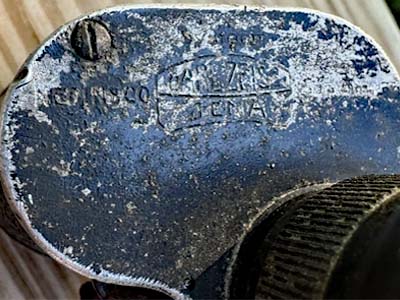
After the First World War, according to terms of the Treaty of Versailles, Germany was prohibited from producing military optical equipment in its home factories in Germany. As a result, the Carl Zeiss optical firm of Jena, Thuringia, Germany, on January 21, 1921 founded the Nederlandse Instrumenten Compagnie – Netherlands Instruments Company, NEDINSCO), in the city of ‘sGravenhage (The Hague) in the Netherlands to produce military optical equipment.
The Netherlands was not a signatory country of the Treaty of Versailles.
Initially, the Netherlands Instruments Company (NEDINSCO) was located in ‘sGravenhage (The Hague). Later in 1921, the company set up its headquarters in an old disused chocolate factory in Flushing, Netherlands. The company produced cameras, binoculars, rangefinders, microscopes, periscopes, and similar optical instruments.
Two years later, in 1923, the company moved to a new location, and constructed a new factory, in Venlo, Netherlands, a city and municipality in southeastern Netherlands, close to the border with Germany. It is situated in the province of Limburg. The municipality of Venlo counted 101,578 inhabitants as of January 2019.
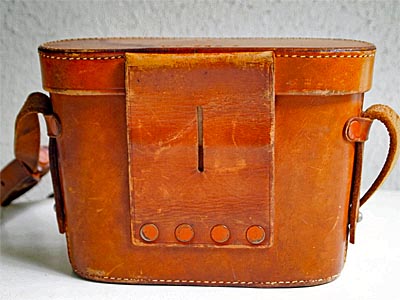
The NEDINSCO factory produced “civilian” and military optical equipment for domestic sales and for export to other countries. NEDINSCO optical equipment bore “civilian” markings, although with military features, such as the Strichplatte (graduated range finding scale), and leather cases with wide belt loops.
NEDINSCO produced military service binoculars for export sales to other countries, including Sweden, Switzerland, Turkey, and others.
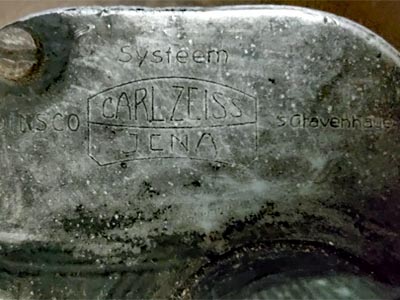
The term, ‘s Gravenhage, is part of the NEDINSCO trademark logo. ‘s Gravenhage is the official name of The Hague, the capital city of the South Holland province of the Netherlands. The name translates to “the Count’s Grove” or “the Count’s private enclosure,” referring to the hunting lodge of the counts of Holland, which was located in a woodland area called Haghe, or “hedge”. The city is also known as Den Haag in Dutch and The Hague in English.
The spelling, ‘s Gravenhage, was officially used for the city from the 17th century onward. Today, this name is used only in some official documents, such as birth and marriage certificates. The city itself uses Den Haag in all its communications. The post office specifies that letters should be addressed to ‘s Gravenhage, but a letter to Den Haag will be delivered just as well. The railway stations use the name Den Haag, as do signposts.
The Hague is the third-largest city in the Netherlands, with a population of over 560,000 inhabitants as of 2023. It serves as the administrative capital of the Netherlands, and is home to the Dutch government, the Royal Family, and various international institutions, including the International Court of Justice.
The city has a rich history, with the Binnenhof, a complex of buildings that includes the Ridderzaal (Knight’s Hall) and the Armistice or Truce Hall, serving as the seat of the Dutch government since 1585. The Hague is also known for its multicultural population, with residents from various countries, including Suriname, Turkey, Morocco, and Indonesia.
In addition to its political and historical significance, The Hague is a cultural and tourist destination, featuring attractions such as the Peace Palace, the Hofvijver lake, and the beaches of Scheveningen. The city is also recognized for its street art and vibrant nightlife.
While the official name is ‘s-Gravenhage, the city commonly uses Den Haag in its communications, and both names are widely recognized.
NEDINSCO service glass optical equipment was marked to identify them as government military property.
Military service binoculars were issued to soldiers with specialized functions. For example, group leaders and artillery observers were issued military service binoculars to perform their duties.
The most common type of NEDINSCO service glass was the 6×30, based on the 6×30 Carl Zeiss Silvamar, introduced in 1910. The 6×30 Silvamar was light weight, 365 grams after 1935. Production of the 6×30 Silvamar was eventualy halted around 1975.
The number “6” identifies the magnification power (in this case, “6” indicates that objects appear six times closer than their actual distance).
The number “30” identifies the diameter in millimeters of the front (objective) lenses — the light gathering lenses — in this case 30 millimeters in diameter.
Another type of NEDINSCO service glass was the 8×30, based on the 8×30 Carl Zeiss Deltrentis, that first appeared in 1920.
The body was made of magnesium and was featherlight at just 390 grams. The wideangle eyepieces, designed by Albert Koenig, were free of distortion and contained 4 lens-elements. A single layer anti-reflection coating with a bluish color was first added during the Second World War. Production of the 8×30 Deltrentis was eventualy halted around 1995.
The number “8” identifies the magnification power (in this case, “8” indicates that objects appear eight times closer than their actual distance).
The number “30” identifies the diameter in millimeters of the front (objective) lenses — the light gathering lenses — in this case 30 millimeters in diameter.
The Carl Zeiss Jena Silvamar 6×30 produced in 1908 (serial number 150684) was part of a limited batch of 100 pieces and represents a rare, early design variant from the model’s initial release period (1907–1909).
Key specifications and features include:
Optical Design: It was the first Zeiss binocular with 30 mm lenses, offering a 6x magnification, 50° apparent field of view, and an 8.4° true field of view.
Physical Construction: The model featured integrated central hinges and “lugs” for neck straps, with prism covers spanning the carcass to improve impermeability. The specific 1908 variant had prism covers and lens barrels made in one piece.
Dimensions & Weight: It measured 16.7 cm in width and 12 cm in height, weighing 660 g.
Markings: The right prism cover bore the inscription “Silvamar 150684 6x” encrusted with silver alloy against a Tessar lens schematic. The hinge disk indicated it was sold by Calderoni & Co in Budapest. Evolution: This “civilian” model was produced from 1907 to 1969, with the 1908 version being one of the earliest iterations before later changes to eyepieces and housing designs were introduced.
“Vulkanite” schwarzes Kunstleder (black synthetic leather) Körperbedeckung (body covering)
 In Germany in the 1930s, an early type of black plastic synthetic leather called “Vulkanite” was used as the body covering of military and commercial Dienstgläser (service glasses) manufactured before World War II.
This “Vulkanite” schwarzes Kunstleder (black synthetic leather) Körperbedeckung (body covering) was the most common Dienstglas body covering used by the German armed forces (and also by most of the other armed forces of Europe) during the early years of the Second World War.
TM 30-506, WAR DEPARTMENT TECHNICAL MANUAL, GERMAN-ENGLISH MILITARY DICTIONARY, WAR DEPARTMENT, 20 MAY I944
The TM 30-506 manual describes “Vulkanite” schwarzes Kunstleder (black synthetic leather) Körperbedeckung (body covering) as “Kunstleder n” artificial leather.
The Carl Zeiss Jena Silvamar 6×30 produced in 1908 (serial number 150684) was part of a limited batch of 100 pieces and represents a rare, early design variant from the model’s initial release period (1907–1909).
Key specifications and features include:
Optical Design: It was the first Zeiss binocular with 30 mm lenses, offering a 6x magnification, 50° apparent field of view, and an 8.4° true field of view.
Physical Construction: The model featured integrated central hinges and “lugs” for neck straps, with prism covers spanning the carcass to improve impermeability. The specific 1908 variant had prism covers and lens barrels made in one piece.
Dimensions & Weight: It measured 16.7 cm in width and 12 cm in height, weighing 660 g. Markings: The right prism cover bore the inscription “Silvamar 150684 6x” encrusted with silver alloy against a Tessar lens schematic. The hinge disk indicated it was sold by Calderoni & Co in Budapest.
Evolution: This “civilian” model was produced from 1907 to 1969, with the 1908 version being one of the earliest iterations before later changes to eyepieces and housing designs were introduced.
Schwarz „Reis“ Raulack (black “rice” rough lacquer) Körperbedeckung (body covering)
 Early in the Second World War, a black Rauhlack (rough lacquer) body covering called schwarz „Reis“ Körperbedeckung (black “rice” body covering) also became a common Dienstglas body finish.
This new Dienstglas body covering began to replace the black “Vulkanite” (synthetic, leather-like, early plastic) body covering material on the housings of German field glasses.
The particular consistency of this schwarz „Reis“ (black “rice”) Rauhlack (rough lacquer) Körperbedeckung (body covering) was achieved by mixing crushed rice or finely granulated cork meal with black lacquer paint.
This schwarz „Reis“ Rauhlack Körperbedeckung (black “rice” rough lacquer body covering) became the most common Dienstglas body covering as the war progressed through 1942 and 1943.
This is a list of 6×24 SPORTUR civilian binoculars, listed in serial number sequence, manufactured by the Carl Zeiss optical company, of Jena, Germany, for domestic sales, from 1935 to 1943, as observed in collections and recorded from sources online.
Carl Zeiss, Jena Domestic Sales
6×24 SPORTUR Production Serial Number Series
Carl Zeiss, Jena Domestic Sales
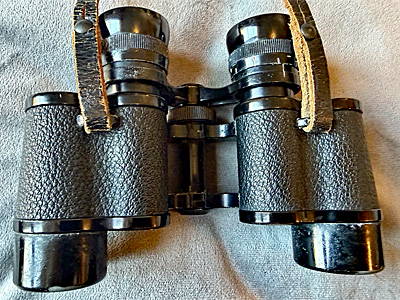
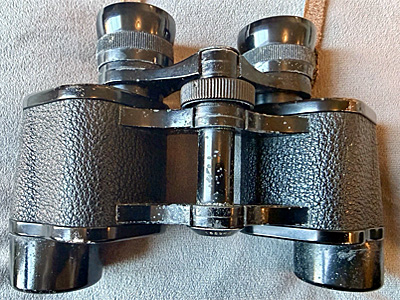
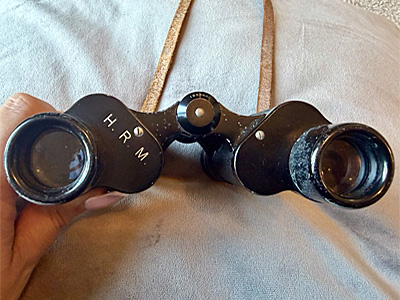
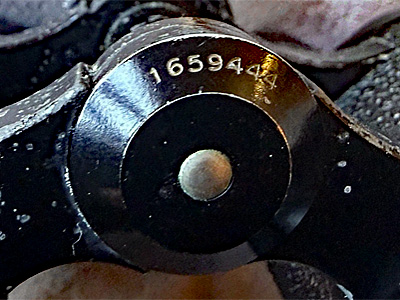
6×24 SPORTUR, September 1934, 1659444, Jena, Thuringia, Germany
|
|
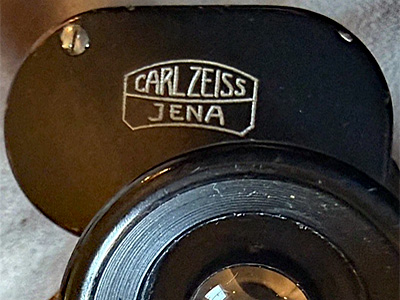
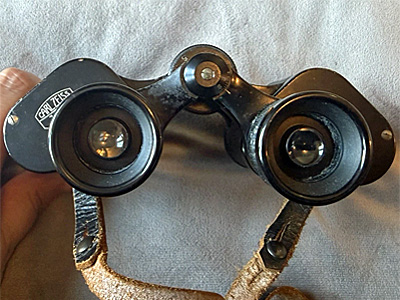
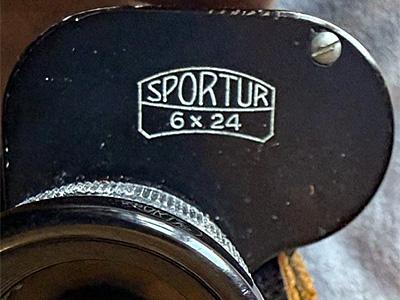
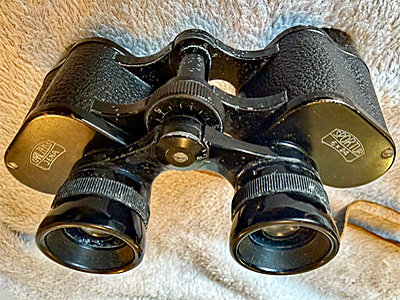
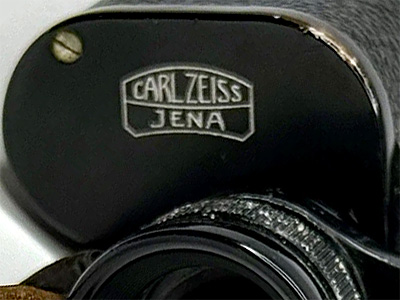
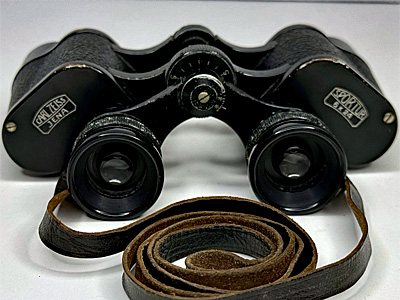
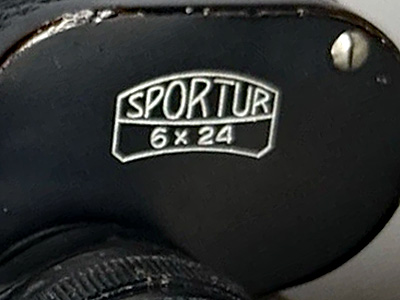
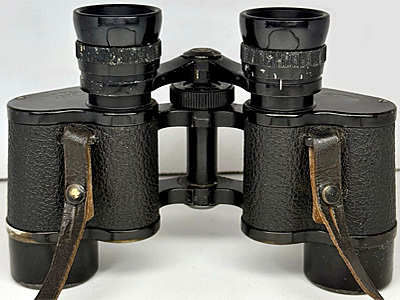
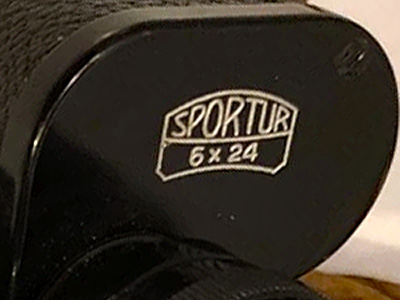
Carl Zeiss, Jena, 6×24 SPORTUR civilian binoculars, production serial number, 1659444, very light construction, made of “Elektron” or “Elektronmetall” (magnesium and aluminum alloy), black “Vulkanite” schwarzes Kunstleder (black synthetic leather, hard plastic) Körperbedeckung (body covering), aluminum alloy prism and objective covers, aluminum alloy objective lens rings. Manufactured about September 1934 by Carl Zeiss, Jena, Germany. Left prism cover marked in white with “CARL ZEISS” / “JENA” trademark logo. Right prism cover marked in white with “SPORTUR” / “6×24” logo. Production serial number, “1659444”, marked in white on bridge spindle front button, was produced about September 1934, within the original Carl Zeiss production serial number series established in 1894. The 6×24 “Sportur” continued in production until 1943. |
Carl Zeiss, Jena Domestic Sales
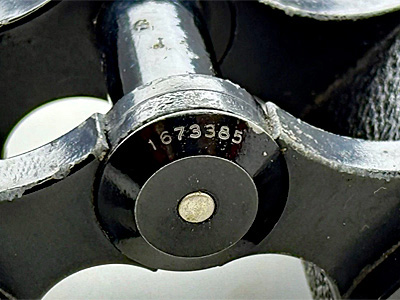
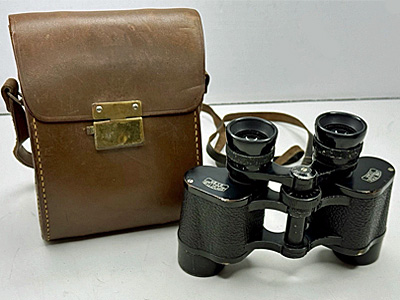
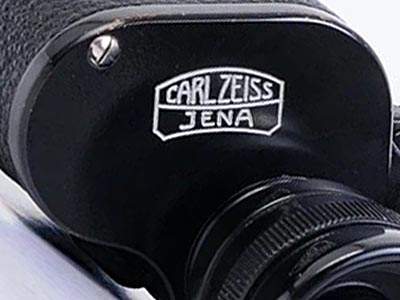
6×24 SPORTUR, January 1935, 1673385, Jena, Thuringia, Germany
|
|
Carl Zeiss, Jena, 6×24 SPORTUR civilian binoculars, production serial number, 1673385, very light construction, made of “Elektron” or “Elektronmetall” (magnesium and aluminum alloy), black “Vulkanite” schwarzes Kunstleder (black synthetic leather, hard plastic) Körperbedeckung (body covering), aluminum alloy prism and objective covers, aluminum alloy objective lens rings. Manufactured about January 1935 by Carl Zeiss, Jena, Germany. Left prism cover marked in white with “CARL ZEISS” / “JENA” trademark logo. Right prism cover marked in white with “SPORTUR” / “6×24” logo. Production serial number, “1673385”, marked in white on bridge spindle front button, was produced about January 1935, within the original Carl Zeiss production serial number series established in 1894. The 6×24 “Sportur” continued in production until 1943. |
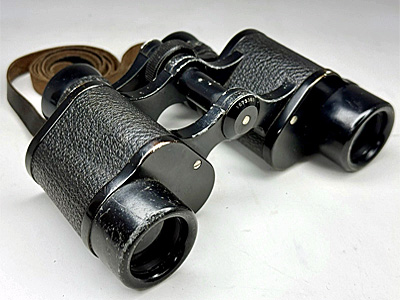
Carl Zeiss, Jena Domestic Sales
6×24 SPORTUR, February 1936, 1721441, Jena, Thuringia, Germany
|
|
Carl Zeiss, Jena, 6×24 SPORTUR civilian binoculars, production serial number, 1721441, very light construction, made of “Elektron” or “Elektronmetall” (magnesium and aluminum alloy), black “Vulkanite” schwarzes Kunstleder (black synthetic leather, hard plastic) Körperbedeckung (body covering), aluminum alloy prism and objective covers, aluminum alloy objective lens rings. Manufactured about February 1936 by Carl Zeiss, Jena, Germany. Left prism cover marked in white with “CARL ZEISS” / “JENA” trademark logo. Right prism cover marked in white with “SPORTUR” / “6×24” logo. Production serial number, “1721441”, marked in white on bridge spindle front button, was produced about February 1936, within the original Carl Zeiss production serial number series established in 1894. The 6×24 “Sportur” continued in production until 1943. |
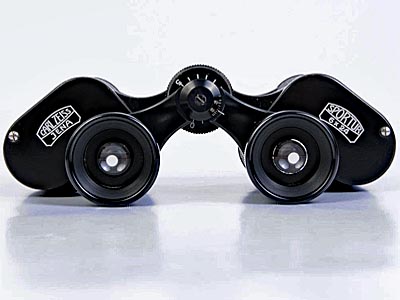
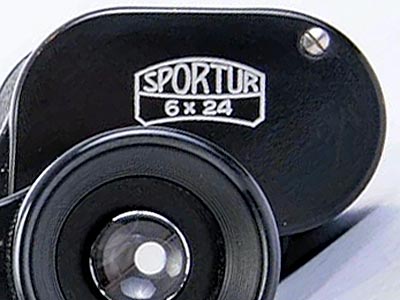
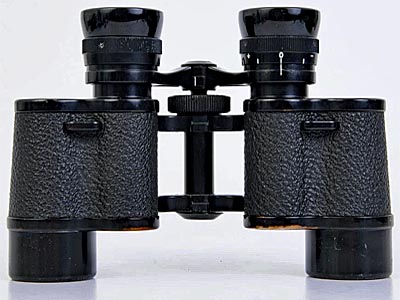
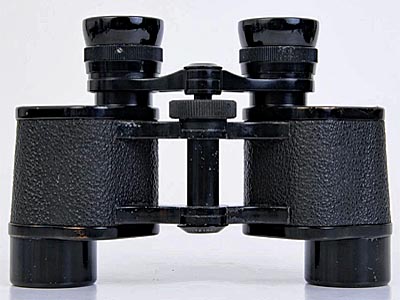
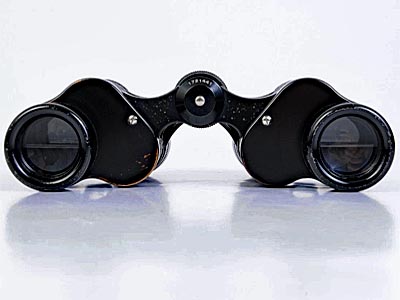
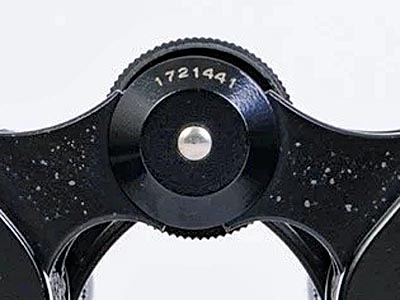
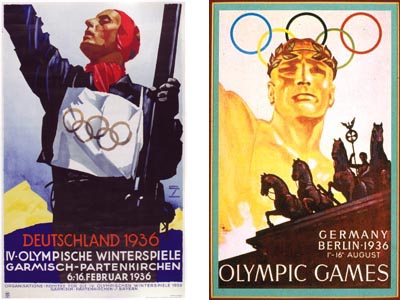
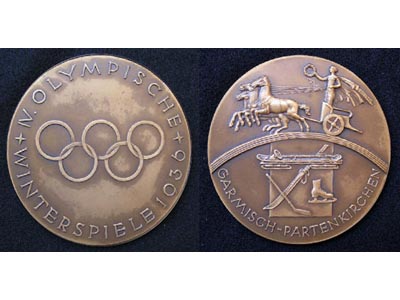
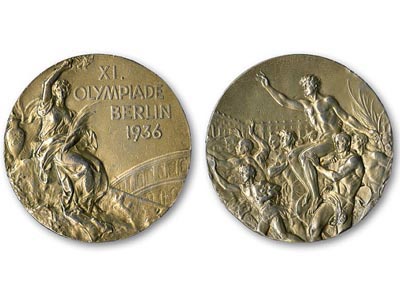
The 6×24 “Sportur” was launched by Carl Zeiss, Jena in 1935, the year before the IV Winter Olympic Games (IV Olympische Winterspiele 1936) in Garmisch-Partenkirchen, Bavaria, Germany (February 6-16, 1936), and the XI Summer Olympic Games (XI Olympische Sommerspiele 1936) in Berlin, Germany (August 1-16, 1936), officially known as the Winter Games of the IV Olympiad, and the Summer Games of the XI Olympiad.
The outstanding feature of the 6×24 “Sportur” was its very light weight, only 330 grams (11.64 ounces avoirdupois), (10.61 ounces troy), making it the ideal companion for watchers of sporting events, and walkers and hikers, to whom it was actively marketed.
Key to its light weight was the use of a newly developed magnesium and aluminum alloy – “Elektron” – which is unusually light, about 36% lighter than aluminum alloy. Magnesium’s relatively low density makes its alloy variants suitable for use in auto racing and aerospace engineering. In 1935, the Carl Zeiss company of Jena, Germany began using Elekton to make the metal housings of manufactured binoculars.
Carl Zeiss, Jena Domestic Sales
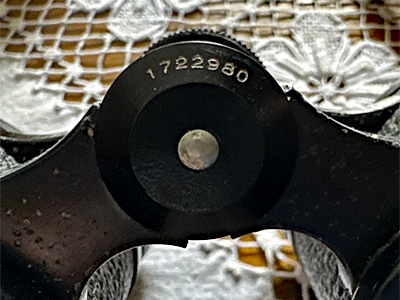
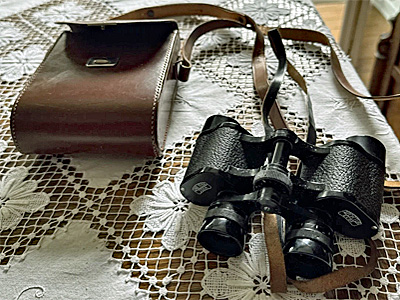
6×24 SPORTUR, February 1936, 1722980, Jena, Thuringia, Germany
|
|
Carl Zeiss, Jena, 6×24 SPORTUR civilian binoculars, production serial number, 1722980, very light construction, made of “Elektron” or “Elektronmetall” (magnesium and aluminum alloy), black “Vulkanite” schwarzes Kunstleder (black synthetic leather, hard plastic) Körperbedeckung (body covering), aluminum alloy prism and objective covers, aluminum alloy objective lens rings. Manufactured about February 1936 by Carl Zeiss, Jena, Germany. Left prism cover marked in white with “CARL ZEISS” / “JENA” trademark logo. Right prism cover marked in white with “SPORTUR” / “6×24” logo. Production serial number, “1722980”, marked in white on bridge spindle front button, was produced about February 1936, within the original Carl Zeiss production serial number series established in 1894. The 6×24 “Sportur” continued in production until 1943. |
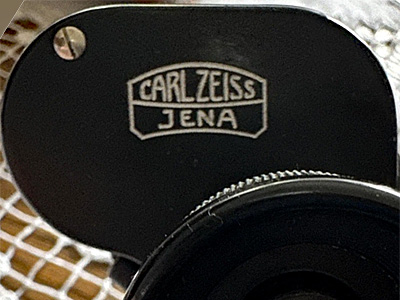
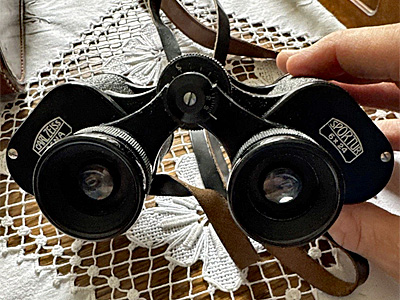
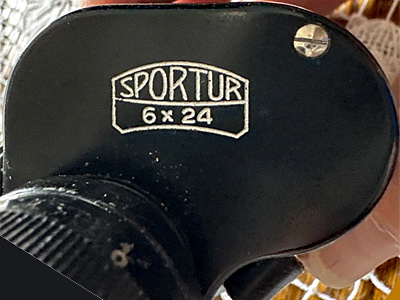
The 6×24 “Sportur” was launched by Carl Zeiss, Jena in 1935, the year before the IV Winter Olympic Games (IV Olympische Winterspiele 1936) in Garmisch-Partenkirchen, Bavaria, Germany (February 6-16, 1936), and the XI Summer Olympic Games (XI Olympische Sommerspiele 1936) in Berlin, Germany (August 1-16, 1936), officially known as the Winter Games of the IV Olympiad, and the Summer Games of the XI Olympiad.
The outstanding feature of the 6×24 “Sportur” was its very light weight, only 330 grams (11.64 ounces avoirdupois), (10.61 ounces troy), making it the ideal companion for watchers of sporting events, and walkers and hikers, to whom it was actively marketed.
Key to its light weight was the use of a newly developed magnesium and aluminum alloy – “Elektron” – which is unusually light, about 36% lighter than aluminum alloy. Magnesium’s relatively low density makes its alloy variants suitable for use in auto racing and aerospace engineering. In 1935, the Carl Zeiss company of Jena, Germany began using Elekton to make the metal housings of manufactured binoculars.
Carl Zeiss, Jena Domestic Sales
6×24 SPORTUR, June 1936, 1736505, Jena, Thuringia, Germany
|
|
Carl Zeiss, Jena, 6×24 SPORTUR civilian binoculars, production serial number, 1736505, very light construction, made of “Elektron” or “Elektronmetall” (magnesium and aluminum alloy), black “Vulkanite” schwarzes Kunstleder (black synthetic leather, hard plastic) Körperbedeckung (body covering), aluminum alloy prism and objective covers, aluminum alloy objective lens rings. Manufactured about June 1936 by Carl Zeiss, Jena, Germany. Left prism cover marked in white with “CARL ZEISS” / “JENA” trademark logo. Right prism cover marked in white with “SPORTUR” / “6×24” logo. Production serial number, “1736505”, marked in white on bridge spindle front button, was produced about June 1936, within the original Carl Zeiss production serial number series established in 1894. The 6×24 “Sportur” continued in production until 1943. |
The 6×24 “Sportur” was launched by Carl Zeiss, Jena in 1935, the year before the IV Winter Olympic Games (IV Olympische Winterspiele 1936) in Garmisch-Partenkirchen, Bavaria, Germany (February 6-16, 1936), and the XI Summer Olympic Games (XI Olympische Sommerspiele 1936) in Berlin, Germany (August 1-16, 1936), officially known as the Winter Games of the IV Olympiad, and the Summer Games of the XI Olympiad.
The outstanding feature of the 6×24 “Sportur” was its very light weight, only 330 grams (11.64 ounces avoirdupois), (10.61 ounces troy), making it the ideal companion for watchers of sporting events, and walkers and hikers, to whom it was actively marketed.
Key to its light weight was the use of a newly developed magnesium and aluminum alloy – “Elektron” – which is unusually light, about 36% lighter than aluminum alloy. Magnesium’s relatively low density makes its alloy variants suitable for use in auto racing and aerospace engineering. In 1935, the Carl Zeiss company of Jena, Germany began using Elekton to make the metal housings of manufactured binoculars.
Carl Zeiss, Jena Domestic Sales
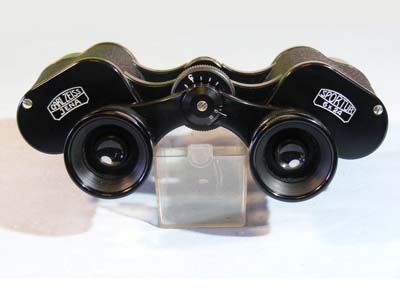
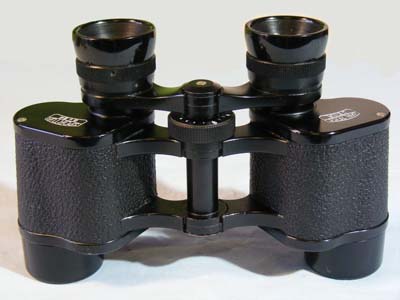
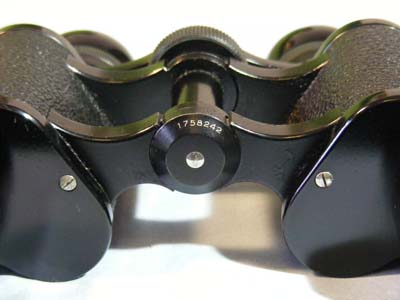
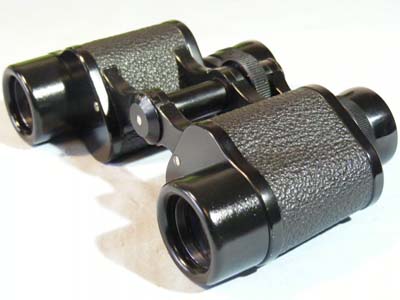
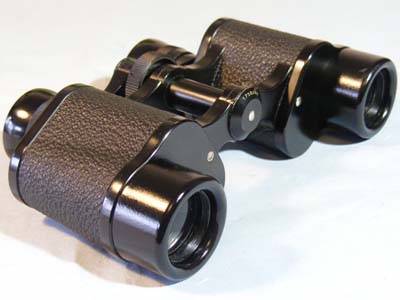
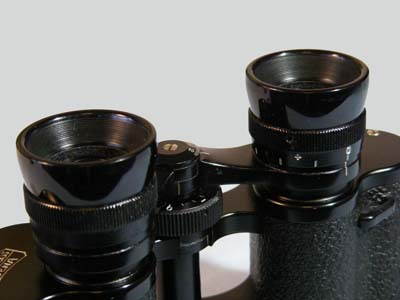
6×24 SPORTUR, November 1936, 1758242, Jena, Thuringia, Germany
|
|
Carl Zeiss, Jena, 6×24 SPORTUR civilian binoculars, production serial number, 1758242, very light construction, made of “Elektron” or “Elektronmetall” (magnesium and aluminum alloy), black “Vulkanite” schwarzes Kunstleder (black synthetic leather, hard plastic) Körperbedeckung (body covering), aluminum alloy prism and objective covers, aluminum alloy objective lens rings. Manufactured about November 1936 by Carl Zeiss, Jena, Germany. Left prism cover marked in white with “CARL ZEISS” / “JENA” trademark logo. Right prism cover marked in white with “SPORTUR” / “6×24” logo. Production serial number, “1758242”, marked in white on bridge spindle front button, was produced about November 1936, within the original Carl Zeiss production serial number series established in 1894. The 6×24 “Sportur” continued in production until 1943. |
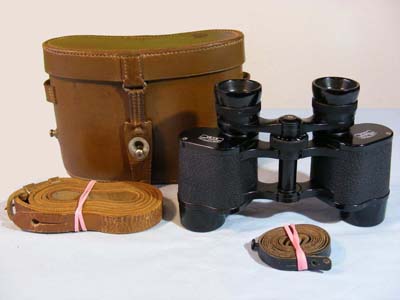
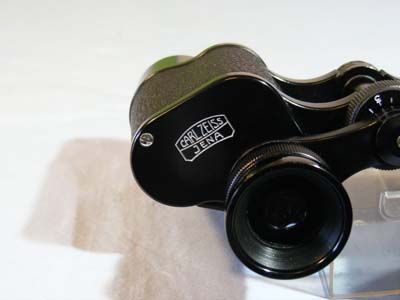
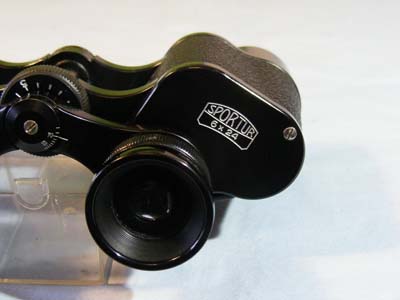
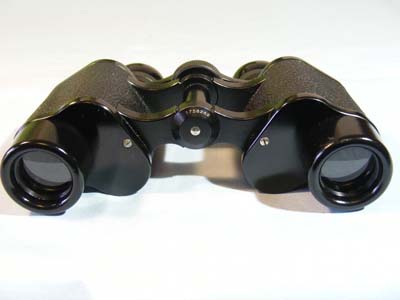
The 6×24 “Sportur” was launched by Carl Zeiss, Jena in 1935, the year before the IV Winter Olympic Games (IV Olympische Winterspiele 1936) in Garmisch-Partenkirchen, Bavaria, Germany (February 6-16, 1936), and the XI Summer Olympic Games (XI Olympische Sommerspiele 1936) in Berlin, Germany (August 1-16, 1936), officially known as the Winter Games of the IV Olympiad, and the Summer Games of the XI Olympiad.
The outstanding feature of the 6×24 “Sportur” was its very light weight, only 330 grams (11.64 ounces avoirdupois), (10.61 ounces troy), making it the ideal companion for watchers of sporting events, and walkers and hikers, to whom it was actively marketed.
Key to its light weight was the use of a newly developed magnesium and aluminum alloy – “Elektron” – which is unusually light, about 36% lighter than aluminum alloy. Magnesium’s relatively low density makes its alloy variants suitable for use in auto racing and aerospace engineering. In 1935, the Carl Zeiss company of Jena, Germany began using Elekton to make the metal housings of manufactured binoculars.
Carl Zeiss, Jena Domestic Sales
6×24 SPORTUR, January 1937, 1766960, Jena, Thuringia, Germany
|
|
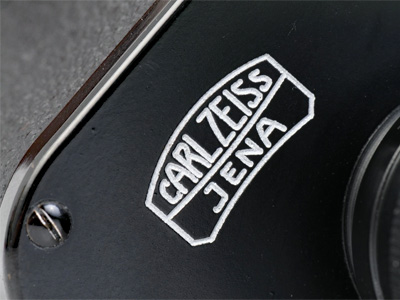
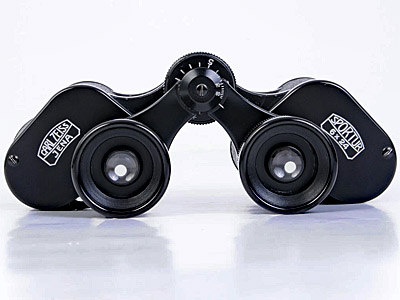
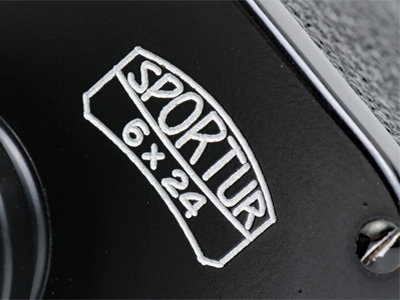
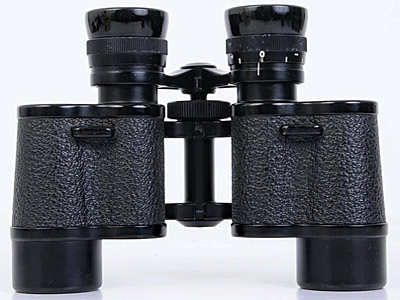
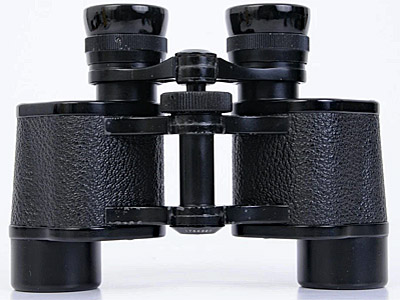
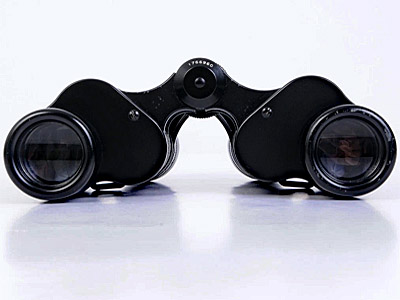
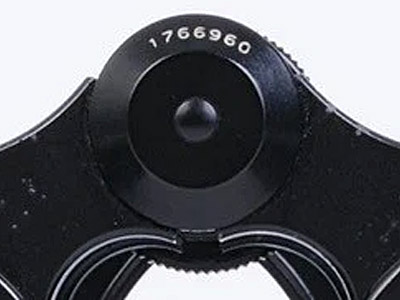
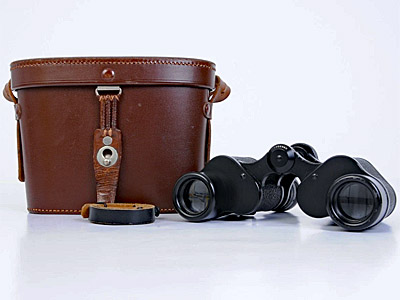
Carl Zeiss, Jena, 6×24 SPORTUR civilian binoculars, production serial number, 1766960, very light construction, made of “Elektron” or “Elektronmetall” (magnesium and aluminum alloy), black “Vulkanite” schwarzes Kunstleder (black synthetic leather, hard plastic) Körperbedeckung (body covering), aluminum alloy prism and objective covers, aluminum alloy objective lens rings. Manufactured about January 1937 by Carl Zeiss, Jena, Germany. Left prism cover marked in white at the top with “CARL ZEISS / JENA” trademark logo. Right prism cover marked in white with “SPORTUR” / “6×24” logo. Production serial number, “1766960”, marked in white on bridge spindle front button, was produced about January 1937, within the original Carl Zeiss production serial number series established in 1894. The 6×24 “Sportur” continued in production until 1943. |
Nr. 012
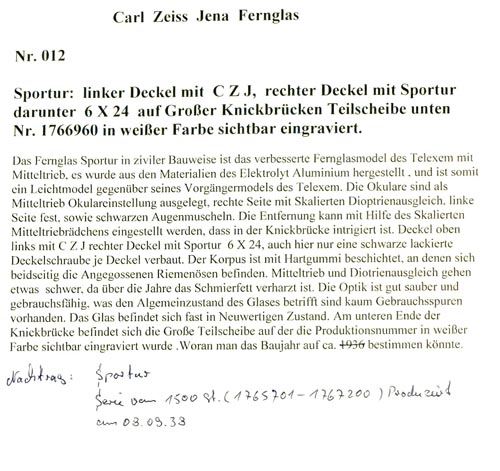
Sportur: linker Deckel mit C Z J, rechter Deckel mit Sportur darunter 6 x 24 auf Knickbrücken Teilscheibe unten Nr. 1766960 in weiser Farbe sichtbar eingraviert.
Das Fernglas Sportur in ziviler Bauweise ist das Elektrolyte Aluminium hergestellt, und ist somit cin Leichtmodel gegenüber seines Vorgängermodels des Telexem. Die Okulare sind als Mitteltrieb Okulareinstellung ausgelegt, rechte Seite mit Skalierten Dioptrienausgleich, linke Seite fest, sowie schwarzen Augenmuscheln. Die Entfernung kann mit Hilfe des Skalierten Mitteltriebradchens eingestellt werden, dass in der Knickbrücke intrigiert. Deckel oben links mit C Z J rechter Deckel mit Sportur 6 X 24, auch hier nur eine schwarze lackierte Deckelschraube je Deckel verbaut. Der Korpus ist mit Hartgummi beschichtet, an denen sich beidseitig die Angegossenen Riemenösen befinden. Mitteltrieb und Diotrienausgleich gehen etwas schwer, da über die Jahre das Schmierfett verharzt ist. Die Optik ist gut sauber und gebrauchsfähig, was den Algenmeinzustand des Glases betrifft sind kaum Gebrauchsspuren vorhanden. Das Glas befindet sich fast in Neuwertigen Zustand. Am unteren Ende der Knickbrücke befindet sich die Grosse Teilscheibe auf der die Produktionsnummer in weisser Farbe sichtbar eingraviert wurde. Woran man das Baujahr auf ca. 1936 bestimmen könnte.
Nachtrag: Sportur Serie von 1500 St. (1765701 – 1767200) Produ zivl 08 09 38
Nr. 012
Sportur: left lid with C Z J, right lid with Sportur underneath 6 x 24 on bending bridge disc below No. 1766960 visibly engraved in white color.
The Sportur binoculars in civilian design are made of electrolyte aluminum, and are therefore a lightweight model compared to their predecessor model, the Telexem. The eyepieces are designed as a center drive eyepiece adjustment, right side with scaled diopter compensation, left side fixed, and black eyecups. The distance can be adjusted using the scaled center drive wheel that is integrated into the bending bridge. Top left cover with C Z J right cover with Sportur 6 X 24, here too only one black painted cover screw installed per cover. The body is coated with hard rubber, on which there are cast strap eyelets on both sides. The center drive and diotriene compensation are a bit difficult because the grease has become resinous over the years. The optics are well clean and usable, as far as the algae condition of the glass is concerned there are hardly any signs of wear. The glass is in almost new condition. At the lower end of the bending bridge is the large graduated disc on which the production number has been visibly engraved in white. How one could determine the year of construction to be around 1936.
Addendum: Sportur Series of 1500 pieces (1765701 – 1767200) Civil production 08 09 38
Carl Zeiss Domestic Sales
6×24 SPORTUR, December 1939, 1955299, Jena, Thuringia
|
|
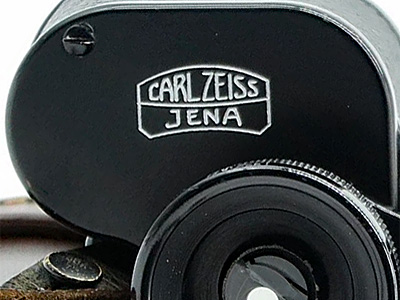
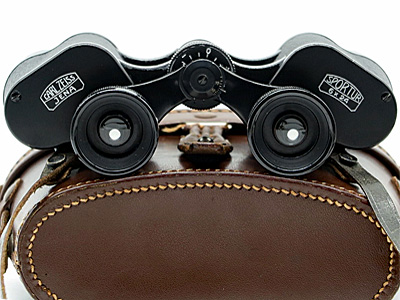
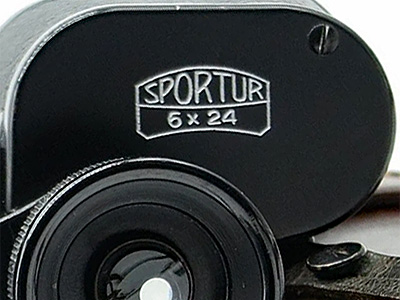
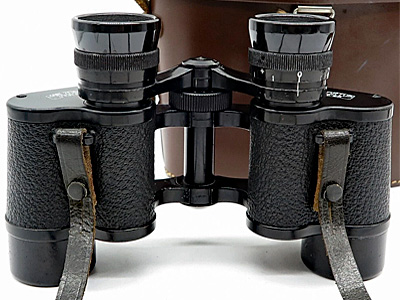
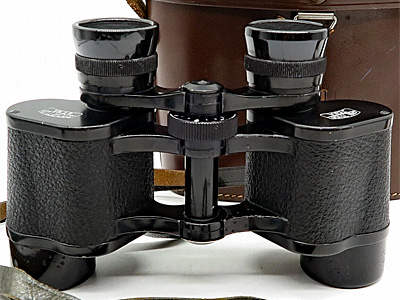
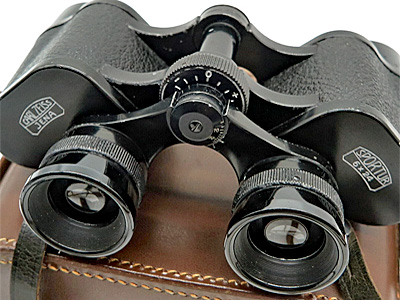
Carl Zeiss, Jena, 6×24 SPORTUR civilian binoculars, production serial number, 1955299, very light construction, made of “Elektron” or “Elektronmetall” (magnesium and aluminum alloy), black “Vulkanite” schwarzes Kunstleder (black synthetic leather, hard plastic) Körperbedeckung (body covering), aluminum alloy prism and objective covers, aluminum alloy objective lens rings. Manufactured about December 1937 by Carl Zeiss, Jena, Germany. Left prism cover marked in white with “CARL ZEISS” / “JENA” trademark logo. Right prism cover marked in white with “SPORTUR” / “6×24” logo. Production serial number, “1955299”, marked in white on bridge spindle front button, was produced about December 1937, within the original Carl Zeiss production serial number series established in 1894. The 6×24 “Sportur” continued in production until 1943. |
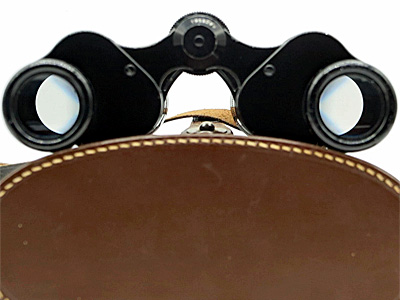
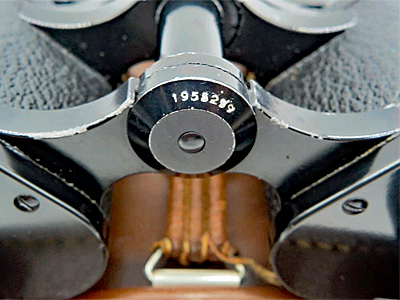
Carl Zeiss Domestic Sales
6×24 SPORTUR, December 1939, 1955407, Jena, Thuringia
|
|
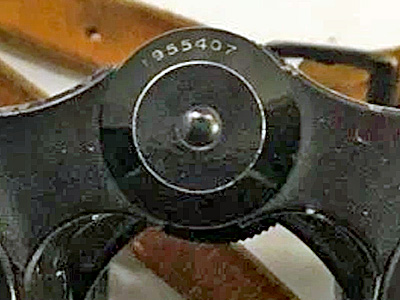
Carl Zeiss, Jena, 6×24 SPORTUR civilian binoculars, production serial number, 1955407, very light construction, made of “Elektron” or “Elektronmetall” (magnesium and aluminum alloy), black “Vulkanite” schwarzes Kunstleder (black synthetic leather, hard plastic) Körperbedeckung (body covering), aluminum alloy prism and objective covers, aluminum alloy objective lens rings. Manufactured about December 1939 by Carl Zeiss, Jena, Thuringia. Left prism cover marked in white with “CARL ZEISS” / “JENA” trademark logo. Right prism cover marked in white with “SPORTUR” / “6×24” logo. Production serial number, “1955407”, marked in white on bridge spindle front button, was produced about December 1939, within the original Carl Zeiss production serial number series established in 1894. The 6×24 “Sportur” continued in production until 1943. |
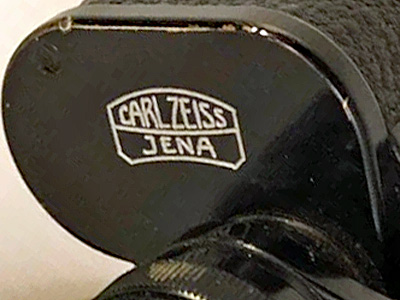
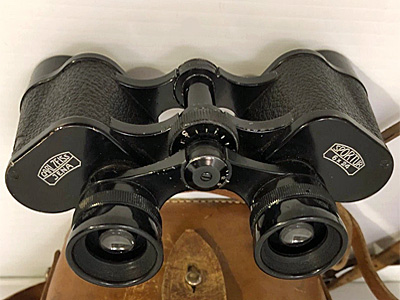
Carl Zeiss Austro-Hungarian Monarchy contract
D.F. 6×30, February 1918, 858568, 22. 4. 18., Jena, Thuringia, Germany
|
|
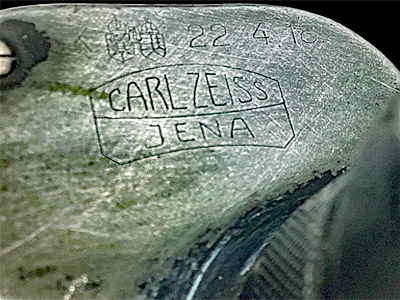
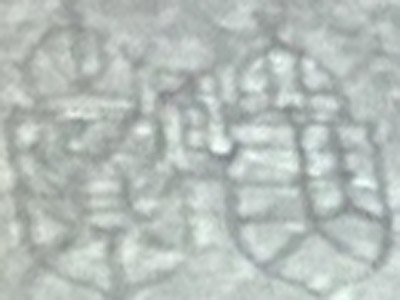
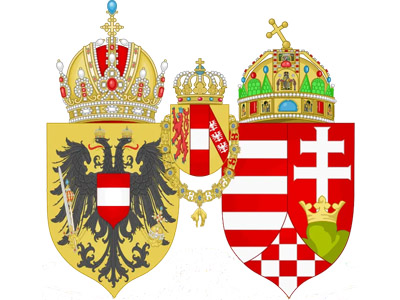
Austro-Hungarian Monarchy D.F.6×30 military service binoculars, with ⊕ reticle (graduated range finding scale) in right lens, production serial number, 858568, heavy construction, made of brass, aluminum alloy prism and objective covers, brass objective lens rings, black synthetic leather body covering, brass fittings. Manufactured about February 1918 by Carl Zeiss, Jena, Germany. Left prism cover marked in white at the top with “Ü.K.” (unknown meaning) / “Austro-Hungarian Monarchy coat of arms” / “22. 4. 18.” (22 April 1918, Austro-Hungarian armed forces property acceptance date) over “CARL ZEISS / JENA” trademark logo. Right prism cover marked in white with “D.F.6×30″ / “858568” production serial number logo. This Carl Zeiss D.F.6×30, serial number, 858568, was produced about February 1918, within the original Carl Zeiss production serial number series established in 1894. |



Carl Zeiss Domestic Sales
6×30 SILVAMAR, August 1918, 970461, Jena, Thuringia
|
|
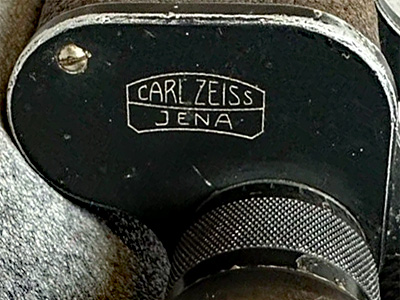
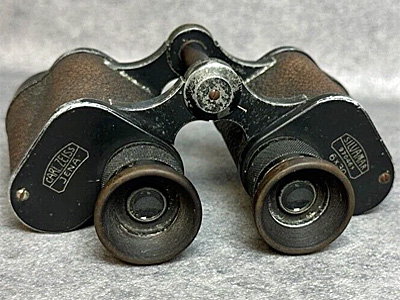
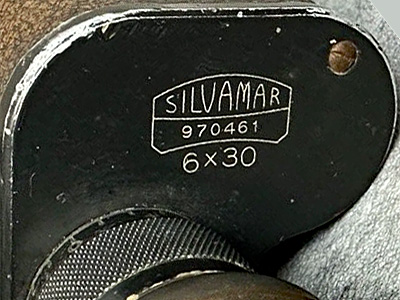
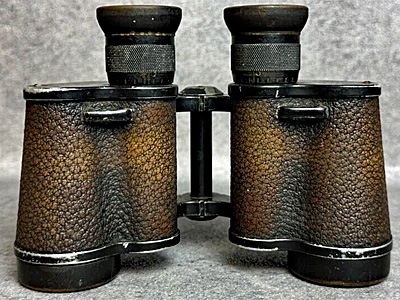
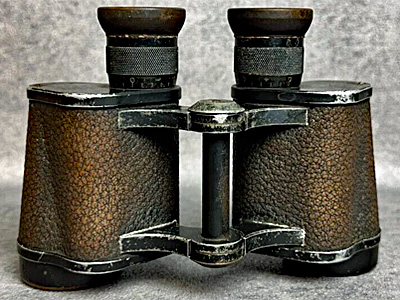
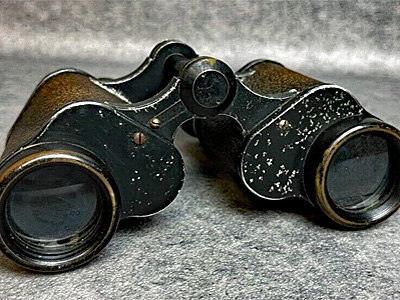
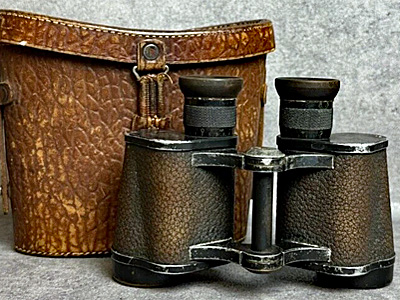
Carl Zeiss, Jena, 6×30 SILVAMAR military service binoculars, production serial number, 970461, light construction, made of aluminum alloy, black “Vulkanite” schwarzes Kunstleder (black synthetic leather, hard plastic) Körperbedeckung (body covering), aluminum/zinc alloy prism and objective covers, brass objective lens rings. Manufactured about August 1918 by Carl Zeiss, Jena, Thuringia. Left prism cover marked in white with “CARL ZEISS” / “JENA” trademark logo. Right prism cover marked in white with “SILVAMAR” / “970461” production serial number logo over “6×30”. This Carl Zeiss 6×30, serial number, 970461, was produced about August 1918, within the original Carl Zeiss production serial number series established in 1894. |
Carl Zeiss Domestic Sales
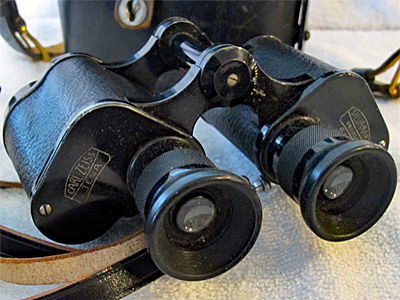
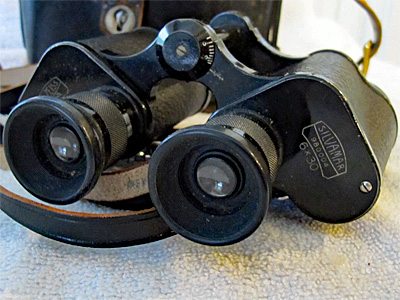
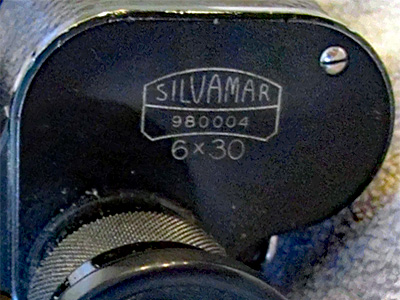
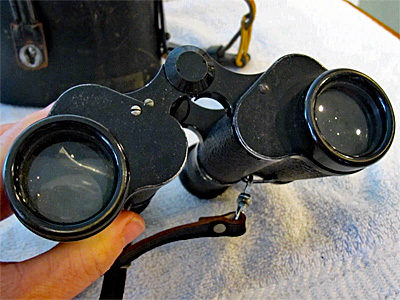
6×30 SILVAMAR, September 1918, 980004, Jena, Thuringia
|
|
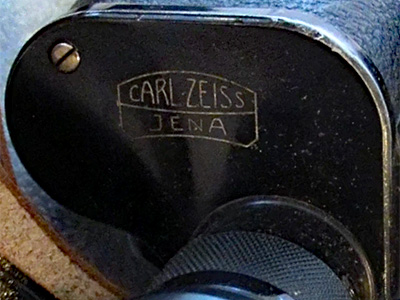
Carl Zeiss, Jena, 6×30 SILVAMAR military service binoculars, production serial number, 980004, light construction, made of aluminum alloy, black “Vulkanite” schwarzes Kunstleder (black synthetic leather, hard plastic) Körperbedeckung (body covering), aluminum/zinc alloy prism and objective covers, brass objective lens rings. Manufactured about September 1918 by Carl Zeiss, Jena, Thuringia. Left prism cover marked in white with “CARL ZEISS” / “JENA” trademark logo. Right prism cover marked in white with “SILVAMAR” / “980004” production serial number logo over “6×30”. This Carl Zeiss 6×30, serial number, 980004, was produced about September 1918, within the original Carl Zeiss production serial number series established in 1894. |
Carl Zeiss Domestic Sales
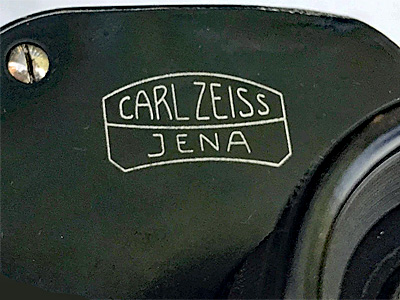
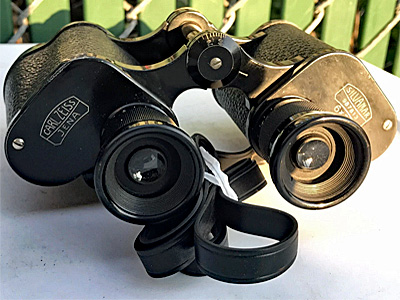
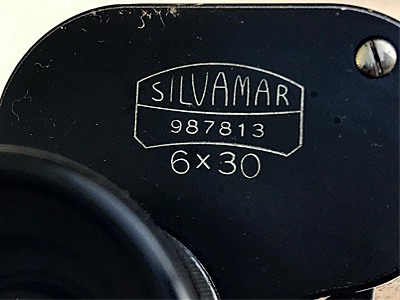
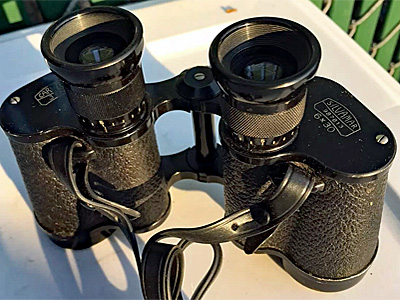
6×30 SILVAMAR, September 1918, 987813, Jena, Thuringia
|
|
Carl Zeiss, Jena, 6×30 SILVAMAR military service binoculars, production serial number, 987813, light construction, made of aluminum alloy, black “Vulkanite” schwarzes Kunstleder (black synthetic leather, hard plastic) Körperbedeckung (body covering), aluminum/zinc alloy prism and objective covers, brass objective lens rings. Manufactured about September 1918 by Carl Zeiss, Jena, Thuringia. Left prism cover marked in white with “CARL ZEISS” / “JENA” trademark logo. Right prism cover marked in white with “SILVAMAR” / “987813” production serial number logo over “6×30”. This Carl Zeiss 6×30, serial number, 987813, was produced about September 1918, within the original Carl Zeiss production serial number series established in 1894. |
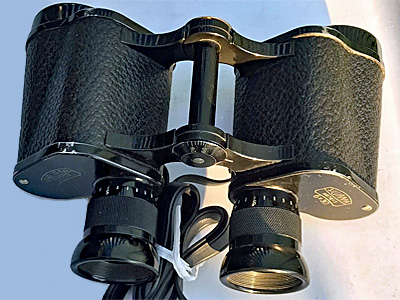
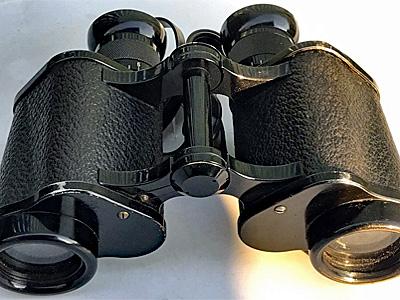
Carl Zeiss Domestic Sales
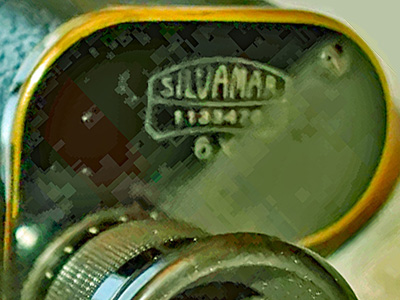
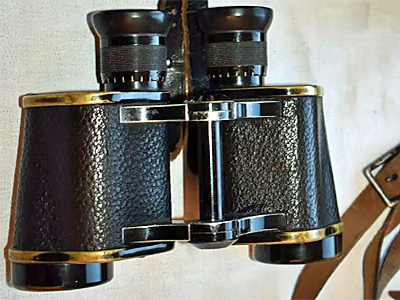
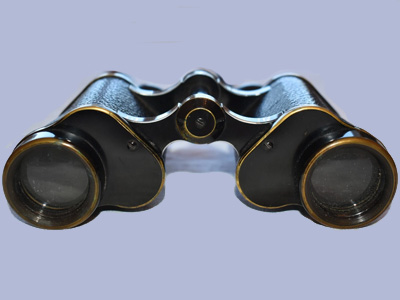
6×30 SILVAMAR, November 1921, 1133476, Jena, Thuringia
|
|
Carl Zeiss, Jena, 6×30 SILVAMAR military service binoculars, production serial number, 1133476, light construction, made of aluminum alloy, black “Vulkanite” schwarzes Kunstleder (black synthetic leather, hard plastic) Körperbedeckung (body covering), aluminum/zinc alloy prism and objective covers, brass objective lens rings. Manufactured about November 1921 by Carl Zeiss, Jena, Thuringia. Left prism cover marked in white with “CARL ZEISS” / “JENA” trademark logo. Right prism cover marked in white with “SILVAMAR” / “1133476” production serial number logo over “6×30”. This Carl Zeiss 6×30, serial number, 1133476, was produced about November 1921, within the original Carl Zeiss production serial number series established in 1894. |
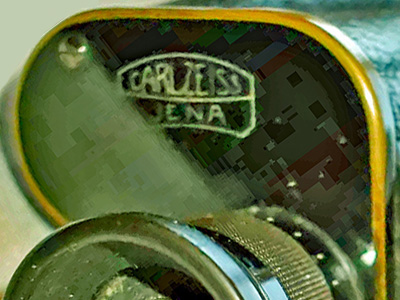
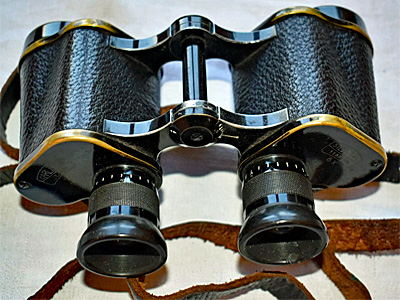
Carl Zeiss Domestic Sales
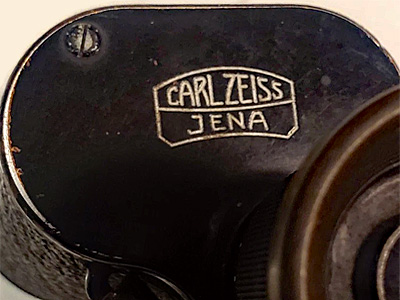
6×30 SILVAMAR, December 1937, 1815342, Jena, Thuringia
|
|
Carl Zeiss, Jena, 6×30 SILVAMAR military service binoculars, production serial number, 1815342, light construction, made of aluminum alloy, black “Vulkanite” schwarzes Kunstleder (black synthetic leather, hard plastic) Körperbedeckung (body covering), aluminum/zinc alloy prism and objective covers, brass objective lens rings. Manufactured about December 1937 by Carl Zeiss, Jena, Thuringia. Left prism cover marked in white with “CARL ZEISS” / “JENA” trademark logo. Right prism cover marked in white with “SILVAMAR” / “1815342” production serial number. This Carl Zeiss 6×30, serial number, 1815342, marked in white on bridge spindle front button, was produced about December 1937, within the original Carl Zeiss production serial number series established in 1894. |
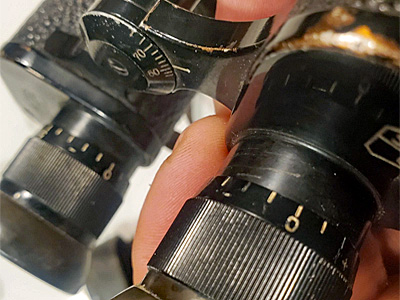
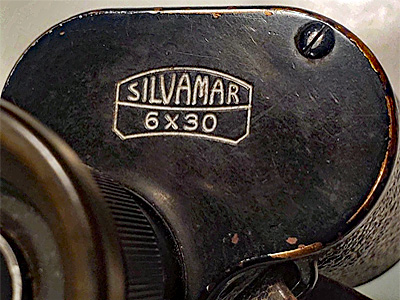
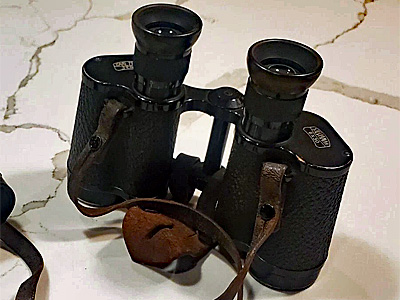
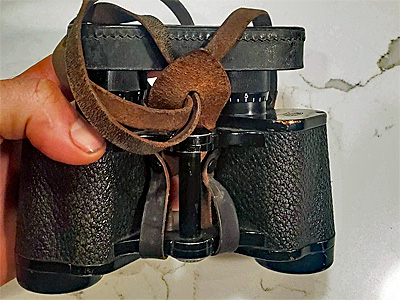
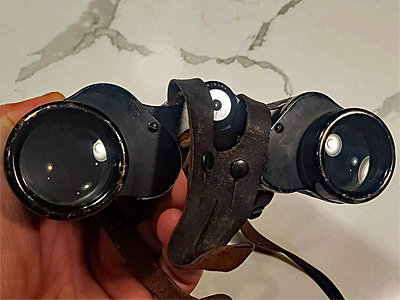
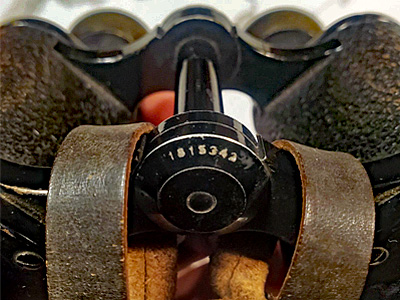
Carl Zeiss NEDINSCO Argentine Republic contract
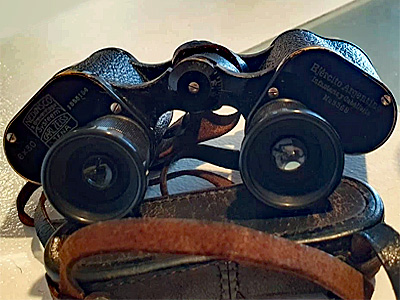
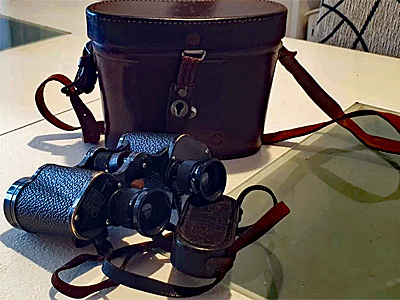
6×30 SILVAMAR, March 1927, 1355184, № 3568, ‘s Gravenhage (The Hague), Netherlands
|
|
Argentine Republic 6×30 military service binoculars, with Strichplatte (graduated range finding scale) in right lens, production serial number, 1355184, light construction, made of aluminum alloy, black “Vulkanite” schwarzes Kunstleder (black synthetic leather) Körperbedeckung (body covering), aluminum alloy prism and objective covers, brass objective lens rings. Manufactured about March 1927 by Carl Zeiss, NEDINSCO, ‘s Gravenhage (The Hague), Netherlands, for the armed forces of the Argentine Republic. Left prism cover marked in white with “6×30” then “NEDINSCO” / ‘s Gravenhage / “Systeem” / “CARL ZEISS / JENA” trademark logo then production serial number “1355184”. Right prism cover marked in white with “Ejército Argentino” (Argentine Army), over “Infanteria y Caballeria” (Infantry and Cavalry) over “№ 3568” (Number 3568, Argentine Republic armed forces property number). This Carl Zeiss 6×30 serial number, 1355184, was produced about March 1927, within the serial number sequence of the original Carl Zeiss production serial number series established in 1894. These binoculars came from Martinez, Argentina. |





Carl Zeiss NEDINSCO domestic and overseas sales
8×30 DELTRENTIS, June 1927, 1367587, ‘s Gravenhage (The Hague), Netherlands
|
|
8×30 military service binoculars, with Strichplatte (graduated range finding scale) in right lens, production serial number, 1367587, light construction, made of aluminum alloy, black “Vulkanite” schwarzes Kunstleder (black synthetic leather) Körperbedeckung (body covering), aluminum alloy prism and objective covers, brass objective lens rings. Manufactured in June 1927 by Carl Zeiss, NEDINSCO, ‘s Gravenhage (The Hague), Netherlands for domestic and overseas sales. Left prism cover marked in white with “NEDINSCO” / ‘s Gravenhage / “Systeem” / “CARL ZEISS / JENA” trademark logo. Right prism cover marked in white with “DELTRENTIS” / “1367587” logo over “8×30”. This Carl Zeiss 8×30 serial number, 1367587, was produced in June 1927, within the serial number sequence of the original Carl Zeiss production serial number series established in 1894. |
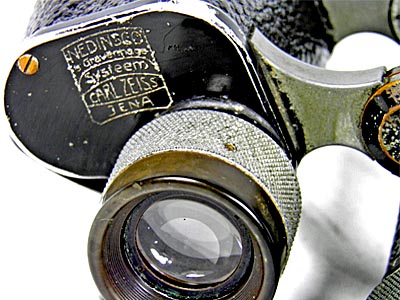
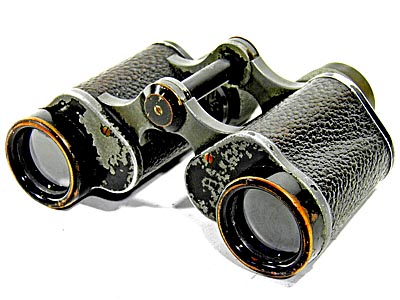

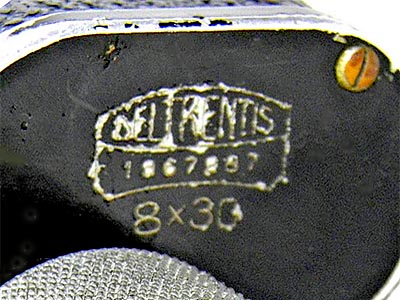
Carl Zeiss NEDINSCO domestic and overseas sales
8×30 DELTRENTIS, June 1927, 1368832, ‘s Gravenhage (The Hague), Netherlands
|
|
8×30 military service binoculars, with Strichplatte (graduated range finding scale) in right lens, production serial number, 1368832, light construction, made of aluminum alloy, black “Vulkanite” schwarzes Kunstleder (black synthetic leather) Körperbedeckung (body covering), aluminum alloy prism and objective covers, brass objective lens rings. Manufactured in June 1927 by Carl Zeiss, NEDINSCO, ‘s Gravenhage (The Hague), Netherlands for domestic and overseas sales. Left prism cover marked in white with “NEDINSCO” / ‘s Gravenhage / “Systeem” / “CARL ZEISS / JENA” trademark logo. Right prism cover marked in white with “DELTRENTIS” / “1368832” logo over “8×30”. This Carl Zeiss 8×30 serial number, 1368832, was produced in June 1927, within the serial number sequence of the original Carl Zeiss production serial number series established in 1894. |


Carl Zeiss, Jena domestic and overseas sales
6×30 SILVAMAR, December 1927, 1395401, Jena, Thuringia
6×30 military service binoculars, with Strichplatte (graduated range finding scale) in right lens, production serial number, 1395401, light construction, made of aluminum alloy, black “Vulkanite” schwarzes Kunstleder (black synthetic leather) Körperbedeckung (body covering), aluminum alloy prism and objective covers, brass objective lens rings.
Manufactured about December 1927 by Carl Zeiss, Jena, Thuringia, for domestic and overseas sales.
Left prism cover marked in white with “CARL ZEISS” / “JENA” trademark logo.
Right prism cover marked in white with “SILVAMAR” / “1395401” logo over “6×30”.
This Carl Zeiss 6×30 serial number, 1395401, was produced about December 1927, within the serial number sequence of the original Carl Zeiss production serial number series established in 1894.
Carl Zeiss NEDINSCO Kingdom of Sweden contract
6×24 Dienstglas, October 1928, 1445122, Nr 147, 1929, ‘s Gravenhage (The Hague), Netherlands
Kingdom of Sweden 6×24 military service binoculars, with Strichplatte (graduated range finding scale) in right lens, production serial number, 1445122, heavy construction, made of brass, black “Vulkanite” schwarzes Kunstleder (black synthetic leather) Körperbedeckung (body covering), aluminum alloy prism and objective covers, brass objective lens rings.
Manufactured about October 1928 by Carl Zeiss, NEDINSCO, ‘s Gravenhage (The Hague), Netherlands, for the armed forces of the Kingdom of Sweden.
Left prism cover marked in white with “Systeem” (System) over “NEDINSCO” (Nederlandse Instrumenten Compagnie, Netherlands Instruments Company) / “CARL ZEISS” / “JENA” trademark logo / ‘s Gravenhage, over production serial number “1445122”.
Right prism cover marked in white with Kingdom of Sweden crown, over “Nr 147” (Number 147, Kingdom of Sweden armed forces property number), over “1929” (Kingdom of Sweden armed forces property year of acceptance), over “6×24”.
Right front objective cover marked in white with “VF 134 A”. Brown leather case marked with “147” over “VF 134 A” on top of case cover.
This Carl Zeiss 6×24 serial number, 1445122, was produced about October 1928, within the serial number sequence of the original Carl Zeiss production serial number series established in 1894.
Carl Zeiss NEDINSCO domestic and overseas sales
6×30 SILVAMAR, September 1929, 1490635, ‘s Gravenhage (The Hague), Netherlands
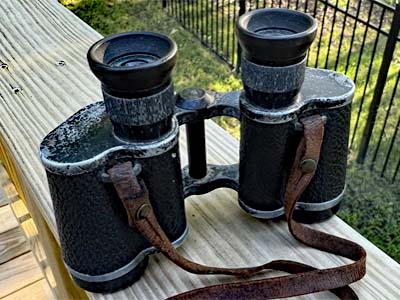
6×30 military service binoculars, with Strichplatte (graduated range finding scale) in right lens, production serial number, 1490635, light construction, made of aluminum alloy, black “Vulkanite” schwarzes Kunstleder (black synthetic leather) Körperbedeckung (body covering), aluminum alloy fittings.
Manufactured about September 1929 by Carl Zeiss, NEDINSCO, ‘s Gravenhage (The Hague), Netherlands for domestic and overseas sales.
Left prism cover marked in white with “Systeem” (System) over “NEDINSCO” (Nederlandse Instrumenten Compagnie, Netherlands Instruments Company), then “CARL ZEISS” / “JENA” trademark logo, then ‘s Gravenhage.
Right prism cover marked in white with “SILVAMAR” / “6×30” logo.
Production serial number, “1490635”, marked in white on bridge spindle front button, was produced about September 1929, within the serial number sequence of the original Carl Zeiss production serial number series established in 1894.
Carl Zeiss NEDINSCO domestic and overseas sales
6×30 SILVAMAR, September 1931, 1578357, ‘s Gravenhage (The Hague), Netherlands
6×30 military service binoculars, with Strichplatte (graduated range finding scale) in right lens, production serial number, 1578357 (front and rear spindle buttons reversed), light construction, made of aluminum alloy, black “Vulkanite” schwarzes Kunstleder (black synthetic leather) Körperbedeckung (body covering), brass fittings.
Manufactured about October 1931 by Carl Zeiss, NEDINSCO, ‘s Gravenhage (The Hague), Netherlands for domestic and overseas sales.
Left prism cover marked in white with “Systeem” (System) over “NEDINSCO” (Nederlandse Instrumenten Compagnie, Netherlands Instruments Company), then “CARL ZEISS” / “JENA” trademark logo, then ‘s Gravenhage, over production serial number “1578357”.
Right prism cover marked in white with “SILVAMAR” / “6×30” logo, above “1/2400” in lower right corner.
This Carl Zeiss 6×30 serial number, 1578357, was produced about September 1931, within the serial number sequence of the original Carl Zeiss production serial number series established in 1894.
Carl Zeiss NEDINSCO domestic and overseas sales
6×30 SILVAMAR, September 1931, 1578916, ‘s Gravenhage (The Hague), Netherlands
6×30 military service binoculars, with Strichplatte (graduated range finding scale) in right lens, production serial number, 1578916, light construction, made of aluminum alloy, black “Vulkanite” schwarzes Kunstleder (black synthetic leather) Körperbedeckung (body covering), brass fittings.
Manufactured about September 1931 by Carl Zeiss, NEDINSCO, ‘s Gravenhage (The Hague), Netherlands for domestic and overseas sales.
Left prism cover marked in white with “Systeem” (System) over “NEDINSCO” (Nederlandse Instrumenten Compagnie, Netherlands Instruments Company), then CARL ZEISS / JENA trademark logo, then ‘s Gravenhage, over production serial number “1578916”.
Right prism cover marked in white with “SILVAMAR” / “6×30” logo, above “1/2400” in lower right corner.
This Carl Zeiss 6×30 serial number, 1578916, was produced about September 1931, within the serial number sequence of the original Carl Zeiss production serial number series established in 1894.
Carl Zeiss NEDINSCO Kingdom of Sweden contract
6×30 Dienstglas, December 1931, 1585734, Ksp:2854g, ‘s Gravenhage (The Hague), Netherlands
Kingdom of Sweden 6×30 military service binoculars, with Strichplatte (graduated range finding scale) in right lens, production serial number, 1585734, light construction, made of aluminum alloy, black “Vulkanite” schwarzes Kunstleder (black synthetic leather) Körperbedeckung (body covering), aluminum alloy fittings.
Manufactured about December 1931 by Carl Zeiss, NEDINSCO, ‘s Gravenhage (The Hague), Netherlands for the armed forces of the Kingdom of Sweden.
Left prism cover marked in white with “Systeem” (System) over “NEDINSCO” (Nederlandse Instrumenten Compagnie, Netherlands Instruments Company), then “CARL ZEISS” / “JENA” trademark logo, then ‘s Gravenhage, over production serial number “1585734”.
Right prism cover marked in white with Kingdom of Sweden crown, over “6×30”, over “Ksp:2854g” (Kingdom of Sweden armed forces property number).
This Carl Zeiss 6×30 serial number, 1585734, was produced about December 1931, within the serial number sequence of the original Carl Zeiss production serial number series established in 1894.
Carl Zeiss NEDINSCO domestic and overseas sales
6×30 Silvamar, March 1932, 1591156, Venlo, Netherlands
6×30 military service binoculars, with Strichplatte (graduated range finding scale) in right lens, production serial number, 1591156, light construction, made of aluminum alloy, black “Vulkanite” schwarzes Kunstleder (black synthetic leather) Körperbedeckung (body covering), brass fittings.
Manufactured about March 1932 by Carl Zeiss, NEDINSCO, Venlo, Netherlands.
Left prism cover marked in white with “Systeem” (System) over “NEDINSCO” (Nederlandse Instrumenten Compagnie, Netherlands Instruments Company), then “CARL ZEISS / JENA” trademark logo, then “Venlo”.
Right prism cover marked in white with “SILVAMAR” / “6×30” logo.
Production serial number, “1591156”, marked in white on bridge spindle front button, was produced about March 1932, within the serial number sequence of the original Carl Zeiss production serial number series established in 1894.
Carl Zeiss NEDINSCO domestic and overseas sales
6×30 Silvamar, March 1932, 1591xxx, Venlo, Netherlands
6×30 military service binoculars, with Strichplatte (graduated range finding scale) in right lens, production serial number, 1591xxx (last three numbers unreadable), light construction, made of aluminum alloy, black “Vulkanite” schwarzes Kunstleder (black synthetic leather) Körperbedeckung (body covering), aluminum alloy prism and objective covers, brass objective lens rings.
Manufactured about March 1932 by Carl Zeiss, NEDINSCO, Venlo, Netherlands.
Left prism cover marked in white with “Systeem” (System) over “NEDINSCO” (Nederlandse Instrumenten Compagnie, Netherlands Instruments Company), then “CARL ZEISS” / “JENA” trademark logo, then “Venlo”.
Right prism cover marked in white with “SILVAMAR” / “6×30” logo.
Production serial number, “1591xxx”, marked in white on bridge spindle front button, was produced about March 1932, within the serial number sequence of the original Carl Zeiss production serial number series established in 1894.
Carl Zeiss, Jena domestic and overseas sales
6×30 Silvamar, December 1937, 1815342, Jena, Thuringia
6×30 military service binoculars, with Strichplatte (graduated range finding scale) in right lens, production serial number, 1815342, light construction, made of aluminum alloy, black “Vulkanite” schwarzes Kunstleder (black synthetic leather) Körperbedeckung (body covering), aluminum alloy prism and objective covers, brass objective lens rings.
Manufactured about December 1937 by Carl Zeiss, Jena, Thuringia.
Left prism cover marked in white with “CARL ZEISS” / “JENA” trademark logo.
Right prism cover marked in white with “SILVAMAR” / “6×30” logo.
Production serial number, “1815342”, marked in white on bridge spindle front button, was produced about December 1937, within the serial number sequence of the original Carl Zeiss production serial number series established in 1894.
Carl Zeiss, Jena domestic and overseas sales
6×30 Silvamar, March 1940, 1969934, Jena, Thuringia
6×30 civilian binoculars, production serial number, 1969934, light construction, made of aluminum alloy, black “Vulkanite” schwarzes Kunstleder (black synthetic leather, hard rubber) Körperbedeckung (body covering), aluminum alloy prism and objective covers, brass objective lens rings.
Manufactured about March 1940 by Carl Zeiss, Jena, Thuringia.
Left prism cover marked in white with “CARL ZEISS” / “JENA” trademark logo.
Right prism cover marked in white with “SILVAMAR” / “6×30” logo.
Production serial number, “1969934”, marked in white on bridge spindle front button, was produced about March 1940, within the serial number sequence of the original Carl Zeiss production serial number series established in 1894.
Carl Zeiss, Jena Dienstglas military service binoculars
6×30 Silvamar, July 1940, 2000045, Jena, Thuringia
6×30 Dienstglas (Serviceglass) military service binoculars, production serial number, 2000045, light construction, made of aluminum alloy, black “Vulkanite” schwarzes Kunstleder (black synthetic leather, hard rubber) Körperbedeckung (body covering), brass prism and objective covers, brass objective lens rings.
Manufactured about July 1940 by Carl Zeiss, Jena, Thuringia.
Left prism cover marked in white with “CARL ZEISS” / “JENA” trademark logo.
Right prism cover marked in white with “Dienstglas” over “6×30” over “2000045” (production serial number), over “H/6400” (graduated range finding scale).
Production serial number, “2000045”, was produced about July 1940, within the serial number sequence of the original Carl Zeiss production serial number series established in 1894.
The H/6400 designation, marked in white on the right prism cover of early war German military service binoculars, refers to the Strichplatte (graduated range finding scale) in the right lens, used for estimating distance.
During the Second World War, the most commonly used German military service binoculars were the Carl Zeiss 6×30 Silvamar with Strichplatte (graduated range finding scale).
Prior to 1941, German military service binoculars were marked with full manufacturer logos, and had black “Vulkanite” schwarzes Kunstleder (black synthetic leather, hard rubber) Körperbedeckung (body covering), brass prism and objective covers, and brass objective lens rings.
As the war continued from 1941 to 1945, manufacturer names were replaced by three-letter codes to hide the origin of equipment production from Allied bombing. Dienstglas body finish was changed to a textured black sand finish, and later to Sandfarben (tan) paint. The tan finish was a general wartime production change for all painted equipment.
Early in the Second World War, a black Rauhlack (rough lacquer) body covering called schwarz „Reis“ Körperbedeckung (black “rice” body covering) also became a common Dienstglas body finish.
This new Dienstglas body covering began to replace the “Vulkanite” (black synthetic leather, hard plastic) body covering material on the housings of German field glasses.
The particular consistency of this black „Reis“ (“rice”) Rauhlack (rough lacquer) body covering was achieved by mixing crushed rice or finely granulated cork meal with black lacquer paint.
This black „Reis“ (“rice”) Rauhlack (rough lacquer) body covering became the most common Dienstglas body covering as the war dragged on through 1942 and 1943.
Carl Zeiss Kingdom of Sweden contract
6×30 Silvamar, September 1941, 2100xx0, Nr. 6540, 1942, Jena, Thuringia, Germany
Kingdom of Sweden 6×30 military service binoculars, with Strichplatte (graduated range finding scale) in right lens, production serial number, 2100xx0 (partially unreadable), light construction, made of aluminum alloy, schwarz „Reis“ Rauhlack Körperbedeckung (black “rice” rough lacquer body covering), aluminum alloy fittings.
Manufactured about September 1941 by Carl Zeiss, Jena, Thuringia, Germany for the armed forces of the Kingdom of Sweden.
Left prism cover marked in white with “CARL ZEISS” / “JENA” trademark logo. Right prism cover marked in white with “SILVAMAR / 6×30” logo.
Left front prism cover marked in white with “6×30”, over Kingdom of Sweden crown, over “Nr. 6540” (Kingdom of Sweden armed forces property number), over “1942” (Kingdom of Sweden armed forces property year of acceptance).
This Carl Zeiss 6×30 serial number, 2100xx0, was produced about September 1941, within the serial number sequence of the original Carl Zeiss production serial number series established in 1894.
Carl Zeiss Kingdom of Sweden contract
6×30 Silvamar, estimated manufacture October 1942, 217xxxx, Nr.1115, 1942, Jena, Thuringia, Germany
Kingdom of Sweden 6×30 military service binoculars, with Strichplatte (graduated range finding scale) in right lens, production serial number not visible (painted over with black paint), light construction, made of aluminum alloy, schwarz „Reis“ Rauhlack Körperbedeckung (black “rice” rough lacquer body covering), aluminum alloy fittings.
Estimated October 1942 date of manufacture by Carl Zeiss, Jena, Thuringia, Germany for the armed forces of the Kingdom of Sweden.
Left prism cover marked in white with “CARL ZEISS / JENA” trademark logo. Right prism cover marked in white with “SILVAMAR / 6×30” logo.
Left front prism cover marked in white with “6×30”, over Kingdom of Sweden crown, over “Nr. 1115” (Kingdom of Sweden armed forces property number), over “1942” (Kingdom of Sweden armed forces property year of acceptance).
This Carl Zeiss 6×30 serial number is unknown, estimated to be 217xxxx (about October 1942), within the serial number sequence of the original Carl Zeiss production serial number series established in 1894.
Carl Zeiss Kingdom of Sweden contract
6×30 Silvamar, November 1942, 2175433, Nr. 1833, 1942, Jena, Thuringia, Germany
Kingdom of Sweden 6×30 military service binoculars, with Strichplatte (graduated range finding scale) in right lens, production serial number, 2175433, light construction, made of aluminum alloy, schwarz „Reis“ Rauhlack Körperbedeckung (black “rice” rough lacquer body covering), aluminum alloy fittings.
Manufactured about November 1942 by Carl Zeiss, Jena, Thuringia, Germany for the armed forces of the Kingdom of Sweden.
Left prism cover marked in white with “CARL ZEISS / JENA” trademark logo. Right prism cover marked in white with “SILVAMAR / 6×30” logo.
Left front prism cover marked in white with “6×30”, over Kingdom of Sweden crown, over “Nr. 1833” (Kingdom of Sweden armed forces property number), over “1942” (Kingdom of Sweden armed forces property year of acceptance).
This Carl Zeiss 6×30 serial number, 2175433, was produced about November 1942, within the serial number sequence of the original Carl Zeiss production serial number series established in 1894.
Carl Zeiss Kingdom of Sweden contract
6×30 Silvamar, December 1942, 2179756, Nr. 4906, 1942, Jena, Thuringia, Germany
Kingdom of Sweden 6×30 military service binoculars, with Strichplatte (graduated range finding scale) in right lens, production serial number, 2179756, light construction, made of aluminum alloy, schwarz „Reis“ Rauhlack Körperbedeckung (black “rice” rough lacquer body covering), aluminum alloy fittings.
Manufactured about December 1942 by Carl Zeiss, Jena, Thuringia, Germany for the armed forces of the Kingdom of Sweden.
Left prism cover marked in white with “CARL ZEISS / JENA” trademark logo. Right prism cover marked in white with “SILVAMAR / 6×30” logo.
Left front prism cover marked in white with “6×30”, over Kingdom of Sweden crown, over “Nr. 4906” (Kingdom of Sweden armed forces property number), over “1942” (Kingdom of Sweden armed forces property year of acceptance).
This Carl Zeiss 6×30 serial number, 2179756, was produced about December 1942, within the serial number sequence of the original Carl Zeiss production serial number series established in 1894.
8×30 Production Serial Numbers
8×40 Production Serial Numbers
Carl Zeiss NEDINSCO
8×30 Deltrentis, June 1927, 1368832, ‘s Gravenhage (The Hague), Netherlands
8×30 military service binoculars, with Strichplatte (graduated range finding scale) in right lens, production serial number, 1368832, light construction, made of aluminum alloy, black “Vulkanite” schwarzes Kunstleder (black synthetic leather) Körperbedeckung (body covering), aluminum alloy prism and objective covers, brass objective lens rings.
Manufactured in June 1927 by Carl Zeiss, ‘s Gravenhage (The Hague), Netherlands.
Left prism cover marked in white with “NEDINSCO” / ‘sGravenhage / “Systeem” / “CARL ZEISS / JENA” trademark logo. Right prism cover marked in white with “DELTRENTIS” / 1368832″ logo over “8×30”.
This Carl Zeiss 8×30 serial number, 1368832, was produced in June 1927, within the serial number sequence of the original Carl Zeiss production serial number series established in 1894.
Carl Zeiss Swiss Confederation contract
8×30 Deltrentis, 1931, unknown serial number, ‘s Gravenhage (The Hague), Netherlands
8×30 military service binoculars, with Strichplatte (graduated range finding scale) in right lens, production serial number, unknown, light construction, made of aluminum alloy, black “Vulkanite” schwarzes Kunstleder (black synthetic leather) Körperbedeckung (body covering), aluminum alloy prism and objective covers, brass objective lens rings.
Manufactured in 1931 by Carl Zeiss, NEDINSCO, ‘s Gravenhage (The Hague), Netherlands for the armed forces of the Swiss Confederation.
Left prism cover marked in white with “NEDINSCO” / ‘sGravenhage / “Systeem” / “CARL ZEISS / JENA” trademark logo, and Swiss cross, over 1931, over 8×30. Right prism cover marked in white with Swiss cross over “Armee-Modell” over №2398″ (Swiss Confederation armed forces property number).
This Carl Zeiss 8×30 serial number, unknown, was produced in 1931, within the serial number sequence of the original Carl Zeiss production serial number series established in 1894.
Carl Zeiss, Jena domestic and overseas sales
6×30 Silvamar, December 1949, 2426486, Jena, Thuringia
6×30 civilian binoculars, production serial number, 2426486, light construction, made of aluminum alloy, black “Vulkanite” schwarzes Kunstleder (black synthetic leather, hard rubber) Körperbedeckung (body covering), aluminum alloy prism and objective covers, brass objective lens rings.
Manufactured about December 1949 by Carl Zeiss, Jena, Thuringia.
Left prism cover marked in white with “CARL ZEISS” / “JENA” trademark logo.
Right prism cover marked in white with “SILVAMAR” / “6×30” logo.
Production serial number, “2426486”, marked in white on bridge spindle front button, was produced about December 1949, slightly beyond the the serial number sequence of the original Carl Zeiss production serial number series established in 1894.
This serial number, 2426486, is actually 2,206 serial numbers beyond, 2424280, the last reported serial number of the final production month of December 1949 for Carl Zeiss, Jena. According to available records, Carl Zeiss, Jena, discontinued all production at Jena in December 1949 with production serial number 2424280.
Treaty of Versailles Military Restrictions
The Treaty of Versailles was a peace treaty signed on June 28, 1919 that ended the war between Germany and most of the Allied Powers. It was signed in the Palace of Versailles, exactly five years after the assassination of Archduke Franz Ferdinand, which led to the war.
The treaty required Germany to disarm, make territorial concessions, extradite alleged war criminals, agree to Kaiser Wilhelm being put on trial, recognize the independence of states whose territory had previously been part of the German Empire, and pay reparations to the Entente powers.
The treaty was comprehensive and complex in the restrictions imposed upon the post-war German armed forces, the Reichswehr. The provisions were intended to make the Reichswehr incapable of offensive action and to encourage international disarmament.
German officials conspired systematically to evade the clauses of the treaty, by failing to meet disarmament deadlines, refusing Allied officials access to military facilities, and maintaining and hiding weapons production.
The Treaty of Versailles prohibited German companies from producing war materials. The treaty did not ban German companies from producing war materials outside of Germany, so companies moved, or opened new companies, in the Netherlands, Switzerland, and Sweden. In 1921, German troops were sent to Sweden to test weapons.
The Treaty of Versailles forced Carl Zeiss to relocate a significant portion of its military production to the Netherlands and Sweden. This influx of equipment and expertise brought new technologies and innovations to the country, influencing the development of Nedinsco.
The 1919 Treaty of Versailles that ended the First World War forced Carl Zeiss Jena to significantly reduce its military production in Germany. To circumvent this restriction, thousands of boxes of equipment and storage were illegally transported from Germany to the Netherlands and Sweden in 1919 and 1920.
In early 1921, the German optical manufacturing firm, Carl Zeiss of Jena, Thuringia, Germany, created a new company, Nedinsco (Nederlandse Instrumenten Compagnie), to produce cameras, binoculars, rangefinders, microscopes, periscopes, and similar optical instruments in the Netherlands.
Initially, the Netherlands Instruments Company (Nedinsco) set up its headquarters in an old disused chocolate factory in Flushing, Netherlands. Two years later, the company moved to a new location in Venlo, Netherlands, and constructed a new factory.
The architect, Hans Schlag, was commissioned for the design of the new Nedinsco factory. He and his design team built a special tower that was used to align optical instruments and to calibrate the larger measuring distances. This was done by adjusting the instruments to the many church towers in Venlo.
The tower, built in the Bauhaus style, is a beautiful national historical monument in the heart of Venlo.
As a subsidiary of Carl Zeiss Jena, Nedinsco inherited the German firm’s expertise in optical technology. This allowed Nedinsco to produce high-quality military optical equipment, including military service binoculars, telescopes, and other precision instruments.
Nedinsco’s early production focused on military optics, with exports to countries such as Switzerland and Sweden. The company’s products were well respected for their exceptional quality, and the company quickly gained a reputation as a reliable supplier of optical equipment.
Nedinsco’s was a well known subsidiary of Carl Zeiss Jena, located in Venlo, Netherlands, producing high-quality military optical equipment for export.
In the 1930s, Nedinsco grew into a strong economic company with a beneficial effect on the regional Dutch economy. During the Second World War, Nedinsco manufactured optical equipment for the German war effort.
In 1944 , an aircraft bomb, intended for the nearby city bridge over the Maas River, destroyed the factory building. Only the tower survived the bombardment.
After the war, Nedinsco was confiscated by the Dutch government and, after a period of temporary management, was sold to the Arnhem entrepreneur G. Beusker, who rebuilt the factory. In 1953, it became an independent company.
Today, Nedinsco is a supplier of systems and modules for the semiconductor industry. The company manufactures diagnostic systems, and products for the defense industry. Nedinsco is a leader in the manufacture of optical, mechanical, and electronic technologies for safety and security.
————————————————————————————————–
The 6×24 “Sportur” was launched by Carl Zeiss / Jena in 1936, the year of the IV Winter Olympic Games (IV Olympische Winterspiele 1936) in Garmisch-Partenkirchen, Bavaria, Germany (February 6-16, 1936), and the XI Summer Olympic Games (XI Olympische Sommerspiele 1936) in Berlin, Germany (August 1-16, 1936), officially known as the Winter Games of the IV Olympiad and the Summer Games of the XI Olympiad.
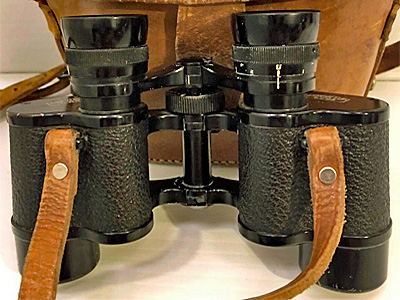
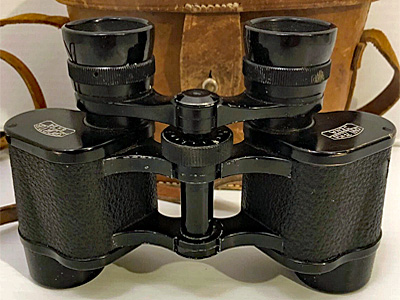
The 6×24 “Sportur” continued in production until 1943. Its outstanding feature was its very light weight, only 330 grams – 11.64 ounces (avoirdupois),10.61 ounces (troy) – making it the ideal companion for watchers of sporting events, and walkers and hikers to whom it was actively marketed. Key to its light weight was the use of a newly developed alloy of magnesium and aluminum – “Elektron” – which is unusually light, about 36% lighter than aluminum alloy. Magnesium’s relatively low density makes its alloy variants suitable for use in auto racing and aerospace engineering. In 1935, the Carl Zeiss company of Jena, Germany began using metal housings made of Elekton to manufacture binoculars.
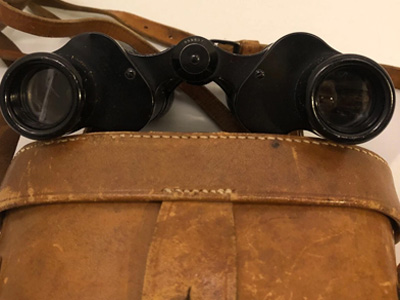
The 6×24 “Sportur” is not very common these days. This one, serial number 1758242 (October 1936), is still virtually in new condition, with optics, center focus, and right diopter working perfectly.
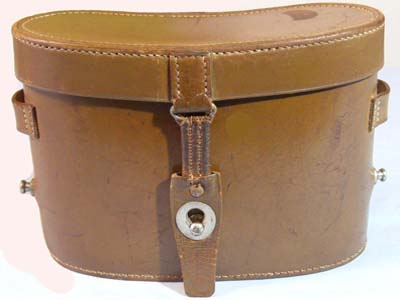
In spite of being more than 80 years old, the paint is in excellent condition, with the lettering still crisp and white. This 6×24 “Sportur” may be one of the better remaining examples outside the Zeiss museum in Jena. It was sold in Britain, and has an English brown leather case.
6 x 24| TELEXEM |120 |1912-1935| 550| SUCCESSOR TO 6×21 TELEXEM, 1936 SPORTUR IS LIGHT WEIGHT METAL VERSION
6 x 24| SPORTUR |150 |1936-1943| 330| LIGHT WEIGHT METAL SUCCESSOR TO TELEXEM
Elektron (alloy)
Elektron is the registered trademark of a wide range of magnesium alloys manufactured by the British company, Magnesium Elektron Ltd (MEL, or the Mag).
There are about 100 different alloys in the Elektron range, containing from 0% to 9.5% of some of the following elements in varying proportions: aluminum (Al) (< 9.5%), yttrium (Y) (5.25%), neodymium (Nd) (2.7%), silver (Ag) (2.5%), gadolinium (Gd) (1.3%), zinc (Zn) (0.9%), zirconium (Zr) (0.6%), manganese (Mn) (0.5%) and other rare-earth metals.
Varying amounts of alloying elements (up to 9.5%) added to the magnesium result in changes to mechanical properties such as increased tensile strength, creep resistance, thermal stability, and corrosion resistance. Elektron is unusually light and has a specific gravity of about 1.8 compared with the 2.8 of aluminium alloy. Magnesium’s relatively low density makes its alloy variants suitable for use in auto racing and aerospace engineering applications.
History
Elektron or Elektronmetall was first developed in 1908 by Gustav Pistor and Wilhelm Moschel at the Bitterfeld works of Chemische Fabrik Griesheim-Elektron (CFGE or CFG), whose HQ was in Griesheim am Main, Germany.
The composition of the initial Elektron alloy was approximately Mg 90%, Al 9%, other 1%. At its pavilion at the International Aviation Fair (Internationale Luftschiffahrt-Ausstellung, ILA) in Frankfurt am Main in 1909, CFG exhibited an Adler 75HP engine with a cast magnesium alloy crankcase. Also exhibiting at the 1909 Frankfurt Air Exhibition was August Euler (1868–1957) – owner of German pilot’s licence No. 1 – who manufactured Voisin biplanes under licence in Griesheim am Main. His Voisins with Adler 50 hp engines flew in October 1909.
Chemische Fabrik Griesheim-Elektron (CFGE or CFG) joined the newly created IG Farben as an associate company in 1916. During the allied occupation after World War I, Major Charles J. P. Ball, DSO, MC, of the Royal Horse Artillery was stationed in Germany. He later joined F. A. Hughes and Co. Ltd., which began manufacturing elektron in the UK under licence from IG Farben from around 1923.
CFG merged fully with the IG Farben conglomerate in 1925 along with Versuchsbau Hellmuth Hirth (a copper alloy manufacturer), and another company, Elektronmetall Bad Cannstatt Stuttgart, was formed. In 1935 IG Farben, ICI and F. A. Hughes and Co. (22% shares) founded Magnesium Elektron Ltd. of Clifton, Greater Manchester. The company is still manufacturing alloys today.
Uses
Elektron has been used in aircraft, Zeppelins, and motor racing applications. In 1924, magnesium alloys (AZ; 2,5–3,0% Al; 3,0–4,0% Zn) were used in automobile pistons diecast by Elektronmetall Bad Cannstatt, another IG Farben company formed out of Versuchsbau Hellmuth Hirth.
Siemens-Halske used elektron casings for their Hellschreiber military teleprinter.
Incendiary bombs using elektron were developed towards the end of the World War I by both Germany (the B-1E Elektronbrandbombe or Stabbrandbombe) and the UK. Although neither side used this type of bomb operationally during the conflict, Erich Ludendorff mentions in his memoirs a plan to bomb Paris with a new type of incendiary bomb with the intention of overwhelming the city’s fire services. This planned raid was also reported in the Paris newspaper, Le Figaro, on December 12, 1918. The lightness of elektron meant that a large aircraft like the Zeppelin-Staaken R-type bomber could carry hundreds of bomblets.
The British and German incendiary bombs, used extensively during World War II, weighed about 1 kg, and consisted of an outer casing made of elektron alloy, filled with thermite pellets, and fitted with a fuse. The fuse ignited the thermite, which in turn ignited the magnesium casing that burned with intense heat for about 15 minutes. Trying to extinguish the fire with water actually intensified the fire. The burning magnesium bomb casing could not be extinguished, and burned at such a high temperature that it could penetrate armor plate.
The metal called “Elektron” was first developed in 1908 by Gustav Pistor and Wilhelm Moschel at the Bitterfeld works of Chemische Fabrik Griesheim-Elektron (CFGE or CFG), whose HQ was in Griesheim am Main, Germany.
Elektron, also known as Elektronmetall, was first mass produced under license in 1935 by the British company, Magnesium Elektron Ltd (MEL, or the Mag), a joint venture formed between Imperial Chemical Industries (ICI), one of the largest chemical companies in Britain (48%), the German conglomerate I.G. Farbenindustrie AG, at one time, the largest chemical and pharmaceutical company in the world (30%), and F.A. Hughes & Co (22%).
In 1936, the company opened a factory northwest of Manchester in Britain to produce magnesium metal. During World War II, the company produced thousands of tons of magnesium metal alloys for the British aircraft industry. During World War II, ICI was involved with the United Kingdom’s nuclear weapons program code named Tube Alloys.
I.G. Farbenindustrie AG become a donor to the Nazi Party in the 1930s, and was a huge government contractor in Nazi Germany. IG Farben produced synthetic dyes, nitrile rubber, polyurethane, Prontosil, and Resochin, among many other products. IG Farbin made the poison gas Zyklon B that was used to murder prisoners at Auschwitz concentration camp.The nerve agent Sarin was first discovered by IG Farben. One product crucial to the operations of the Wehrmacht was synthetic fuel, made from lignite using the coal liquefaction process.
After World War II, I.G. Farbenindustrie AG resumed operations, but in 1951 was split into its four largest original constituent companies, Agfa, BASF, Bayer, and Sanofi, which today remain among largest chemical and pharmaceutical companies in the world.
|
|
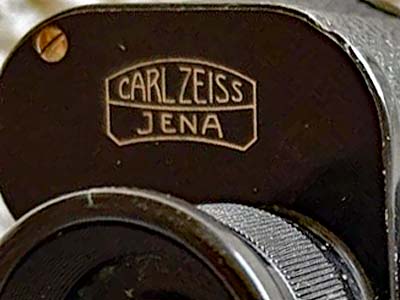
6×30 military service binoculars, with Strichplatte (graduated range finding scale) in right lens, production serial number, 1395401, light construction, made of aluminum alloy, black “Vulkanite” schwarzes Kunstleder (black synthetic leather) Körperbedeckung (body covering), aluminum alloy prism and objective covers, brass objective lens rings. Manufactured about December 1927 by Carl Zeiss, Jena, Thuringia, for domestic and overseas sales. Left prism cover marked in white with “CARL ZEISS” / “JENA” trademark logo. Right prism cover marked in white with “SILVAMAR” / “1395401” logo over “6×30”. This Carl Zeiss 6×30 serial number, 1395401, was produced about December 1927, within the serial number sequence of the original Carl Zeiss production serial number series established in 1894. |


Carl Zeiss NEDINSCO Kingdom of Sweden contract
6×24 Dienstglas, October 1928, 1445122, Nr 147, 1929, ‘s Gravenhage (The Hague), Netherlands
|
|
Kingdom of Sweden 6×24 military service binoculars, with Strichplatte (graduated range finding scale) in right lens, production serial number, 1445122, heavy construction, made of brass, black “Vulkanite” schwarzes Kunstleder (black synthetic leather) Körperbedeckung (body covering), aluminum alloy prism and objective covers, brass objective lens rings. Manufactured about October 1928 by Carl Zeiss, NEDINSCO, ‘s Gravenhage (The Hague), Netherlands, for the armed forces of the Kingdom of Sweden. Left prism cover marked in white with “Systeem” (System) over “NEDINSCO” (Nederlandse Instrumenten Compagnie, Netherlands Instruments Company) / “CARL ZEISS” / “JENA” trademark logo / ‘s Gravenhage, over production serial number “1445122”. Right prism cover marked in white with Kingdom of Sweden crown, over “Nr 147” (Number 147, Kingdom of Sweden armed forces property number), over “1929” (Kingdom of Sweden armed forces property year of acceptance), over “6×24”. Right front objective cover marked in white with “VF 134 A”. Brown leather case marked with “147” over “VF 134 A” on top of case cover. This Carl Zeiss 6×24 serial number, 1445122, was produced about October 1928, within the serial number sequence of the original Carl Zeiss production serial number series established in 1894. |




Carl Zeiss NEDINSCO domestic and overseas sales
6×30 SILVAMAR, September 1929, 1490635, ‘s Gravenhage (The Hague), Netherlands
|
|
6×30 military service binoculars, with Strichplatte (graduated range finding scale) in right lens, production serial number, 1490635, light construction, made of aluminum alloy, black “Vulkanite” schwarzes Kunstleder (black synthetic leather) Körperbedeckung (body covering), aluminum alloy fittings. Manufactured about September 1929 by Carl Zeiss, NEDINSCO, ‘s Gravenhage (The Hague), Netherlands for domestic and overseas sales. Left prism cover marked in white with “Systeem” (System) over “NEDINSCO” (Nederlandse Instrumenten Compagnie, Netherlands Instruments Company), then “CARL ZEISS” / “JENA” trademark logo, then ‘s Gravenhage. Right prism cover marked in white with “SILVAMAR” / “6×30” logo. Production serial number, “1490635”, marked in white on bridge spindle front button, was produced about September 1929, within the serial number sequence of the original Carl Zeiss production serial number series established in 1894. |




Carl Zeiss NEDINSCO domestic and overseas sales
6×30 SILVAMAR, September 1931, 1578357, ‘s Gravenhage (The Hague), Netherlands
|
|
6×30 military service binoculars, with Strichplatte (graduated range finding scale) in right lens, production serial number, 1578357 (front and rear spindle buttons reversed), light construction, made of aluminum alloy, black “Vulkanite” schwarzes Kunstleder (black synthetic leather) Körperbedeckung (body covering), brass fittings. Manufactured about October 1931 by Carl Zeiss, NEDINSCO, ‘s Gravenhage (The Hague), Netherlands for domestic and overseas sales. Left prism cover marked in white with “Systeem” (System) over “NEDINSCO” (Nederlandse Instrumenten Compagnie, Netherlands Instruments Company), then “CARL ZEISS” / “JENA” trademark logo, then ‘s Gravenhage, over production serial number “1578357”. Right prism cover marked in white with “SILVAMAR” / “6×30” logo, above “1/2400” in lower right corner. This Carl Zeiss 6×30 serial number, 1578357, was produced about September 1931, within the serial number sequence of the original Carl Zeiss production serial number series established in 1894. |


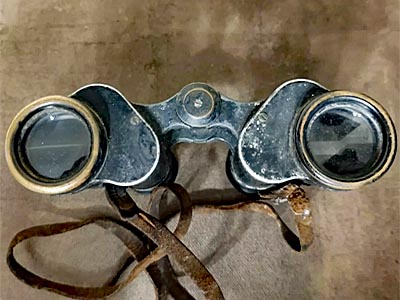


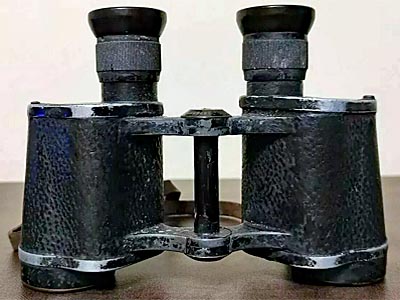
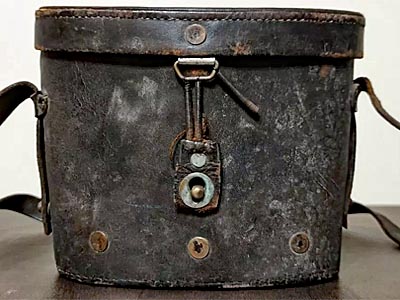


Carl Zeiss NEDINSCO domestic and overseas sales
6×30 SILVAMAR, September 1931, 1578916, ‘s Gravenhage (The Hague), Netherlands
|
|
6×30 military service binoculars, with Strichplatte (graduated range finding scale) in right lens, production serial number, 1578916, light construction, made of aluminum alloy, black “Vulkanite” schwarzes Kunstleder (black synthetic leather) Körperbedeckung (body covering), brass fittings. Manufactured about September 1931 by Carl Zeiss, NEDINSCO, ‘s Gravenhage (The Hague), Netherlands for domestic and overseas sales. Left prism cover marked in white with “Systeem” (System) over “NEDINSCO” (Nederlandse Instrumenten Compagnie, Netherlands Instruments Company), then CARL ZEISS / JENA trademark logo, then ‘s Gravenhage, over production serial number “1578916”. Right prism cover marked in white with “SILVAMAR” / “6×30” logo, above “1/2400” in lower right corner. This Carl Zeiss 6×30 serial number, 1578916, was produced about September 1931, within the serial number sequence of the original Carl Zeiss production serial number series established in 1894. |


Carl Zeiss NEDINSCO Kingdom of Sweden contract
6×30 Dienstglas, December 1931, 1585734, Ksp:2854g, ‘s Gravenhage (The Hague), Netherlands
|
|
Kingdom of Sweden 6×30 military service binoculars, with Strichplatte (graduated range finding scale) in right lens, production serial number, 1585734, light construction, made of aluminum alloy, black “Vulkanite” schwarzes Kunstleder (black synthetic leather) Körperbedeckung (body covering), aluminum alloy fittings. Manufactured about December 1931 by Carl Zeiss, NEDINSCO, ‘s Gravenhage (The Hague), Netherlands for the armed forces of the Kingdom of Sweden. Left prism cover marked in white with “Systeem” (System) over “NEDINSCO” (Nederlandse Instrumenten Compagnie, Netherlands Instruments Company), then “CARL ZEISS” / “JENA” trademark logo, then ‘s Gravenhage, over production serial number “1585734”. Right prism cover marked in white with Kingdom of Sweden crown, over “6×30”, over “Ksp:2854g” (Kingdom of Sweden armed forces property number). This Carl Zeiss 6×30 serial number, 1585734, was produced about December 1931, within the serial number sequence of the original Carl Zeiss production serial number series established in 1894. |


Carl Zeiss NEDINSCO domestic and overseas sales
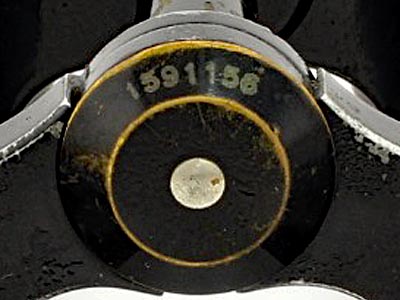
6×30 Silvamar, March 1932, 1591156, Venlo, Netherlands
|
|
6×30 military service binoculars, with Strichplatte (graduated range finding scale) in right lens, production serial number, 1591156, light construction, made of aluminum alloy, black “Vulkanite” schwarzes Kunstleder (black synthetic leather) Körperbedeckung (body covering), brass fittings. Manufactured about March 1932 by Carl Zeiss, NEDINSCO, Venlo, Netherlands. Left prism cover marked in white with “Systeem” (System) over “NEDINSCO” (Nederlandse Instrumenten Compagnie, Netherlands Instruments Company), then “CARL ZEISS / JENA” trademark logo, then “Venlo”. Right prism cover marked in white with “SILVAMAR” / “6×30” logo. Production serial number, “1591156”, marked in white on bridge spindle front button, was produced about March 1932, within the serial number sequence of the original Carl Zeiss production serial number series established in 1894. |



Carl Zeiss NEDINSCO domestic and overseas sales
6×30 Silvamar, March 1932, 1591xxx, Venlo, Netherlands
|
|
6×30 military service binoculars, with Strichplatte (graduated range finding scale) in right lens, production serial number, 1591xxx (last three numbers unreadable), light construction, made of aluminum alloy, black “Vulkanite” schwarzes Kunstleder (black synthetic leather) Körperbedeckung (body covering), aluminum alloy prism and objective covers, brass objective lens rings. Manufactured about March 1932 by Carl Zeiss, NEDINSCO, Venlo, Netherlands. Left prism cover marked in white with “Systeem” (System) over “NEDINSCO” (Nederlandse Instrumenten Compagnie, Netherlands Instruments Company), then “CARL ZEISS” / “JENA” trademark logo, then “Venlo”. Right prism cover marked in white with “SILVAMAR” / “6×30” logo. Production serial number, “1591xxx”, marked in white on bridge spindle front button, was produced about March 1932, within the serial number sequence of the original Carl Zeiss production serial number series established in 1894. |


Carl Zeiss, Jena domestic and overseas sales
6×30 Silvamar, December 1937, 1815342, Jena, Thuringia
|
|
6×30 military service binoculars, with Strichplatte (graduated range finding scale) in right lens, production serial number, 1815342, light construction, made of aluminum alloy, black “Vulkanite” schwarzes Kunstleder (black synthetic leather) Körperbedeckung (body covering), aluminum alloy prism and objective covers, brass objective lens rings. Manufactured about December 1937 by Carl Zeiss, Jena, Thuringia. Left prism cover marked in white with “CARL ZEISS” / “JENA” trademark logo. Right prism cover marked in white with “SILVAMAR” / “6×30” logo. Production serial number, “1815342”, marked in white on bridge spindle front button, was produced about December 1937, within the serial number sequence of the original Carl Zeiss production serial number series established in 1894. |


Carl Zeiss, Jena domestic and overseas sales
6×30 Silvamar, March 1940, 1969934, Jena, Thuringia
|
|
6×30 civilian binoculars, production serial number, 1969934, light construction, made of aluminum alloy, black “Vulkanite” schwarzes Kunstleder (black synthetic leather, hard rubber) Körperbedeckung (body covering), aluminum alloy prism and objective covers, brass objective lens rings. Manufactured about March 1940 by Carl Zeiss, Jena, Thuringia. Left prism cover marked in white with “CARL ZEISS” / “JENA” trademark logo. Right prism cover marked in white with “SILVAMAR” / “6×30” logo. Production serial number, “1969934”, marked in white on bridge spindle front button, was produced about March 1940, within the serial number sequence of the original Carl Zeiss production serial number series established in 1894. |


Carl Zeiss, Jena Dienstglas military service binoculars
6×30 Silvamar, July 1940, 2000045, Jena, Thuringia
|
|
6×30 Dienstglas (Serviceglass) military service binoculars, production serial number, 2000045, light construction, made of aluminum alloy, black “Vulkanite” schwarzes Kunstleder (black synthetic leather, hard rubber) Körperbedeckung (body covering), brass prism and objective covers, brass objective lens rings. Manufactured about July 1940 by Carl Zeiss, Jena, Thuringia. Left prism cover marked in white with “CARL ZEISS” / “JENA” trademark logo. Right prism cover marked in white with “Dienstglas” over “6×30” over “2000045” (production serial number), over “H/6400” (graduated range finding scale). Production serial number, “2000045”, was produced about July 1940, within the serial number sequence of the original Carl Zeiss production serial number series established in 1894. |
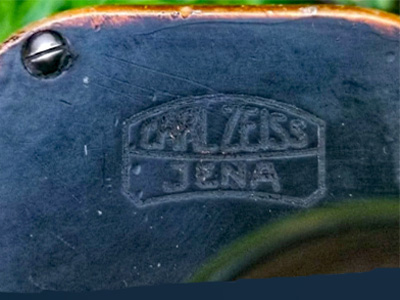
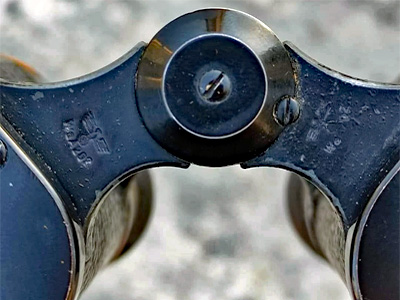
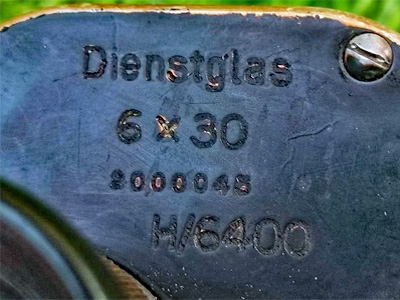
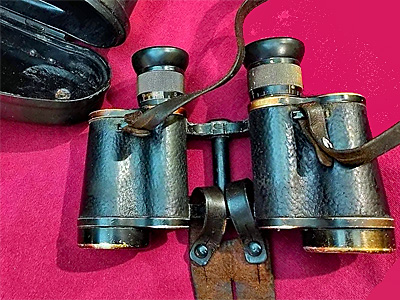
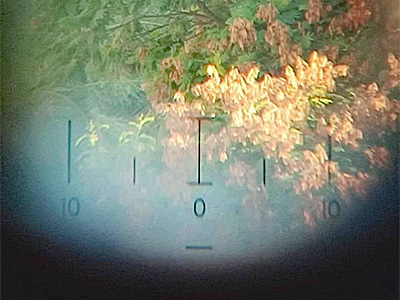
The H/6400 designation, marked in white on the right prism cover of early war German military service binoculars, refers to the Strichplatte (graduated range finding scale) in the right lens, used for estimating distance.
During the Second World War, the most commonly used German military service binoculars were the Carl Zeiss 6×30 Silvamar with Strichplatte (graduated range finding scale).
Prior to 1941, German military service binoculars were marked with full manufacturer logos, and had black “Vulkanite” schwarzes Kunstleder (black synthetic leather, hard rubber) Körperbedeckung (body covering), brass prism and objective covers, and brass objective lens rings.
As the war continued from 1941 to 1945, manufacturer names were replaced by three-letter codes to hide the origin of equipment production from Allied bombing. Dienstglas body finish was changed to a textured black sand finish, and later to Sandfarben (tan) paint. The tan finish was a general wartime production change for all painted equipment.
Early in the Second World War, a black Rauhlack (rough lacquer) body covering called schwarz „Reis“ Körperbedeckung (black “rice” body covering) also became a common Dienstglas body finish.
This new Dienstglas body covering began to replace the “Vulkanite” (black synthetic leather, hard plastic) body covering material on the housings of German field glasses.
The particular consistency of this black „Reis“ (“rice”) Rauhlack (rough lacquer) body covering was achieved by mixing crushed rice or finely granulated cork meal with black lacquer paint.
This black „Reis“ (“rice”) Rauhlack (rough lacquer) body covering became the most common Dienstglas body covering as the war dragged on through 1942 and 1943.
Carl Zeiss Kingdom of Sweden contract
6×30 Silvamar, September 1941, 2100xx0, Nr. 6540, 1942, Jena, Thuringia, Germany
|
|
Kingdom of Sweden 6×30 military service binoculars, with Strichplatte (graduated range finding scale) in right lens, production serial number, 2100xx0 (partially unreadable), light construction, made of aluminum alloy, schwarz „Reis“ Rauhlack Körperbedeckung (black “rice” rough lacquer body covering), aluminum alloy fittings. Manufactured about September 1941 by Carl Zeiss, Jena, Thuringia, Germany for the armed forces of the Kingdom of Sweden. Left prism cover marked in white with “CARL ZEISS” / “JENA” trademark logo. Right prism cover marked in white with “SILVAMAR / 6×30” logo. Left front prism cover marked in white with “6×30”, over Kingdom of Sweden crown, over “Nr. 6540” (Kingdom of Sweden armed forces property number), over “1942” (Kingdom of Sweden armed forces property year of acceptance). This Carl Zeiss 6×30 serial number, 2100xx0, was produced about September 1941, within the serial number sequence of the original Carl Zeiss production serial number series established in 1894. |


Carl Zeiss Kingdom of Sweden contract
6×30 Silvamar, estimated manufacture October 1942, 217xxxx, Nr.1115, 1942, Jena, Thuringia, Germany
|
|
Kingdom of Sweden 6×30 military service binoculars, with Strichplatte (graduated range finding scale) in right lens, production serial number not visible (painted over with black paint), light construction, made of aluminum alloy, schwarz „Reis“ Rauhlack Körperbedeckung (black “rice” rough lacquer body covering), aluminum alloy fittings. Estimated October 1942 date of manufacture by Carl Zeiss, Jena, Thuringia, Germany for the armed forces of the Kingdom of Sweden. Left prism cover marked in white with “CARL ZEISS / JENA” trademark logo. Right prism cover marked in white with “SILVAMAR / 6×30” logo. Left front prism cover marked in white with “6×30”, over Kingdom of Sweden crown, over “Nr. 1115” (Kingdom of Sweden armed forces property number), over “1942” (Kingdom of Sweden armed forces property year of acceptance). This Carl Zeiss 6×30 serial number is unknown, estimated to be 217xxxx (about October 1942), within the serial number sequence of the original Carl Zeiss production serial number series established in 1894. |


Carl Zeiss Kingdom of Sweden contract
6×30 Silvamar, November 1942, 2175433, Nr. 1833, 1942, Jena, Thuringia, Germany
|
|
Kingdom of Sweden 6×30 military service binoculars, with Strichplatte (graduated range finding scale) in right lens, production serial number, 2175433, light construction, made of aluminum alloy, schwarz „Reis“ Rauhlack Körperbedeckung (black “rice” rough lacquer body covering), aluminum alloy fittings. Manufactured about November 1942 by Carl Zeiss, Jena, Thuringia, Germany for the armed forces of the Kingdom of Sweden. Left prism cover marked in white with “CARL ZEISS / JENA” trademark logo. Right prism cover marked in white with “SILVAMAR / 6×30” logo. Left front prism cover marked in white with “6×30”, over Kingdom of Sweden crown, over “Nr. 1833” (Kingdom of Sweden armed forces property number), over “1942” (Kingdom of Sweden armed forces property year of acceptance). This Carl Zeiss 6×30 serial number, 2175433, was produced about November 1942, within the serial number sequence of the original Carl Zeiss production serial number series established in 1894. |


Carl Zeiss Kingdom of Sweden contract
6×30 Silvamar, December 1942, 2179756, Nr. 4906, 1942, Jena, Thuringia, Germany
|
|
Kingdom of Sweden 6×30 military service binoculars, with Strichplatte (graduated range finding scale) in right lens, production serial number, 2179756, light construction, made of aluminum alloy, schwarz „Reis“ Rauhlack Körperbedeckung (black “rice” rough lacquer body covering), aluminum alloy fittings. Manufactured about December 1942 by Carl Zeiss, Jena, Thuringia, Germany for the armed forces of the Kingdom of Sweden. Left prism cover marked in white with “CARL ZEISS / JENA” trademark logo. Right prism cover marked in white with “SILVAMAR / 6×30” logo. Left front prism cover marked in white with “6×30”, over Kingdom of Sweden crown, over “Nr. 4906” (Kingdom of Sweden armed forces property number), over “1942” (Kingdom of Sweden armed forces property year of acceptance). This Carl Zeiss 6×30 serial number, 2179756, was produced about December 1942, within the serial number sequence of the original Carl Zeiss production serial number series established in 1894. |


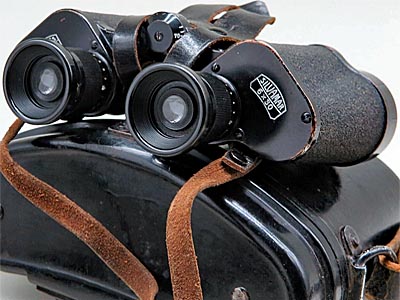


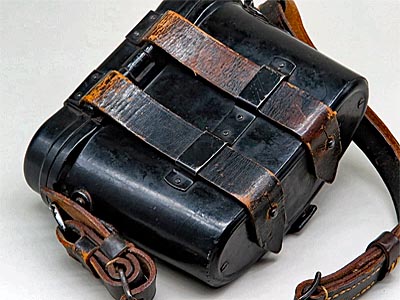
8×30 Production Serial Numbers
8×40 Production Serial Numbers
Carl Zeiss NEDINSCO
8×30 Deltrentis, June 1927, 1368832, ‘s Gravenhage (The Hague), Netherlands
|
|
8×30 military service binoculars, with Strichplatte (graduated range finding scale) in right lens, production serial number, 1368832, light construction, made of aluminum alloy, black “Vulkanite” schwarzes Kunstleder (black synthetic leather) Körperbedeckung (body covering), aluminum alloy prism and objective covers, brass objective lens rings. Manufactured in June 1927 by Carl Zeiss, ‘s Gravenhage (The Hague), Netherlands. Left prism cover marked in white with “NEDINSCO” / ‘sGravenhage / “Systeem” / “CARL ZEISS / JENA” trademark logo. Right prism cover marked in white with “DELTRENTIS” / 1368832″ logo over “8×30”. This Carl Zeiss 8×30 serial number, 1368832, was produced in June 1927, within the serial number sequence of the original Carl Zeiss production serial number series established in 1894. |
Carl Zeiss Swiss Confederation contract
8×30 Deltrentis, 1931, unknown serial number, ‘s Gravenhage (The Hague), Netherlands
|
|
8×30 military service binoculars, with Strichplatte (graduated range finding scale) in right lens, production serial number, unknown, light construction, made of aluminum alloy, black “Vulkanite” schwarzes Kunstleder (black synthetic leather) Körperbedeckung (body covering), aluminum alloy prism and objective covers, brass objective lens rings. Manufactured in 1931 by Carl Zeiss, NEDINSCO, ‘s Gravenhage (The Hague), Netherlands for the armed forces of the Swiss Confederation. Left prism cover marked in white with “NEDINSCO” / ‘sGravenhage / “Systeem” / “CARL ZEISS / JENA” trademark logo, and Swiss cross, over 1931, over 8×30. Right prism cover marked in white with Swiss cross over “Armee-Modell” over №2398″ (Swiss Confederation armed forces property number). This Carl Zeiss 8×30 serial number, unknown, was produced in 1931, within the serial number sequence of the original Carl Zeiss production serial number series established in 1894. |


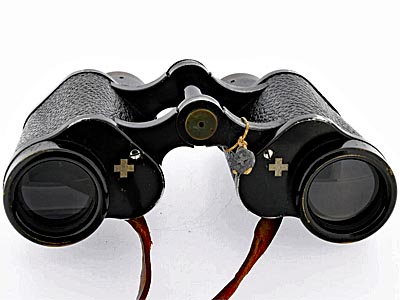


Carl Zeiss, Jena domestic and overseas sales
6×30 Silvamar, December 1949, 2426486, Jena, Thuringia
|
|
6×30 civilian binoculars, production serial number, 2426486, light construction, made of aluminum alloy, black “Vulkanite” schwarzes Kunstleder (black synthetic leather, hard rubber) Körperbedeckung (body covering), aluminum alloy prism and objective covers, brass objective lens rings. Manufactured about December 1949 by Carl Zeiss, Jena, Thuringia. Left prism cover marked in white with “CARL ZEISS” / “JENA” trademark logo. Right prism cover marked in white with “SILVAMAR” / “6×30” logo. Production serial number, “2426486”, marked in white on bridge spindle front button, was produced about December 1949, slightly beyond the the serial number sequence of the original Carl Zeiss production serial number series established in 1894. |
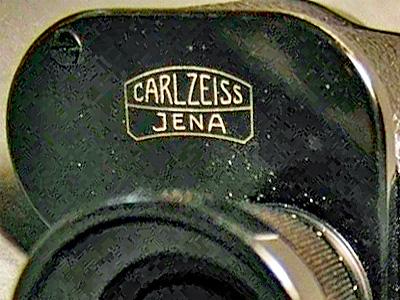
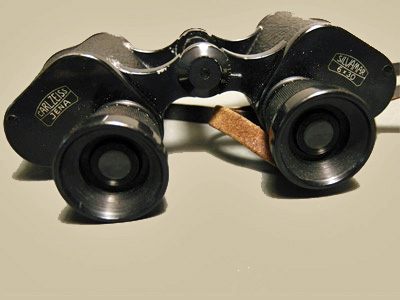
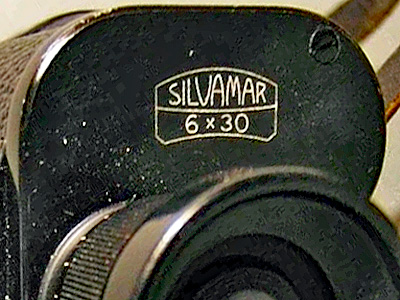
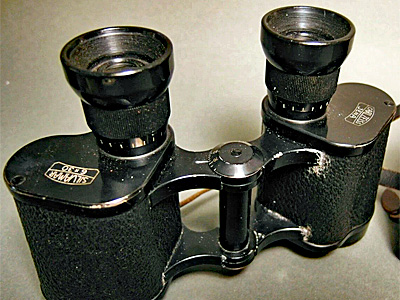
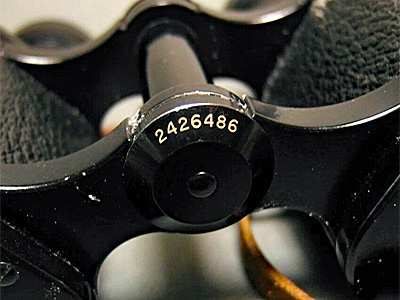
This serial number, 2426486, is actually 2,206 serial numbers beyond, 2424280, the last reported serial number of the final production month of December 1949 for Carl Zeiss, Jena. According to available records, Carl Zeiss, Jena, discontinued all production at Jena in December 1949 with production serial number 2424280.
Treaty of Versailles Military Restrictions
The Treaty of Versailles was a peace treaty signed on June 28, 1919 that ended the war between Germany and most of the Allied Powers. It was signed in the Palace of Versailles, exactly five years after the assassination of Archduke Franz Ferdinand, which led to the war.
The treaty required Germany to disarm, make territorial concessions, extradite alleged war criminals, agree to Kaiser Wilhelm being put on trial, recognize the independence of states whose territory had previously been part of the German Empire, and pay reparations to the Entente powers.
The treaty was comprehensive and complex in the restrictions imposed upon the post-war German armed forces, the Reichswehr. The provisions were intended to make the Reichswehr incapable of offensive action and to encourage international disarmament.
German officials conspired systematically to evade the clauses of the treaty, by failing to meet disarmament deadlines, refusing Allied officials access to military facilities, and maintaining and hiding weapons production.
The Treaty of Versailles prohibited German companies from producing war materials. The treaty did not ban German companies from producing war materials outside of Germany, so companies moved, or opened new companies, in the Netherlands, Switzerland, and Sweden. In 1921, German troops were sent to Sweden to test weapons.
The Treaty of Versailles forced Carl Zeiss to relocate a significant portion of its military production to the Netherlands and Sweden. This influx of equipment and expertise brought new technologies and innovations to the country, influencing the development of Nedinsco.
The 1919 Treaty of Versailles that ended the First World War forced Carl Zeiss Jena to significantly reduce its military production in Germany. To circumvent this restriction, thousands of boxes of equipment and storage were illegally transported from Germany to the Netherlands and Sweden in 1919 and 1920.
In early 1921, the German optical manufacturing firm, Carl Zeiss of Jena, Thuringia, Germany, created a new company, Nedinsco (Nederlandse Instrumenten Compagnie), to produce cameras, binoculars, rangefinders, microscopes, periscopes, and similar optical instruments in the Netherlands.
Initially, the Netherlands Instruments Company (Nedinsco) set up its headquarters in an old disused chocolate factory in Flushing, Netherlands. Two years later, the company moved to a new location in Venlo, Netherlands, and constructed a new factory.
The architect, Hans Schlag, was commissioned for the design of the new Nedinsco factory. He and his design team built a special tower that was used to align optical instruments and to calibrate the larger measuring distances. This was done by adjusting the instruments to the many church towers in Venlo.
The tower, built in the Bauhaus style, is a beautiful national historical monument in the heart of Venlo.
As a subsidiary of Carl Zeiss Jena, Nedinsco inherited the German firm’s expertise in optical technology. This allowed Nedinsco to produce high-quality military optical equipment, including military service binoculars, telescopes, and other precision instruments.
Nedinsco’s early production focused on military optics, with exports to countries such as Switzerland and Sweden. The company’s products were well respected for their exceptional quality, and the company quickly gained a reputation as a reliable supplier of optical equipment.
Nedinsco’s was a well known subsidiary of Carl Zeiss Jena, located in Venlo, Netherlands, producing high-quality military optical equipment for export.
In the 1930s, Nedinsco grew into a strong economic company with a beneficial effect on the regional Dutch economy. During the Second World War, Nedinsco manufactured optical equipment for the German war effort.
In 1944 , an aircraft bomb, intended for the nearby city bridge over the Maas River, destroyed the factory building. Only the tower survived the bombardment.
After the war, Nedinsco was confiscated by the Dutch government and, after a period of temporary management, was sold to the Arnhem entrepreneur G. Beusker, who rebuilt the factory. In 1953, it became an independent company.
Today, Nedinsco is a supplier of systems and modules for the semiconductor industry. The company manufactures diagnostic systems, and products for the defense industry. Nedinsco is a leader in the manufacture of optical, mechanical, and electronic technologies for safety and security.
————————————————————————————————–The 6×24 “Sportur” was launched by Carl Zeiss / Jena in 1936, the year of the IV Winter Olympic Games (IV Olympische Winterspiele 1936) in Garmisch-Partenkirchen, Bavaria, Germany (February 6-16, 1936), and the XI Summer Olympic Games (XI Olympische Sommerspiele 1936) in Berlin, Germany (August 1-16, 1936), officially known as the Winter Games of the IV Olympiad and the Summer Games of the XI Olympiad.
The 6×24 “Sportur” continued in production until 1943. Its outstanding feature was its very light weight, only 330 grams – 11.64 ounces (avoirdupois),10.61 ounces (troy) – making it the ideal companion for watchers of sporting events, and walkers and hikers to whom it was actively marketed. Key to its light weight was the use of a newly developed alloy of magnesium and aluminum – “Elektron” – which is unusually light, about 36% lighter than aluminum alloy. Magnesium’s relatively low density makes its alloy variants suitable for use in auto racing and aerospace engineering. In 1935, the Carl Zeiss company of Jena, Germany began using metal housings made of Elekton to manufacture binoculars.
The 6×24 “Sportur” is not very common these days. This one, serial number 1758242 (October 1936), is still virtually in new condition, with optics, center focus, and right diopter working perfectly.
In spite of being more than 80 years old, the paint is in excellent condition, with the lettering still crisp and white. This 6×24 “Sportur” may be one of the better remaining examples outside the Zeiss museum in Jena. It was sold in Britain, and has an English brown leather case.
6 x 24| TELEXEM |120 |1912-1935| 550| SUCCESSOR TO 6×21 TELEXEM, 1936 SPORTUR IS LIGHT WEIGHT METAL VERSION
6 x 24| SPORTUR |150 |1936-1943| 330| LIGHT WEIGHT METAL SUCCESSOR TO TELEXEM
Elektron (alloy)
Elektron is the registered trademark of a wide range of magnesium alloys manufactured by the British company, Magnesium Elektron Ltd (MEL, or the Mag).
There are about 100 different alloys in the Elektron range, containing from 0% to 9.5% of some of the following elements in varying proportions: aluminum (Al) (< 9.5%), yttrium (Y) (5.25%), neodymium (Nd) (2.7%), silver (Ag) (2.5%), gadolinium (Gd) (1.3%), zinc (Zn) (0.9%), zirconium (Zr) (0.6%), manganese (Mn) (0.5%) and other rare-earth metals.
Varying amounts of alloying elements (up to 9.5%) added to the magnesium result in changes to mechanical properties such as increased tensile strength, creep resistance, thermal stability, and corrosion resistance. Elektron is unusually light and has a specific gravity of about 1.8 compared with the 2.8 of aluminium alloy. Magnesium’s relatively low density makes its alloy variants suitable for use in auto racing and aerospace engineering applications.
History
Elektron or Elektronmetall was first developed in 1908 by Gustav Pistor and Wilhelm Moschel at the Bitterfeld works of Chemische Fabrik Griesheim-Elektron (CFGE or CFG), whose HQ was in Griesheim am Main, Germany.
The composition of the initial Elektron alloy was approximately Mg 90%, Al 9%, other 1%. At its pavilion at the International Aviation Fair (Internationale Luftschiffahrt-Ausstellung, ILA) in Frankfurt am Main in 1909, CFG exhibited an Adler 75HP engine with a cast magnesium alloy crankcase. Also exhibiting at the 1909 Frankfurt Air Exhibition was August Euler (1868–1957) – owner of German pilot’s licence No. 1 – who manufactured Voisin biplanes under licence in Griesheim am Main. His Voisins with Adler 50 hp engines flew in October 1909.
Chemische Fabrik Griesheim-Elektron (CFGE or CFG) joined the newly created IG Farben as an associate company in 1916. During the allied occupation after World War I, Major Charles J. P. Ball, DSO, MC, of the Royal Horse Artillery was stationed in Germany. He later joined F. A. Hughes and Co. Ltd., which began manufacturing elektron in the UK under licence from IG Farben from around 1923.
CFG merged fully with the IG Farben conglomerate in 1925 along with Versuchsbau Hellmuth Hirth (a copper alloy manufacturer), and another company, Elektronmetall Bad Cannstatt Stuttgart, was formed. In 1935 IG Farben, ICI and F. A. Hughes and Co. (22% shares) founded Magnesium Elektron Ltd. of Clifton, Greater Manchester. The company is still manufacturing alloys today.
Uses
Elektron has been used in aircraft, Zeppelins, and motor racing applications. In 1924, magnesium alloys (AZ; 2,5–3,0% Al; 3,0–4,0% Zn) were used in automobile pistons diecast by Elektronmetall Bad Cannstatt, another IG Farben company formed out of Versuchsbau Hellmuth Hirth.
Siemens-Halske used elektron casings for their Hellschreiber military teleprinter.
Incendiary bombs using elektron were developed towards the end of the World War I by both Germany (the B-1E Elektronbrandbombe or Stabbrandbombe) and the UK. Although neither side used this type of bomb operationally during the conflict, Erich Ludendorff mentions in his memoirs a plan to bomb Paris with a new type of incendiary bomb with the intention of overwhelming the city’s fire services. This planned raid was also reported in the Paris newspaper, Le Figaro, on December 12, 1918. The lightness of elektron meant that a large aircraft like the Zeppelin-Staaken R-type bomber could carry hundreds of bomblets.
The British and German incendiary bombs, used extensively during World War II, weighed about 1 kg, and consisted of an outer casing made of elektron alloy, filled with thermite pellets, and fitted with a fuse. The fuse ignited the thermite, which in turn ignited the magnesium casing that burned with intense heat for about 15 minutes. Trying to extinguish the fire with water actually intensified the fire. The burning magnesium bomb casing could not be extinguished, and burned at such a high temperature that it could penetrate armor plate.
The metal called “Elektron” was first developed in 1908 by Gustav Pistor and Wilhelm Moschel at the Bitterfeld works of Chemische Fabrik Griesheim-Elektron (CFGE or CFG), whose HQ was in Griesheim am Main, Germany.
Elektron, also known as Elektronmetall, was first mass produced under license in 1935 by the British company, Magnesium Elektron Ltd (MEL, or the Mag), a joint venture formed between Imperial Chemical Industries (ICI), one of the largest chemical companies in Britain (48%), the German conglomerate I.G. Farbenindustrie AG, at one time, the largest chemical and pharmaceutical company in the world (30%), and F.A. Hughes & Co (22%).
In 1936, the company opened a factory northwest of Manchester in Britain to produce magnesium metal. During World War II, the company produced thousands of tons of magnesium metal alloys for the British aircraft industry. During World War II, ICI was involved with the United Kingdom’s nuclear weapons program code named Tube Alloys.
I.G. Farbenindustrie AG become a donor to the Nazi Party in the 1930s, and was a huge government contractor in Nazi Germany. IG Farben produced synthetic dyes, nitrile rubber, polyurethane, Prontosil, and Resochin, among many other products. IG Farbin made the poison gas Zyklon B that was used to murder prisoners at Auschwitz concentration camp.The nerve agent Sarin was first discovered by IG Farben. One product crucial to the operations of the Wehrmacht was synthetic fuel, made from lignite using the coal liquefaction process.
After World War II, I.G. Farbenindustrie AG resumed operations, but in 1951 was split into its four largest original constituent companies, Agfa, BASF, Bayer, and Sanofi, which today remain among largest chemical and pharmaceutical companies in the world.