


Swiss Confederation Contract
Carl Zeiss, Jena, Thuringia, Germany, 1912
In the Swiss Confederation armed forces, military service binoculars were marked to identify them as government military property.
Military service binoculars were issued to soldiers with specialized functions. For example, group leaders and artillery observers were issued military service binoculars to perform their duties.
The most common type of service glass was the 6×30.
The number “6” identifies the magnification power (in this case, “6” indicates that objects appear six times closer than their actual distance).
The number “30” identifies the diameter in millimeters of the front (objective) lenses — the light gathering lenses — in this case 30 millimeters in diameter.
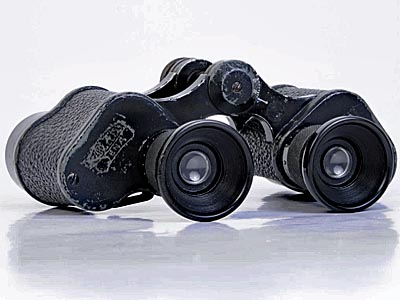
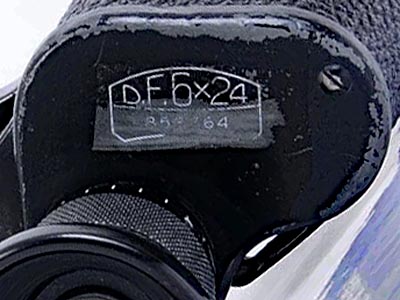
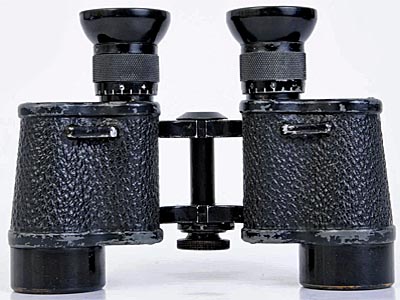
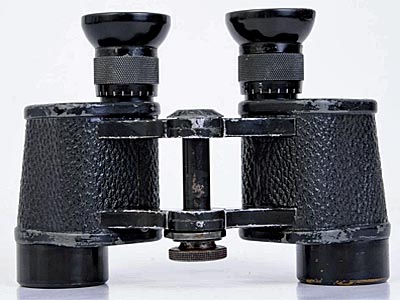
The Carl Zeiss, Jena, D.F. 6×24 is the military service version of the civilian Telex 6×24 model. Produced primarily between 1913 and 1919, these binoculars feature 6x magnification and 24mm objective lenses, with a field of view of approximately 6.8°. Earlier versions weighed 480g, and have a closest focusing distance of 2.5–3.6m.
6×21, TELEX and D.F. 6, 1907-1912, 120m FOV, 430 grams weight, leather body covers replaced by hard rubber body covers
6×24, TELEX and D.F. 6×24, 1912-1919, hard rubber body covers
Early models marked “D.F. 6x” were updated to “D.F. 6×24” about 1916–1917. The final version (from 1913) has objective covers with rounded front edges, as well as improved optical reliability using flat springs to hold prisms in place.
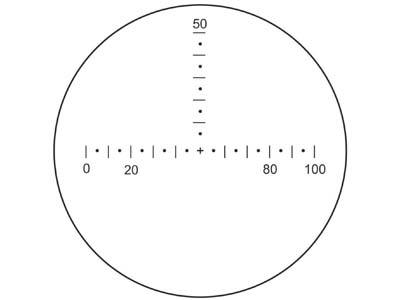
Unlike the civilian Telex, the D.F. 6×24 has a graduated rangefinder in the right prism housing and a large knurled locking wheel for personal user visual adjustment.
As the war dragged on, metal shortages after 1916 led to D.F. 6×24 military service prism covers being made with zinc alloy metal instead of brass.
Kern & Co. AG, Aarau, Aargau, Switzerland, a highly developed optical manufacturing company, was founded in 1819 by Jakob Kern. The company was acquired by the Wild Leitz group in 1988, and the production facility in Aarau was closed in 1991.
“Vulkanite” schwarzes Kunstleder (black synthetic leather) Körperbedeckung (body covering)
 In Germany in the 1930s, an early type of black plastic synthetic leather called “Vulkanite” was used as the body covering of military and commercial Dienstgläser (service glasses) manufactured before World War II.
This “Vulkanite” schwarzes Kunstleder (black synthetic leather) Körperbedeckung (body covering) was the most common Dienstglas body covering used by the German armed forces (and also by most of the other armed forces of Europe) during the early years of the Second World War.
TM 30-506, WAR DEPARTMENT TECHNICAL MANUAL, GERMAN-ENGLISH MILITARY DICTIONARY, WAR DEPARTMENT, 20 MAY I944
The TM 30-506 manual describes “Vulkanite” schwarzes Kunstleder (black synthetic leather) Körperbedeckung (body covering) as “Kunstleder n” artificial leather.
Schwarz „Reis“ Raulack (black “rice” rough lacquer) Körperbedeckung (body covering)
 Early in the Second World War, a black Rauhlack (rough lacquer) body covering called schwarz „Reis“ Körperbedeckung (black “rice” body covering) also became a common Dienstglas body finish.
This new Dienstglas body covering began to replace the black “Vulkanite” (synthetic, leather-like, early plastic) body covering material on the housings of German field glasses.
The particular consistency of this schwarz „Reis“ (black “rice”) Rauhlack (rough lacquer) Körperbedeckung (body covering) was achieved by mixing crushed rice or finely granulated cork meal with black lacquer paint.
This schwarz „Reis“ Rauhlack Körperbedeckung (black “rice” rough lacquer body covering) became the most common Dienstglas body covering as the war progressed through 1942 and 1943.
Carl Zeiss Swiss Confederation Contract
8×24 TELACT Production Serial Number Series
Carl Zeiss Swiss Confederation contract
8×24 TELACT, D.F. 8x, 348847, May 1913, №1965, Jena, Germany
|
|
Swiss Confederation 8×24 D.F. 8x military service binoculars, with Strichplatte (graduated range finding scale) in LEFT lens, production serial number, 348847, heavy construction, made of brass, black “Vulkanite” schwarzes Kunstleder (black synthetic leather) Körperbedeckung (body covering), brass prism and objective covers, brass objective lens rings, eyepieces with diopter scale, and diagonal 45 degree knurling. Manufactured about May 1913 by Carl Zeiss, Jena, Germany for the armed forces of the Swiss Confederation. Left prism cover marked in white with “1912” over “8 X” (magnification power, objects appear eight times closer than their actual distance). Right prism cover marked in white with Das Schweizerkreuz (“+” the Swiss cross) over “Armee-Modell” over “№1965” (Swiss Confederation armed forces property number). Upper inside edge of right prism cover stamped in very small numbers with “348847” (production serial number). |




This Carl Zeiss 8×24 serial number, 348847, was produced about May 1913, within the serial number sequence of the original Carl Zeiss production serial number series established in 1894.
As it turns out, the Strichplatte (graduated range finding scale) is actually within the left lens, not within the right lens, as is usual.
The objective lens caps, made with circular grooves machined within the interior rim to minimize reflection of stray light, are a signature feature of the third, rare version, of Carl Zeiss D.F.8x military service binoculars.
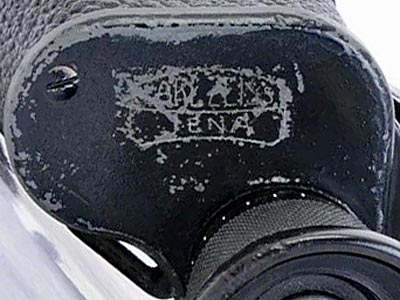
The “CARL ZEISS” / “JENA” trademark logo is etched onto the face of the rear spindle button.
These 8×24 military service binoculars are accompanied by the original brown leather Trageriemen (carrying strap).
The brown leather Behalter or Köcher (case) with strap, is marked on the bottom with maker’s name “G. LUBSIGER” over “– BERN –” within an oval, over the numbers “13” (last two digits of 1913, the year of case manufacture), and a vertical rectangle containing the Swiss cross over the letters “Sch” (Schweiz) armed forces property stamp. Bern is the capital of the canton of Bern, and is the defacto capital of Switzerland.
These military service binoculars came from Frick, Switzerland, the most populous municipality in the Laufenburg district of the Canton of Aargau. Frick is located in the Sissle valley near the meeting point of the Bözberg, Staffelegg, and Benken Jura passes, about halfway between Basel and Zurich.
Carl Zeiss Swiss Confederation Contract
6×24 TELEX Production Serial Number Series
Carl Zeiss Swiss Confederation contract
6×24 TELEX, D.F. 6×, 692213, February 1917, № 692213, Jena, Germany
|
|
Swiss Confederation D.F. 6× military service binoculars, with Strichplatte (graduated range finding scale) in right lens, “692213” production serial number, heavy construction, made of brass, black “Vulkanite” schwarzes Kunstleder (black synthetic leather) Körperbedeckung (body covering), aluminum alloy prism and objective covers, brass objective lens rings. Manufactured about February 1917 by Carl Zeiss, Jena, Germany for the armed forces of the Swiss Confederation. Left prism cover marked in white with “Carl Zeiss” / “Jena” trademark logo. Right prism cover marked in white with “D.F. 6×” (“Dopplefernrohr 6×24” – Binoculars 6×24) / “692213” (production serial number). Right front objective lens cover marked in white with “№ 692213” production serial number. This Carl Zeiss D.F. 6× serial number, 692213, was produced about February 1917, within the serial number sequence of the original Carl Zeiss production serial number series established in 1894. |
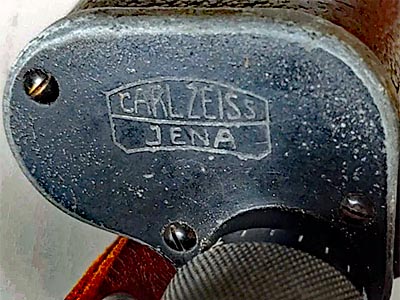
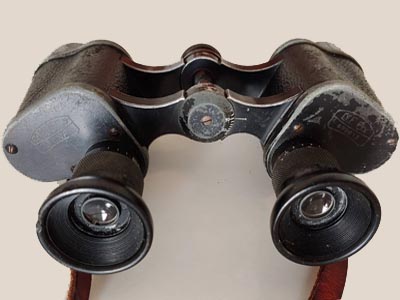
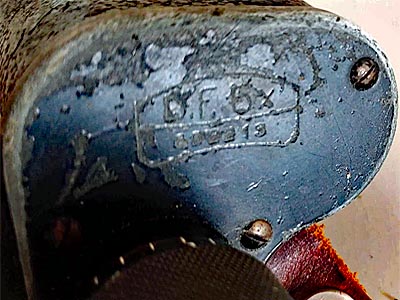
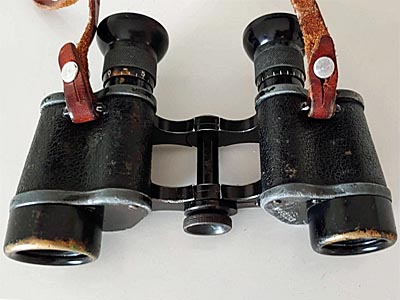
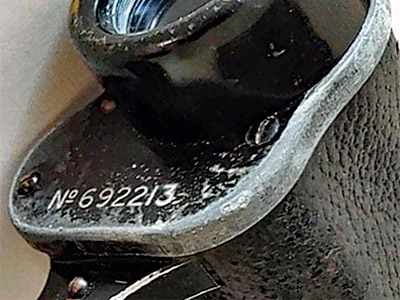
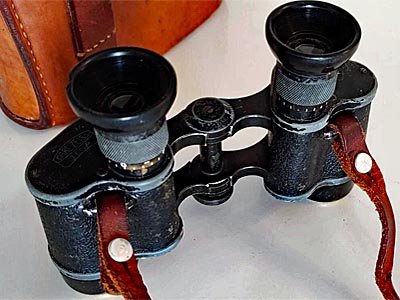

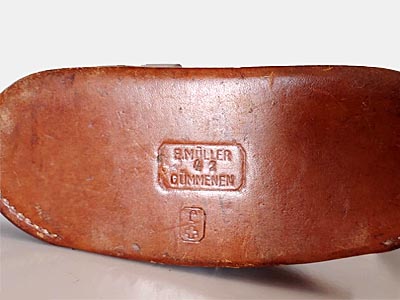
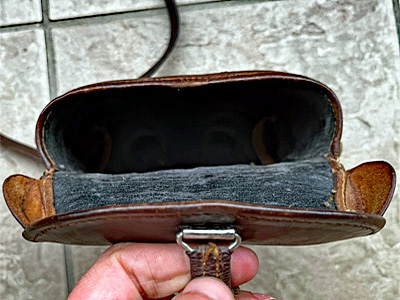
These D.F. 6× military service binoculars are accompanied by the original brown leather Trageriemen (carrying strap) and a Swiss Behalter or Köcher (leather case), stamped on the bottom with “E. MÜLLER” over “42” (last two digits of 1942, year of case manufacture) over “GÜMMENEN” within a horizontal rectangle, over an inverted vertical rectangle containing Das Schweizerkreuz (the Swiss cross) over the letter “J” (unknown meaning) armed forces property stamp.
Gümmenen refers to a railway station (Bahnhof Gümmenen) in the municipality of Ferenbalm, in the Swiss canton of Bern in Switzerland.
Swiss Confederation contract
6×24 TELEX, D.F. 6x, 715275, March 1917, № 792878, Carl Zeiss, Jena, Thuringia
|
|
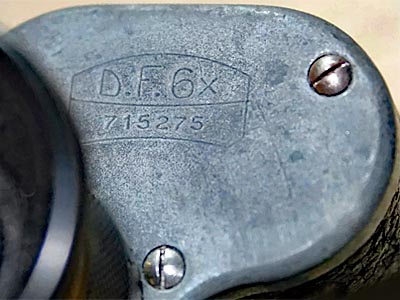
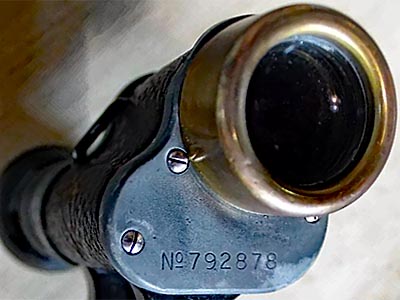
Swiss Confederation 6×24 D.F. 6x military service binoculars, production serial number, 715275, heavy construction, made of brass, black “Vulkanite” schwarzes Kunstleder (black synthetic leather) Körperbedeckung (body covering), aluminum alloy prism and objective covers (black paint removed), brass objective lens rings, manufactured about March 1917 by Carl Zeiss, Jena, Thuringia. Left prism cover marked in white with “Carl Zeiss” / “Jena” trademark logo. Right prism cover marked in white with “D.F. 6x” (“Dopplefernrohr 6x” – Binoculars 6x) / “715275” (production serial number). Right objective cover stamped with “№ 792878” (Swiss Confederation armed forces property number). This Carl Zeiss D.F. 6×, serial number, 715275, was produced about March 1917, within the serial number sequence of the original Carl Zeiss production serial number series established in 1894. |




Carl Zeiss Swiss Confederation contract
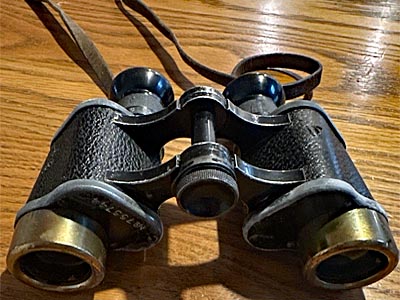
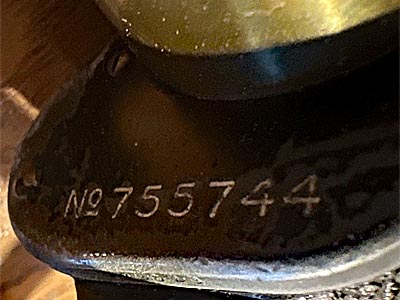
6×24 TELEX, D.F. 6×24, 755744, July 1917, № 755744, Jena, Germany
|
|
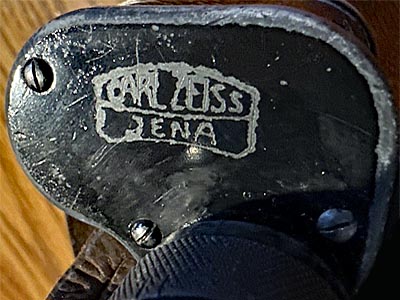
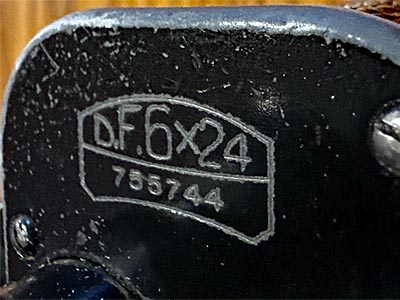
Swiss Confederation D.F. 6×24 military service binoculars, with Strichplatte (graduated range finding scale) in right lens, “755744” production serial number, heavy construction, made of brass, black “Vulkanite” schwarzes Kunstleder (black synthetic leather) Körperbedeckung (body covering), aluminum alloy prism and objective covers, brass objective lens rings. Manufactured about July 1917 by Carl Zeiss, Jena, Germany for the armed forces of the Swiss Confederation. Left prism cover marked in white with “Carl Zeiss” / “Jena” trademark logo. Right prism cover marked in white with “D.F. 6×24” (“Dopplefernrohr 6×24” – Binoculars 6×24) / “755744” (production serial number). Right front lens cover marked in white with “№ 755744” production serial number. This Carl Zeiss D.F. 6×24 serial number, 755744, was produced about July 1917, within the serial number sequence of the original Carl Zeiss production serial number series established in 1894. |
Carl Zeiss Swiss Confederation contract
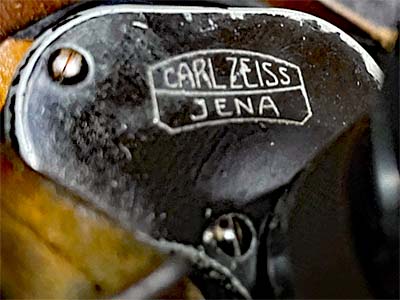
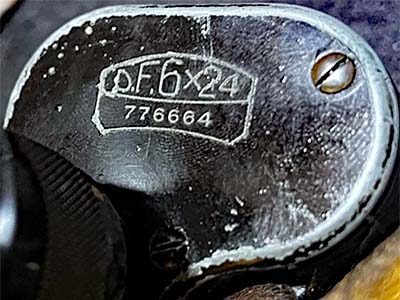
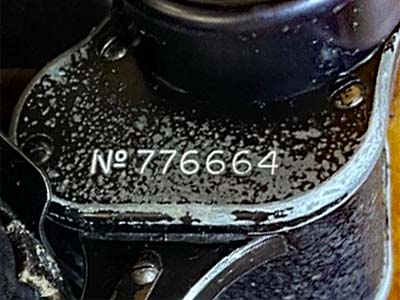
6×24 TELEX, D.F. 6×24, 776664, August 1917, № 776664, Jena, Germany
|
|
Swiss Confederation D.F. 6×24 military service binoculars, with Strichplatte (graduated range finding scale) in right lens, “776664” production serial number, heavy construction, made of brass, black “Vulkanite” schwarzes Kunstleder (black synthetic leather) Körperbedeckung (body covering), aluminum alloy prism and objective covers, brass objective lens rings. Manufactured about August 1917 by Carl Zeiss, Jena, Germany for the armed forces of the Swiss Confederation. Left prism cover marked in white with “Carl Zeiss” / “Jena” trademark logo. Right prism cover marked in white with “D.F. 6×24” (“Dopplefernrohr 6×24” – Binoculars 6×24) / “776664” (production serial number). Right front lens cover marked in white with “№ 776664” production serial number. This Carl Zeiss D.F. 6×24 serial number, 776664, was produced about August 1917, within the serial number sequence of the original Carl Zeiss production serial number series established in 1894. |
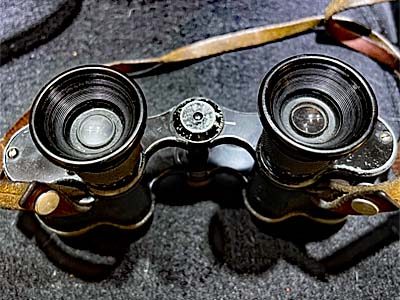
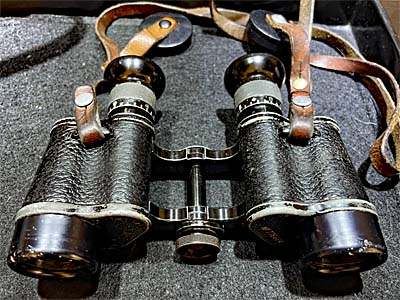
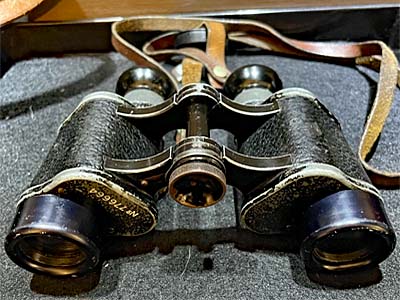
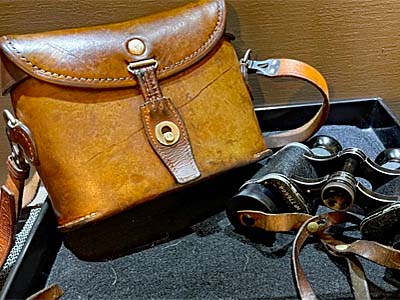
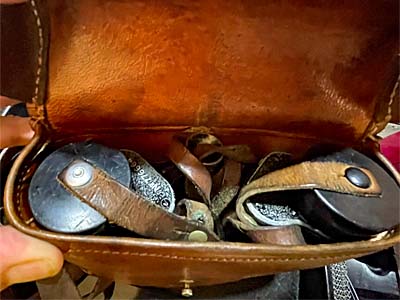
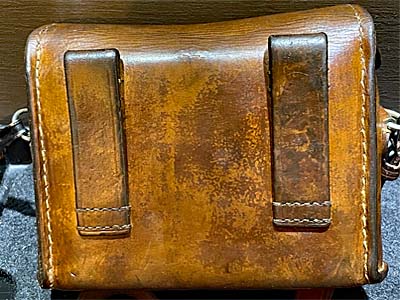
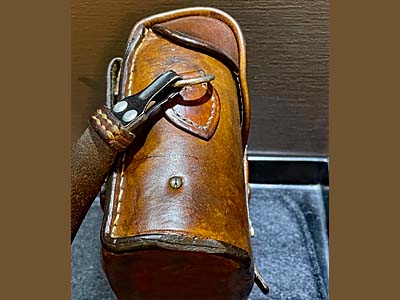
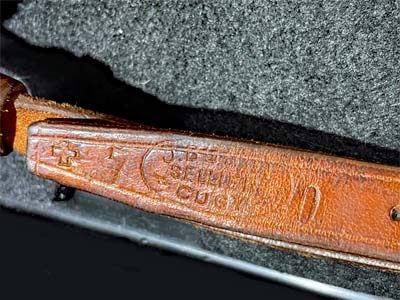
These D.F. 6×24 military service binoculars are accompanied by the original brown leather Trageriemen (carrying strap), brown leather Okularshutz (eye piece protector) or Regenschutzdeckel (rain protection cover) or Benutzerkappe (user cap).
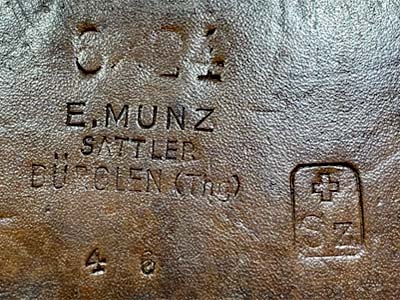
Brown leather case with strap, marked on bottom with “6×24” over maker’s name “E.MUNZ” over “SATTLER” (saddler, leather worker) over “BÜRGLEN (Thg)” over “46” (1946, year of case manufacture), next to vertical rectangle containing the Swiss cross over the letters “Sz” (Schweiz) Swiss Confederation armed forces property stamp. Bürglen is a municipality in the district of Weinfelden in the canton of Thurgau in Switzerland.
Carl Zeiss Swiss Confederation contract
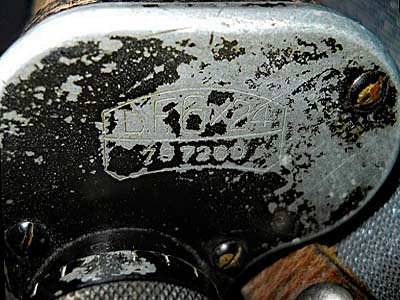
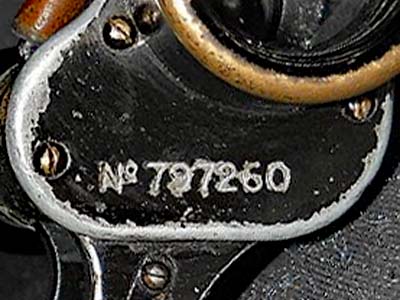
6×24 TELEX, D.F. 6×24, 797260, October 1917, № 797260, Jena, Germany
|
|
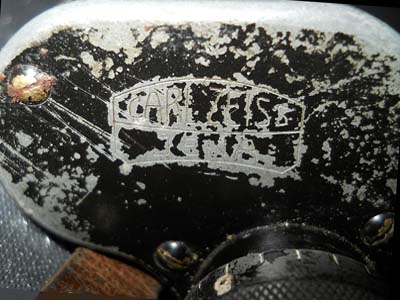
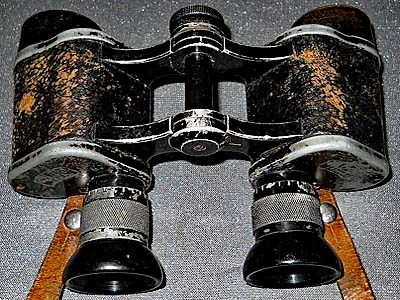
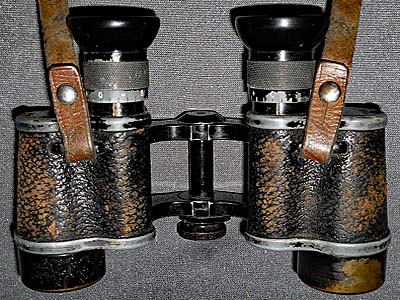
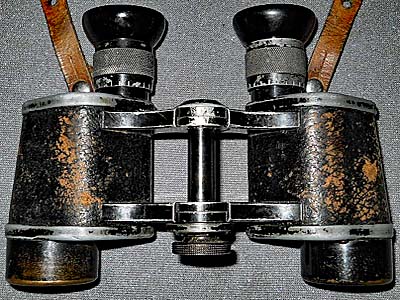
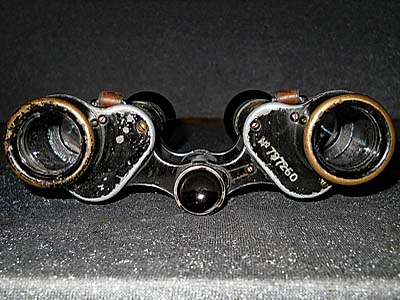
Swiss Confederation D.F. 6×24 military service binoculars, with Strichplatte (graduated range finding scale) in right lens, “797260” production serial number, heavy construction, made of brass, black “Vulkanite” schwarzes Kunstleder (black synthetic leather) Körperbedeckung (body covering), aluminum alloy prism and objective covers, brass objective lens rings. Manufactured about October 1917 by Carl Zeiss, Jena, Germany for the armed forces of the Swiss Confederation. Left prism cover marked in white with “Carl Zeiss” / “Jena” trademark logo. Right prism cover marked in white with “D.F. 6×24” (“Dopplefernrohr 6×24” – Binoculars 6×24) / “797260” (production serial number). Right front objective lens cover marked in white with “№ 797260” production serial number. This Carl Zeiss D.F. 6×24 serial number, 797260, was produced about October 1917, within the serial number sequence of the original Carl Zeiss production serial number series established in 1894. |
Carl Zeiss Swiss Confederation contract
6×24 TELEX, D.F. 6×24, 798141, October 1917, № 798141, Jena, Germany
|
|
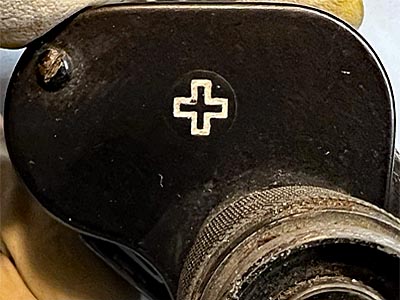
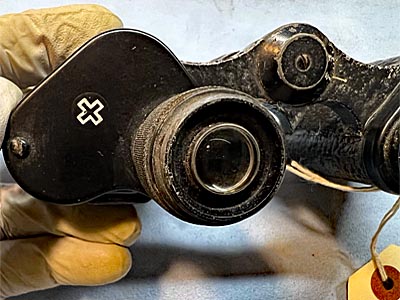
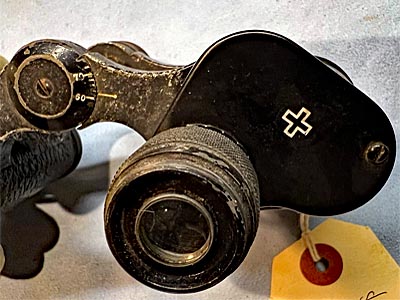
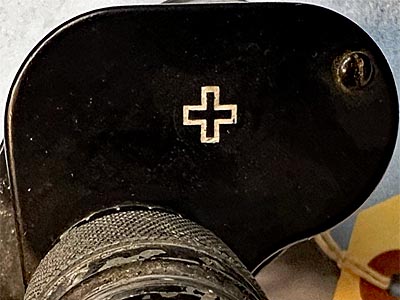
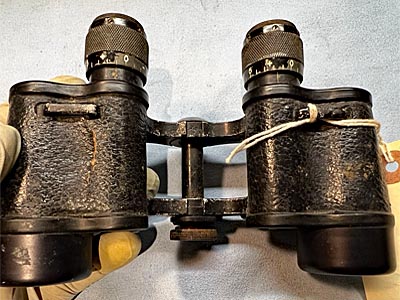
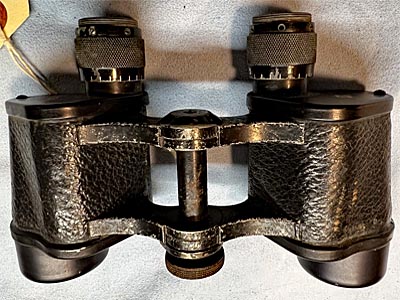
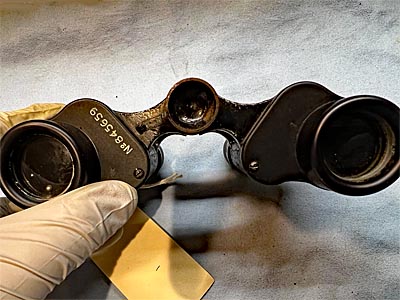
Swiss Confederation D.F. 6×24 military service binoculars, with Strichplatte (graduated range finding scale) in right lens, “№ 798141” production serial number, heavy construction, made of brass, black “Vulkanite” schwarzes Kunstleder (black synthetic leather) Körperbedeckung (body covering), aluminum alloy prism and objective covers, brass objective lens rings. Manufactured about October 1917 by Carl Zeiss, Jena, Germany for the armed forces of the Swiss Confederation. Left prism cover marked in white with Das Schweizerkreuz (“+” the Swiss cross). Right prism cover marked in white with “+” Swiss cross. Right front objective lens cover marked in white with “№ 798141” production serial number. This Carl Zeiss D.F. 6×24 serial number, 798141, was produced about October 1917, within the serial number sequence of the original Carl Zeiss production serial number series established in 1894. |


These D.F. 6×24 military service binoculars are accompanied by the original brown leather Trageriemen (carrying strap), brown leather Okularshutz (eye piece protector) or Regenschutzdeckel (rain protection cover) or Benutzerkappe (user cap), and brown leather Aknöpflasche (button tab).
The brown leather Aknöpflasche (button tab) is made in Switzerland, and is stamped on the inside with “R. BILLTMER” over “1917” over “MÄNNEDORF” within an oval. Männedorf is a municipality in the district of Meilen in the canton of Zürich in Switzerland.
Carl Zeiss Swiss Confederation contract
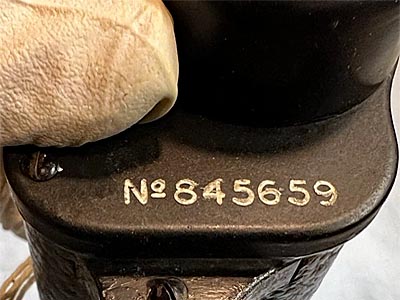
6×24 TELEX, D.F. 6×24, 845659, January 1918, № 845659, Jena, Germany
|
|
Swiss Confederation D.F. 6×24 military service binoculars, with Strichplatte (graduated range finding scale) in right lens, “№ 845659” production serial number, heavy construction, made of brass, black “Vulkanite” schwarzes Kunstleder (black synthetic leather) Körperbedeckung (body covering), aluminum alloy prism and objective covers, brass objective lens rings. Manufactured about January 1918 by Carl Zeiss, Jena, Germany for the armed forces of the Swiss Confederation. Left prism cover marked in white with Das Schweizerkreuz (“+” the Swiss cross). Right prism cover marked in white with “+” Swiss cross. Right front objective lens cover marked in white with “№ 845659” production serial number. This Carl Zeiss D.F. 6×24 serial number, 845659, was produced about January 1918, within the serial number sequence of the original Carl Zeiss production serial number series established in 1894. |
Carl Zeiss Swiss Confederation contract
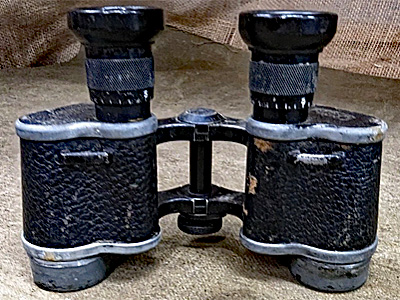
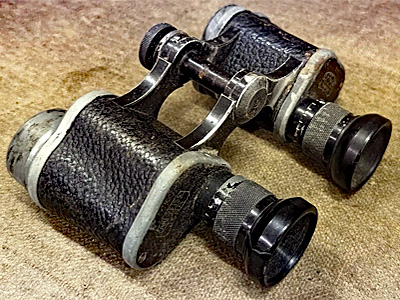
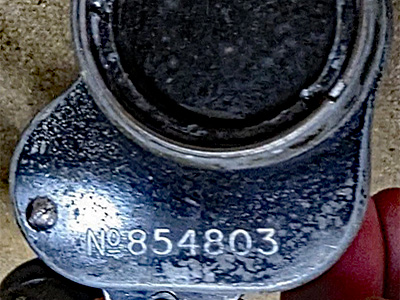
6×24 TELEX, D.F. 6×24, 845749, January 1918, № 854803, Jena, Germany
|
|
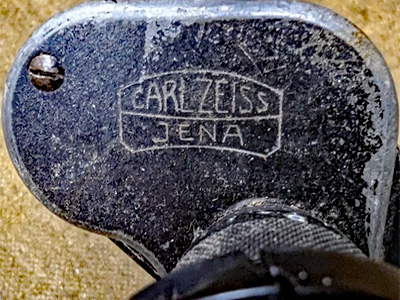
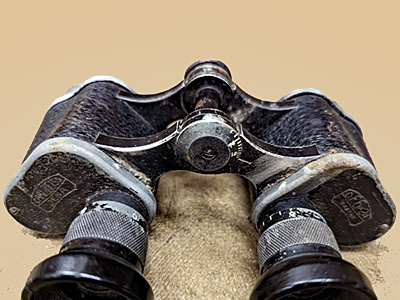
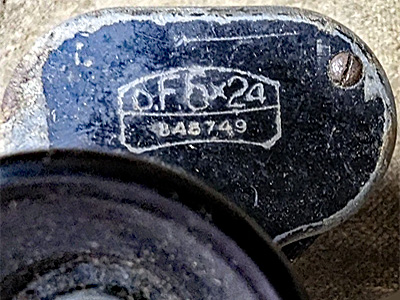
Swiss Confederation D.F. 6×24 military service binoculars, with Strichplatte (graduated range finding scale) in right lens, “845749” production serial number, heavy construction, made of brass, black “Vulkanite” schwarzes Kunstleder (black synthetic leather) Körperbedeckung (body covering), aluminum alloy prism covers, objective covers, and objective lens rings. Manufactured about January 1918 by Carl Zeiss, Jena, Germany for the armed forces of the Swiss Confederation. Left prism cover marked in white with “Carl Zeiss” / “Jena” trademark logo. Right prism cover marked in white with “D.F. 6×24” (“Dopplefernrohr 6×24” – Binoculars 6×24) / “845749” (production serial number). Right front lens cover marked in white with “№ 854803” Swiss Confederation armed forces property number. This Carl Zeiss D.F. 6×24 serial number, 845749, was produced about January 1918, within the serial number sequence of the original Carl Zeiss production serial number series established in 1894. |
Carl Zeiss Swiss Confederation contract
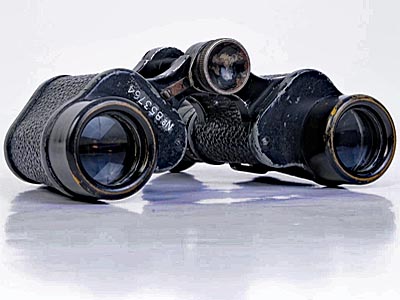
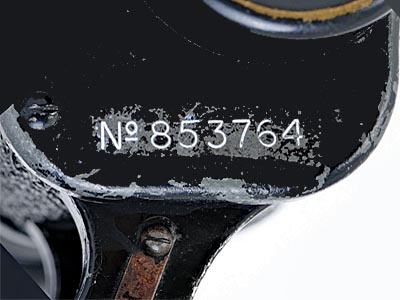
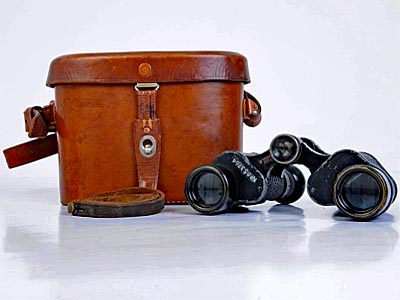
6×24 TELEX, D.F. 6×24, 853764, January 1918, № 853764, Jena, Germany
|
|
Swiss Confederation D.F. 6×24 military service binoculars, with Strichplatte (graduated range finding scale) in right lens, “853764” production serial number, heavy construction, made of brass, black “Vulkanite” schwarzes Kunstleder (black synthetic leather) Körperbedeckung (body covering), aluminum alloy prism and objective covers, brass objective lens rings. Manufactured about January 1918 by Carl Zeiss, Jena, Germany for the armed forces of the Swiss Confederation. Left prism cover marked in white with “Carl Zeiss” / “Jena” trademark logo. Right prism cover marked in white with “D.F. 6×24” (“Dopplefernrohr 6×24” – Binoculars 6×24) / “853764” (production serial number). Right front lens cover marked in white with “№ 853764” production serial number. This Carl Zeiss D.F. 6×24 serial number, 845749, was produced about January 1918, within the serial number sequence of the original Carl Zeiss production serial number series established in 1894. |
Carl Zeiss Swiss Confederation contract
6×24 TELEX, D.F. 6×24, 973637, August 1918, № 960244, Jena, Germany
|
|
Swiss Confederation D.F. 6×24 military service binoculars, with Strichplatte (graduated range finding scale) in right lens, “№ 973637” production serial number, heavy construction, made of brass, black “Vulkanite” schwarzes Kunstleder (black synthetic leather) Körperbedeckung (body covering), aluminum alloy prism and objective covers, brass objective lens rings. Manufactured about August 1918 by Carl Zeiss, Jena, Germany for the armed forces of the Swiss Confederation. Left prism cover marked in white with “Carl Zeiss” / “Jena” trademark logo. Right prism cover marked in white with “D.F. 6×24” (“Dopplefernrohr 6×24” – Binoculars 6×24) / “973637” (production serial number). Right front lens cover marked in white with “№ 960244” Swiss Confederation armed forces property number. This Carl Zeiss D.F. 6×24 serial number, 973637, was produced about August 1918, within the serial number sequence of the original Carl Zeiss production serial number series established in 1894. |


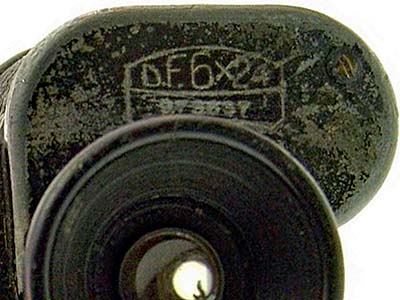

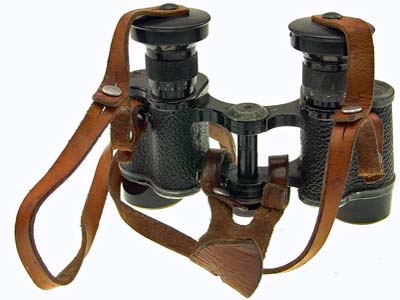


These 6×24 military service binoculars are accompanied by the original brown leather Trageriemen (carrying strap), brown leather Okularshutz (eye piece protector) or Regenschutzdeckel (rain protection cover) or Benutzerkappe (user cap), and brown leather Aknöpflasche (button tab).
The brown Bakelit (Bakelite) Behalter or Köcher (case) is made in Switzerland, and is marked on the right side leather belt strap with the Swiss federal coat of arms (eidgenössisches Wappen) with Das Schweizerkreuz (the Swiss cross) stamped onto the leather.
Carl Zeiss Swiss Confederation contract
6×24 TELEX, D.F. 6×24 974010, August 1918, № 974010, Jena, Germany
|
|
Swiss Confederation D.F. 6×24 military service binoculars, with Strichplatte (graduated range finding scale) in right lens, “№ 974010” production serial number, heavy construction, made of brass, black “Vulkanite” schwarzes Kunstleder (black synthetic leather) Körperbedeckung (body covering), aluminum alloy prism and objective covers, brass objective lens rings. Manufactured about August 1918 by Carl Zeiss, Jena, Germany for the armed forces of the Swiss Confederation. Left prism cover marked in white with “Carl Zeiss” / “Jena” trademark logo. Right prism cover marked in white with “D.F. 6×24” (“Dopplefernrohr 6×24” – Binoculars 6×24) / “974010” (production serial number). Right front lens cover marked in white with “№ 974010” Swiss Confederation armed forces production serial number. This Carl Zeiss D.F. 6×24 serial number, 974010, was produced about August 1918, within the serial number sequence of the original Carl Zeiss production serial number series established in 1894. |
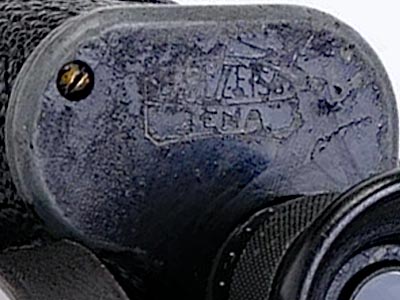
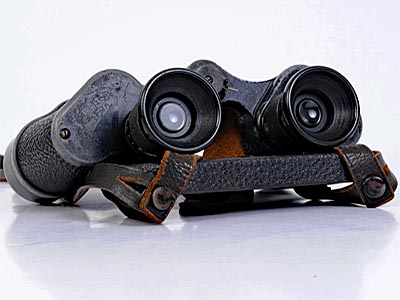
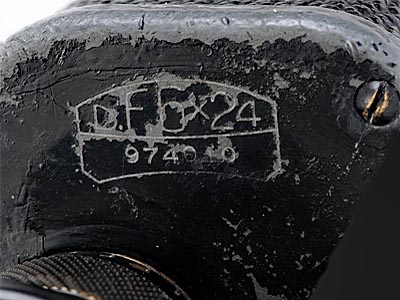
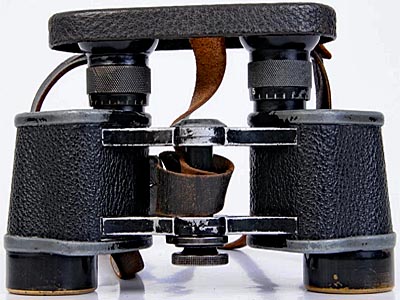
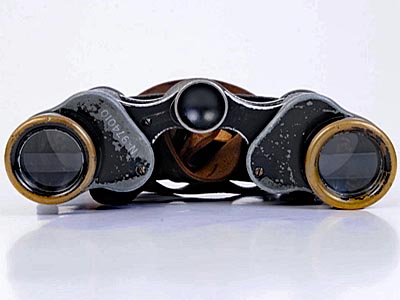
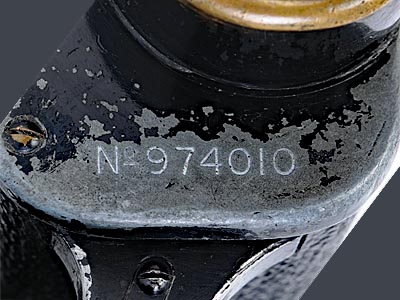
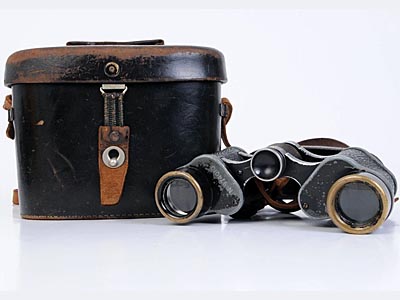
These D.F. 6×24 military service binoculars are accompanied by the original brown leather Trageriemen (carrying strap), brown leather Okularshutz (eye piece protector) or Regenschutzdeckel (rain protection cover) or Benutzerkappe (user cap), and brown leather Behalter or Köcher (case) with strap.
Carl Zeiss Swiss Confederation contract
6×24 TELEX, 1035420, June 1919, Jena, Germany
|
|
Swiss Confederation 6×24 military service binoculars, with Strichplatte (graduated range finding scale) in right lens, “1035420” production serial number, heavy construction, made of brass, black “Vulkanite” schwarzes Kunstleder (black synthetic leather) Körperbedeckung (body covering), aluminum alloy prism and objective covers, brass objective lens rings. Manufactured about June 1919 by Carl Zeiss, Jena, Germany for the armed forces of the Swiss Confederation. Left prism cover marked in white with “Carl Zeiss” / “Jena” trademark logo. Right prism cover marked in white with “TELEX” / “1035420” (production serial number) logo over “6 X”. This Carl Zeiss 6×24 serial number, 1035420, was produced about June 1919, within the serial number sequence of the original Carl Zeiss production serial number series established in 1894. |
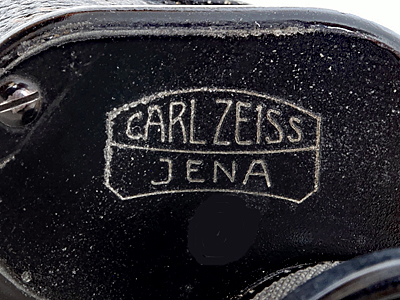
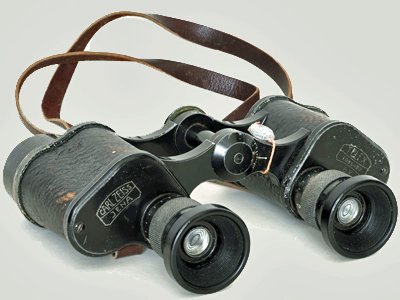
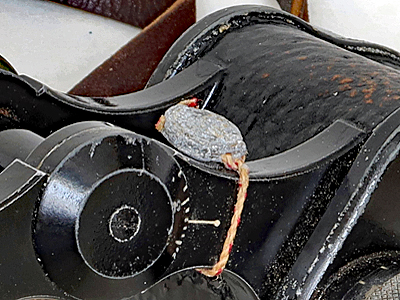
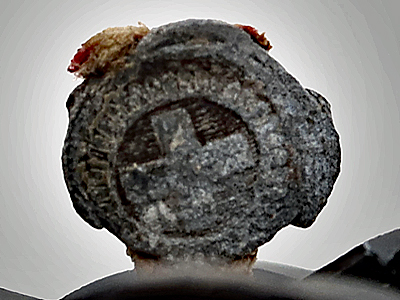
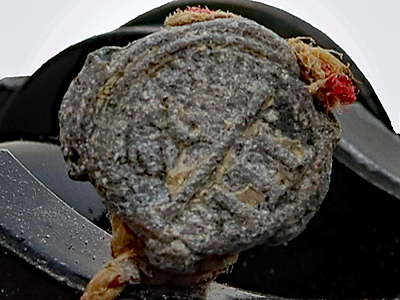
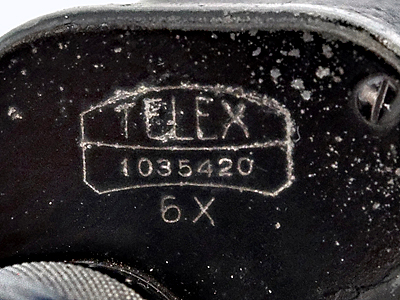
These 6×24 military service binoculars are accompanied by the original brown leather Trageriemen (carrying strap). A lead seal with Das Schweizerkreuz (the Swiss cross) stamped on one side (the other side is unreadable) is attached by hemp twine to the right rear bridge spindle support arm.
Carl Zeiss Swiss Confederation Contract
8×30 DELTRENTIS Production Serial Number Series
Carl Zeiss NEDINSCO Swiss Confederation contract
8×30 DELTRENTIS, unknown production serial number, 1931, №2398, ‘s Gravenhage (The Hague), Netherlands
|
|
Swiss Confederation 8×30 military service binoculars, with Strichplatte (graduated range finding scale) in right lens, unknown production serial number, light construction, made of aluminum alloy, black “Vulkanite” schwarzes Kunstleder (black synthetic leather) Körperbedeckung (body covering), aluminum alloy prism and objective covers, brass objective lens rings. Manufactured in 1931 by Carl Zeiss, NEDINSCO, ‘s Gravenhage (The Hague), Netherlands, for the armed forces of the Swiss Confederation. Left prism cover marked in white with Das Schweizerkreuz (“+” the Swiss cross) over “1931” over “8×30” with the “NEDINSCO” / ‘s Gravenhage / “Systeem” / “CARL ZEISS / JENA” trademark logo at the lower left. Right prism cover marked in white with “+” Swiss cross over “Armee-Modell” over “№2398” (Swiss Confederation armed forces property number). Right front objective lens cover marked in white with “+” Swiss cross. Left front objective lens cover marked in white with “+” Swiss cross. |


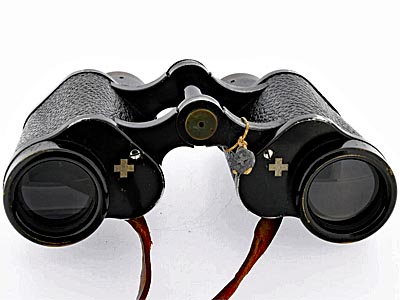


These 8×30 military service binoculars are accompanied by the original brown leather Trageriemen (carrying strap).
Brown leather Behalter or Köcher (case) with brown leather strap.
A lead seal with Das Schweizerkreuz (the Swiss cross) stamped on one side (the other side is unreadable) is attached by hemp twine to the left front bridge spindle support arm.
Carl Zeiss NEDINSCO Swiss Confederation contract
8×30 DELTRENTIS, unknown production serial number, 1932, №2792, ‘s Gravenhage (The Hague), Netherlands
|
|
Swiss Confederation 8×30 military service binoculars, with Strichplatte (graduated range finding scale) in right lens, unknown production serial number, light construction, made of aluminum alloy, black “Vulkanite” schwarzes Kunstleder (black synthetic leather) Körperbedeckung (body covering), aluminum alloy prism and objective covers, brass objective lens rings. Manufactured in 1932 by Carl Zeiss, NEDINSCO, ‘s Gravenhage (The Hague), Netherlands, for the armed forces of the Swiss Confederation. Left prism cover marked in white with Das Schweizerkreuz (“+” the Swiss cross) over “1932” over “8×30” with the “NEDINSCO” / ‘s Gravenhage / “Systeem” / “CARL ZEISS / JENA” trademark logo at the lower left. Right prism cover marked in white with “+” Swiss cross over “Armee-Modell” over “№2792” (Swiss Confederation armed forces property number). Right front objective lens cover marked in white with “+” Swiss cross. Left front objective lens cover marked in white with “+” Swiss cross. |
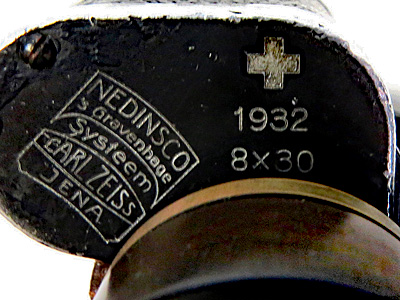
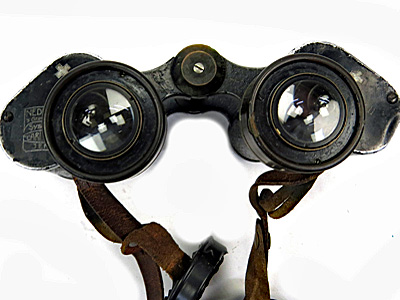
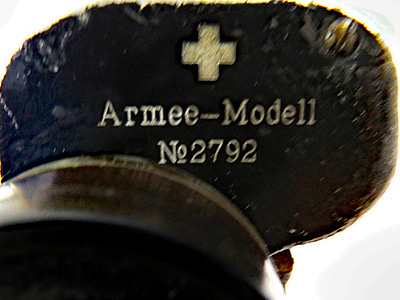
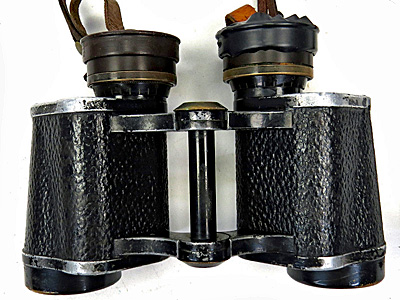
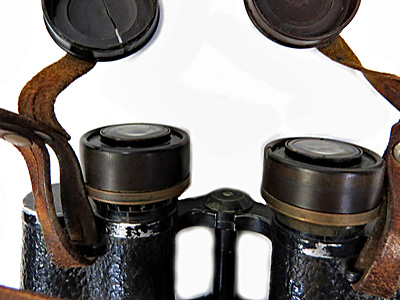
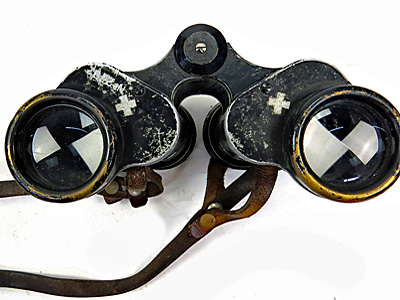
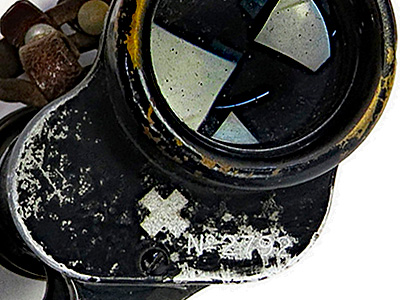
These 8×30 military service binoculars are accompanied by the original brown leather Trageriemen (carrying strap), and brown Bakelit (Bakelite) Okularshutz (eye piece protector) or Regenschutzdeckel (rain protection cover) or Benutzerkappe (user cap).
Carl Zeiss NEDINSCO Swiss Confederation contract
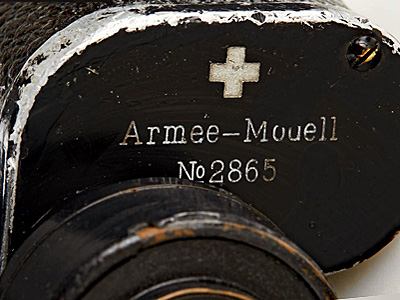
8×30 DELTRENTIS, unknown production serial number, 1932, №2865, ‘s Gravenhage (The Hague), Netherlands
|
|
Swiss Confederation 8×30 military service binoculars, with Strichplatte (graduated range finding scale) in right lens, unknown production serial number, light construction, made of aluminum alloy, black “Vulkanite” schwarzes Kunstleder (black synthetic leather) Körperbedeckung (body covering), aluminum alloy prism and objective covers, brass objective lens rings. Manufactured in 1931 by Carl Zeiss, NEDINSCO, ‘s Gravenhage (The Hague), Netherlands, for the armed forces of the Swiss Confederation. Left prism cover marked in white with Das Schweizerkreuz (“+” the Swiss cross) over “1932” over “8×30” with the “NEDINSCO” / ‘s Gravenhage / “Systeem” / “CARL ZEISS / JENA” trademark logo at the lower left. Right prism cover marked in white with “+” Swiss cross over “Armee-Modell” over “№2865” (Swiss Confederation armed forces property number). Right front objective lens cover marked in white with “+” Swiss cross. Left front objective lens cover marked in white with “+” Swiss cross. |
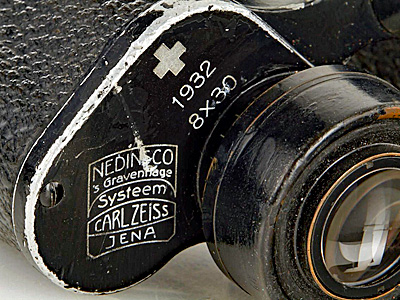
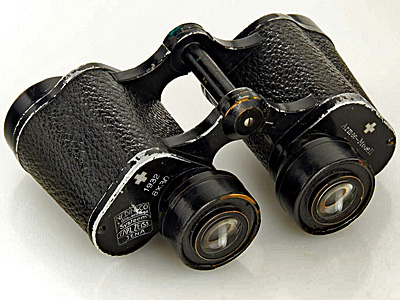
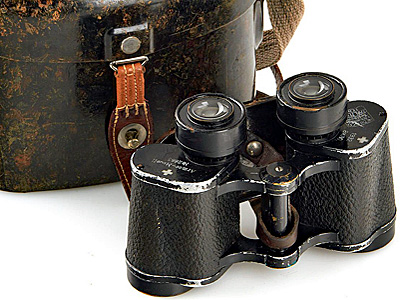
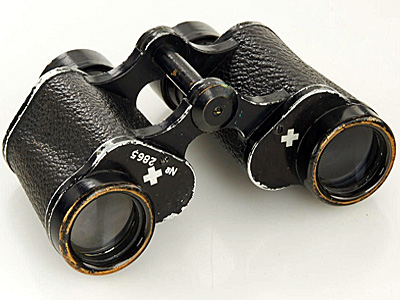
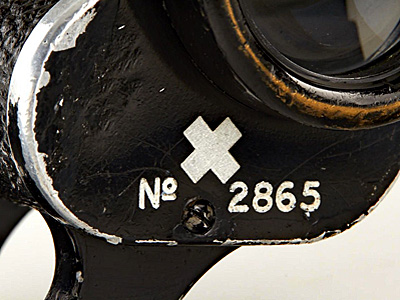
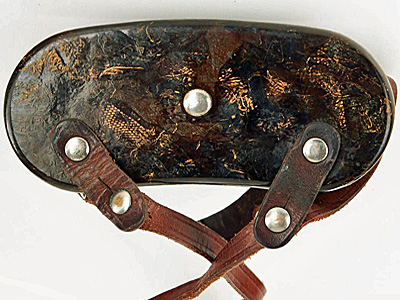
These 8×30 military service binoculars are accompanied by the original brown leather Trageriemen (carrying strap), and brown Bakelit (Bakelite) Okularshutz (eye piece protector) or Regenschutzdeckel (rain protection cover) or Benutzerkappe (user cap).
The brown Bakelit (Bakelite) Behalter or Köcher (case) with fabric strap is made in Switzerland, and is marked on the right side leather belt strap with the Swiss federal coat of arms (eidgenössisches Wappen) with Das Schweizerkreuz (the Swiss cross) stamped onto the leather.
Kern Aarau
6×24 Production Serial Number Series
Kern Aarau
6×24 1926, №41, Aarau, Swiss Confederation
|
|
Swiss Confederation 6×24 military service binoculars, with Strichplatte (graduated range finding scale) in right lens, “№41” production serial number, heavy construction, made of brass, black “Vulkanite” schwarzes Kunstleder (black synthetic leather) Körperbedeckung (body covering), brass fittings. Manufactured in 1926 by Kern, Aarau, Switzerland for the armed forces of the Swiss Confederation. Left prism cover marked in white with Das Schweizerkreuz (the Swiss cross) over “1926” over “6×24” with “Kern / Aarau” at the bottom left. Right prism cover marked in white with Swiss cross over “Armee-Modell” over “№41” production serial number. Right front lens cover marked in white with Swiss cross. Left front lens cover marked in white with Swiss cross. |


These 6×24 military service binoculars are accompanied by the original brown leather Trageriemen (carrying strap).
Brown leather case with strap, marked on bottom with vertical rectangle containing the Swiss cross over the letters “Sch” (Schweiz) armed forces property acceptance stamp over maker’s name (unreadible) over “SATTLER” over community (unreadible) within an oval, over the numbers “19” (last two digits of 1919, year of case manufacture).
Kern Aarau
6×24 1927, №1256, Aarau, Swiss Confederation
|
|
Swiss Confederation 6×24 military service binoculars, with Strichplatte (graduated range finding scale) in right lens, “№1256” production serial number, heavy construction, made of brass, black “Vulkanite” schwarzes Kunstleder (black synthetic leather) Körperbedeckung (body covering), brass fittings. Manufactured in 1927 by Kern, Aarau, Switzerland for the armed forces of the Swiss Confederation. Left prism cover marked in white with Das Schweizerkreuz (the Swiss cross) over “1927” over “6×24” with “Kern / Aarau” at the bottom left. Right prism cover marked in white with Swiss cross over “Armee-Modell” over “№1256” production serial number. Right front lens cover marked in white with Swiss cross over “№1256”. Left front lens cover marked in white with Swiss cross. |


These 6×24 military service binoculars are accompanied by the original brown leather Trageriemen (carrying strap), and brown leather Aknöpflasche (button tab).
Brown leather case with strap, marked on bottom with maker’s name, “ERNST FÄSSLER” over “1940” over “APPENZELL” over vertical rectangle containing the Swiss cross over the letters “Sz” (Schweiz) armed forces property stamp. Appenzell, composed of two half-cantons, Innerrhoden and Ausserrhoden, is a glacial, mountain, forest region in northeastern Switzerland.
Kern Aarau
6×24 1928, №1273, Aarau, Swiss Confederation
|
|
Swiss Confederation 6×24 military service binoculars, with Strichplatte (graduated range finding scale) in right lens, “№1273” production serial number, heavy construction, made of brass, black “Vulkanite” schwarzes Kunstleder (black synthetic leather) Körperbedeckung (body covering), brass fittings. Manufactured in 1928 by Kern, Aarau, Switzerland for the armed forces of the Swiss Confederation. Left prism cover marked in white with Das Schweizerkreuz (the Swiss cross) over “1928” over “6×24” with “Kern / Aarau” at the bottom left. Right prism cover marked in white with Swiss cross over “Armee-Modell” over “№1273” production serial number. Right front lens cover marked in white with Swiss cross over “№1273” production serial number. Left front lens cover marked in white with Swiss cross. |
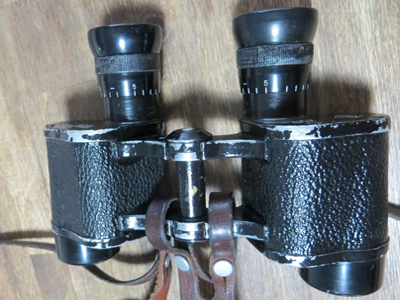


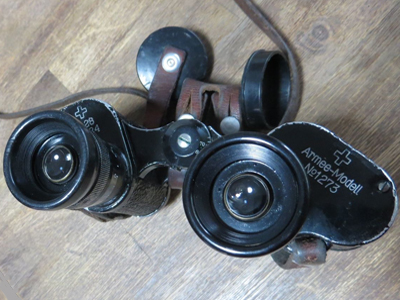


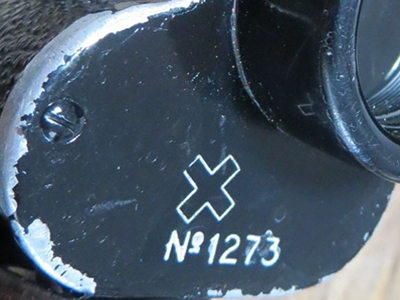


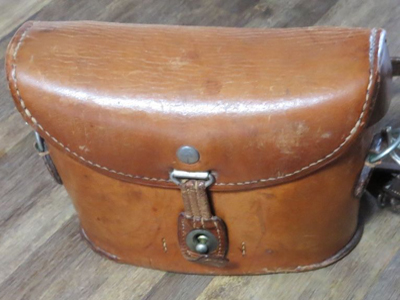
These 6×24 military service binoculars are accompanied by the original brown leather Trageriemen (carrying strap), brown leather Okularshutz (eye piece protector) or Regenschutzdeckel (rain protection cover) or Benutzerkappe (user cap), brown leather Aknöpflasche (button tab), and brown leather case.
Kern Aarau
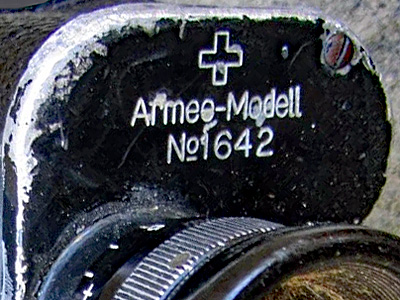
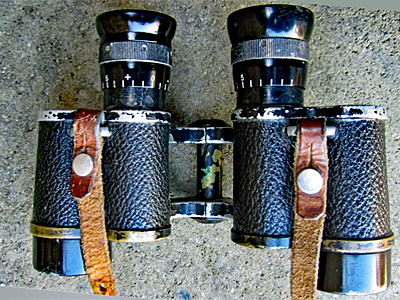
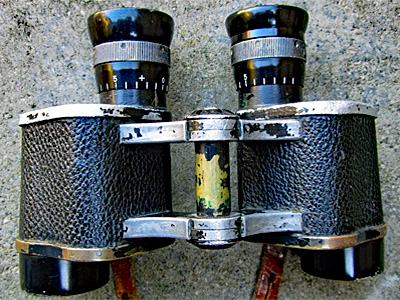
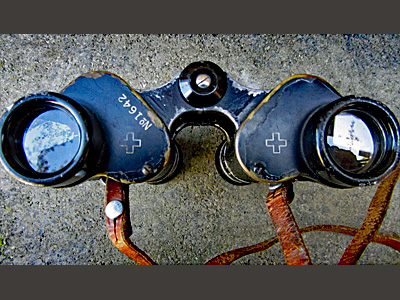
6×24 1928, №1642, Aarau, Swiss Confederation
|
|
Swiss Confederation 6×24 military service binoculars, with Strichplatte (graduated range finding scale) in right lens, “№1642” production serial number, heavy construction, made of brass, black “Vulkanite” schwarzes Kunstleder (black synthetic leather) Körperbedeckung (body covering), brass fittings. Manufactured in 1928 by Kern, Aarau, Switzerland for the armed forces of the Swiss Confederation. Left prism cover marked in white with Das Schweizerkreuz (the Swiss cross) over “1928” over “6×24” with “Kern / Aarau” at the bottom left. Right prism cover marked in white with Swiss cross over “Armee-Modell” over “№1642” production serial number. Right front lens cover marked in white with Swiss cross over “№1642” production serial number. Left front lens cover marked in white with Swiss cross. |
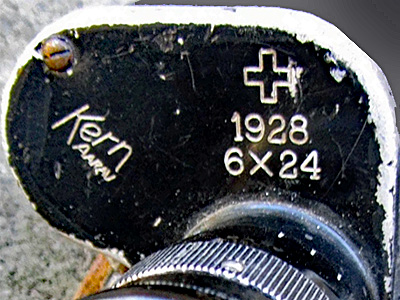
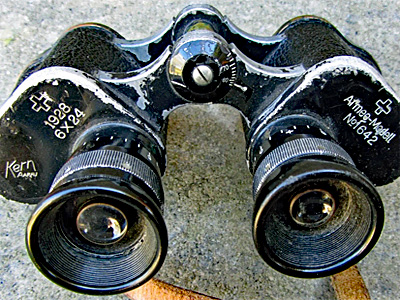
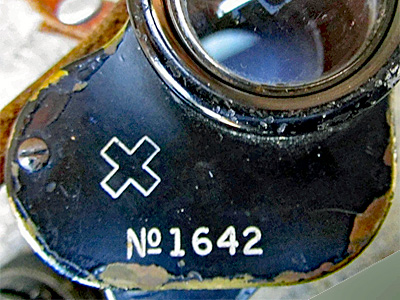
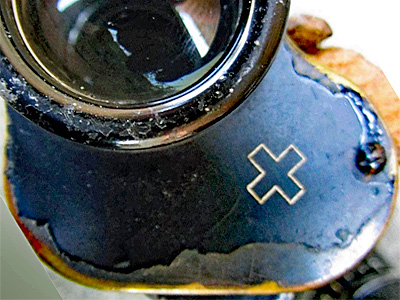
These 6×24 military service binoculars are accompanied by the original brown leather Trageriemen (carrying strap).
Kern Aarau
6×24 1929, №5112, Aarau, Swiss Confederation
|
|
Swiss Confederation 6×24 military service binoculars, with Strichplatte (graduated range finding scale) in right lens, “№13560” production serial number, heavy construction, made of brass, black “Vulkanite” schwarzes Kunstleder (black synthetic leather) Körperbedeckung (body covering), brass fittings. Manufactured in 1929 by Kern, Aarau, Switzerland for the armed forces of the Swiss Confederation. Left prism cover marked in white with Das Schweizerkreuz (the Swiss cross) over “1929” over “6×24” with “Kern / Aarau” at the bottom left. Right prism cover marked in white with Swiss cross over “Armee-Modell” over “№5112” production serial number. Right front lens cover marked in white with “№5112” production serial number. Left front lens cover marked in white with Swiss cross. |


These 6×24 military service binoculars are accompanied by the original brown leather Trageriemen (carrying strap), brown leather Okularshutz (eye piece protector) or Regenschutzdeckel (rain protection cover) or Benutzerkappe (user cap), and brown leather Aknöpflasche (button tab).
Kern Aarau
6×24 1933, №10462, Aarau, Swiss Confederation
|
|
Swiss Confederation 6×24 military service binoculars, with Strichplatte (graduated range finding scale) in right lens, “№10462” production serial number, heavy construction, made of brass, black “Vulkanite” schwarzes Kunstleder (black synthetic leather) Körperbedeckung (body covering), brass fittings. Manufactured in 1933 by Kern, Aarau, Switzerland for the armed forces of the Swiss Confederation. Left prism cover marked in white with Das Schweizerkreuz (the Swiss cross) over “1933” over “6×24” with “Kern / Aarau” at the bottom left. Right prism cover marked in white with Swiss cross over “Armee-Modell” over “№10462” production serial number. Right front lens cover marked in white with “№10462” production serial number. Left front lens cover marked in white with Swiss cross. |
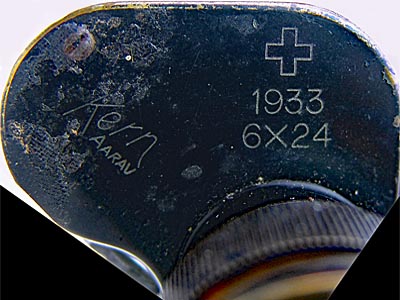
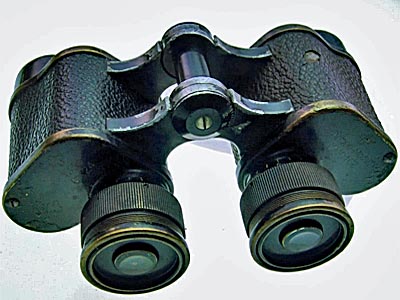
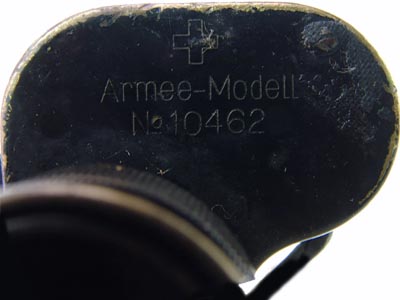
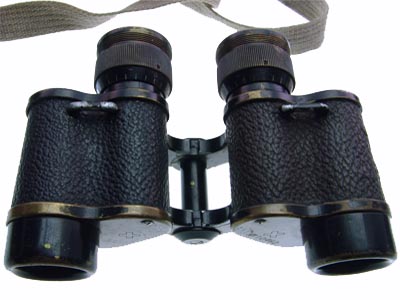
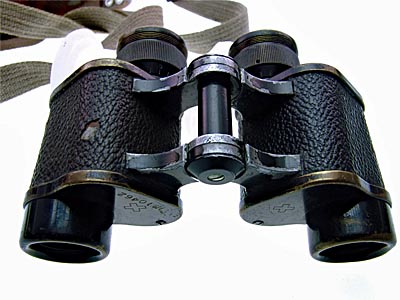
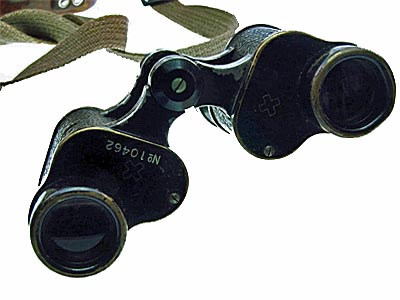
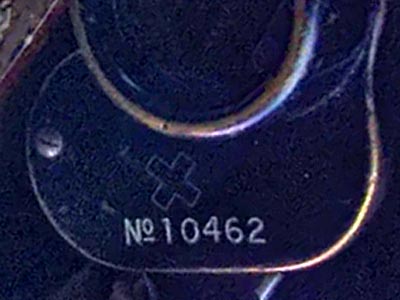
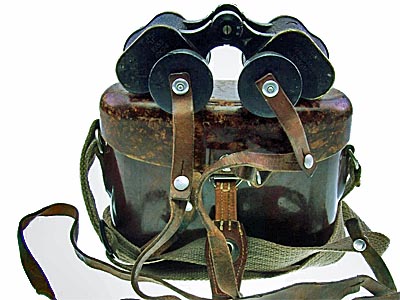
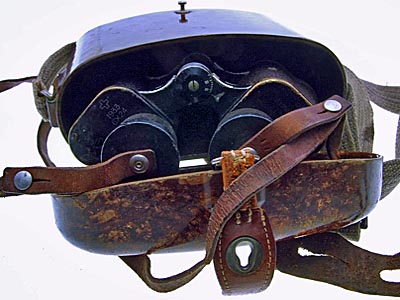
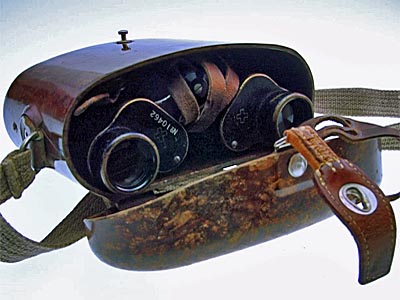
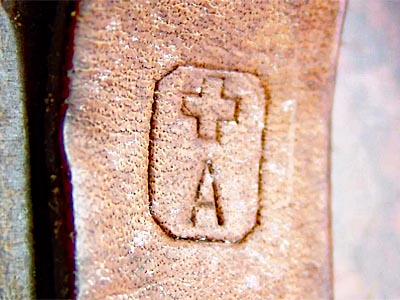
These 6×24 military service binoculars are accompanied by the original brown leather Trageriemen (carrying strap), and brown leather Okularshutz (eye piece protector) or Regenschutzdeckel (rain protection cover) or Benutzerkappe (user cap).
The brown Bakelit (Bakelite) Behalter or Köcher (case) is made in Switzerland, and is marked on the right side leather belt strap with Das Schweizerkreuz (the Swiss cross) over the capital letter “A” all within a vertical rectangle stamped onto the leather.
Kern Aarau
6×24 1934, №9744, Aarau, Swiss Confederation
|
|
Swiss Confederation 6×24 military service binoculars, with Strichplatte (graduated range finding scale) in right lens, “№9744” production serial number, heavy construction, made of brass, black “Vulkanite” schwarzes Kunstleder (black synthetic leather) Körperbedeckung (body covering), brass fittings. Manufactured in 1934 by Kern, Aarau, Switzerland for the armed forces of the Swiss Confederation. Left prism cover marked in white with Das Schweizerkreuz (the Swiss cross) over “1934” over “6×24” with “Kern / Aarau” at the bottom left. Right prism cover marked in white with Swiss cross over “Armee-Modell” over “№9744” production serial number. Right front lens cover marked in white with Swiss cross. Left front lens cover marked in white with Swiss cross. |

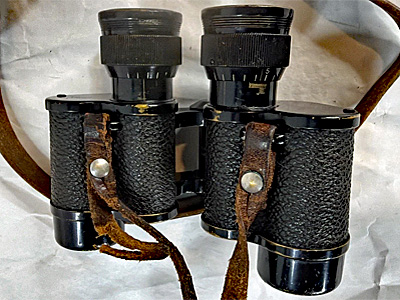


These 6×24 military service binoculars are accompanied by the original brown leather Trageriemen (carrying strap).
Brown leather case with strap, marked on bottom with vertical rectangle containing the Swiss cross over the letters “Sch” (Schweiz) armed forces property stamp, then “W. PLÜSS” over “Sattler” over “REIDEN” over the numbers “48” (last two digits of 1948, year of case manufacture), then “6×24.” Reiden is a municipality in the district of Willisau in the canton of Lucerne in Switzerland.
Kern Aarau
6×24 1934, №13560, Aarau, Swiss Confederation
|
|
Swiss Confederation 6×24 military service binoculars, with Strichplatte (graduated range finding scale) in right lens, “№13560” production serial number, heavy construction, made of brass, black “Vulkanite” schwarzes Kunstleder (black synthetic leather) Körperbedeckung (body covering), brass fittings. Manufactured in 1934 by Kern, Aarau, Switzerland for the armed forces of the Swiss Confederation. Left prism cover marked in white with Das Schweizerkreuz (the Swiss cross) over “1934” over “6×24” with “Kern / Aarau” at the bottom left. Right prism cover marked in white with Swiss cross over “Armee-Modell” over “№13560” production serial number. Right front lens cover marked in white with Swiss cross over “№13560” production serial number. Left front lens cover marked in white with Swiss cross. |

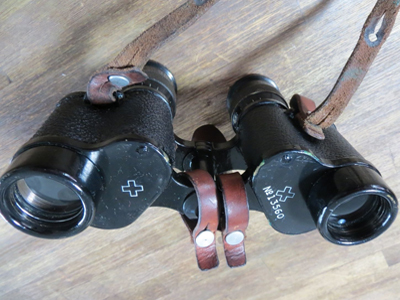


These 6×24 military service binoculars are accompanied by the original brown leather Trageriemen (carrying strap), and brown leather Aknöpflasche (button tab).
Kern Aarau
6×24 1938, №17060, Aarau, Swiss Confederation
|
|
Swiss Confederation 6×24 military service binoculars, with Strichplatte (graduated range finding scale) in right lens, “№17060” production serial number, heavy construction, made of brass, black “Vulkanite” schwarzes Kunstleder (black synthetic leather) Körperbedeckung (body covering), brass fittings. Manufactured in 1938 by Kern, Aarau, Switzerland for the armed forces of the Swiss Confederation. Left prism cover marked in white with Das Schweizerkreuz (the Swiss cross) over “1938” over “6×24” with “Kern / Aarau” at the bottom left. Right prism cover marked in white with Swiss cross over “Armee-Modell” over “№17060” production serial number. Right front lens cover marked in white with Swiss cross over “№17060” production serial number. Left front lens cover marked in white with Swiss cross. |


Brown leather case with strap, marked on bottom with inverted vertical rectangle containing the Swiss cross over the letters “Sch” (Schweiz) armed forces property stamp, over the numbers “38” (last two digits of 1938, year of case manufacture), over “W. GERBER” over “LENGNAU.” Lengnau is a municipality in the Biel/Bienne District in the canton of Bern in Switzerland.
Kern Aarau
6×24 1939, №18148, Aarau, Swiss Confederation
|
|
Swiss Confederation 6×24 military service binoculars, with Strichplatte (graduated range finding scale) in right lens, “№18148” production serial number, heavy construction, made of brass, black “Vulkanite” schwarzes Kunstleder (black synthetic leather) Körperbedeckung (body covering), brass fittings. Manufactured in 1939 by Kern, Aarau, Switzerland for the armed forces of the Swiss Confederation. Left prism cover marked in white with Das Schweizerkreuz (the Swiss cross) over “6×24” with “Kern / Aarau” at the bottom left. Right prism cover marked in white with Swiss cross over “Armee-Modell” over “№18148” production serial number. Right front lens cover marked in white with Swiss cross over “№18148” production serial number. Left front lens cover marked in white with Swiss cross. |


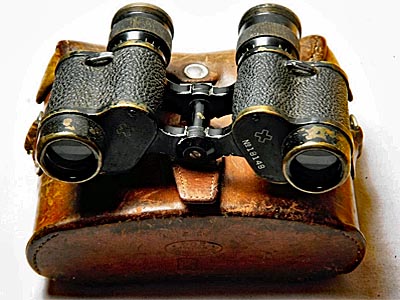


Brown leather case with strap, marked on bottom with vertical rectangle containing the Swiss cross over the letters “Sch” (Schweiz) armed forces property acceptance stamp, over maker’s name (unreadible) over “SATTLER” over “ZUG” in an oval, over the numbers “29” (last two digits of 1929, year of case manufacture). Zug is the largest town and capital of the canton of Zug in Switzerland.
Kern Aarau
6×24 1939, unknown production serial number, Aarau, Swiss Confederation
|
|
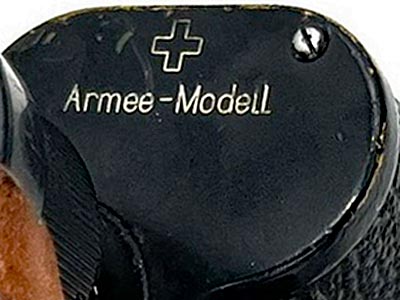
Swiss Confederation 6×24 military service binoculars, with Strichplatte (graduated range finding scale) in right lens, unknown production serial number, heavy construction, made of brass, black “Vulkanite” schwarzes Kunstleder (black synthetic leather) Körperbedeckung (body covering), brass fittings. Manufactured in 1939 by Kern, Aarau, Switzerland for the armed forces of the Swiss Confederation. Left prism cover marked in white with Das Schweizerkreuz (the Swiss cross) over “6×24” with “Kern / Aarau” at the bottom left. Right prism cover marked in white with Swiss cross over “Armee-Modell” without production serial number shown below. Right front lens cover marked in white with Swiss cross over unknown production serial number. Left front lens cover marked in white with Swiss cross. |
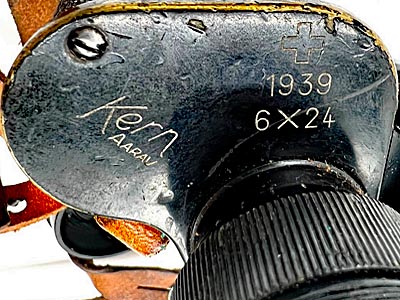
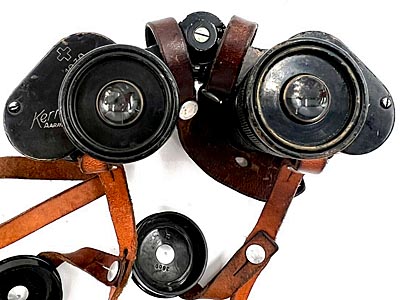
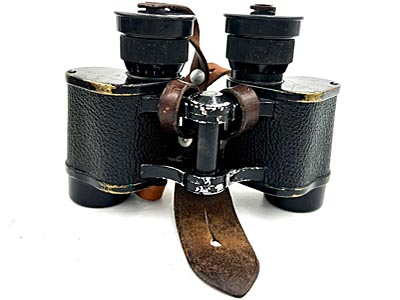
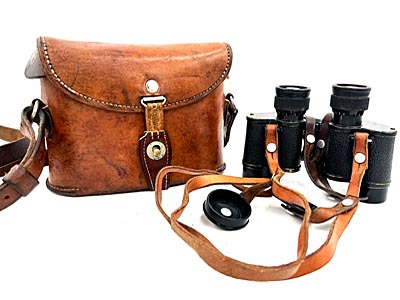
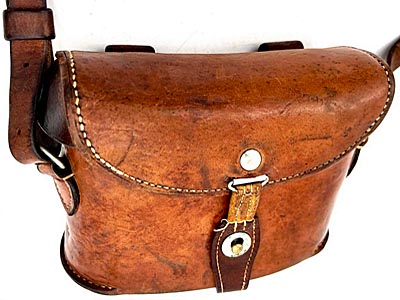
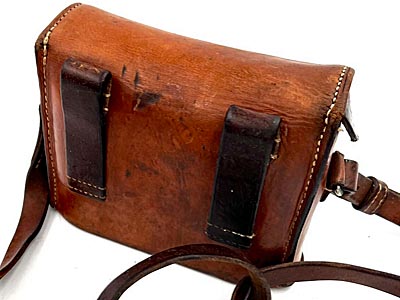
These 6×24 military service binoculars are accompanied by the original brown leather Trageriemen (carrying strap), brown leather Okularshutz (eye piece protector) or Regenschutzdeckel (rain protection cover) or Benutzerkappe (user cap), and brown leather Aknöpflasche (button tab).
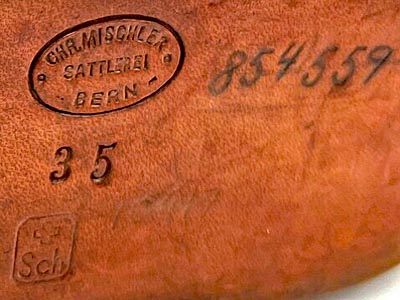
Brown leather case with strap, marked on bottom with maker’s name (“CHR. MISCHLER”) over “SATTLEREI” over “– BERN –” within an oval, over the numbers “35” (last two digits of 1935, year of case manufacture) over vertical rectangle containing the Swiss cross over the letters “Sch” (Schweiz) armed forces property stamp. To the right are the numbers “854559” written in ink.
Bern is the capital of the canton of Bern, and is the defacto capital of Switzerland.
Kern Aarau
6×24 , №22656, Aarau, Swiss Confederation
|
|
Swiss Confederation 6×24 military service binoculars, with Strichplatte (graduated range finding scale) in right lens, №22656 production serial number, heavy construction, made of brass, black “Vulkanite” schwarzes Kunstleder (black synthetic leather) Körperbedeckung (body covering), brass fittings. Manufactured in 1940 by Kern, Aarau, Switzerland for the armed forces of the Swiss Confederation. Left prism cover marked in white with Das Schweizerkreuz (the Swiss cross) over “6×24” with “Kern / Aarau” at the bottom left. Right prism cover marked in white with Swiss cross over “Armee-Modell” without production serial number shown below. Right front lens cover marked in white with Swiss cross over №22656. Left front lens cover marked in white with Swiss cross. |
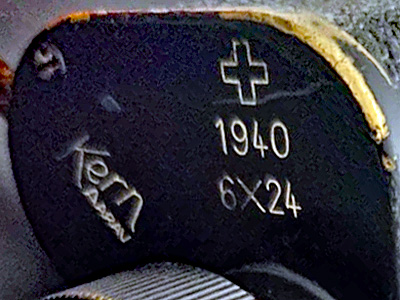
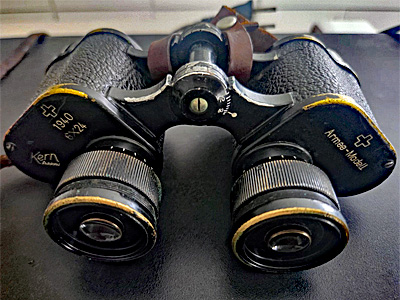
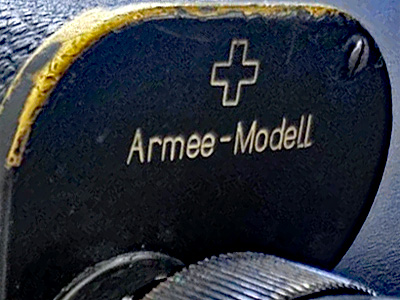
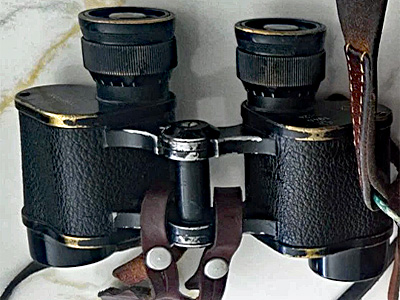
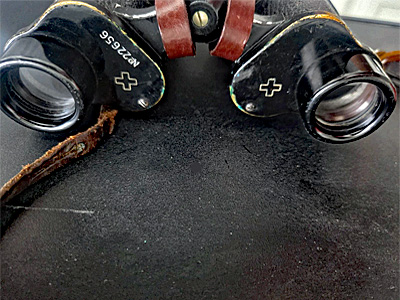
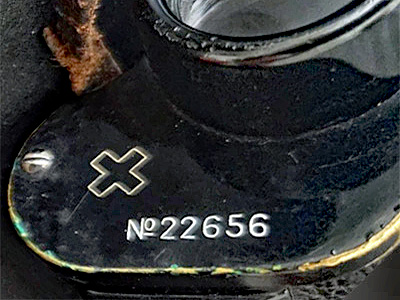
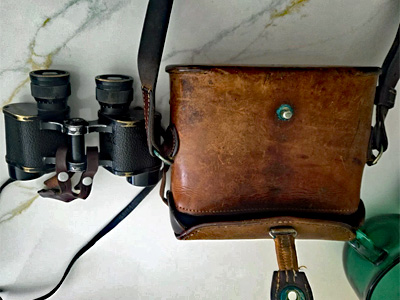
These 6×24 military service binoculars are accompanied by the original brown leather Trageriemen (carrying strap), brown leather Aknöpflasche (button tab), and brown leather Behalter or Köcher (case) with strap.
Kern Aarau
6×24 1940, №23105, Aarau, Swiss Confederation
|
|
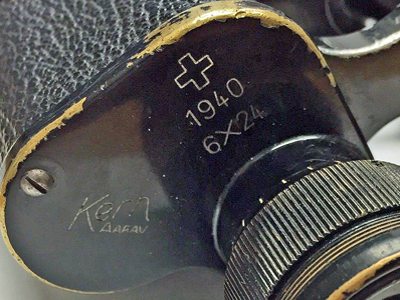
Swiss Confederation 6×24 military service binoculars, with Strichplatte (graduated range finding scale) in right lens, “№23105” production serial number, heavy construction, made of brass, black “Vulkanite” schwarzes Kunstleder (black synthetic leather) Körperbedeckung (body covering), brass fittings. Manufactured in 1940 by Kern, Aarau, Switzerland for the armed forces of the Swiss Confederation. Left prism cover marked in white with Das Schweizerkreuz (the Swiss cross) over “1940” over “6×24” with “Kern / Aarau” at the bottom left. Right prism cover marked in white with Swiss cross over “Armee-Modell.” Right front lens cover marked in white with Swiss cross over “№23105” production serial number. Left front lens cover marked in white with Swiss cross. |



Kern Aarau
6×24 1940, №23377, Aarau, Swiss Confederation
|
|
Swiss Confederation 6×24 military service binoculars, with Strichplatte (graduated range finding scale) in right lens, “№23377” production serial number, heavy construction, made of brass, black “Vulkanite” schwarzes Kunstleder (black synthetic leather) Körperbedeckung (body covering), brass fittings. Manufactured in 1940 by Kern, Aarau, Switzerland for the armed forces of the Swiss Confederation. Left prism cover marked in white with Das Schweizerkreuz (the Swiss cross) over “1940” over “6×24” with “Kern / Aarau” at the bottom left. Right prism cover marked in white with Swiss cross over “Armee-Modell.” Right front lens cover marked in white with Swiss cross over “№23377” production serial number. Left front lens cover marked in white with Swiss cross. |


These 6×24 military service binoculars are accompanied by the original brown leather Trageriemen (carrying strap), and brown leather Okularshutz (eye piece protector) or Regenschutzdeckel (rain protection cover) or Benutzerkappe (user cap).
Brown leather case with strap, marked on bottom with vertical rectangle containing the Swiss cross over the letters “Sch” (Schweiz) armed forces property stamp, over maker’s name “F.E. KAPPELER” over “19 SATTLER 28” (1928, year of case manufacture, SATTLER, saddler, leather worker) over “PFYN” all within an oval. Pfyn is a municipality in the Frauenfeld District in the canton of Thurgau in Switzerland.”
Kern Aarau
6×24 1940, №23973, Aarau, Swiss Confederation
|
|
Swiss Confederation 6×24 military service binoculars, with Strichplatte (graduated range finding scale) in right lens, “№23973” production serial number, heavy construction, made of brass, black “Vulkanite” schwarzes Kunstleder (black synthetic leather) Körperbedeckung (body covering), brass fittings. Manufactured in 1940 by Kern, Aarau, Switzerland for the armed forces of the Swiss Confederation. Left prism cover marked in white with Das Schweizerkreuz (the Swiss cross) over “1940” over “6×24” with “Kern / Aarau” at the bottom left. Right prism cover marked in white with Swiss cross over “Armee-Modell.” Right front lens cover marked in white with Swiss cross over “№23973” production serial number. Left front lens cover marked in white with Swiss cross. |


These 6×24 military service binoculars are accompanied by the original brown leather Trageriemen (carrying strap), brown leather Okularshutz (eye piece protector) or Regenschutzdeckel (rain protection cover) or Benutzerkappe (user cap), brown leather Aknöpflasche (button tab), and brown leather case.
Kern Aarau
6×24 1941, №28986, Aarau, Swiss Confederation
|
|
Swiss Confederation 6×24 military service binoculars, with Strichplatte (graduated range finding scale) in right lens, “№28986” production serial number, heavy construction, made of brass, black “Vulkanite” schwarzes Kunstleder (black synthetic leather) Körperbedeckung (body covering), brass fittings. Manufactured in 1941 by Kern, Aarau, Switzerland for the armed forces of the Swiss Confederation. Left prism cover marked in white with Das Schweizerkreuz (the Swiss cross) over “1941” over “6×24” with “Kern / Aarau” at the bottom left. Right prism cover marked in white with Swiss cross over “Armee-Modell.” Right front lens cover marked in white with Swiss cross over “№28986” production serial number. Left front lens cover marked in white with Swiss cross. |


These 6×24 military service binoculars are accompanied by the original brown leather Trageriemen (carrying strap), and brown leather Okularshutz (eye piece protector) or Regenschutzdeckel (rain protection cover) or Benutzerkappe (user cap), and brown leather Aknöpflasche (button tab).
Brown leather case with strap, marked on bottom with maker’s name “E.MUNZ” over “SATTLER” (saddler, leather worker) over “BÜRGLEN (Thg)” over “41” (1941, year of case manufacture), over vertical rectangle containing the Swiss cross over the letter “J” (unknown) armed forces property stamp. Bürglen is a municipality in the district of Weinfelden in the canton of Thurgau in Switzerland.
Kern Aarau
6×24 1942, №31433, Aarau, Swiss Confederation
|
|
Swiss Confederation 6×24 military service binoculars, with Strichplatte (graduated range finding scale) in right lens, “№31433” production serial number, heavy construction, made of brass, black “Vulkanite” schwarzes Kunstleder (black synthetic leather) Körperbedeckung (body covering), brass fittings. Manufactured in 1942 by Kern, Aarau, Switzerland for the armed forces of the Swiss Confederation. Left prism cover marked in white with Das Schweizerkreuz (the Swiss cross) over “1942” over “6×24” with “Kern / Aarau” at the bottom left. Right prism cover marked in white with Swiss cross over “Armee-Modell.” Right front lens cover marked in white with Swiss cross over “№31433” production serial number. Left front lens cover marked in white with Swiss cross. |


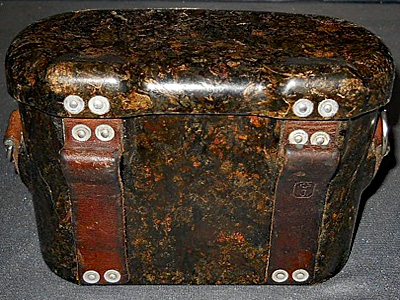

These 6×24 military service binoculars are accompanied by the original brown leather Trageriemen (carrying strap), and brown leather Okularshutz (eye piece protector) or Regenschutzdeckel (rain protection cover) or Benutzerkappe (user cap).
Brown Bakelit or Presstoff (Bakelite) carrying case, marked on right belt loop with vertical rectangle containing the Swiss cross over the letter “J” (unknown) armed forces property stamp.
Kern Aarau
6×24 1942, №31464, Aarau, Swiss Confederation
|
|
Swiss Confederation 6×24 military service binoculars, with Strichplatte (graduated range finding scale) in right lens, “№31464” production serial number, heavy construction, made of brass, black “Vulkanite” schwarzes Kunstleder (black synthetic leather) Körperbedeckung (body covering), brass fittings. Manufactured in 1942 by Kern, Aarau, Switzerland for the armed forces of the Swiss Confederation. Left prism cover marked in white with Das Schweizerkreuz (the Swiss cross) over “1942” over “6×24” with “Kern / Aarau” at the bottom left. Right prism cover marked in white with Swiss cross over “Armee-Modell.” Right front lens cover marked in white with Swiss cross over “№31464” production serial number. Left front lens cover marked in white with Swiss cross. |


These 6×24 military service binoculars are accompanied by the original brown leather Trageriemen (carrying strap).
Kern Aarau
6×24 1942, №31576, Aarau, Swiss Confederation
|
|
Swiss Confederation 6×24 military service binoculars, with Strichplatte (graduated range finding scale) in right lens, “№31576” production serial number, heavy construction, made of brass, black “Vulkanite” schwarzes Kunstleder (black synthetic leather) Körperbedeckung (body covering), brass fittings. Manufactured in 1942 by Kern, Aarau, Switzerland for the armed forces of the Swiss Confederation. Left prism cover marked in white with Das Schweizerkreuz (the Swiss cross) over “6×24” with “Kern / Aarau” at the bottom left. Right prism cover marked in white with Swiss cross over “Armee-Modell.” Right front lens cover marked in white with Swiss cross over “№31576” production serial number. Left front lens cover marked in white with Swiss cross. |
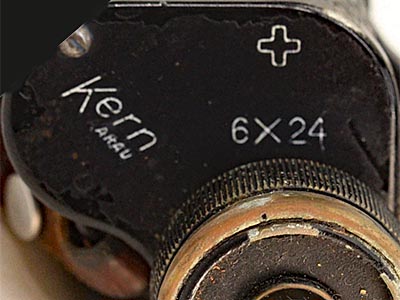


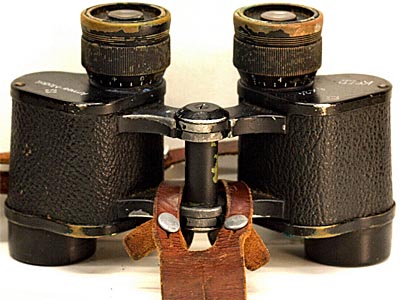

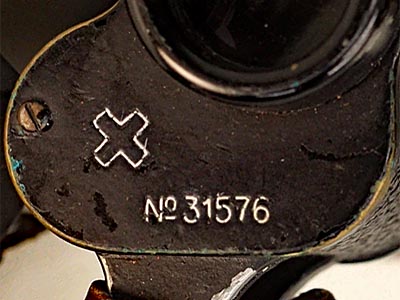
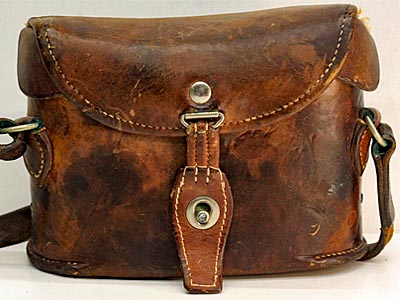
These 6×24 military service binoculars are accompanied by the original brown leather Trageriemen (carrying strap), and brown leather Aknöpflasche (button tab).
Kern Aarau
6×24 1942, №31580, Aarau, Swiss Confederation
|
|
Swiss Confederation 6×24 military service binoculars, with Strichplatte (graduated range finding scale) in right lens, “№31580” production serial number, heavy construction, made of brass, black “Vulkanite” schwarzes Kunstleder (black synthetic leather) Körperbedeckung (body covering), brass fittings. Manufactured in 1942 by Kern, Aarau, Switzerland for the armed forces of the Swiss Confederation. Left prism cover marked in white with Das Schweizerkreuz (the Swiss cross) over “1942” over “6×24” with “Kern / Aarau” at the bottom left. Right prism cover marked in white with Swiss cross over “Armee-Modell.” Right front lens cover marked in white with Swiss cross over “№31580” production serial number. Left front lens cover marked in white with Swiss cross. |


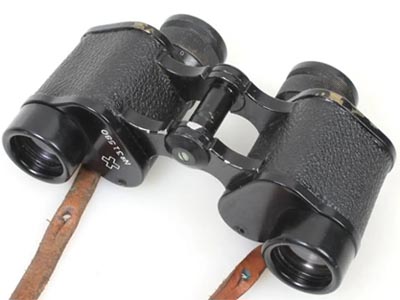


These 6×24 military service binoculars are accompanied by the original brown leather Trageriemen (carrying strap).
Kern Aarau
6×24 1942, №32315, Aarau, Swiss Confederation
|
|
Swiss Confederation 6×24 military service binoculars, with Strichplatte (graduated range finding scale) in right lens, “№32315” production serial number, heavy construction, made of brass, black “Vulkanite” schwarzes Kunstleder (black synthetic leather) Körperbedeckung (body covering), brass fittings. Manufactured in 1942 by Kern, Aarau, Switzerland for the armed forces of the Swiss Confederation. Left prism cover marked in white with Das Schweizerkreuz (the Swiss cross) over “1942” over “6×24” with “Kern / Aarau” at the bottom left. Right prism cover marked in white with Swiss cross over “Armee-Modell.” Right front lens cover marked in white with Swiss cross over “AR” over “№32315” production serial number. Left front lens cover marked in white with Swiss cross. |
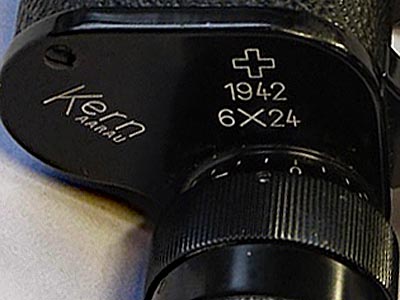


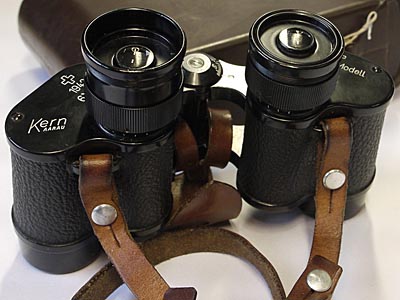


The initials “AR” refer to “Appenzell Ausserrhoden,” the Swiss canton (half-canton) where the city of Aarau is located.
Kern & Co. AG, founded in Aarau by Jakob Kern in 1819, operated in Aarau for over 170 years before being taken over by Leica in 1988, and closed in 1991 or 1992.
The term, “AG,” is the abbreviation of Aktiengesellschaft, the German legal term for a public limited liability company or joint stock corporation. The term is derived from the German words Aktien (shares) and Gesellschaft (company or society).
The corporate designation, “AG,” signifies that the business is a separate legal entity owned by shareholders, whose liability is limited to their investment, and whose shares may be publicly traded on stock exchanges.
These 6×24 military service binoculars are accompanied by the original brown leather Trageriemen (carrying strap), and brown leather Aknöpflasche (button tab).
Kern Aarau
6×24 1942, №32928, Aarau, Swiss Confederation
|
|
Swiss Confederation 6×24 military service binoculars, with Strichplatte (graduated range finding scale) in right lens, “№32928” production serial number, heavy construction, made of brass, black “Vulkanite” schwarzes Kunstleder (black synthetic leather) Körperbedeckung (body covering), brass fittings. Manufactured in 1942 by Kern, Aarau, Switzerland for the armed forces of the Swiss Confederation. Left prism cover marked in white with Das Schweizerkreuz (the Swiss cross) over “1942” over “6×24” with “Kern / Aarau” at the bottom left. Right prism cover marked in white with Swiss cross over “Armee-Modell.” Right front lens cover marked in white with Swiss cross over “№32928” production serial number. Left front lens cover marked in white with Swiss cross. |
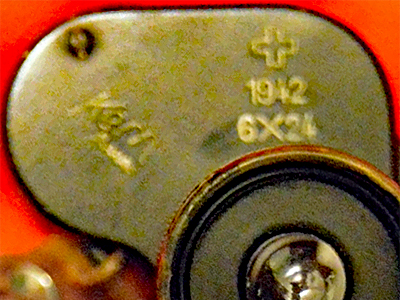
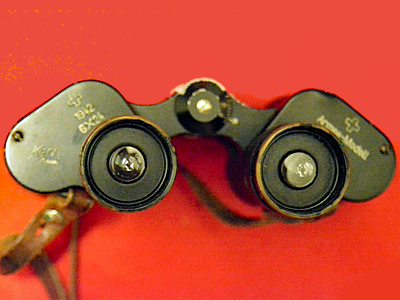
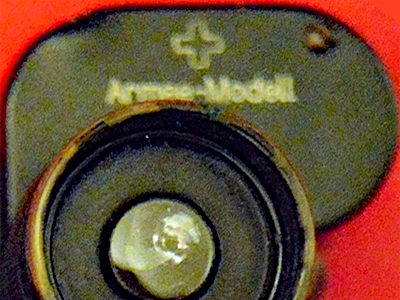
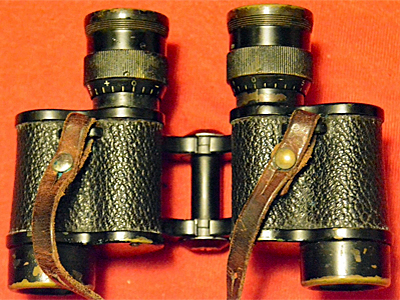
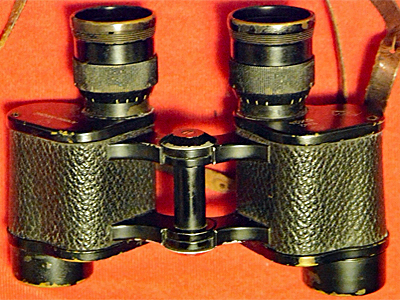
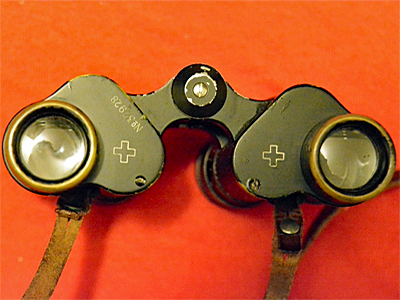
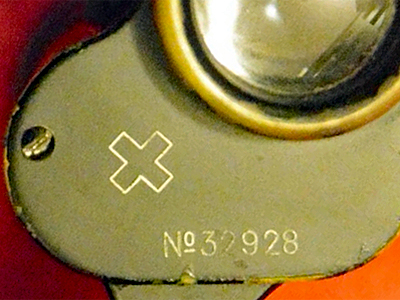
These 6×24 military service binoculars are accompanied by the original brown leather Trageriemen (carrying strap).
Kern Aarau
6×30 Production Serial Number Series
Kern Aarau
6×30 1941, №1725, Aarau, Swiss Confederation
|
|
Swiss Confederation 6×30 military service binoculars, with Strichplatte (graduated range finding scale) in right lens, “№1725” production serial number, heavy construction, made of brass, black “Vulkanite” schwarzes Kunstleder (black synthetic leather) Körperbedeckung (body covering), brass fittings. Manufactured in 1941 by Kern, Aarau, Switzerland for the armed forces of the Swiss Confederation. Left prism cover marked in white with Das Schweizerkreuz (the Swiss cross) over “1941” over “6×30” with “Kern / Aarau” at the bottom left. Right prism cover marked in white with Swiss cross over “Armee-Modell.” Right front lens cover marked in white with Swiss cross over “№1725” production serial number. Left front lens cover marked in white with Swiss cross. |
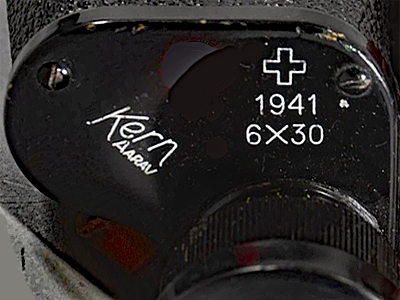
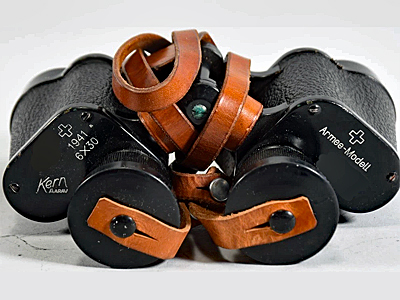
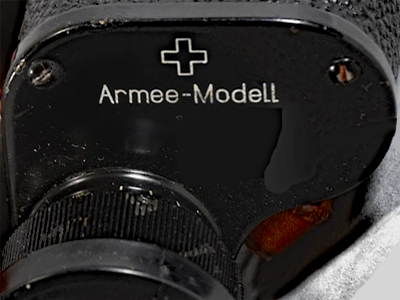
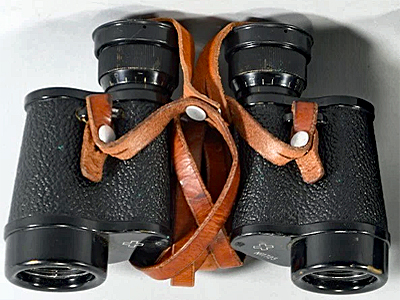
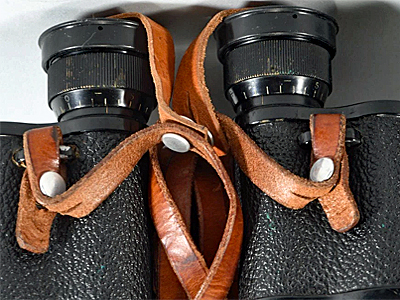
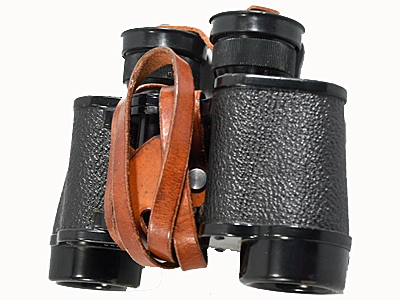
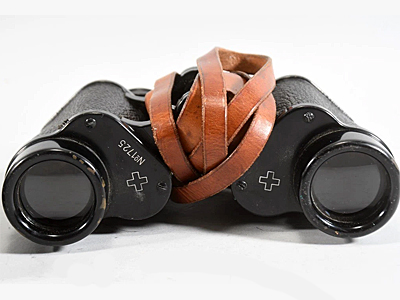
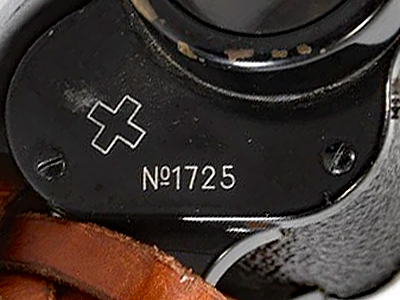
These 6×30 military service binoculars are accompanied by the original brown leather Trageriemen (carrying strap), and brown leather Okularshutz (eye piece protector) or Regenschutzdeckel (rain protection cover) or Benutzerkappe (user cap), and brown leather Aknöpflasche (button tab).
Kern & Co. AG, founded in Aarau by Jakob Kern in 1819, operated in Aarau for over 170 years before being taken over by Leica in 1988, and closed in 1991 or 1992.
Kern Aarau
6×30 1943, №3264, Aarau, Swiss Confederation
|
|
Swiss Confederation 6×30 military service binoculars, with Strichplatte (graduated range finding scale) in right lens, “№3264” production serial number, heavy construction, made of brass, black “Vulkanite” schwarzes Kunstleder (black synthetic leather) Körperbedeckung (body covering), brass fittings. Manufactured in 1943 by Kern, Aarau, Switzerland for the armed forces of the Swiss Confederation. Left prism cover marked in white with Das Schweizerkreuz (the Swiss cross) over “1943” over “6×30” with “Kern / Aarau” at the bottom left. Right prism cover marked in white with Swiss cross over “Armee-Modell.” Right front lens cover marked in white with Swiss cross over “№3264” production serial number. Left front lens cover marked in white with Swiss cross. |
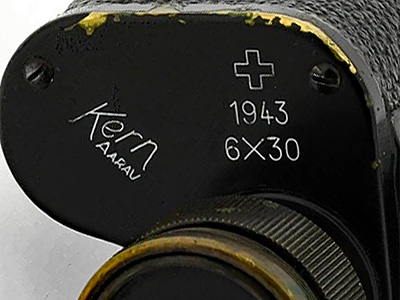
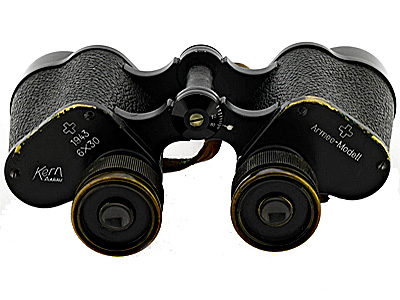
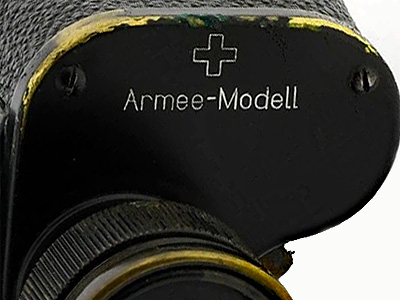
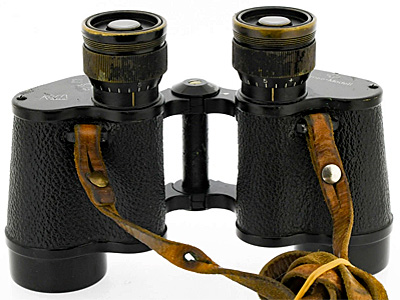
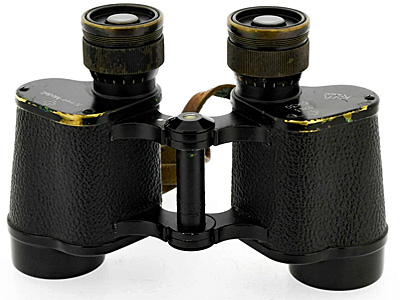
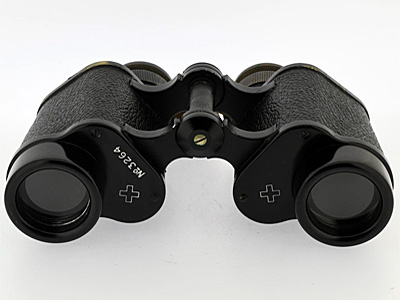
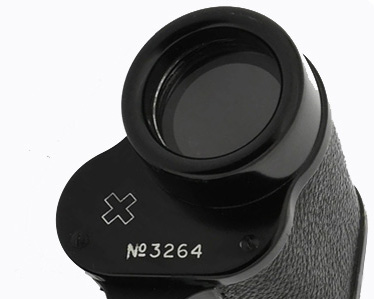
These 6×30 military service binoculars are accompanied by the original brown leather Trageriemen (carrying strap).
Kern & Co. AG, founded in Aarau by Jakob Kern in 1819, operated in Aarau for over 170 years before being taken over by Leica in 1988, and closed in 1991 or 1992.
Kern Aarau
6×30 1943, №3264, Aarau, Swiss Confederation
|
|
Swiss Confederation 6×30 military service binoculars, with Strichplatte (graduated range finding scale) in right lens, “№3264” production serial number, heavy construction, made of brass, black “Vulkanite” schwarzes Kunstleder (black synthetic leather) Körperbedeckung (body covering), brass fittings. Manufactured in 1943 by Kern, Aarau, Switzerland for the armed forces of the Swiss Confederation. Left prism cover marked in white with Das Schweizerkreuz (the Swiss cross) over “1943” over “6×30” with “Kern / Aarau” at the bottom left. Right prism cover marked in white with Swiss cross over “Armee-Modell.” Right front lens cover marked in white with Swiss cross over “№3264” production serial number. Left front lens cover marked in white with Swiss cross. |
These 6×30 military service binoculars are accompanied by the original brown leather Trageriemen (carrying strap).
Kern & Co. AG, founded in Aarau by Jakob Kern in 1819, operated in Aarau for over 170 years before being taken over by Leica in 1988, and closed in 1991 or 1992.
Kern Aarau
8 x 30 Production Serial Number Series
Kern Aarau
8 × 30 1961, № 13570, Aarau, Swiss Confederation
|
|
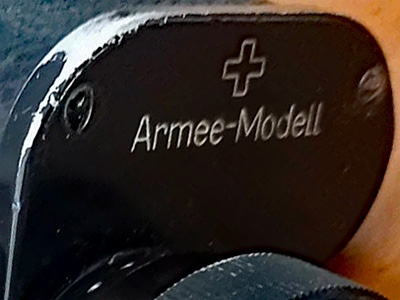
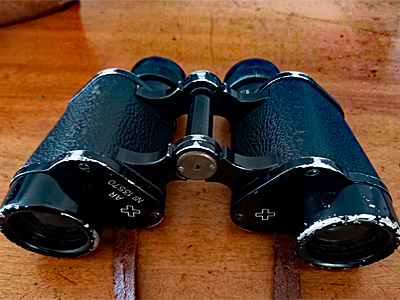
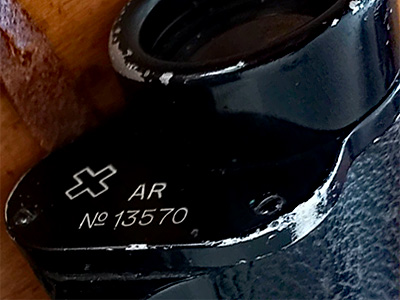
Swiss Confederation 8 × 30 military service binoculars, with Strichplatte (graduated range finding scale) in right lens, “№ 13570” production serial number, heavy construction, made of brass, black “Vulkanite” schwarzes Kunstleder (black synthetic leather) Körperbedeckung (body covering), brass fittings. Manufactured in 1961 by Kern, Aarau, Switzerland for the armed forces of the Swiss Confederation. Left prism cover marked in white with Das Schweizerkreuz (the Swiss cross) over “1961” over “8 x 30” with “Kern / Aarau” at the bottom left. Right prism cover marked in white with Swiss cross over “Armee-Modell.” Right objective lens cover marked in white with Swiss cross and “AR” over “№ 13570” production serial number. The initials “AR” refer to “Appenzell Ausserrhoden,” the Swiss canton (half-canton) where the city of Aarau is located. Left objective lens cover marked in white with Swiss cross. |
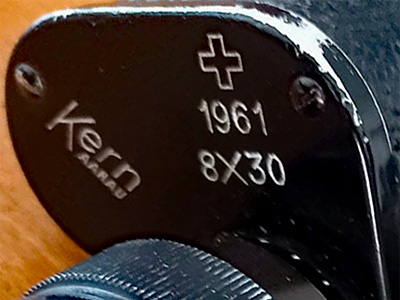
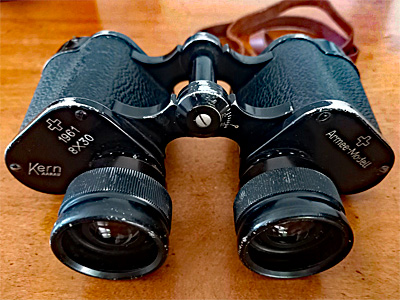
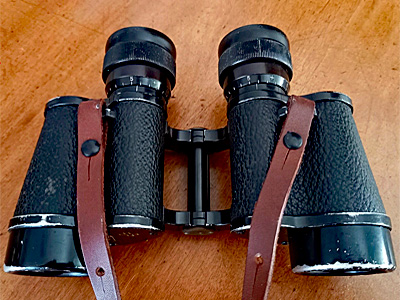
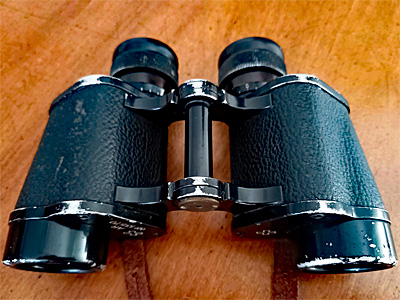
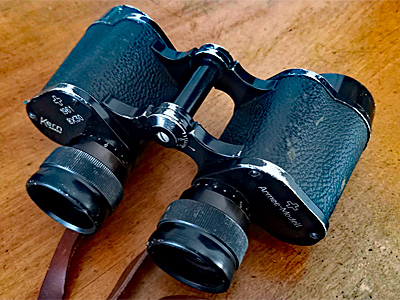
These 8 × 30 military service binoculars are accompanied by the original brown leather Trageriemen (carrying strap).
Kern & Co. AG, founded in Aarau by Jakob Kern in 1819, operated in Aarau for over 170 years before being taken over by Leica in 1988, and closed in 1991 or 1992.
Kern Aarau
8 × 30 1963, № 16315, Aarau, Swiss Confederation
|
|
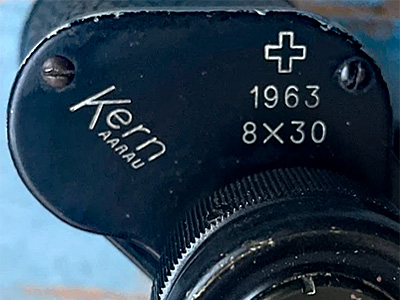
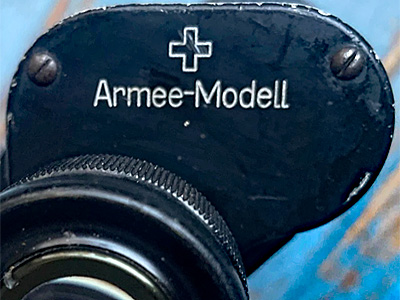
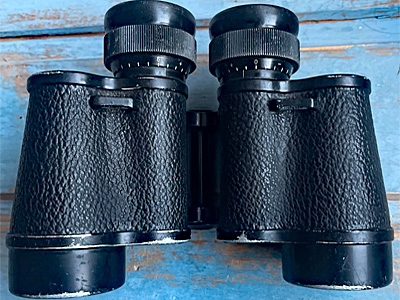
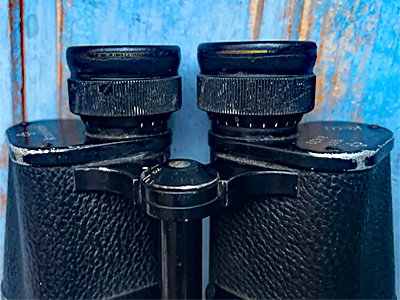
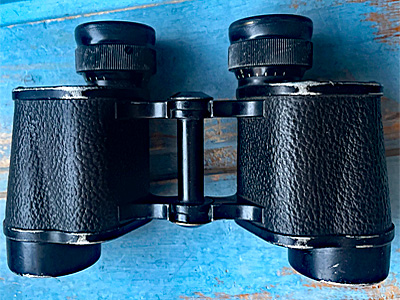
Swiss Confederation 8 × 30 military service binoculars, with Strichplatte (graduated range finding scale) in right lens, “№ 16315” production serial number, heavy construction, made of brass, black “Vulkanite” schwarzes Kunstleder (black synthetic leather) Körperbedeckung (body covering), brass fittings. Manufactured in 1963 by Kern, Aarau, Switzerland for the armed forces of the Swiss Confederation. Left prism cover marked in white with Das Schweizerkreuz (the Swiss cross) over “1963” over “8 x 30” with “Kern / Aarau” at the bottom left. Right prism cover marked in white with Swiss cross over “Armee-Modell.” Right objective lens cover marked in white with Swiss cross and “AR” over “№ 16315” production serial number. The initials “AR” refer to “Appenzell Ausserrhoden,” the Swiss canton (half-canton) where the city of Aarau is located. Left objective lens cover marked in white with Swiss cross. |
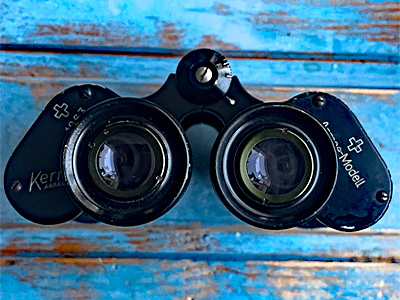

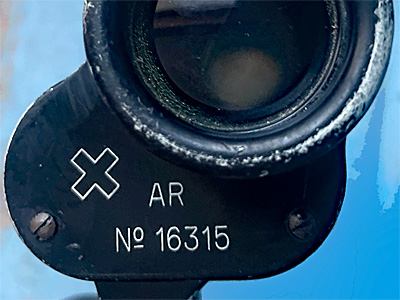
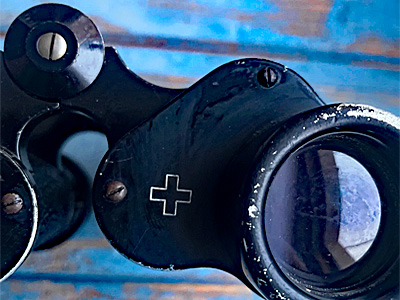
These 8 × 30 military service binoculars are accompanied by the original brown leather Trageriemen (carrying strap).
Kern & Co. AG, founded in Aarau by Jakob Kern in 1819, operated in Aarau for over 170 years before being taken over by Leica in 1988, and closed in 1991 or 1992.
Kern Aarau
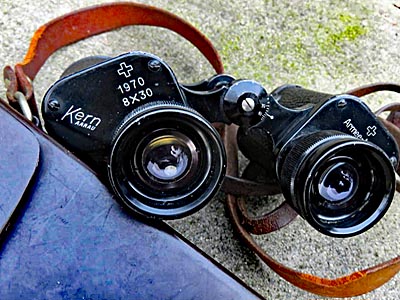
8 × 30 1970, № 36830, Aarau, Swiss Confederation
|
|
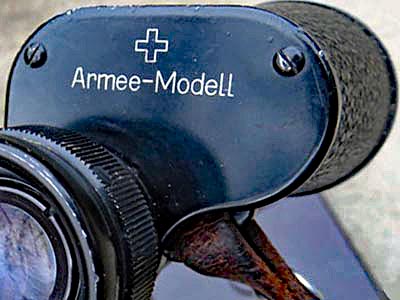
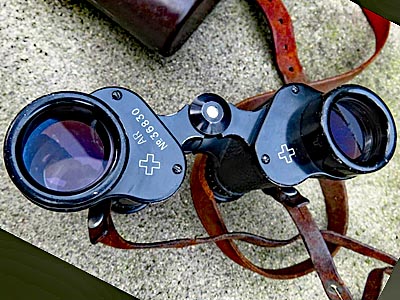
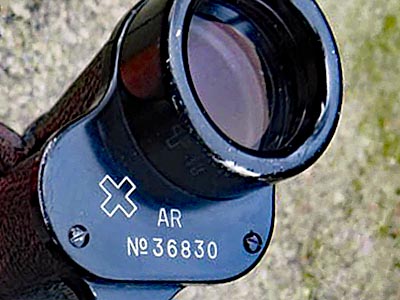
Swiss Confederation 8 × 30 military service binoculars, with Strichplatte (graduated range finding scale) in right lens, “№ 368300” production serial number, heavy construction, made of brass, black “Vulkanite” schwarzes Kunstleder (black synthetic leather) Körperbedeckung (body covering), brass fittings. Manufactured in 1970 by Kern, Aarau, Switzerland for the armed forces of the Swiss Confederation. Left prism cover marked in white with Das Schweizerkreuz (the Swiss cross) over “1970” over “8 x 30” with “Kern / Aarau” at the bottom left. Right prism cover marked in white with Swiss cross over “Armee-Modell.” Right objective lens cover marked in white with Swiss cross and “AR” over “№ 36830” production serial number. The initials “AR” refer to “Appenzell Ausserrhoden,” the Swiss canton (half-canton) where the city of Aarau is located. Left objective lens cover marked in white with Swiss cross. |
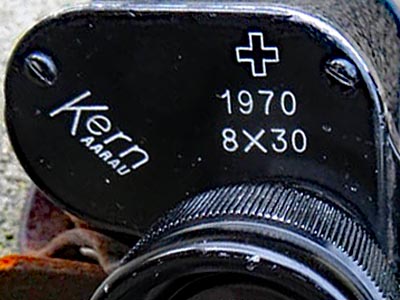
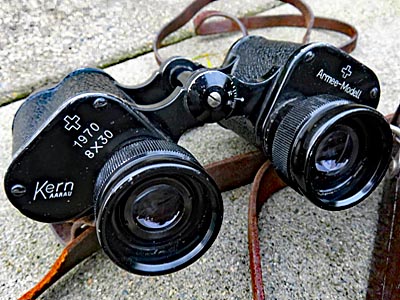
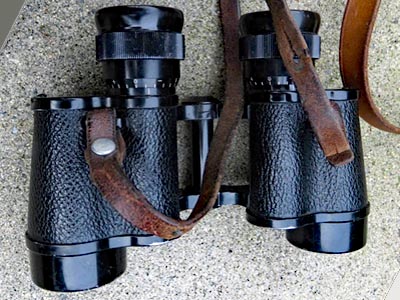

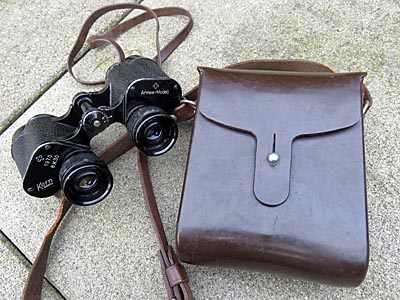
These 8 × 30 military service binoculars are accompanied by the original brown leather Trageriemen (carrying strap).
Kern & Co. AG, founded in Aarau by Jakob Kern in 1819, operated in Aarau for over 170 years before being taken over by Leica in 1988, and closed in 1991 or 1992.
CZ 6×24 1917-10 No. 798141
VERY RARE ZEISS EXPORT BINDINGS FOR SWITZERLAND – WIKI CARL ZEISS JENA D.F. 6x without Zeiss logo, only engraved with the Swiss cross! With original strap, clip-on lens cap, and rain cover!
As early as 1898, military Zeiss binoculars were released for export by the Bavarian War Ministry outside the German army. Switzerland was among the major purchasers of military Zeiss binoculars.
The Swiss authorities were somewhat particular regarding the labeling of binoculars. Around 1910, the old cursive script used for frame-built binoculars was still used on Swiss export models. Occasionally, the covers were marked with the Swiss cross, and the Zeiss lens symbol was engraved in small type on the central lens cover. This particular example shows no indication of the manufacturer. It is only engraved with the Swiss cross and the serial number!
To stimulate the economy, accessories were manufactured domestically. The carrying strap with snap-on clasp and brass rain cover are riveted together as a single piece. The manufacturer’s mark and year are stamped inside the rain cover.
The specifications are 6×24: 6x magnification with 24 mm objective lenses.
Both upper housing covers are engraved with the Swiss cross. This symbol was officially adopted as the Swiss coat of arms in 1815. It represents Christianity and symbolizes neutrality, democracy, and peace.
The serial number 798141, typical of Swiss export models, is located on the lower right housing cover and is filled with white paint. Manufactured in 1917, it comes from a large production run of 3,400 binoculars. Some of these were intended for export to Switzerland.
The one-piece zinc eyepieces are characteristic of late wartime production, as are the simply screwed-on housing covers.
The objective lenses have round caps.
The large clamping screw is a military indicator.
The manufacturer’s mark, dated 1917, is present.>
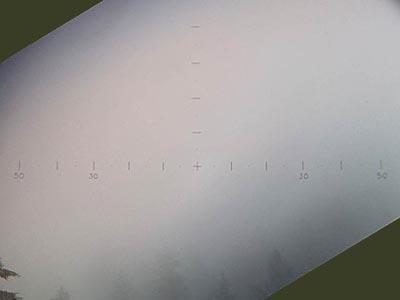
View through the binoculars.
Width = 15 cm, Height = 10.5 cm, Weight = 480 g.