


NEDINSCO (Nederlandse Instrumenten Compagnie)
Carl Zeiss, Venlo, Netherlands, 1921-1942
After the First World War, according to terms of the Treaty of Versailles, Germany was prohibited from producing military optical equipment in its home factories in Germany. As a result, the Carl Zeiss optical firm of Jena, Thuringia, Germany, on January 21, 1921 founded the Nederlandse Instrumenten Compagnie – Netherlands Instruments Company, NEDINSCO), in the city of ‘sGravenhage (The Hague) in the Netherlands to produce military optical equipment.
The Netherlands was not a signatory country of the Treaty of Versailles.
Initially, the Netherlands Instruments Company (NEDINSCO) was located in ‘sGravenhage (The Hague). Later in 1921, the company set up its headquarters in an old disused chocolate factory in Flushing, Netherlands. The company produced cameras, binoculars, rangefinders, microscopes, periscopes, and similar optical instruments.
Two years later, in 1923, the company moved to a new location, and constructed a new factory, in Venlo, Netherlands, a city and municipality in southeastern Netherlands, close to the border with Germany. It is situated in the province of Limburg. The municipality of Venlo counted 101,578 inhabitants as of January 2019.
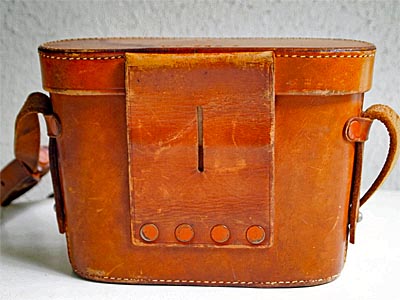
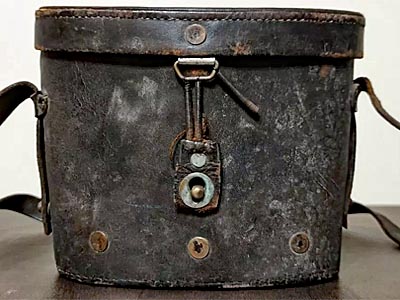
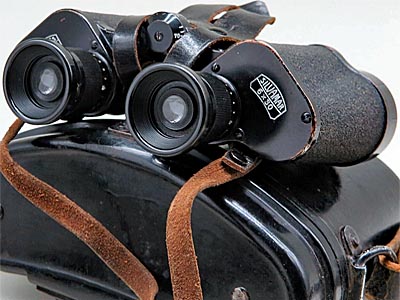
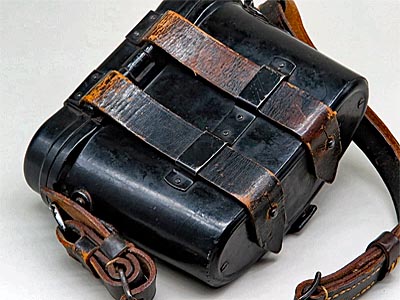
The NEDINSCO factory produced “civilian” and military optical equipment for domestic sales and for export to other countries. NEDINSCO optical equipment bore “civilian” markings, although with military features, such as the Strichplatte (graduated range finding scale), and leather cases with wide belt loops.
NEDINSCO produced military service binoculars for export sales to other countries, including Sweden, Switzerland, Turkey, and others.
The term, ‘s Gravenhage, is part of the NEDINSCO trademark logo. ‘s Gravenhage is the official name of The Hague, the capital city of the South Holland province of the Netherlands. The name translates to “the Count’s Grove” or “the Count’s private enclosure,” referring to the hunting lodge of the counts of Holland, which was located in a woodland area called Haghe, or “hedge”. The city is also known as Den Haag in Dutch and The Hague in English.
The spelling, ‘s Gravenhage, was officially used for the city from the 17th century onward. Today, this name is used only in some official documents, such as birth and marriage certificates. The city itself uses Den Haag in all its communications. The post office specifies that letters should be addressed to ‘s Gravenhage, but a letter to Den Haag will be delivered just as well. The railway stations use the name Den Haag, as do signposts.
The Hague is the third-largest city in the Netherlands, with a population of over 560,000 inhabitants as of 2023. It serves as the administrative capital of the Netherlands, and is home to the Dutch government, the Royal Family, and various international institutions, including the International Court of Justice.
The city has a rich history, with the Binnenhof, a complex of buildings that includes the Ridderzaal (Knight’s Hall) and the Armistice or Truce Hall, serving as the seat of the Dutch government since 1585. The Hague is also known for its multicultural population, with residents from various countries, including Suriname, Turkey, Morocco, and Indonesia.
In addition to its political and historical significance, The Hague is a cultural and tourist destination, featuring attractions such as the Peace Palace, the Hofvijver lake, and the beaches of Scheveningen. The city is also recognized for its street art and vibrant nightlife.
While the official name is ‘s-Gravenhage, the city commonly uses Den Haag in its communications, and both names are widely recognized.
NEDINSCO service glass optical equipment was marked to identify them as government military property.
Military service binoculars were issued to soldiers with specialized functions. For example, group leaders and artillery observers were issued military service binoculars to perform their duties.
The most common type of NEDINSCO service glass was the 6×30, based on the 6×30 Carl Zeiss Silvamar, introduced in 1910. The 6×30 Silvamar was light weight, 365 grams after 1935. Production of the 6×30 Silvamar was eventualy halted around 1975.
The number “6” identifies the magnification power (in this case, “6” indicates that objects appear six times closer than their actual distance).
The number “30” identifies the diameter in millimeters of the front (objective) lenses — the light gathering lenses — in this case 30 millimeters in diameter.
Another type of NEDINSCO service glass was the 8×30, based on the 8×30 Carl Zeiss Deltrentis, that first appeared in 1920.
The body was made of magnesium and was featherlight at just 390 grams. The wideangle eyepieces, designed by Albert Koenig, were free of distortion and contained 4 lens-elements. A single layer anti-reflection coating with a bluish color was first added during the Second World War. Production of the 8×30 Deltrentis was eventualy halted around 1995.
The number “8” identifies the magnification power (in this case, “8” indicates that objects appear eight times closer than their actual distance).
The number “30” identifies the diameter in millimeters of the front (objective) lenses — the light gathering lenses — in this case 30 millimeters in diameter.
“Vulkanite” schwarzes Kunstleder (black synthetic leather) Körperbedeckung (body covering)
 In Germany in the 1930s, an early type of black plastic synthetic leather called “Vulkanite” was used as the body covering of military and commercial Dienstgläser (service glasses) manufactured before World War II.
This “Vulkanite” schwarzes Kunstleder (black synthetic leather) Körperbedeckung (body covering) was the most common Dienstglas body covering used by the German armed forces (and also by most of the other armed forces of Europe) during the early years of the Second World War.
TM 30-506, WAR DEPARTMENT TECHNICAL MANUAL, GERMAN-ENGLISH MILITARY DICTIONARY, WAR DEPARTMENT, 20 MAY I944
The TM 30-506 manual describes “Vulkanite” schwarzes Kunstleder (black synthetic leather) Körperbedeckung (body covering) as “Kunstleder n” artificial leather.
Schwarz „Reis“ Raulack (black “rice” rough lacquer) Körperbedeckung (body covering)
 Early in the Second World War, a black Rauhlack (rough lacquer) body covering called schwarz „Reis“ Körperbedeckung (black “rice” body covering) also became a common Dienstglas body finish.
This new Dienstglas body covering began to replace the black “Vulkanite” (synthetic, leather-like, early plastic) body covering material on the housings of German field glasses.
The particular consistency of this schwarz „Reis“ (black “rice”) Rauhlack (rough lacquer) Körperbedeckung (body covering) was achieved by mixing crushed rice or finely granulated cork meal with black lacquer paint.
This schwarz „Reis“ Rauhlack Körperbedeckung (black “rice” rough lacquer body covering) became the most common Dienstglas body covering as the war progressed through 1942 and 1943.
This is a list of 6×24, 6×30, 8×30, and 8×40 military service binoculars, listed in serial number sequence, manufactured by the Carl Zeiss optical company, of Jena, Germany, dba NEDINSCO (Nederlandse Instrumenten Compagnie – Netherlands Instruments Company) in ‘sGravenhage (The Hague) and Venlo, Netherlands, for domestic sale and export to other countries from 1921 to 1933, prior to the Second World War, and later in Jena, Germany, during the Second World War, observed in collections and recorded from sources online.
6×24, 6×30, 8×30, and 8×40 Production Serial Numbers
Carl Zeiss Austro-Hungarian Monarchy Contract
6×24 and D.F. 6×30 Production Serial Number Series
Carl Zeiss Austro-Hungarian Monarchy contract
6×24 TELEX, November 1913, 373857, 21. 8. 14., Jena, Thuringia, Germany
|
|
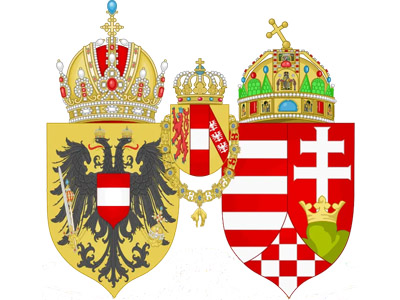
Austro-Hungarian Monarchy 6×24 military service binoculars, with ⊕ reticle (graduated range finding scale) in right lens, production serial number, 373857, heavy construction, made of brass, aluminum alloy prism and objective covers, brass objective lens rings, black synthetic leather body covering, brass fittings, manufactured in November 1913 by Carl Zeiss, Jena, Germany. Left prism cover marked in white at the top with “Ü.K.” (unknown meaning) / “Austro-Hungarian Monarchy coat of arms” / “21. 8. 14.” (21 August 1914, Austro-Hungarian armed forces property acceptance date) over “CARL ZEISS / JENA” trademark logo. Right prism cover marked in white with “TELEX” / “373857” production serial number logo over “6 X”. This Carl Zeiss 6×24, serial number, 373857, was produced about November 1913, within the original Carl Zeiss production serial number series established in 1894. |


Carl Zeiss Austro-Hungarian Monarchy contract
6×24 TELEX, December 1913, 378625, 21. 8. 14., Jena, Thuringia, Germany
|
|
Austro-Hungarian Monarchy 6×24 military service binoculars, with ⊕ reticle (graduated range finding scale) in right lens, production serial number, 378625, heavy construction, made of brass, aluminum alloy prism and objective covers, brass objective lens rings, black synthetic leather body covering, brass fittings, manufactured in December 1913 by Carl Zeiss, Jena, Germany. Left prism cover marked in white at the top with “Ü.K.” (unknown meaning) / “Austro-Hungarian Monarchy coat of arms” / “21. 8. 14.” (21 August 1914, Austro-Hungarian armed forces property acceptance date) over “CARL ZEISS / JENA” trademark logo. Right prism cover marked in white with “TELEX” / “378625” production serial number logo, over “6 X”. This Carl Zeiss 6×24, serial number, 378625, was produced about December 1913, within the original Carl Zeiss production serial number series established in 1894. |




Carl Zeiss Austro-Hungarian Monarchy contract
6×30 MARINEGLAS, August 1917, 773058, 11. 10. 17., Jena, Thuringia, Germany
|
|
Austro-Hungarian Monarchy 6×30 military service binoculars, with ⊕ reticle (graduated range finding scale) in right lens, production serial number, 773058, heavy construction, made of brass, aluminum alloy prism and objective covers, brass objective lens rings, black synthetic leather body covering, brass fittings, manufactured in August 1917 by Carl Zeiss, Jena, Germany. Left prism cover marked in white at the top with “Ü.K.” (unknown meaning) / “Austro-Hungarian Monarchy coat of arms” / “11. 10. 17.” (11 October 1917, Austro-Hungarian armed forces property acceptance date) over “CARL ZEISS / JENA” trademark logo. Right prism cover marked in white with “MARINEGLAS” / “773058” production serial number logo, over “6×30”. This Carl Zeiss 6×30, serial number, 773058, was produced about August 1917, within the original Carl Zeiss production serial number series established in 1894. |


Carl Zeiss Austro-Hungarian Monarchy contract
D.F. 6×30, February 1918, 858568, 22. 4. 18., Jena, Thuringia, Germany
|
|
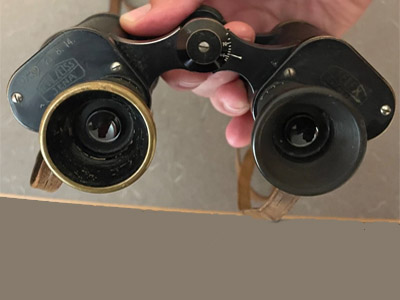
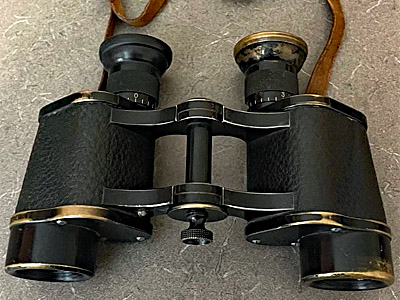
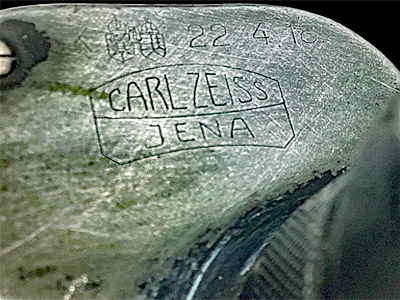
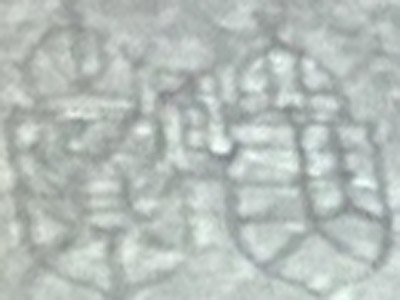
Austro-Hungarian Monarchy D.F.6×30 military service binoculars, with ⊕ reticle (graduated range finding scale) in right lens, production serial number, 858568, heavy construction, made of brass, aluminum alloy prism and objective covers, brass objective lens rings, black synthetic leather body covering, brass fittings, manufactured in February 1918 by Carl Zeiss, Jena, Germany. Left prism cover marked in white at the top with “Ü.K.” (unknown meaning) / “Austro-Hungarian Monarchy coat of arms” / “22. 4. 18.” (22 April 1918, Austro-Hungarian armed forces property acceptance date) over “CARL ZEISS / JENA” trademark logo. Right prism cover marked in white with “D.F.6×30″ / “858568” production serial number logo. This Carl Zeiss D.F.6×30, serial number, 858568, was produced about February 1918, within the original Carl Zeiss production serial number series established in 1894. |



Carl Zeiss NEDINSCO domestic and overseas sales
6×24 TELEX, August 1922, 1170843, ‘s Gravenhage (The Hague), Netherlands
|
|
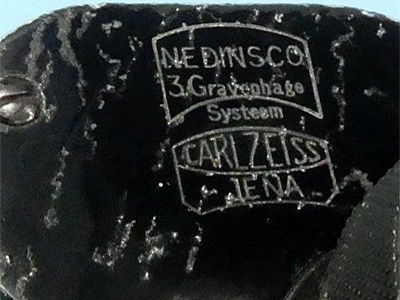
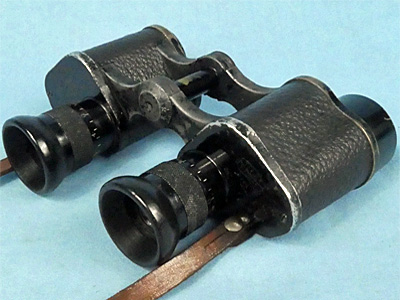
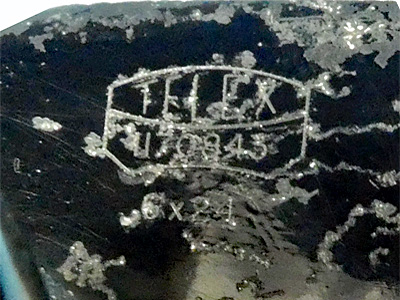
NEDINSCO 6×24 binoculars, production serial number, 1170843, heavy construction, made of brass, black “Vulkanite” schwarzes Kunstleder (black synthetic leather) Körperbedeckung (body covering), aluminum alloy prism and objective covers, brass objective lens rings. Manufactured about August 1922 by Carl Zeiss, NEDINSCO, ‘s Gravenhage (The Hague), Netherlands for domestic and overseas sales. Left prism cover marked in white with “NEDINSCO” (Nederlandse Instrumenten Compagnie, Netherlands Instruments Company) / ‘s Gravenhage (The Hague) / “Systeem” (System) over “CARL ZEISS” / “JENA” trademark logo. Right prism cover marked in white with “TELEX” / “1170843” (production serial number) logo over “6×24”. This Carl Zeiss 6×24 serial number, 1170843, was produced about August 1922, within the serial number sequence of the original Carl Zeiss production serial number series established in 1894. |

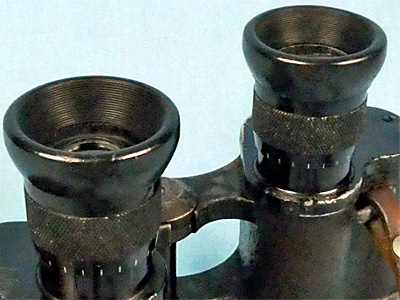
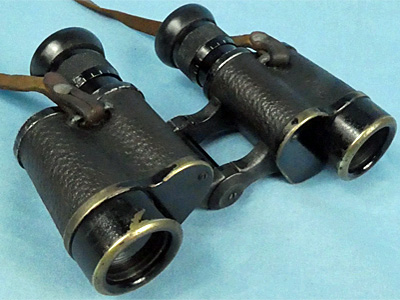
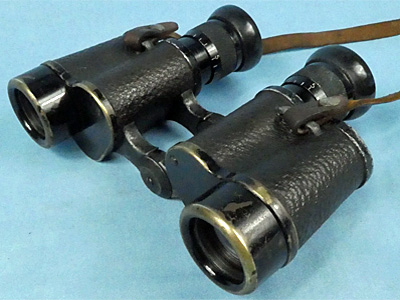
The Carl Zeiss company circumvented the 1919 Treaty of Versailles by manufacturing in the Netherlands and exporting to other countries.
Telex was manufactured, in four versions, with various design changes, from 1907 to 1932, with D.F.6×24 being its military analogue.
1st version (1907): 6×21, frame lens cap and lower prismatic cover made as single part, eyepiece case with “transverse” knurling.
2nd version (1908-1909): 6×21 with two-ring type lens frames.
3rd version (1911-1912): 6×24 with two-ring type lens frames.
4th version (1913-1932): 6×24 with rounded lens covers. Later production serial numbers moved to bridge spindle front button, continuing to the present.
This Telex 6×24 (production serial number, 1170843, marked in white on bridge spindle front button), is of the 4th version, produced about August 1922, between 1913 and 1932.
Carl Zeiss NEDINSCO domestic and overseas sales
6×24 TELEX, November 1923, 1212728, ‘s Gravenhage (The Hague), Netherlands
|
|
NEDINSCO 6×24 binoculars, production serial number, 1212728, heavy construction, made of brass, black “Vulkanite” schwarzes Kunstleder (black synthetic leather) Körperbedeckung (body covering), aluminum alloy prism and objective covers, brass objective lens rings. Manufactured about November 1923 by Carl Zeiss, NEDINSCO, ‘s Gravenhage (The Hague), Netherlands for domestic and overseas sales. Left prism cover marked in white with “NEDINSCO” (Nederlandse Instrumenten Compagnie, Netherlands Instruments Company) / ‘s Gravenhage (The Hague) / “Systeem” (System) over “CARL ZEISS” / “JENA” trademark logo. Right prism cover marked in white with “TELEX” / “1212728” (production serial number) logo over “6×24”. This Carl Zeiss 6×24 serial number, 1212728, was produced about November 1923, within the serial number sequence of the original Carl Zeiss production serial number series established in 1894. |


Carl Zeiss NEDINSCO domestic and overseas sales
6×24 TELEX, November 1923, 1212775, ‘s Gravenhage (The Hague), Netherlands
|
|
NEDINSCO 6×24 binoculars, production serial number, 1212775, heavy construction, made of brass, black “Vulkanite” schwarzes Kunstleder (black synthetic leather) Körperbedeckung (body covering), aluminum alloy prism and objective covers, brass objective lens rings. Manufactured about November 1923 by Carl Zeiss, NEDINSCO, ‘s Gravenhage (The Hague), Netherlands for domestic and overseas sales. Left prism cover marked in white with “NEDINSCO” (Nederlandse Instrumenten Compagnie, Netherlands Instruments Company) / ‘s Gravenhage (The Hague) / “Systeem” (System) over “CARL ZEISS” / “JENA” trademark logo. Right prism cover marked in white with “TELEX” / “1212775” (production serial number) logo over “6×24”. Brown leather case stamped with “NEDINSCO” (Nederlandse Instrumenten Compagnie, Netherlands Instruments Company) / ‘s Gravenhage (The Hague) / “Systeem” (System) over “CARL ZEISS” / “JENA” trademark logo. This Carl Zeiss 6×24 serial number, 1212775, was produced about November 1923, within the serial number sequence of the original Carl Zeiss production serial number series established in 1894. |


Carl Zeiss NEDINSCO domestic and overseas sales
8×40 DELACTIS, March 1926, 1312157, ‘s Gravenhage (The Hague), Netherlands
|
|
8×40 military service binoculars, with Strichplatte (graduated range finding scale) in right lens, production serial number, 1312157, light construction, made of aluminum alloy, black “Vulkanite” schwarzes Kunstleder (black synthetic leather) Körperbedeckung (body covering), brass prism covers, aluminum alloy objective covers and objective lens rings. Manufactured about March 1926 by Carl Zeiss, NEDINSCO, ‘s Gravenhage (The Hague), Netherlands for domestic and overseas sales. Said to be part of a small group of military service binoculars produced for the Union of Soviet Socialist Republics. Left prism cover marked in white with “NEDINSCO” over ‘s Gravenhage over “Systeem” over “CARL ZEISS / JENA” trademark logo. Right prism cover marked in white with “DELACTIS” / “1312157” logo over “8×40”. This Carl Zeiss 8×30 serial number, 1312157, was produced about March 1926, within the serial number sequence of the original Carl Zeiss production serial number series established in 1894. |


Carl Zeiss NEDINSCO domestic and overseas sales
8×40 DELACTIS, April 1926, 1316645, ‘s Gravenhage (The Hague), Netherlands
|
|
8×40 military service binoculars, with Strichplatte (graduated range finding scale) in right lens, production serial number, 1316645, light construction, made of aluminum alloy, black “Vulkanite” schwarzes Kunstleder (black synthetic leather) Körperbedeckung (body covering), brass prism covers, aluminum alloy objective covers and objective lens rings. Manufactured about April 1926 by Carl Zeiss, NEDINSCO, ‘s Gravenhage (The Hague), Netherlands for domestic and overseas sales. Said to be part of a small group of military service binoculars produced for the Union of Soviet Socialist Republics. Left prism cover marked in white with “NEDINSCO” over ‘s Gravenhage over “Systeem” over “CARL ZEISS / JENA” trademark logo. Right prism cover marked in white with “DELACTIS” / “1316645” logo over “8×40”. Stamped to the right is a Soviet Russian marking (“1940” / triangle enclosing letter “P” over number “75”). This Carl Zeiss 8×30 serial number, 1316645, was produced about April 1926, within the serial number sequence of the original Carl Zeiss production serial number series established in 1894. |


Carl Zeiss NEDINSCO Argentine Republic contract
6×30 SILVAMAR, March 1927, 1355184, № 3568, ‘s Gravenhage (The Hague), Netherlands
|
|
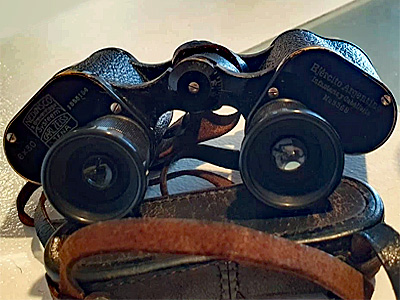
Argentine Republic 6×30 military service binoculars, with Strichplatte (graduated range finding scale) in right lens, production serial number, 1355184, light construction, made of aluminum alloy, black “Vulkanite” schwarzes Kunstleder (black synthetic leather) Körperbedeckung (body covering), aluminum alloy prism and objective covers, brass objective lens rings. Manufactured about March 1927 by Carl Zeiss, NEDINSCO, ‘s Gravenhage (The Hague), Netherlands, for the armed forces of the Argentine Republic. Left prism cover marked in white with “6×30” then “NEDINSCO” / ‘s Gravenhage / “Systeem” / “CARL ZEISS / JENA” trademark logo then production serial number “1355184”. Right prism cover marked in white with “Ejército Argentino” (Argentine Army), over “Infanteria y Caballeria” (Infantry and Cavalry) over “№ 3568” (Number 3568, Argentine Republic armed forces property number). This Carl Zeiss 6×30 serial number, 1355184, was produced about March 1927, within the serial number sequence of the original Carl Zeiss production serial number series established in 1894. These binoculars came from Martinez, Argentina. |



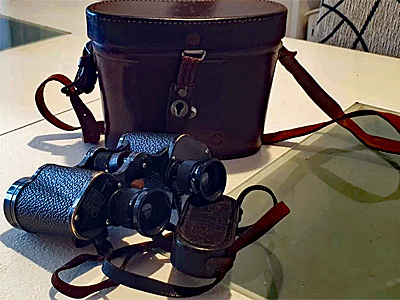


Carl Zeiss NEDINSCO domestic and overseas sales
8×30 DELTRENTIS, June 1927, 1367587, ‘s Gravenhage (The Hague), Netherlands
|
|
8×30 military service binoculars, with Strichplatte (graduated range finding scale) in right lens, production serial number, 1367587, light construction, made of aluminum alloy, black “Vulkanite” schwarzes Kunstleder (black synthetic leather) Körperbedeckung (body covering), aluminum alloy prism and objective covers, brass objective lens rings. Manufactured about June 1927 by Carl Zeiss, NEDINSCO, ‘s Gravenhage (The Hague), Netherlands for domestic and overseas sales. Left prism cover marked in white with “NEDINSCO” / ‘s Gravenhage / “Systeem” / “CARL ZEISS / JENA” trademark logo. Right prism cover marked in white with “DELTRENTIS” / “1367587” logo over “8×30”. This Carl Zeiss 8×30 serial number, 1367587, was produced about June 1927, within the serial number sequence of the original Carl Zeiss production serial number series established in 1894. |
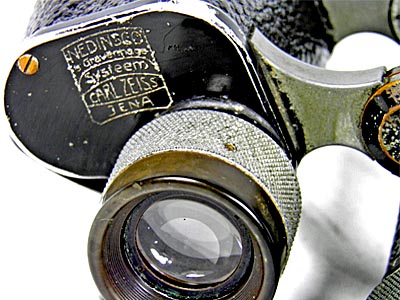
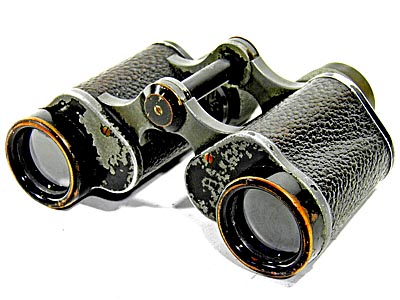

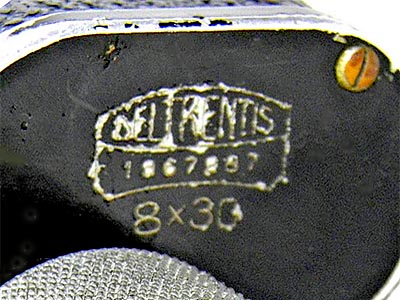
Carl Zeiss NEDINSCO domestic and overseas sales
8×30 DELTRENTIS, June 1927, 1368832, ‘s Gravenhage (The Hague), Netherlands
|
|
8×30 military service binoculars, with Strichplatte (graduated range finding scale) in right lens, production serial number, 1368832, light construction, made of aluminum alloy, black “Vulkanite” schwarzes Kunstleder (black synthetic leather) Körperbedeckung (body covering), aluminum alloy prism and objective covers, brass objective lens rings. Manufactured about June 1927 by Carl Zeiss, NEDINSCO, ‘s Gravenhage (The Hague), Netherlands for domestic and overseas sales. Left prism cover marked in white with “NEDINSCO” / ‘s Gravenhage / “Systeem” / “CARL ZEISS / JENA” trademark logo. Right prism cover marked in white with “DELTRENTIS” / “1368832” logo over “8×30”. This Carl Zeiss 8×30 serial number, 1368832, was produced about June 1927, within the serial number sequence of the original Carl Zeiss production serial number series established in 1894. |


Carl Zeiss, Jena domestic and overseas sales
6×30 SILVAMAR, December 1927, 1395401, Jena, Thuringia, Germany
6×30 military service binoculars, with Strichplatte (graduated range finding scale) in right lens, production serial number, 1395401, light construction, made of aluminum alloy, black “Vulkanite” schwarzes Kunstleder (black synthetic leather) Körperbedeckung (body covering), aluminum alloy prism and objective covers, brass objective lens rings.
Manufactured about December 1927 by Carl Zeiss, Jena, Thuringia, Germany, for domestic and overseas sales.
Left prism cover marked in white with “CARL ZEISS” / “JENA” trademark logo.
Right prism cover marked in white with “SILVAMAR” / “1395401” logo over “6×30”.
This Carl Zeiss 6×30 serial number, 1395401, was produced about December 1927, within the serial number sequence of the original Carl Zeiss production serial number series established in 1894.
Carl Zeiss NEDINSCO Kingdom of Sweden contract
6×24 Dienstglas, October 1928, 1445122, Nr 147, 1929, ‘s Gravenhage (The Hague), Netherlands
Kingdom of Sweden 6×24 military service binoculars, with Strichplatte (graduated range finding scale) in right lens, production serial number, 1445122, heavy construction, made of brass, black “Vulkanite” schwarzes Kunstleder (black synthetic leather) Körperbedeckung (body covering), aluminum alloy prism and objective covers, brass objective lens rings.
Manufactured about October 1928 by Carl Zeiss, NEDINSCO, ‘s Gravenhage (The Hague), Netherlands, for the armed forces of the Kingdom of Sweden.
Left prism cover marked in white with “Systeem” (System) over “NEDINSCO” (Nederlandse Instrumenten Compagnie, Netherlands Instruments Company) / “CARL ZEISS” / “JENA” trademark logo / ‘s Gravenhage, over production serial number “1445122”.
Right prism cover marked in white with Kingdom of Sweden crown, over “Nr 147” (Number 147, Kingdom of Sweden armed forces property number), over “1929” (Kingdom of Sweden armed forces property year of acceptance), over “6×24”.
Right front objective cover marked in white with “VF 134 A”. Brown leather case marked with “147” over “VF 134 A” on top of case cover.
This Carl Zeiss 6×24 serial number, 1445122, was produced about October 1928, within the serial number sequence of the original Carl Zeiss production serial number series established in 1894.
Carl Zeiss NEDINSCO domestic and overseas sales
6×30 SILVAMAR, September 1929, 1490635, ‘s Gravenhage (The Hague), Netherlands
6×30 military service binoculars, with Strichplatte (graduated range finding scale) in right lens, production serial number, 1490635, light construction, made of aluminum alloy, black “Vulkanite” schwarzes Kunstleder (black synthetic leather) Körperbedeckung (body covering), aluminum alloy fittings.
Manufactured about September 1929 by Carl Zeiss, NEDINSCO, ‘s Gravenhage (The Hague), Netherlands for domestic and overseas sales.
Left prism cover marked in white with “Systeem” (System) over “NEDINSCO” (Nederlandse Instrumenten Compagnie, Netherlands Instruments Company), then “CARL ZEISS” / “JENA” trademark logo, then ‘s Gravenhage.
Right prism cover marked in white with “SILVAMAR” / “6×30” logo.
Production serial number, “1490635”, marked in white on bridge spindle front button, was produced about September 1929, within the serial number sequence of the original Carl Zeiss production serial number series established in 1894.
Carl Zeiss NEDINSCO domestic and overseas sales
6×30 SILVAMAR, September 1931, 1578357, ‘s Gravenhage (The Hague), Netherlands
6×30 military service binoculars, with Strichplatte (graduated range finding scale) in right lens, production serial number, 1578357 (front and rear spindle buttons reversed), light construction, made of aluminum alloy, black “Vulkanite” schwarzes Kunstleder (black synthetic leather) Körperbedeckung (body covering), brass fittings.
Manufactured about October 1931 by Carl Zeiss, NEDINSCO, ‘s Gravenhage (The Hague), Netherlands for domestic and overseas sales.
Left prism cover marked in white with “Systeem” (System) over “NEDINSCO” (Nederlandse Instrumenten Compagnie, Netherlands Instruments Company), then “CARL ZEISS” / “JENA” trademark logo, then ‘s Gravenhage, over production serial number “1578357”.
Right prism cover marked in white with “SILVAMAR” / “6×30” logo, above “1/2400” in lower right corner.
This Carl Zeiss 6×30 serial number, 1578357, was produced about September 1931, within the serial number sequence of the original Carl Zeiss production serial number series established in 1894.
Carl Zeiss NEDINSCO domestic and overseas sales
6×30 SILVAMAR, September 1931, 1578916, ‘s Gravenhage (The Hague), Netherlands
6×30 military service binoculars, with Strichplatte (graduated range finding scale) in right lens, production serial number, 1578916, light construction, made of aluminum alloy, black “Vulkanite” schwarzes Kunstleder (black synthetic leather) Körperbedeckung (body covering), brass fittings.
Manufactured about September 1931 by Carl Zeiss, NEDINSCO, ‘s Gravenhage (The Hague), Netherlands for domestic and overseas sales.
Left prism cover marked in white with “Systeem” (System) over “NEDINSCO” (Nederlandse Instrumenten Compagnie, Netherlands Instruments Company), then CARL ZEISS / JENA trademark logo, then ‘s Gravenhage, over production serial number “1578916”.
Right prism cover marked in white with “SILVAMAR” / “6×30” logo, above “1/2400” in lower right corner.
This Carl Zeiss 6×30 serial number, 1578916, was produced about September 1931, within the serial number sequence of the original Carl Zeiss production serial number series established in 1894.
Carl Zeiss NEDINSCO Kingdom of Sweden contract
6×30 Dienstglas, December 1931, 1585734, Ksp:2854g, ‘s Gravenhage (The Hague), Netherlands
Kingdom of Sweden 6×30 military service binoculars, with Strichplatte (graduated range finding scale) in right lens, production serial number, 1585734, light construction, made of aluminum alloy, black “Vulkanite” schwarzes Kunstleder (black synthetic leather) Körperbedeckung (body covering), aluminum alloy fittings.
Manufactured about December 1931 by Carl Zeiss, NEDINSCO, ‘s Gravenhage (The Hague), Netherlands for the armed forces of the Kingdom of Sweden.
Left prism cover marked in white with “Systeem” (System) over “NEDINSCO” (Nederlandse Instrumenten Compagnie, Netherlands Instruments Company), then “CARL ZEISS” / “JENA” trademark logo, then ‘s Gravenhage, over production serial number “1585734”.
Right prism cover marked in white with Kingdom of Sweden crown, over “6×30”, over “Ksp:2854g” (Kingdom of Sweden armed forces property number).
This Carl Zeiss 6×30 serial number, 1585734, was produced about December 1931, within the serial number sequence of the original Carl Zeiss production serial number series established in 1894.
Carl Zeiss NEDINSCO overseas sales
6×24 TELEX, January 1932, 1588018, ‘s Gravenhage (The Hague), Netherlands
NEDINSCO 6×24 binoculars, production serial number, 1588018, heavy construction, made of brass, black “Vulkanite” schwarzes Kunstleder (black synthetic leather) Körperbedeckung (body covering), aluminum alloy prism and objective covers, brass objective lens rings.
Manufactured about January 1932 by Carl Zeiss, NEDINSCO, ‘s Gravenhage (The Hague), Netherlands for overseas sales.
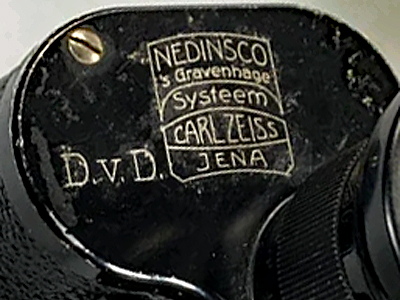
Left prism cover marked in white with “NEDINSCO” (Nederlandse Instrumenten Compagnie, Netherlands Instruments Company) / ‘s Gravenhage (The Hague), over “Systeem” (System), over “CARL ZEISS” / “JENA” trademark logo, with initials “D.v.D.” (Departement van Defensie, Department of Defense) to the lower left.
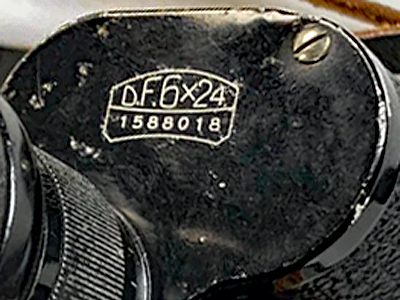
Right prism cover marked in white with “D.F.6×24” / “1588018” (production serial number) logo.
This Carl Zeiss 6×24 serial number, 1588018, was produced about January 1932, within the serial number sequence of the original Carl Zeiss production serial number series established in 1894.
Right rear bridge spindle support stamped with “22.R.A.” (property mark of “22 Regiment der Artillerie” — 22nd Regiment of Artillerie).
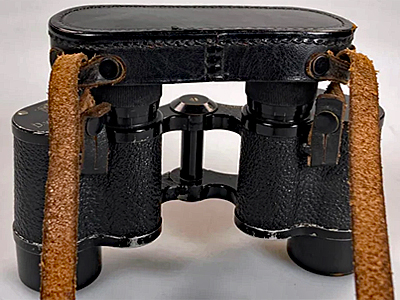
These D.F. 6×24 military service binoculars are accompanied by the original black leather Trageriemen (carrying strap), black leather Okularshutz (eye piece protector) or Regenschutzdeckel (rain protection cover) or Benutzerkappe (user cap). Black leather Behalter or Köcher (case) is marked with “D.v.D.” (Departement van Defensie, Department of Defense), “L.W.D.” (korps Lucht Wacht Dienst, Air Observation Service corps) stamped onto the leather.
Carl Zeiss NEDINSCO domestic and overseas sales
6×30 Silvamar, March 1932, 1591156, Venlo, Netherlands
6×30 military service binoculars, with Strichplatte (graduated range finding scale) in right lens, production serial number, 1591156, light construction, made of aluminum alloy, black “Vulkanite” schwarzes Kunstleder (black synthetic leather) Körperbedeckung (body covering), brass fittings.
Manufactured about March 1932 by Carl Zeiss, NEDINSCO, Venlo, Netherlands.
Left prism cover marked in white with “Systeem” (System) over “NEDINSCO” (Nederlandse Instrumenten Compagnie, Netherlands Instruments Company), then “CARL ZEISS / JENA” trademark logo, then “Venlo”.
Right prism cover marked in white with “SILVAMAR” / “6×30” logo.
Production serial number, “1591156”, marked in white on bridge spindle front button, was produced about March 1932, within the serial number sequence of the original Carl Zeiss production serial number series established in 1894.
Carl Zeiss NEDINSCO domestic and overseas sales
6×30 Silvamar, March 1932, 1591xxx, Venlo, Netherlands
6×30 military service binoculars, with Strichplatte (graduated range finding scale) in right lens, production serial number, 1591xxx (last three numbers unreadable), light construction, made of aluminum alloy, black “Vulkanite” schwarzes Kunstleder (black synthetic leather) Körperbedeckung (body covering), aluminum alloy prism and objective covers, brass objective lens rings.
Manufactured about March 1932 by Carl Zeiss, NEDINSCO, Venlo, Netherlands.
Left prism cover marked in white with “Systeem” (System) over “NEDINSCO” (Nederlandse Instrumenten Compagnie, Netherlands Instruments Company), then “CARL ZEISS” / “JENA” trademark logo, then “Venlo”.
Right prism cover marked in white with “SILVAMAR” / “6×30” logo.
Production serial number, “1591xxx”, marked in white on bridge spindle front button, was produced about March 1932, within the serial number sequence of the original Carl Zeiss production serial number series established in 1894.
Carl Zeiss domestic and overseas sales
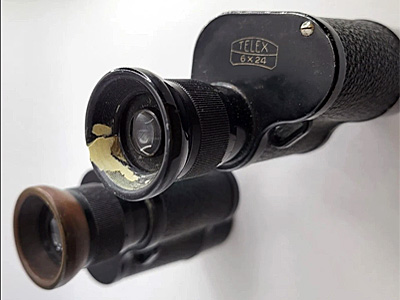
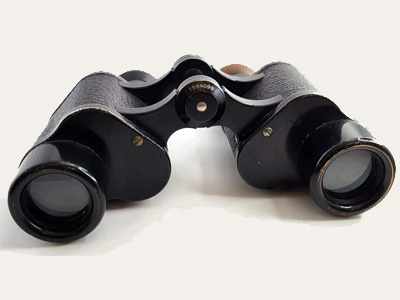
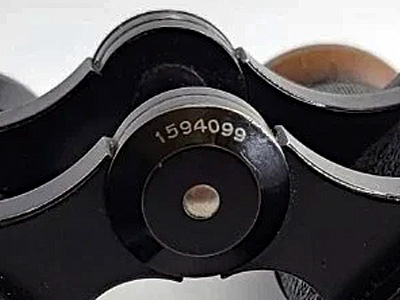
6×24 TELEX, April 1932, 1594099, Jena, Thuringia, Germany
NEDINSCO 6×24 binoculars, production serial number, 1594099, heavy construction, made of brass, black “Vulkanite” schwarzes Kunstleder (black synthetic leather) Körperbedeckung (body covering), aluminum alloy prism and objective covers, brass objective lens rings.
Manufactured about April 1932 by Carl Zeiss, Jena, Thuringia, Germany for domestic and overseas sales.
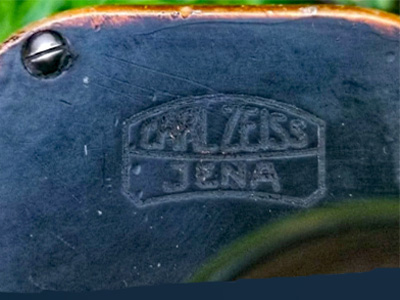
Left prism cover marked in white with “CARL ZEISS” / “JENA” trademark logo.
Right prism cover marked in white with “TELEX” / “6 X 24” logo.
This Carl Zeiss 6×24, production serial number, 1594099, marked in white on bridge spindle front button, was produced about April 1932, within the serial number sequence of the original Carl Zeiss production serial number series established in 1894.
Telex was manufactured, in four versions, with various design changes, from 1907 to 1932, with D.F.6×24 being its military analogue.
1st version (1907): 6×21, frame lens cap and lower prismatic cover made as single part, eyepiece case with “transverse” knurling.
2nd version (1908-1909): 6×21 with two-ring type lens frames.
3rd version (1911-1912): 6×24 with two-ring type lens frames.
4th version (1913-1932): 6×24 with rounded lens covers. Later production serial numbers moved to bridge spindle front button, continuing to the present.
This Telex 6×24, production serial number, 1594099, marked in white on bridge spindle front button, is of the 4th version, produced about August 1922, between 1913 and 1932.
Carl Zeiss, Jena domestic and overseas sales
6×30 Silvamar, December 1937, 1815342, Jena, Thuringia, Germany
6×30 military service binoculars, with Strichplatte (graduated range finding scale) in right lens, production serial number, 1815342, light construction, made of aluminum alloy, black “Vulkanite” schwarzes Kunstleder (black synthetic leather) Körperbedeckung (body covering), aluminum alloy prism and objective covers, brass objective lens rings.
Manufactured about December 1937 by Carl Zeiss, Jena, Thuringia, Germany.
Left prism cover marked in white with “CARL ZEISS” / “JENA” trademark logo.
Right prism cover marked in white with “SILVAMAR” / “6×30” logo.
Production serial number, “1815342”, marked in white on bridge spindle front button, was produced about December 1937, within the serial number sequence of the original Carl Zeiss production serial number series established in 1894.
Carl Zeiss, Jena domestic and overseas sales
6×30 Silvamar, March 1940, 1969934, Jena, Thuringia, Germany
6×30 military service binoculars, with Strichplatte (graduated range finding scale) in right lens, production serial number, 1969934, light construction, made of aluminum alloy, black “Vulkanite” schwarzes Kunstleder (black synthetic leather) Körperbedeckung (body covering), aluminum alloy prism and objective covers, brass objective lens rings.
Manufactured about March 1940 by Carl Zeiss, Jena, Thuringia, Germany.
Left prism cover marked in white with “CARL ZEISS” / “JENA” trademark logo.
Right prism cover marked in white with “SILVAMAR” / “6×30” logo.
Production serial number, “1969934”, marked in white on bridge spindle front button, was produced about March 1940, within the serial number sequence of the original Carl Zeiss production serial number series established in 1894.
Carl Zeiss, Jena Dienstglas military service binoculars
6×30 Silvamar, July 1940, 2000045, Jena, Thuringia, Germany
6×30 Dienstglas (“Serviceglass”) military service binoculars, with Strichplatte (graduated range finding scale) in right lens, production serial number, 2000045, light construction, made of aluminum alloy, black “Vulkanite” schwarzes Kunstleder (black synthetic leather) Körperbedeckung (body covering), brass prism and objective covers, brass objective lens rings.
Manufactured about July 1940 by Carl Zeiss, Jena, Thuringia, Germany.
Left prism cover marked in white with “CARL ZEISS” / “JENA” trademark logo.
Right prism cover marked in white with “Dienstglas” over “6×30” over “2000045” production serial number over “H/6400”.
Production serial number, “2000045”, was produced about July 1940, within the serial number sequence of the original Carl Zeiss production serial number series established in 1894.
The H/6400 designation, marked in white on the right prism cover, refers to the Strichplatte (graduated range finding scale) in the right lens of German Dienstglas military service binoculars, used for estimating distance.
Prior to 1941, German military service binoculars were marked with full manufacturer logos, and were finished with black “Vulkanite” schwarzes Kunstleder (black synthetic leather, hard plastic) Körperbedeckung (body covering).
From 1941 to 1945, manufacturer names were replaced with three-letter codes to hide production origins from Allied bombing. Body finishes changed first to textured black sand finish, the later Sandfarben (tan) paint finish. The tan finish was a general wartime production change for all metal finishes.
The most commonly used German military service binoculars were based on the Carl Zeiss 6×30 Silvamar, using uncoated optical glass (except for some Kriegsmarine (Navy) binoculars, used by submarine crews.
Carl Zeiss Kingdom of Sweden contract
6×30 Silvamar, September 1941, 2100xx0, Nr. 6540, 1942, Jena, Thuringia, Germany
Kingdom of Sweden 6×30 military service binoculars, with Strichplatte (graduated range finding scale) in right lens, production serial number, 2100xx0 (partially unreadable), light construction, made of aluminum alloy, schwarz „Reis“ Rauhlack Körperbedeckung (black “rice” rough lacquer body covering), aluminum alloy fittings.
Manufactured about September 1941 by Carl Zeiss, Jena, Thuringia, Germany for the armed forces of the Kingdom of Sweden.
Left prism cover marked in white with “CARL ZEISS” / “JENA” trademark logo. Right prism cover marked in white with “SILVAMAR / 6×30” logo.
Left front prism cover marked in white with “6×30”, over Kingdom of Sweden crown, over “Nr. 6540” (Kingdom of Sweden armed forces property number), over “1942” (Kingdom of Sweden armed forces property year of acceptance).
This Carl Zeiss 6×30 serial number, 2100xx0, was produced about September 1941, within the serial number sequence of the original Carl Zeiss production serial number series established in 1894.
Carl Zeiss Kingdom of Sweden contract
6×30 Silvamar, estimated manufacture October 1942, 217xxxx, Nr.1115, 1942, Jena, Thuringia, Germany
Kingdom of Sweden 6×30 military service binoculars, with Strichplatte (graduated range finding scale) in right lens, production serial number not visible (painted over with black paint), light construction, made of aluminum alloy, schwarz „Reis“ Rauhlack Körperbedeckung (black “rice” rough lacquer body covering), aluminum alloy fittings.
Estimated October 1942 date of manufacture by Carl Zeiss, Jena, Thuringia, Germany for the armed forces of the Kingdom of Sweden.
Left prism cover marked in white with “CARL ZEISS / JENA” trademark logo. Right prism cover marked in white with “SILVAMAR / 6×30” logo.
Left front prism cover marked in white with “6×30”, over Kingdom of Sweden crown, over “Nr. 1115” (Kingdom of Sweden armed forces property number), over “1942” (Kingdom of Sweden armed forces property year of acceptance).
This Carl Zeiss 6×30 serial number is unknown, estimated to be 217xxxx (about October 1942), within the serial number sequence of the original Carl Zeiss production serial number series established in 1894.
Carl Zeiss Kingdom of Sweden contract
6×30 Silvamar, November 1942, 2175433, Nr. 1833, 1942, Jena, Thuringia, Germany
Kingdom of Sweden 6×30 military service binoculars, with Strichplatte (graduated range finding scale) in right lens, production serial number, 2175433, light construction, made of aluminum alloy, schwarz „Reis“ Rauhlack Körperbedeckung (black “rice” rough lacquer body covering), aluminum alloy fittings.
Manufactured about November 1942 by Carl Zeiss, Jena, Thuringia, Germany for the armed forces of the Kingdom of Sweden.
Left prism cover marked in white with “CARL ZEISS / JENA” trademark logo. Right prism cover marked in white with “SILVAMAR / 6×30” logo.
Left front prism cover marked in white with “6×30”, over Kingdom of Sweden crown, over “Nr. 1833” (Kingdom of Sweden armed forces property number), over “1942” (Kingdom of Sweden armed forces property year of acceptance).
This Carl Zeiss 6×30 serial number, 2175433, was produced about November 1942, within the serial number sequence of the original Carl Zeiss production serial number series established in 1894.
Carl Zeiss Kingdom of Sweden contract
6×30 Silvamar, December 1942, 2179756, Nr. 4906, 1942, Jena, Thuringia, Germany
Kingdom of Sweden 6×30 military service binoculars, with Strichplatte (graduated range finding scale) in right lens, production serial number, 2179756, light construction, made of aluminum alloy, schwarz „Reis“ Rauhlack Körperbedeckung (black “rice” rough lacquer body covering), aluminum alloy fittings.
Manufactured about December 1942 by Carl Zeiss, Jena, Thuringia, Germany for the armed forces of the Kingdom of Sweden.
Left prism cover marked in white with “CARL ZEISS / JENA” trademark logo. Right prism cover marked in white with “SILVAMAR / 6×30” logo.
Left front prism cover marked in white with “6×30”, over Kingdom of Sweden crown, over “Nr. 4906” (Kingdom of Sweden armed forces property number), over “1942” (Kingdom of Sweden armed forces property year of acceptance).
This Carl Zeiss 6×30 serial number, 2179756, was produced about December 1942, within the serial number sequence of the original Carl Zeiss production serial number series established in 1894.
8×30 Production Serial Numbers
Carl Zeiss NEDINSCO
8×30 Deltrentis, June 1927, 1368832, ‘s Gravenhage (The Hague), Netherlands
8×30 military service binoculars, with Strichplatte (graduated range finding scale) in right lens, production serial number, 1368832, light construction, made of aluminum alloy, black “Vulkanite” schwarzes Kunstleder (black synthetic leather) Körperbedeckung (body covering), aluminum alloy prism and objective covers, brass objective lens rings.
Manufactured about June 1927 by Carl Zeiss, ‘s Gravenhage (The Hague), Netherlands.
Left prism cover marked in white with “NEDINSCO” / ‘sGravenhage / “Systeem” / “CARL ZEISS / JENA” trademark logo. Right prism cover marked in white with “DELTRENTIS” / 1368832″ logo over “8×30”.
This Carl Zeiss 8×30 serial number, 1368832, was produced about June 1927, within the serial number sequence of the original Carl Zeiss production serial number series established in 1894.
Carl Zeiss Swiss Confederation contract
8×30 Deltrentis, 1931, unknown serial number, ‘s Gravenhage (The Hague), Netherlands
8×30 military service binoculars, with Strichplatte (graduated range finding scale) in right lens, production serial number, unknown, light construction, made of aluminum alloy, black “Vulkanite” schwarzes Kunstleder (black synthetic leather) Körperbedeckung (body covering), aluminum alloy prism and objective covers, brass objective lens rings.
Manufactured in 1931 by Carl Zeiss, NEDINSCO, ‘s Gravenhage (The Hague), Netherlands for the armed forces of the Swiss Confederation.
Left prism cover marked in white with “NEDINSCO” / ‘sGravenhage / “Systeem” / “CARL ZEISS / JENA” trademark logo, and Swiss cross, over 1931, over 8×30. Right prism cover marked in white with Swiss cross over “Armee-Modell” over №2398″ (Swiss Confederation armed forces property number).
This Carl Zeiss 8×30 serial number, unknown, was produced in 1931, within the serial number sequence of the original Carl Zeiss production serial number series established in 1894.
Carl Zeiss, People’s Republic of China contract
8×30 Deltrentis, 1957, 2907478, Jena, Thuringia, Germany
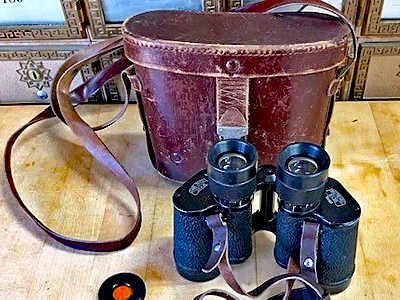
8×30 military service binoculars, with Strichplatte (graduated range finding scale) in right lens, production serial number, 2907478, light construction, made of aluminum alloy, black “Vulkanite” schwarzes Kunstleder (black synthetic leather) Körperbedeckung (body covering), aluminum alloy prism and objective covers, brass objective lens rings.
Manufactured about 1957 by Carl Zeiss, Jena, Thuringia, Germany.
Left prism cover marked in white with “CARL ZEISS” / “JENA” trademark logo, followed by the the red star emblem of the People’s Liberation Army of the People’s Republic of China.
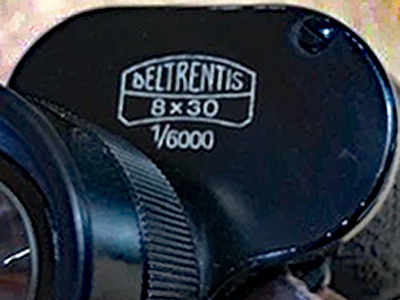
Right prism cover marked in white with “DELTRENTIS” / “8×30” logo over “1/6000”.
This Carl Zeiss 8×30 serial number, 2907478, was produced about October-November-December 1957, within the serial number sequence of the original Carl Zeiss production serial number series established in 1894.
The People’s Liberation Army red star emblem (a red star with yellow outline and “八 8″–”一 1” PLA inside the star) refers to the date, “August 1” (1927), that the People’s Liberation Army was founded during the Nanchang uprising.
The People’s Liberation Army (PLA) is the military wing of the Chinese Communist Party (CCP), and the primary armed forces of the People’s Republic of China (PRC). The PLA consists of four services — Ground Force, Navy, Air Force, and Rocket Force, and four arms — Aerospace Force, Cyberspace Force, Information Support Force, and Joint Logistics Support Force.
The PLA, led by the Central Military Commission (CMC), with its chairman as commander-in-chief, operates under the absolute control of the CCP. The PLA, alongside the paramilitary People’s Armed Police (PAP) and the Militia, forms the bulk of the armed forces of the People’s Republic of China.
The marking in white (“1/6000”) on the right prism cover is a reference to the Strichplatte (graduated range finding scale) in the right lens of these military service binoculars.
This 1/6000 marking indicates the precision of angular measurement, specifically that one unit (typically a milliradian or mil) on the reticle corresponds to an angle where an object of a certain size is seen from a specific distance ratio.
In military optics, this is closely related to the concept of the milliradian (mil), which is defined as a thousandth of a radian. The formula provided in search context for estimating distance is:
d=h×1000/Mil
Where:
d is the distance to the object
h is the known height or size of the object
Mil is the angular measurement in milliradians
The 1/6000 figure often appears in the context of stadia or reticle graduations used for ranging. While a standard milliradian is 1/1000 of a radian, some specific military binoculars or rangefinders may use a different scale or approximation where 1 mil is treated as 1/6000 of the circumference (based on an approximation of π≈3 for rapid mental calculation, since 2π≈6 ).
This simplifies the ranging formula to:
Distance = Mil Reading
Object Height × 6000
For example, if you know an object is 6 meters tall and it spans 1 mil on your reticle, the distance is approximately 6,000 meters. This system allows for quick, accurate distance estimation without complex calculations, which is critical in tactical situations.
8×40 Production Serial Numbers
Treaty of Versailles Military Restrictions
The Treaty of Versailles was a peace treaty signed on June 28, 1919 that ended the war between Germany and most of the Allied Powers. It was signed in the Palace of Versailles, exactly five years after the assassination of Archduke Franz Ferdinand, which led to the war.
The treaty required Germany to disarm, make territorial concessions, extradite alleged war criminals, agree to Kaiser Wilhelm being put on trial, recognize the independence of states whose territory had previously been part of the German Empire, and pay reparations to the Entente powers.
The treaty was comprehensive and complex in the restrictions imposed upon the post-war German armed forces, the Reichswehr. The provisions were intended to make the Reichswehr incapable of offensive action and to encourage international disarmament.
German officials conspired systematically to evade the clauses of the treaty, by failing to meet disarmament deadlines, refusing Allied officials access to military facilities, and maintaining and hiding weapons production.
The Treaty of Versailles prohibited German companies from producing war materials. The treaty did not ban German companies from producing war materials outside of Germany, so companies moved, or opened new companies, in the Netherlands, Switzerland, and Sweden. In 1921, German troops were sent to Sweden to test weapons.
The Treaty of Versailles forced Carl Zeiss to relocate a significant portion of its military production to the Netherlands and Sweden. This influx of equipment and expertise brought new technologies and innovations to the country, influencing the development of Nedinsco.
The 1919 Treaty of Versailles that ended the First World War forced Carl Zeiss Jena to significantly reduce its military production in Germany. To circumvent this restriction, thousands of boxes of equipment and storage were illegally transported from Germany to the Netherlands and Sweden in 1919 and 1920.
In early 1921, the German optical manufacturing firm, Carl Zeiss of Jena, Thuringia, Germany, created a new company, Nedinsco (Nederlandse Instrumenten Compagnie), to produce cameras, binoculars, rangefinders, microscopes, periscopes, and similar optical instruments in the Netherlands.
Initially, the Netherlands Instruments Company (Nedinsco) set up its headquarters in an old disused chocolate factory in Flushing, Netherlands. Two years later, the company moved to a new location in Venlo, Netherlands, and constructed a new factory.
The architect, Hans Schlag, was commissioned for the design of the new Nedinsco factory. He and his design team built a special tower that was used to align optical instruments and to calibrate the larger measuring distances. This was done by adjusting the instruments to the many church towers in Venlo.
The tower, built in the Bauhaus style, is a beautiful national historical monument in the heart of Venlo.
As a subsidiary of Carl Zeiss Jena, Nedinsco inherited the German firm’s expertise in optical technology. This allowed Nedinsco to produce high-quality military optical equipment, including military service binoculars, telescopes, and other precision instruments.
Nedinsco’s early production focused on military optics, with exports to countries such as Switzerland and Sweden. The company’s products were well respected for their exceptional quality, and the company quickly gained a reputation as a reliable supplier of optical equipment.
Nedinsco’s was a well known subsidiary of Carl Zeiss Jena, located in Venlo, Netherlands, producing high-quality military optical equipment for export.
In the 1930s, Nedinsco grew into a strong economic company with a beneficial effect on the regional Dutch economy. During the Second World War, Nedinsco manufactured optical equipment for the German war effort.
In 1944 , an aircraft bomb, intended for the nearby city bridge over the Maas River, destroyed the factory building. Only the tower survived the bombardment.
After the war, Nedinsco was confiscated by the Dutch government and, after a period of temporary management, was sold to the Arnhem entrepreneur G. Beusker, who rebuilt the factory. In 1953, it became an independent company.
Today, Nedinsco is a supplier of systems and modules for the semiconductor industry. The company manufactures diagnostic systems, and products for the defense industry. Nedinsco is a leader in the manufacture of optical, mechanical, and electronic technologies for safety and security.
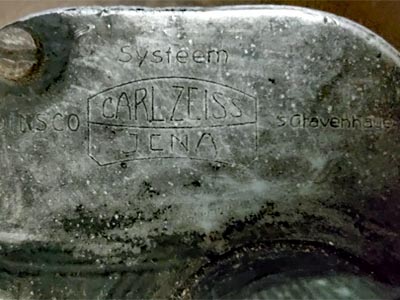
After the end of World War I, according to Versailles Peace Treaty terms, Germany could not produce military optics in its factories. Therefore, Carl Zeiss founded the Nedinsco company (Nederlandse Instrumenten Compagnie) in the city of Venlo in the Netherlands on January 21, 1921 for military optics production (this country did not sign the Treaty of Versailles).
The company’s Headquarters was located in The Hague (Gravenhage). The plant produced “civilian”, as well as military devices for export to various countries. The exported models had “civilian” marking rather often; however, they possessed such military features, as the goniometer grid, case with wide loop for wearing on a belt, etc.
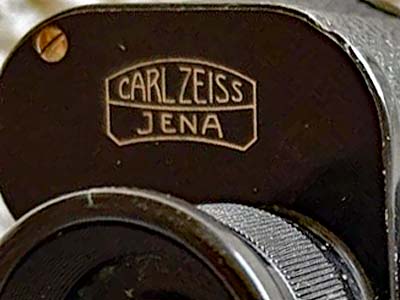
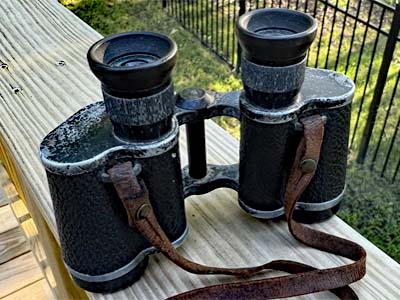
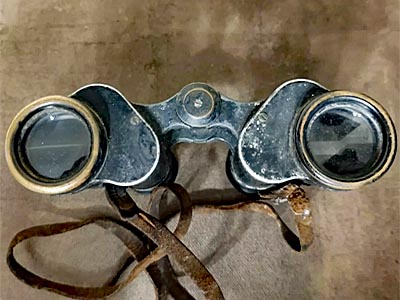
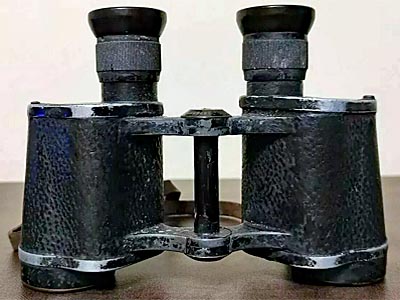
It looks like this Silvamar 6×30 belongs to such binoculars. It has the goniometer grid (at right tube) the case with a wide loop for attaching binocular to a belt.
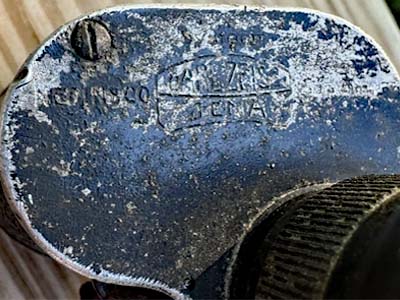
Serial number: 1579557. In accordance to information I’ve found this serial number corresponds to the year of manufacture 1934. Nothing repairs or improvements were made from the time this binoculars was found.
The binoculars are used, but in a very good condition for it’s age (look at the pictures). I couldn’t see any damages of the lenses. Mechanics in good condition.
The binoculars need to be serviced: clean the lenses, lubricate. But this binoculars currently are in fully functional condition.
|
|
6×30 military service binoculars, with Strichplatte (graduated range finding scale) in right lens, production serial number, 1395401, light construction, made of aluminum alloy, black “Vulkanite” schwarzes Kunstleder (black synthetic leather) Körperbedeckung (body covering), aluminum alloy prism and objective covers, brass objective lens rings. Manufactured about December 1927 by Carl Zeiss, Jena, Thuringia, Germany, for domestic and overseas sales. Left prism cover marked in white with “CARL ZEISS” / “JENA” trademark logo. Right prism cover marked in white with “SILVAMAR” / “1395401” logo over “6×30”. This Carl Zeiss 6×30 serial number, 1395401, was produced about December 1927, within the serial number sequence of the original Carl Zeiss production serial number series established in 1894. |


Carl Zeiss NEDINSCO Kingdom of Sweden contract
6×24 Dienstglas, October 1928, 1445122, Nr 147, 1929, ‘s Gravenhage (The Hague), Netherlands
|
|
Kingdom of Sweden 6×24 military service binoculars, with Strichplatte (graduated range finding scale) in right lens, production serial number, 1445122, heavy construction, made of brass, black “Vulkanite” schwarzes Kunstleder (black synthetic leather) Körperbedeckung (body covering), aluminum alloy prism and objective covers, brass objective lens rings. Manufactured about October 1928 by Carl Zeiss, NEDINSCO, ‘s Gravenhage (The Hague), Netherlands, for the armed forces of the Kingdom of Sweden. Left prism cover marked in white with “Systeem” (System) over “NEDINSCO” (Nederlandse Instrumenten Compagnie, Netherlands Instruments Company) / “CARL ZEISS” / “JENA” trademark logo / ‘s Gravenhage, over production serial number “1445122”. Right prism cover marked in white with Kingdom of Sweden crown, over “Nr 147” (Number 147, Kingdom of Sweden armed forces property number), over “1929” (Kingdom of Sweden armed forces property year of acceptance), over “6×24”. Right front objective cover marked in white with “VF 134 A”. Brown leather case marked with “147” over “VF 134 A” on top of case cover. This Carl Zeiss 6×24 serial number, 1445122, was produced about October 1928, within the serial number sequence of the original Carl Zeiss production serial number series established in 1894. |




Carl Zeiss NEDINSCO domestic and overseas sales
6×30 SILVAMAR, September 1929, 1490635, ‘s Gravenhage (The Hague), Netherlands
|
|
6×30 military service binoculars, with Strichplatte (graduated range finding scale) in right lens, production serial number, 1490635, light construction, made of aluminum alloy, black “Vulkanite” schwarzes Kunstleder (black synthetic leather) Körperbedeckung (body covering), aluminum alloy fittings. Manufactured about September 1929 by Carl Zeiss, NEDINSCO, ‘s Gravenhage (The Hague), Netherlands for domestic and overseas sales. Left prism cover marked in white with “Systeem” (System) over “NEDINSCO” (Nederlandse Instrumenten Compagnie, Netherlands Instruments Company), then “CARL ZEISS” / “JENA” trademark logo, then ‘s Gravenhage. Right prism cover marked in white with “SILVAMAR” / “6×30” logo. Production serial number, “1490635”, marked in white on bridge spindle front button, was produced about September 1929, within the serial number sequence of the original Carl Zeiss production serial number series established in 1894. |




Carl Zeiss NEDINSCO domestic and overseas sales
6×30 SILVAMAR, September 1931, 1578357, ‘s Gravenhage (The Hague), Netherlands
|
|
6×30 military service binoculars, with Strichplatte (graduated range finding scale) in right lens, production serial number, 1578357 (front and rear spindle buttons reversed), light construction, made of aluminum alloy, black “Vulkanite” schwarzes Kunstleder (black synthetic leather) Körperbedeckung (body covering), brass fittings. Manufactured about October 1931 by Carl Zeiss, NEDINSCO, ‘s Gravenhage (The Hague), Netherlands for domestic and overseas sales. Left prism cover marked in white with “Systeem” (System) over “NEDINSCO” (Nederlandse Instrumenten Compagnie, Netherlands Instruments Company), then “CARL ZEISS” / “JENA” trademark logo, then ‘s Gravenhage, over production serial number “1578357”. Right prism cover marked in white with “SILVAMAR” / “6×30” logo, above “1/2400” in lower right corner. This Carl Zeiss 6×30 serial number, 1578357, was produced about September 1931, within the serial number sequence of the original Carl Zeiss production serial number series established in 1894. |






Carl Zeiss NEDINSCO domestic and overseas sales
6×30 SILVAMAR, September 1931, 1578916, ‘s Gravenhage (The Hague), Netherlands
|
|
6×30 military service binoculars, with Strichplatte (graduated range finding scale) in right lens, production serial number, 1578916, light construction, made of aluminum alloy, black “Vulkanite” schwarzes Kunstleder (black synthetic leather) Körperbedeckung (body covering), brass fittings. Manufactured about September 1931 by Carl Zeiss, NEDINSCO, ‘s Gravenhage (The Hague), Netherlands for domestic and overseas sales. Left prism cover marked in white with “Systeem” (System) over “NEDINSCO” (Nederlandse Instrumenten Compagnie, Netherlands Instruments Company), then CARL ZEISS / JENA trademark logo, then ‘s Gravenhage, over production serial number “1578916”. Right prism cover marked in white with “SILVAMAR” / “6×30” logo, above “1/2400” in lower right corner. This Carl Zeiss 6×30 serial number, 1578916, was produced about September 1931, within the serial number sequence of the original Carl Zeiss production serial number series established in 1894. |


Carl Zeiss NEDINSCO Kingdom of Sweden contract
6×30 Dienstglas, December 1931, 1585734, Ksp:2854g, ‘s Gravenhage (The Hague), Netherlands
|
|
Kingdom of Sweden 6×30 military service binoculars, with Strichplatte (graduated range finding scale) in right lens, production serial number, 1585734, light construction, made of aluminum alloy, black “Vulkanite” schwarzes Kunstleder (black synthetic leather) Körperbedeckung (body covering), aluminum alloy fittings. Manufactured about December 1931 by Carl Zeiss, NEDINSCO, ‘s Gravenhage (The Hague), Netherlands for the armed forces of the Kingdom of Sweden. Left prism cover marked in white with “Systeem” (System) over “NEDINSCO” (Nederlandse Instrumenten Compagnie, Netherlands Instruments Company), then “CARL ZEISS” / “JENA” trademark logo, then ‘s Gravenhage, over production serial number “1585734”. Right prism cover marked in white with Kingdom of Sweden crown, over “6×30”, over “Ksp:2854g” (Kingdom of Sweden armed forces property number). This Carl Zeiss 6×30 serial number, 1585734, was produced about December 1931, within the serial number sequence of the original Carl Zeiss production serial number series established in 1894. |


Carl Zeiss NEDINSCO overseas sales
6×24 TELEX, January 1932, 1588018, ‘s Gravenhage (The Hague), Netherlands
|
|
NEDINSCO 6×24 binoculars, production serial number, 1588018, heavy construction, made of brass, black “Vulkanite” schwarzes Kunstleder (black synthetic leather) Körperbedeckung (body covering), aluminum alloy prism and objective covers, brass objective lens rings. Manufactured about January 1932 by Carl Zeiss, NEDINSCO, ‘s Gravenhage (The Hague), Netherlands for overseas sales. Left prism cover marked in white with “NEDINSCO” (Nederlandse Instrumenten Compagnie, Netherlands Instruments Company) / ‘s Gravenhage (The Hague), over “Systeem” (System), over “CARL ZEISS” / “JENA” trademark logo, with initials “D.v.D.” (Departement van Defensie, Department of Defense) to the lower left. Right prism cover marked in white with “D.F.6×24” / “1588018” (production serial number) logo. |
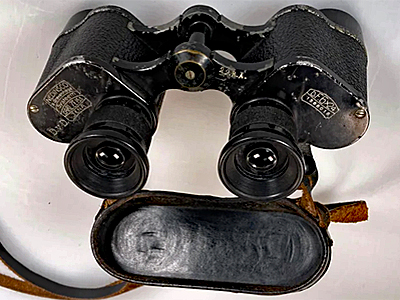
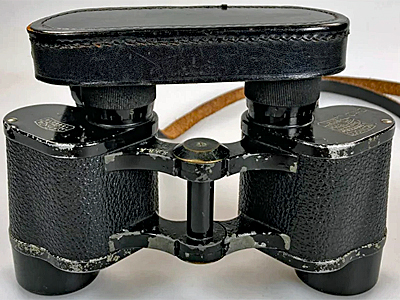
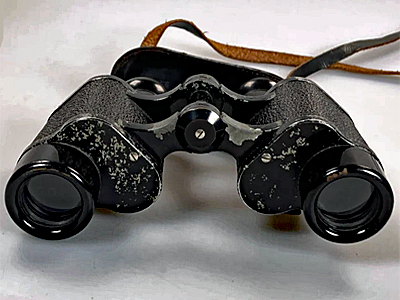
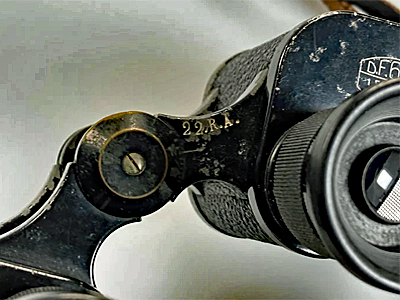
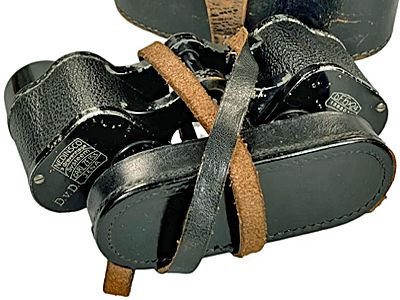
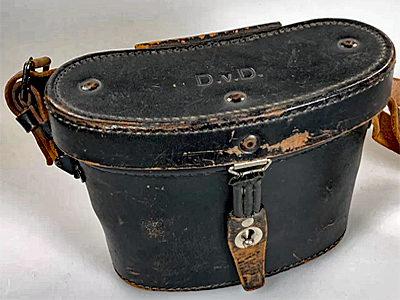
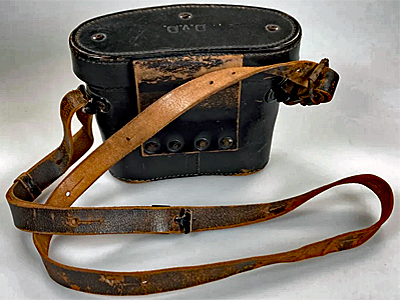
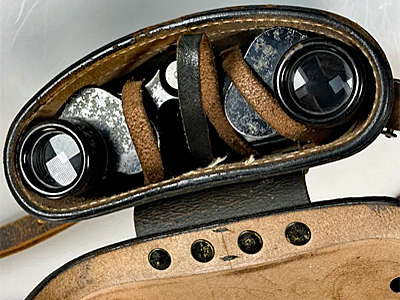
This Carl Zeiss 6×24 serial number, 1588018, was produced about January 1932, within the serial number sequence of the original Carl Zeiss production serial number series established in 1894.
Right rear bridge spindle support stamped with “22.R.A.” (property mark of “22 Regiment der Artillerie” — 22nd Regiment of Artillerie).
These D.F. 6×24 military service binoculars are accompanied by the original black leather Trageriemen (carrying strap), black leather Okularshutz (eye piece protector) or Regenschutzdeckel (rain protection cover) or Benutzerkappe (user cap). Black leather Behalter or Köcher (case) is marked with “D.v.D.” (Departement van Defensie, Department of Defense), “L.W.D.” (korps Lucht Wacht Dienst, Air Observation Service corps) stamped onto the leather.
Carl Zeiss NEDINSCO domestic and overseas sales
6×30 Silvamar, March 1932, 1591156, Venlo, Netherlands
|
|
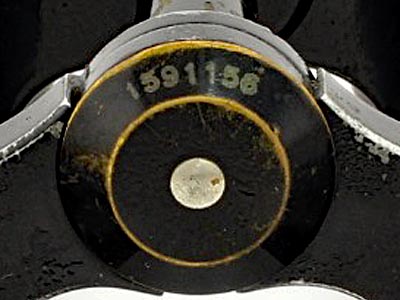
6×30 military service binoculars, with Strichplatte (graduated range finding scale) in right lens, production serial number, 1591156, light construction, made of aluminum alloy, black “Vulkanite” schwarzes Kunstleder (black synthetic leather) Körperbedeckung (body covering), brass fittings. Manufactured about March 1932 by Carl Zeiss, NEDINSCO, Venlo, Netherlands. Left prism cover marked in white with “Systeem” (System) over “NEDINSCO” (Nederlandse Instrumenten Compagnie, Netherlands Instruments Company), then “CARL ZEISS / JENA” trademark logo, then “Venlo”. Right prism cover marked in white with “SILVAMAR” / “6×30” logo. Production serial number, “1591156”, marked in white on bridge spindle front button, was produced about March 1932, within the serial number sequence of the original Carl Zeiss production serial number series established in 1894. |



Carl Zeiss NEDINSCO domestic and overseas sales
6×30 Silvamar, March 1932, 1591xxx, Venlo, Netherlands
|
|
6×30 military service binoculars, with Strichplatte (graduated range finding scale) in right lens, production serial number, 1591xxx (last three numbers unreadable), light construction, made of aluminum alloy, black “Vulkanite” schwarzes Kunstleder (black synthetic leather) Körperbedeckung (body covering), aluminum alloy prism and objective covers, brass objective lens rings. Manufactured about March 1932 by Carl Zeiss, NEDINSCO, Venlo, Netherlands. Left prism cover marked in white with “Systeem” (System) over “NEDINSCO” (Nederlandse Instrumenten Compagnie, Netherlands Instruments Company), then “CARL ZEISS” / “JENA” trademark logo, then “Venlo”. Right prism cover marked in white with “SILVAMAR” / “6×30” logo. Production serial number, “1591xxx”, marked in white on bridge spindle front button, was produced about March 1932, within the serial number sequence of the original Carl Zeiss production serial number series established in 1894. |


Carl Zeiss domestic and overseas sales
6×24 TELEX, April 1932, 1594099, Jena, Thuringia, Germany
|
|
NEDINSCO 6×24 binoculars, production serial number, 1594099, heavy construction, made of brass, black “Vulkanite” schwarzes Kunstleder (black synthetic leather) Körperbedeckung (body covering), aluminum alloy prism and objective covers, brass objective lens rings. Manufactured about April 1932 by Carl Zeiss, Jena, Thuringia, Germany for domestic and overseas sales. Left prism cover marked in white with “CARL ZEISS” / “JENA” trademark logo. Right prism cover marked in white with “TELEX” / “6 X 24” logo. This Carl Zeiss 6×24, production serial number, 1594099, marked in white on bridge spindle front button, was produced about April 1932, within the serial number sequence of the original Carl Zeiss production serial number series established in 1894. |
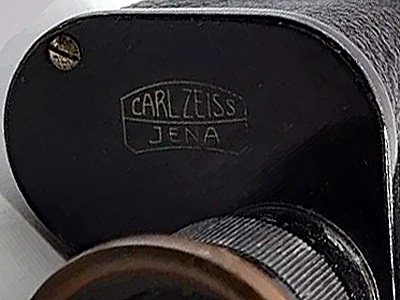
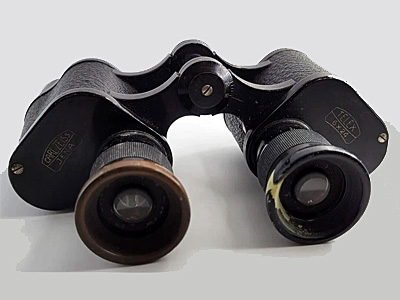
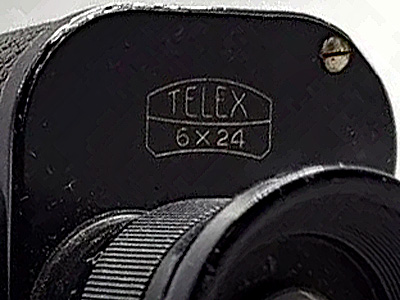
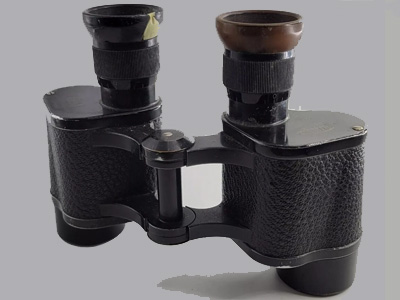
Telex was manufactured, in four versions, with various design changes, from 1907 to 1932, with D.F.6×24 being its military analogue.
1st version (1907): 6×21, frame lens cap and lower prismatic cover made as single part, eyepiece case with “transverse” knurling.
2nd version (1908-1909): 6×21 with two-ring type lens frames.
3rd version (1911-1912): 6×24 with two-ring type lens frames.
4th version (1913-1932): 6×24 with rounded lens covers. Later production serial numbers moved to bridge spindle front button, continuing to the present.
This Telex 6×24, production serial number, 1594099, marked in white on bridge spindle front button, is of the 4th version, produced about August 1922, between 1913 and 1932.
Carl Zeiss, Jena domestic and overseas sales
6×30 Silvamar, December 1937, 1815342, Jena, Thuringia, Germany
|
|
6×30 military service binoculars, with Strichplatte (graduated range finding scale) in right lens, production serial number, 1815342, light construction, made of aluminum alloy, black “Vulkanite” schwarzes Kunstleder (black synthetic leather) Körperbedeckung (body covering), aluminum alloy prism and objective covers, brass objective lens rings. Manufactured about December 1937 by Carl Zeiss, Jena, Thuringia, Germany. Left prism cover marked in white with “CARL ZEISS” / “JENA” trademark logo. Right prism cover marked in white with “SILVAMAR” / “6×30” logo. Production serial number, “1815342”, marked in white on bridge spindle front button, was produced about December 1937, within the serial number sequence of the original Carl Zeiss production serial number series established in 1894. |


Carl Zeiss, Jena domestic and overseas sales
6×30 Silvamar, March 1940, 1969934, Jena, Thuringia, Germany
|
|
6×30 military service binoculars, with Strichplatte (graduated range finding scale) in right lens, production serial number, 1969934, light construction, made of aluminum alloy, black “Vulkanite” schwarzes Kunstleder (black synthetic leather) Körperbedeckung (body covering), aluminum alloy prism and objective covers, brass objective lens rings. Manufactured about March 1940 by Carl Zeiss, Jena, Thuringia, Germany. Left prism cover marked in white with “CARL ZEISS” / “JENA” trademark logo. Right prism cover marked in white with “SILVAMAR” / “6×30” logo. Production serial number, “1969934”, marked in white on bridge spindle front button, was produced about March 1940, within the serial number sequence of the original Carl Zeiss production serial number series established in 1894. |


Carl Zeiss, Jena Dienstglas military service binoculars
6×30 Silvamar, July 1940, 2000045, Jena, Thuringia, Germany
|
|
6×30 Dienstglas (“Serviceglass”) military service binoculars, with Strichplatte (graduated range finding scale) in right lens, production serial number, 2000045, light construction, made of aluminum alloy, black “Vulkanite” schwarzes Kunstleder (black synthetic leather) Körperbedeckung (body covering), brass prism and objective covers, brass objective lens rings. Manufactured about July 1940 by Carl Zeiss, Jena, Thuringia, Germany. Left prism cover marked in white with “CARL ZEISS” / “JENA” trademark logo. Right prism cover marked in white with “Dienstglas” over “6×30” over “2000045” production serial number over “H/6400”. Production serial number, “2000045”, was produced about July 1940, within the serial number sequence of the original Carl Zeiss production serial number series established in 1894. |
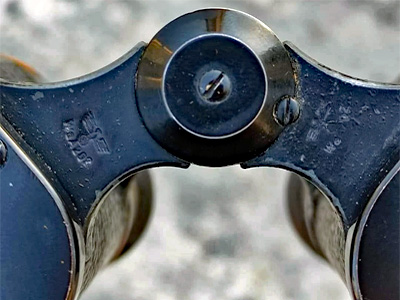
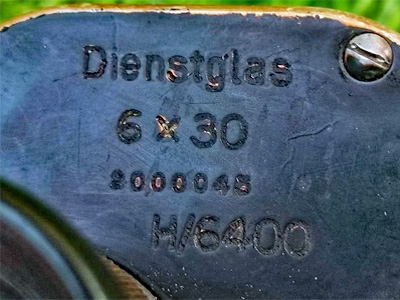
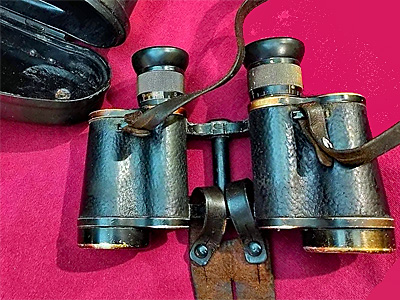
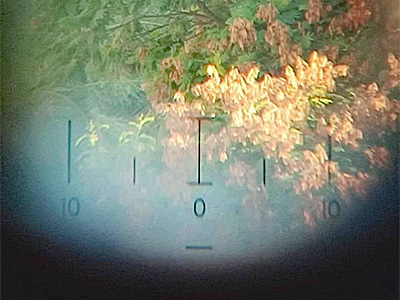
The H/6400 designation, marked in white on the right prism cover, refers to the Strichplatte (graduated range finding scale) in the right lens of German Dienstglas military service binoculars, used for estimating distance.
Prior to 1941, German military service binoculars were marked with full manufacturer logos, and were finished with black “Vulkanite” schwarzes Kunstleder (black synthetic leather, hard plastic) Körperbedeckung (body covering).
From 1941 to 1945, manufacturer names were replaced with three-letter codes to hide production origins from Allied bombing. Body finishes changed first to textured black sand finish, the later Sandfarben (tan) paint finish. The tan finish was a general wartime production change for all metal finishes.The most commonly used German military service binoculars were based on the Carl Zeiss 6×30 Silvamar, using uncoated optical glass (except for some Kriegsmarine (Navy) binoculars, used by submarine crews.
Carl Zeiss Kingdom of Sweden contract
6×30 Silvamar, September 1941, 2100xx0, Nr. 6540, 1942, Jena, Thuringia, Germany
|
|
Kingdom of Sweden 6×30 military service binoculars, with Strichplatte (graduated range finding scale) in right lens, production serial number, 2100xx0 (partially unreadable), light construction, made of aluminum alloy, schwarz „Reis“ Rauhlack Körperbedeckung (black “rice” rough lacquer body covering), aluminum alloy fittings. Manufactured about September 1941 by Carl Zeiss, Jena, Thuringia, Germany for the armed forces of the Kingdom of Sweden. Left prism cover marked in white with “CARL ZEISS” / “JENA” trademark logo. Right prism cover marked in white with “SILVAMAR / 6×30” logo. Left front prism cover marked in white with “6×30”, over Kingdom of Sweden crown, over “Nr. 6540” (Kingdom of Sweden armed forces property number), over “1942” (Kingdom of Sweden armed forces property year of acceptance). This Carl Zeiss 6×30 serial number, 2100xx0, was produced about September 1941, within the serial number sequence of the original Carl Zeiss production serial number series established in 1894. |


Carl Zeiss Kingdom of Sweden contract
6×30 Silvamar, estimated manufacture October 1942, 217xxxx, Nr.1115, 1942, Jena, Thuringia, Germany
|
|
Kingdom of Sweden 6×30 military service binoculars, with Strichplatte (graduated range finding scale) in right lens, production serial number not visible (painted over with black paint), light construction, made of aluminum alloy, schwarz „Reis“ Rauhlack Körperbedeckung (black “rice” rough lacquer body covering), aluminum alloy fittings. Estimated October 1942 date of manufacture by Carl Zeiss, Jena, Thuringia, Germany for the armed forces of the Kingdom of Sweden. Left prism cover marked in white with “CARL ZEISS / JENA” trademark logo. Right prism cover marked in white with “SILVAMAR / 6×30” logo. Left front prism cover marked in white with “6×30”, over Kingdom of Sweden crown, over “Nr. 1115” (Kingdom of Sweden armed forces property number), over “1942” (Kingdom of Sweden armed forces property year of acceptance). This Carl Zeiss 6×30 serial number is unknown, estimated to be 217xxxx (about October 1942), within the serial number sequence of the original Carl Zeiss production serial number series established in 1894. |


Carl Zeiss Kingdom of Sweden contract
6×30 Silvamar, November 1942, 2175433, Nr. 1833, 1942, Jena, Thuringia, Germany
|
|
Kingdom of Sweden 6×30 military service binoculars, with Strichplatte (graduated range finding scale) in right lens, production serial number, 2175433, light construction, made of aluminum alloy, schwarz „Reis“ Rauhlack Körperbedeckung (black “rice” rough lacquer body covering), aluminum alloy fittings. Manufactured about November 1942 by Carl Zeiss, Jena, Thuringia, Germany for the armed forces of the Kingdom of Sweden. Left prism cover marked in white with “CARL ZEISS / JENA” trademark logo. Right prism cover marked in white with “SILVAMAR / 6×30” logo. Left front prism cover marked in white with “6×30”, over Kingdom of Sweden crown, over “Nr. 1833” (Kingdom of Sweden armed forces property number), over “1942” (Kingdom of Sweden armed forces property year of acceptance). This Carl Zeiss 6×30 serial number, 2175433, was produced about November 1942, within the serial number sequence of the original Carl Zeiss production serial number series established in 1894. |


Carl Zeiss Kingdom of Sweden contract
6×30 Silvamar, December 1942, 2179756, Nr. 4906, 1942, Jena, Thuringia, Germany
|
|
Kingdom of Sweden 6×30 military service binoculars, with Strichplatte (graduated range finding scale) in right lens, production serial number, 2179756, light construction, made of aluminum alloy, schwarz „Reis“ Rauhlack Körperbedeckung (black “rice” rough lacquer body covering), aluminum alloy fittings. Manufactured about December 1942 by Carl Zeiss, Jena, Thuringia, Germany for the armed forces of the Kingdom of Sweden. Left prism cover marked in white with “CARL ZEISS / JENA” trademark logo. Right prism cover marked in white with “SILVAMAR / 6×30” logo. Left front prism cover marked in white with “6×30”, over Kingdom of Sweden crown, over “Nr. 4906” (Kingdom of Sweden armed forces property number), over “1942” (Kingdom of Sweden armed forces property year of acceptance). This Carl Zeiss 6×30 serial number, 2179756, was produced about December 1942, within the serial number sequence of the original Carl Zeiss production serial number series established in 1894. |




8×30 Production Serial Numbers
Carl Zeiss NEDINSCO
8×30 Deltrentis, June 1927, 1368832, ‘s Gravenhage (The Hague), Netherlands
|
|
8×30 military service binoculars, with Strichplatte (graduated range finding scale) in right lens, production serial number, 1368832, light construction, made of aluminum alloy, black “Vulkanite” schwarzes Kunstleder (black synthetic leather) Körperbedeckung (body covering), aluminum alloy prism and objective covers, brass objective lens rings. Manufactured about June 1927 by Carl Zeiss, ‘s Gravenhage (The Hague), Netherlands. Left prism cover marked in white with “NEDINSCO” / ‘sGravenhage / “Systeem” / “CARL ZEISS / JENA” trademark logo. Right prism cover marked in white with “DELTRENTIS” / 1368832″ logo over “8×30”. This Carl Zeiss 8×30 serial number, 1368832, was produced about June 1927, within the serial number sequence of the original Carl Zeiss production serial number series established in 1894. |
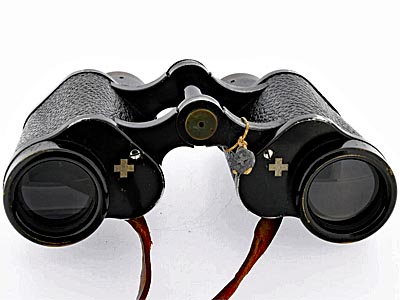
Carl Zeiss Swiss Confederation contract
8×30 Deltrentis, 1931, unknown serial number, ‘s Gravenhage (The Hague), Netherlands
|
|
8×30 military service binoculars, with Strichplatte (graduated range finding scale) in right lens, production serial number, unknown, light construction, made of aluminum alloy, black “Vulkanite” schwarzes Kunstleder (black synthetic leather) Körperbedeckung (body covering), aluminum alloy prism and objective covers, brass objective lens rings. Manufactured in 1931 by Carl Zeiss, NEDINSCO, ‘s Gravenhage (The Hague), Netherlands for the armed forces of the Swiss Confederation. Left prism cover marked in white with “NEDINSCO” / ‘sGravenhage / “Systeem” / “CARL ZEISS / JENA” trademark logo, and Swiss cross, over 1931, over 8×30. Right prism cover marked in white with Swiss cross over “Armee-Modell” over №2398″ (Swiss Confederation armed forces property number). This Carl Zeiss 8×30 serial number, unknown, was produced in 1931, within the serial number sequence of the original Carl Zeiss production serial number series established in 1894. |




Carl Zeiss, People’s Republic of China contract
8×30 Deltrentis, 1957, 2907478, Jena, Thuringia, Germany
|
|
8×30 military service binoculars, with Strichplatte (graduated range finding scale) in right lens, production serial number, 2907478, light construction, made of aluminum alloy, black “Vulkanite” schwarzes Kunstleder (black synthetic leather) Körperbedeckung (body covering), aluminum alloy prism and objective covers, brass objective lens rings. Manufactured about 1957 by Carl Zeiss, Jena, Thuringia, Germany. Left prism cover marked in white with “CARL ZEISS” / “JENA” trademark logo, followed by the the red star emblem of the People’s Liberation Army of the People’s Republic of China. Right prism cover marked in white with “DELTRENTIS” / “8×30” logo over “1/6000”. This Carl Zeiss 8×30 serial number, 2907478, was produced about October-November-December 1957, within the serial number sequence of the original Carl Zeiss production serial number series established in 1894. |
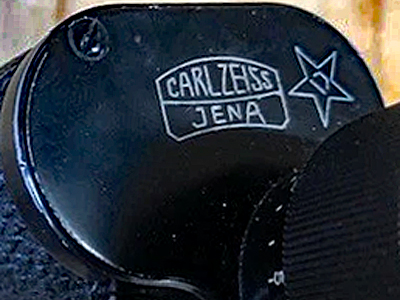
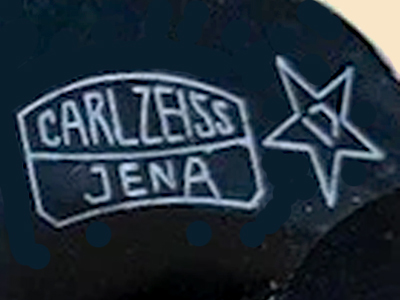
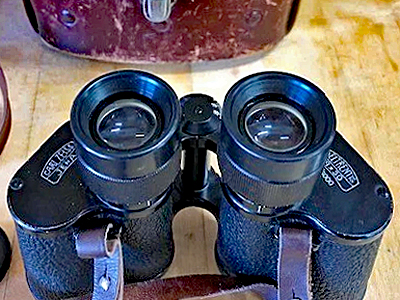
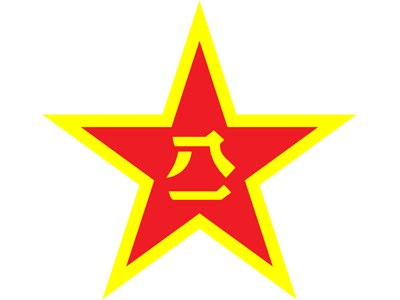
The People’s Liberation Army red star emblem (a red star with yellow outline and “八 8″–”一 1” PLA inside the star) refers to the date, “August 1” (1927), that the People’s Liberation Army was founded during the Nanchang uprising.
The People’s Liberation Army (PLA) is the military wing of the Chinese Communist Party (CCP), and the primary armed forces of the People’s Republic of China (PRC). The PLA consists of four services — Ground Force, Navy, Air Force, and Rocket Force, and four arms — Aerospace Force, Cyberspace Force, Information Support Force, and Joint Logistics Support Force.
The PLA, led by the Central Military Commission (CMC), with its chairman as commander-in-chief, operates under the absolute control of the CCP. The PLA, alongside the paramilitary People’s Armed Police (PAP) and the Militia, forms the bulk of the armed forces of the People’s Republic of China.
The marking in white (“1/6000”) on the right prism cover is a reference to the Strichplatte (graduated range finding scale) in the right lens of these military service binoculars.
This 1/6000 marking indicates the precision of angular measurement, specifically that one unit (typically a milliradian or mil) on the reticle corresponds to an angle where an object of a certain size is seen from a specific distance ratio.
In military optics, this is closely related to the concept of the milliradian (mil), which is defined as a thousandth of a radian. The formula provided in search context for estimating distance is:
d=h×1000/Mil
Where:
d is the distance to the object
h is the known height or size of the object
Mil is the angular measurement in milliradians
The 1/6000 figure often appears in the context of stadia or reticle graduations used for ranging. While a standard milliradian is 1/1000 of a radian, some specific military binoculars or rangefinders may use a different scale or approximation where 1 mil is treated as 1/6000 of the circumference (based on an approximation of π≈3 for rapid mental calculation, since 2π≈6 ).
This simplifies the ranging formula to:
Distance = Mil Reading
Object Height × 6000
For example, if you know an object is 6 meters tall and it spans 1 mil on your reticle, the distance is approximately 6,000 meters. This system allows for quick, accurate distance estimation without complex calculations, which is critical in tactical situations.
8×40 Production Serial Numbers
Treaty of Versailles Military Restrictions
The Treaty of Versailles was a peace treaty signed on June 28, 1919 that ended the war between Germany and most of the Allied Powers. It was signed in the Palace of Versailles, exactly five years after the assassination of Archduke Franz Ferdinand, which led to the war.
The treaty required Germany to disarm, make territorial concessions, extradite alleged war criminals, agree to Kaiser Wilhelm being put on trial, recognize the independence of states whose territory had previously been part of the German Empire, and pay reparations to the Entente powers.
The treaty was comprehensive and complex in the restrictions imposed upon the post-war German armed forces, the Reichswehr. The provisions were intended to make the Reichswehr incapable of offensive action and to encourage international disarmament.
German officials conspired systematically to evade the clauses of the treaty, by failing to meet disarmament deadlines, refusing Allied officials access to military facilities, and maintaining and hiding weapons production.
The Treaty of Versailles prohibited German companies from producing war materials. The treaty did not ban German companies from producing war materials outside of Germany, so companies moved, or opened new companies, in the Netherlands, Switzerland, and Sweden. In 1921, German troops were sent to Sweden to test weapons.
The Treaty of Versailles forced Carl Zeiss to relocate a significant portion of its military production to the Netherlands and Sweden. This influx of equipment and expertise brought new technologies and innovations to the country, influencing the development of Nedinsco.
The 1919 Treaty of Versailles that ended the First World War forced Carl Zeiss Jena to significantly reduce its military production in Germany. To circumvent this restriction, thousands of boxes of equipment and storage were illegally transported from Germany to the Netherlands and Sweden in 1919 and 1920.
In early 1921, the German optical manufacturing firm, Carl Zeiss of Jena, Thuringia, Germany, created a new company, Nedinsco (Nederlandse Instrumenten Compagnie), to produce cameras, binoculars, rangefinders, microscopes, periscopes, and similar optical instruments in the Netherlands.
Initially, the Netherlands Instruments Company (Nedinsco) set up its headquarters in an old disused chocolate factory in Flushing, Netherlands. Two years later, the company moved to a new location in Venlo, Netherlands, and constructed a new factory.
The architect, Hans Schlag, was commissioned for the design of the new Nedinsco factory. He and his design team built a special tower that was used to align optical instruments and to calibrate the larger measuring distances. This was done by adjusting the instruments to the many church towers in Venlo.
The tower, built in the Bauhaus style, is a beautiful national historical monument in the heart of Venlo.
As a subsidiary of Carl Zeiss Jena, Nedinsco inherited the German firm’s expertise in optical technology. This allowed Nedinsco to produce high-quality military optical equipment, including military service binoculars, telescopes, and other precision instruments.
Nedinsco’s early production focused on military optics, with exports to countries such as Switzerland and Sweden. The company’s products were well respected for their exceptional quality, and the company quickly gained a reputation as a reliable supplier of optical equipment.
Nedinsco’s was a well known subsidiary of Carl Zeiss Jena, located in Venlo, Netherlands, producing high-quality military optical equipment for export.
In the 1930s, Nedinsco grew into a strong economic company with a beneficial effect on the regional Dutch economy. During the Second World War, Nedinsco manufactured optical equipment for the German war effort.
In 1944 , an aircraft bomb, intended for the nearby city bridge over the Maas River, destroyed the factory building. Only the tower survived the bombardment.
After the war, Nedinsco was confiscated by the Dutch government and, after a period of temporary management, was sold to the Arnhem entrepreneur G. Beusker, who rebuilt the factory. In 1953, it became an independent company.
Today, Nedinsco is a supplier of systems and modules for the semiconductor industry. The company manufactures diagnostic systems, and products for the defense industry. Nedinsco is a leader in the manufacture of optical, mechanical, and electronic technologies for safety and security.
After the end of World War I, according to Versailles Peace Treaty terms, Germany could not produce military optics in its factories. Therefore, Carl Zeiss founded the Nedinsco company (Nederlandse Instrumenten Compagnie) in the city of Venlo in the Netherlands on January 21, 1921 for military optics production (this country did not sign the Treaty of Versailles).
The company’s Headquarters was located in The Hague (Gravenhage). The plant produced “civilian”, as well as military devices for export to various countries. The exported models had “civilian” marking rather often; however, they possessed such military features, as the goniometer grid, case with wide loop for wearing on a belt, etc.
It looks like this Silvamar 6×30 belongs to such binoculars. It has the goniometer grid (at right tube) the case with a wide loop for attaching binocular to a belt.
Serial number: 1579557. In accordance to information I’ve found this serial number corresponds to the year of manufacture 1934. Nothing repairs or improvements were made from the time this binoculars was found.
The binoculars are used, but in a very good condition for it’s age (look at the pictures). I couldn’t see any damages of the lenses. Mechanics in good condition.
The binoculars need to be serviced: clean the lenses, lubricate. But this binoculars currently are in fully functional condition.