


Krasnogorsk Mechanical Factory (KMZ) • Красногорский механический завод (КМЗ)
Krasnogorsk, Russia (Красногорск, Россия) 1942-1945
In the Russian armed forces, military service binoculars were marked to identify them as government property.
Military service binoculars were issued to soldiers with specialized functions. For example, a group leader or an artillery observer was issued a set of binoculars to perform his duties.
The most common type of military service binoculars was the 6×30 Standardized Model B-6 military service binoculars.
The number “6” identifies the magnification power of the binoculars (in this case, “6” indicates that objects appear six times closer than their actual distance).
The number “30” identifies the diameter in millimeters of the front (objective) lenses — the light gathering lenses — in this case 30 millimeters in diameter.
Krasnogorsk Mechanical Factory (KMZ)
6×30 Standardized Model B-6, 1943, N43117776, Krasnagorsk, Russia
|
|
Soviet Russian 6×30 Standardized Model B-6 military service binoculars, production serial number, N43117776, heavy, made of brass, raised dot pattern body covering, manufactured in 1943 by the Krasnagorsk Mechanical Factory, Красногорский механический завод (КМЗ), of Krasnagorsk, Russia. Left prism cover marked in white with 6×30 at the top, followed by the Soviet hammer, sickle, and star insignia, over the manufacturer’s trademark logo, then by the production serial number, N43117776. The first two numbers, 43, indicate year of manufacture. At the bottom is the marking of an unknown repair depot that repaired these binoculars in 1958. Original brass right objective lens ring replaced with one of steel. Original brass left objective lens ring remains in place. Original raised dot pattern body covering repainted with black paint. These 6×30 Standardized Model B-6 military binoculars are accompanied by the original brown leather carrying strap and brown leather case with carrying strap. The Krasnagorsk Mechanical Factory (KMZ), Красногорский механический завод, Krasnogorski Mekhanicheskii Zavod (КМЗ), was established in 1942 in the northwestern Moscow suburb of Krasnagorsk, about 18.6 miles from Red Square. |


Krasnogorsk Mechanical Factory (KMZ)
6×30 Standardized Model B-6, 1944, 78912, Krasnagorsk, Russia
|
|
Soviet Russian 6×30 Standardized Model B-6 military service binoculars, production serial number, 78912, heavy, made of brass, early pattern body covering, manufactured in 1944 by the Krasnagorsk Mechanical Factory, Красногорский механический завод (КМЗ), of Krasnagorsk, Russia. Usually, Russian military service service binoculars are marked with the manufacturer’s trademark logo, production serial number, and year of manufacture on the left prism cover. In early 1942, the markings of some factories were moved from the left prism cover to the back of the bridge. In this case, left bridge arm marked in white with 6×30 over manufacturer’s trademark logo. Right bridge arm marked in white with production serial number, 78912, over year of manufacture, 1944. These 6×30 Standardized Model B-6 military binoculars are accompanied by the original brown leather carrying strap. The Krasnagorsk Mechanical Factory (KMZ), Красногорский механический завод, Krasnogorski Mekhanicheskii Zavod (КМЗ), was established in 1942 in the northwestern Moscow suburb of Krasnagorsk, about 18.6 miles from Red Square. |


Krasnogorsk Mechanical Factory (KMZ)
6×30 Standardized Model B-6, 1945, N152019, Krasnagorsk, Russia
|
|
Soviet Russian 6×30 Standardized Model B-6 military service binoculars, production serial number, N152019, heavy, made of brass, early pattern body covering, manufactured in 1945 by the Krasnagorsk Mechanical Factory, Красногорский механический завод (КМЗ), of Krasnagorsk, Russia. Left prism cover marked in white with 6×30, over Soviet hammer, sickle, and star insignia, over 19 / manufacturer’s trademark logo / 45г (г stands for года, year of manufacture), over production serial number, N152019. Right prism cover blank. These 6×30 Standardized Model B-6 military binoculars are accompanied by the original brown leather carrying strap and brown leather eye piece protector. The Krasnagorsk Mechanical Factory (KMZ), Красногорский механический завод, Krasnogorski Mekhanicheskii Zavod (КМЗ), was established in 1942 in the northwestern Moscow suburb of Krasnagorsk, about 18.6 miles from Red Square. |
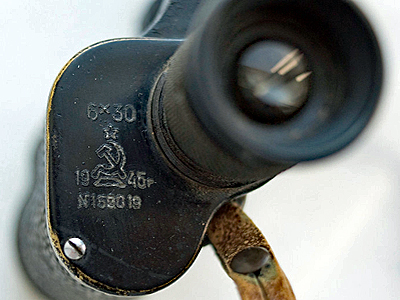


Krasnogorsk Mechanical Factory (KMZ)
6×30 Standardized Model B-6, 1945, N160195, Krasnagorsk, Russia
|
|
Soviet Russian 6×30 Standardized Model B-6 military service binoculars, production serial number, N160195, heavy, made of brass, early pattern body covering, manufactured in 1945 by the Krasnagorsk Mechanical Factory, Красногорский механический завод (КМЗ), of Krasnagorsk, Russia. Right prism cover marked in white with 6×30, over Soviet hammer, sickle, and star insignia, over 19 / manufacturer’s trademark logo / 45г (г is abbreviation of “года” year of manufacture), over production serial number, N160195. Left prism cover blank. The Krasnagorsk Mechanical Factory (KMZ), Красногорский механический завод, Krasnogorski Mekhanicheskii Zavod (КМЗ), was established in 1942 in the northwestern Moscow suburb of Krasnagorsk, about 18.6 miles from Red Square. |


KMЗ (KMZ) Civilian Binoculars
Krasnogorsk Mechanical Factory (KMZ)
6×30 Standardized Model B-6 Civilian, 1945, 13482, Krasnagorsk, Russia
|
|
Soviet Russian 6×30 Standardized Model B-6 civilian binoculars, production serial number, 13482, heavy, made of brass, early pattern body covering, manufactured in 1945 by the Krasnagorsk Mechanical Factory, Красногорский механический завод (КМЗ), of Krasnagorsk, Russia. Right prism cover marked in white with 6×30, over production serial number, 13482, over manufacturer’s trademark logo, over 1945 year of manufacture. Left prism cover blank These 6×30 Standardized Model B-6 civilian binoculars are accompanied by the original brown leather carrying strap. The Krasnagorsk Mechanical Factory (KMZ), Красногорский механический завод, Krasnogorski Mekhanicheskii Zavod (КМЗ), was established in 1942 in the northwestern Moscow suburb of Krasnagorsk, about 18.6 miles from Red Square. |


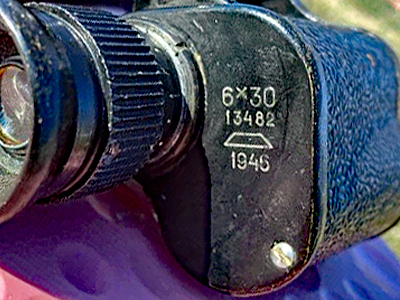
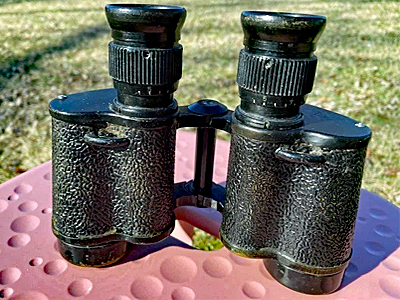


Krasnogorsk Mechanical Factory (KMZ)
6×30 Standardized Model B-6 Civilian, 1945, 125145, Krasnagorsk, Russia
|
|
Soviet Russian 6×30 Standardized Model B-6 civilian binoculars, production serial number, 125145, heavy, made of brass, early pattern body covering, manufactured in 1945 by the Krasnagorsk Mechanical Factory, Красногорский механический завод (КМЗ), of Krasnagorsk, Russia. Right prism cover marked in white with 6×30, over production serial number, 125145, over manufacturer’s trademark logo, over 1945 year of manufacture. Left prism cover blank These 6×30 Standardized Model B-6 civilian binoculars are accompanied by the original brown leather carrying strap. The Krasnagorsk Mechanical Factory (KMZ), Красногорский механический завод, Krasnogorski Mekhanicheskii Zavod (КМЗ), was established in 1942 in the northwestern Moscow suburb of Krasnagorsk, about 18.6 miles from Red Square. |


Krasnogorsk Mechanical Factory (KMZ)
6×30 Standardized Model B-6 Civilian, 1946, 033019, Krasnagorsk, Russia
|
|
Soviet Russian 6×30 Standardized Model B-6 civilian binoculars, production serial number, 033019, heavy, made of brass, early pattern body covering, manufactured in 1946 by the Krasnagorsk Mechanical Factory, Красногорский механический завод (КМЗ), of Krasnagorsk, Russia. Right prism cover marked in white with 6×30, over production serial number, 033019, over manufacturer’s trademark logo, over 1946 year of manufacture. Left prism cover blank These 6×30 Standardized Model B-6 civilian binoculars are accompanied by the original brown leather carrying strap and brown leather case with carrying strap. The Krasnagorsk Mechanical Factory (KMZ), Красногорский механический завод, Krasnogorski Mekhanicheskii Zavod (КМЗ), was established in 1942 in the northwestern Moscow suburb of Krasnagorsk, about 18.6 miles from Red Square. |


Krasnogorsk Mechanical Factory (KMZ)
6×30 Standardized Model B-6 Civilian, 1946, 041013, Krasnagorsk, Russia
|
|
Soviet Russian 6×30 Standardized Model B-6 civilian binoculars, production serial number, 041013, heavy, made of brass, early pattern body covering, manufactured in 1946 by the Krasnagorsk Mechanical Factory, Красногорский механический завод (КМЗ), of Krasnagorsk, Russia. Right prism cover marked in white with 6×30, over production serial number, 041013, over manufacturer’s trademark logo, over 1946 year of manufacture. Left prism cover blank These 6×30 Standardized Model B-6 civilian binoculars are accompanied by the original brown leather carrying strap. The Krasnagorsk Mechanical Factory (KMZ), Красногорский механический завод, Krasnogorski Mekhanicheskii Zavod (КМЗ), was established in 1942 in the northwestern Moscow suburb of Krasnagorsk, about 18.6 miles from Red Square. |
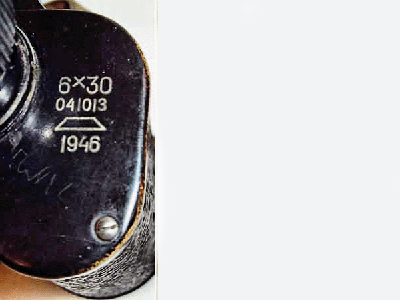
Krasnogorskij Mechanicheskij Zavod (KMЗ), Krasnogorsky Zavod
Красногорский Механический Завод, Krasnogorskij Mechanicheskij Zavod (KMЗ), Krasnogorsk Mechanical Plant (KMZ), known locally as Krasnogorsky Zavod, is one of Russia’s largest optical factories, and one of the world’s larger optical factories.
Another of Russia’s largest optical factories is LOMO (Ленинградское Oптико-Mеханическое Oбъединение, Leningradskoye Optiko-Mekhanicheskoye Obyedinenie, Leningrad Optical Mechanical Association), founded in 1914 in Petrograd, now St. Petersburg.
Krasnogorsk is a city and the administrative center of Krasnogorsky District in Moscow Oblast, Russia, located on the Moskva River, adjacent to the northwestern boundary of Moscow. Krasnogorsky Zavod is located in Krasnogorsk, thirty kilometres from the Red Square.


Krasnogorsk is one of the few cities connected to Moscow by the Moscow Metro. It is served by Metro station Myakinino (named after a nearby village).
The city was originally known as “posjolok Ban’ka,” settlement (on the) Ban’ka (of the Moskva River), that flowed through the area.
A State Optical Factory was located there in 1926, and an urban settlement developed, so that by 1932, the community was renamed “rabochij posjolok Ban’ka,” worker’s settlement (on the) Ban’ka.
The community developed, and on October 7, 1940, was renamed “gorod Krasnogorsk,” the town of Krasnogorsk. The 2021 census registered a population of 187,634 people in the city of Krasnogorsk.
During the Second World War, German forces came within close range of Moscow, but ground to a halt somewhere near Krasnogorsk. By that time the Krasnogorsk Mechanical Plant (KMZ) had long been evacuated, like so many others, to the suburbs of Sverdlovsk, a town in the Ural mountains.
After the Second World War, German V2 rocket scientists, who were captured by the Soviet Army at the end of the war, were taken to Krasnogorsk with their families for sharashka work.
With the return of peace after the war, KMZ developed a civilian optical branch. One of its first products were opera glasses for the Bolshoy Theater.
In 1947 the first FED-Zorkis were produced from leftover FED parts, the first ZK and BK lenses were manufactured out of seized Zeiss products for Zavod Arsenal in Kiev, and the first Zeiss Ikontas were assembled in Krasnogorsk: the Moskvas.
In the 1950’s came Zenits, Iskras and Moskvas. Later eras brought essentially more of the same: though there were quite some experimental models, most of the cameras produced at KMZ were Zenit or Zorki derivatives.

Like most State factories in the Soviet Union, KMZ had both a military and a civilian role. The civil role focused on cameras, lenses, binoculars, laser equipment, night vision devices, and medical optical equipment.
The more important defense tasks involved making arial cameras for ground observation, telescopes for stellar observation, aiding the Russian space program not only by optical products (for instance the camera that made the first picture of the dark side of the moon), but also by testing facilities, making tank sights, artillery sights, and aircraft parts.
KMZ was a huge conglomerate plant with many sub-suppliers (for example UOMZ and ROMZ). KMZ employed many people, ran a hospital, two culture palaces, one or two colleges, a stadium, an electric plant, a pump station, kolchozes and many more.
KMZ also owned many of the houses in Krasnogorsk, providing housing for some 100,000 people, one third of those were employed at KMZ. KMZ dominated the town.
In September 1976, KMZ was renamed PO KMZ, PO meaning Proizvodstvennoe Obyedinenie, a Production Association, indicating a group of factories and suppliers. The Vilieka, Rostov, and Valdai factories were KMZ’s sister factories, part of the PO KMZ association, not separate factories. In 1979, the government renamed KMZ to “PO KMZ imeni S. A. Zvereva,” meaning “PO KMZ in the name of S. A. Zverev.”

In 1991, when the Soviet Union collapsed, and the communist system was abolished, most State factories had problems switching over to a competition-driven capitalist system.
KMZ was no exception. Suddenly, the company needed to make a profit.
Markets opened up for foreign products and the Ruble was inflated rapidly. For KMZ’s workers, it meant either seeking another job or being content with lower wages.
For KMZ, the situation was difficult. Under the communist system, factories were not set up to produce products economically, competitively, in the world marketplace. Better and cheaper Japanese optical products flooded the market, and KMZ’s Zenit-E descendants were not competitive.
Krasnogorsky Zavod responded at first by canceling some of its products, like the KRASNOGORSK-3 16mm cine camera and the Russar 20mm. The company tried to develop new products, including the cheaper -12 reflexes, the 212k, the 312m, and more recently, the 412dx.
Krasnogorsky Zavod attempted to focus on niche products, like their Horizon-202, gyro-stabilised binoculars, night vision devices, the Zenitar 16mm fisheye, high-speed film cameras, radar devices, and other optical equipment products.