
1924 |
|
| January | 12 – 94 |
| February | 95 – 177 |
| March | 178 – 259 |
| April | 260 – 342 |
| May | 343 – 424 |
| June | 425 – 507 |
| July | 508 – 589 |
| August | 590 – 671 |
| September | 672 – 754 |
| October | 755 – 836 |
| November | 837 – 919 |
| December | 920 – 1000 |
1925 |
|
| January | 1001 – 1343 |
| February | 1344 – 1684 |
| March | 1685 – 2026 |
| April | 2027 – 2367 |
| May | 2368 – 2709 |
| June | 2710 – 3051 |
| July | 3052 – 3392 |
| August | 3393 – 3734 |
| September | 3735 – 4075 |
| October | 4076 – 4417 |
| November | 4418 – 4759 |
| December | 4760 – 5100 |
1926 |
|
| January | 5101 – 5534 |
| February | 5535 – 5968 |
| March | 5969 – 6401 |
| April | 6402 – 6834 |
| May | 6835 – 7268 |
| June | 7269 – 7701 |
| July | 7702 – 8134 |
| August | 8135 – 8567 |
| September | 8568 – 9001 |
| October | 9002 – 9434 |
| November | 9435 – 9867 |
| December | 9868 – 10300 |
1927 |
|
| January | 10301 – 10768 |
| February | 10769 – 11234 |
| March | 11235 – 11701 |
| April | 11702 – 12167 |
| May | 12168 – 12634 |
| June | 12635 – 13101 |
| July | 13102 – 13567 |
| August | 13568 – 14034 |
| September | 14035 – 14500 |
| October | 14501 – 14967 |
| November | 14968 – 15434 |
| December | 15435 – 15900 |
1928 |
|
| January | 15901 – 16243 |
| February | 16244 – 16584 |
| March | 16585 – 16926 |
| April | 16927 – 17267 |
| May | 17268 – 17609 |
| June | 17610 – 17951 |
| July | 17952 – 18292 |
| August | 18293 – 18634 |
| September | 18635 – 18975 |
| October | 18976 – 19317 |
| November | 19318 – 19659 |
| December | 19660 – 20000 |
1929 |
|
| January | 20001 – 20393 |
| February | 20394 – 20784 |
| March | 20785 – 21176 |
| April | 21177 – 21567 |
| May | 21568 – 21959 |
| June | 21960 – 22351 |
| July | 22352 – 22742 |
| August | 22743 – 23134 |
| September | 23135 – 23525 |
| October | 23526 – 23917 |
| November | 23918 – 24309 |
| December | 24310 – 24700 |
1930 |
|
| January | 24701 – 25084 |
| February | 25085 – 25468 |
| March | 25469 – 25851 |
| April | 25852 – 26234 |
| May | 26235 – 26618 |
| June | 26619 – 27001 |
| July | 27002 – 27384 |
| August | 27385 – 27767 |
| September | 27768 – 28151 |
| October | 28152 – 28534 |
| November | 28535 – 28917 |
| December | 28918 – 29300 |
1931 |
January 1, 1931 – May 29, 1931 only |
| January | 29301 – 29393 |
| February | 29394 – 29485 |
| March | 29486 – 29578 |
| April | 29579 – 29670 |
| May | 29671 – 29762 |
| Fabryka Aparatow Optyczne i Precyzyjnych, H. Kolberg i Ska, Warszawa, Polska
Factory of Optical and Precise Instruments, H. Kolberg & Co., Ltd.), Warsaw, Poland
Poland became a sovereign country (II Rzeczpospolita Polska, Second Polish Republic) November 11, 1918. Poland solidified its independence in a series of border wars fought by the newly formed Polish Army from 1918 to 1921, the most significant being the Polish–Soviet War (1919–1921) in which Poland inflicted a crushing defeat on the Red Army at the Battle of Warsaw, an event which is considered to have halted the advance of Communism into Europe and forced Vladimir Lenin to rethink his objective of achieving global socialism. The event is often referred to as the “Miracle at the Vistula”. Beginning in 1924, binoculars manufactured for the Polish armed forces were produced by two companies in Poland. • Fabryka Aparatur Optycznych i Precyzyjnych, H. Kolberg i Ska (Factory of Optical and Precise Instruments, H. Kolberg & Co. Ltd.), established in Warsaw, Poland, October 1921. The Polish language term “i Ska” is a contemporary abbreviation of the words i Spółka (& Co. Ltd. in English; et Cie. in French). The company (H. Kolberg & Co. Ltd.) was later renamed Polskie Zaklady Optycznych S.A. (Polish Optical Factory, Inc. (Corporation, Joint Stock Company) – PZO. The Polish language term “S.A.” is a contemporary abbreviation of the words Spółka Akcyjna (Corporation (Inc.) in English; Société Anonyme (S.A.) in French; Aktiengesellschaft (AG) in German). Poland, 1919 – Spółka_z_ograniczoną_odpowiedzialnością (s. o. o.) • Zaklady Optycznych, H. Kolberg i Ska (Optical Factory, H. Kolberg & Co. Ltd.) The Fabryka Aparatur Optycznych i Precyzyjnych, H. Kolberg i S-ka (Factory of Optical and Precise Instruments, H. Kolberg & Co. Ltd.) was established as a limited liability company in Warsaw, Poland, October 1921 by a group of industrialists, including Leon Malecki, Henryk Kolberg, and Kazimierz Karol Mieszczański. [Archiwum Panstwowe m.st. Warszawy, Ksiega Rejestrow Handlowych, National Archive of Warsaw, Book of Trade Registries] The company was transformed into a corporation, in January 1922, with investor shares distributed like this: Henryk Kolberg 40%, Bank Handlowy w Warszawie 20%, and other investors 40%. The company was named Fabryka Aparatur Optycznych i Precyzyjnych, H. Kolberg i S-ka S.A. (Factory of Optical and Precise Instruments, H. Kolberg & Co. Ltd., S.A.). [Memorial w sprawe Polskie Zakladow Optycznych Sp. Akc. Nr 207 tjn LM/IL, Warszawa pazdziernik 1935, Report of Polish Optical Factory, Joint Stock Company No 207, October 1935] The company signed its first contract with the Ministerstwo Spraw Wojskowych – Department III Artylerii Uzbrojenia (Polish Ministry of Defense, Department III of Artillery and Armament) for the production of 1000 6×30 binoculars, based on the 6×30 Zeiss Silvamar binoculars that were being produced by the Carl Zeiss firm of Jena, Thuringia, Germany since 1910. To fulfill the contract, the company needed a larger factory building than it was using, so in June 1923, the company purchased a factory building at 35, Grochowski Street (present Grochowski Street, 316) that had previously been used for the production of snuff boxes. This 1500 square meter (5381.96 square foot) factory building on 583.51 square meters (6280.85 square feet) of land was owned and used by the company until November 2, 1995. Production History of the 6×30 Binocular The Polish Ministry of Defense contract, in 18 points, provided guidance for the “Technical orders of prismatic binocular with case” to be produced by the company. The last point stated, “To make binocular production easier, Department III of Artillery and Armament lends the Company H. Kolberg i Ska S.A. construction drawings of the Russian binocular 6x (type Zeiss). The Company has to make two copies of the drawings, and has to return the original drawings, and one copy, in ten days from the date of the contract signature”. |
||||||
The history of PZO spans the turbulent years of the 19th and 20th centuries. The first assembly line production of optical instruments in Warsaw began during this period. At the end of the 19th century, there were several Warsaw companies making optical instruments. The most important optical instrument company was established by Aleksander Ginsberg, founder of the photo-optical company named “The First Factory of FOS Optical Instruments in the Country”. Ginsberg, born in Sosnowiec in southern Poland in 1871, is widely recognized as the founder of the optical industry in Poland. He studied in Paris and Berlin, and obtained his engineering degree in Berlin. For many years he worked at the Krauss optical factory in Paris and at Zeiss in Jena, as director of manufacturing. When he returned to Warsaw, he founded the famous FOS in 1898. The company’s name was changed in 1902 to “FOS Limited Partnership Society Ginsberg and Co”.
In 1904, FOS employed 30 employees, 150 by 1911, producing mostly camera lenses. The most acclaimed were f/8 aplanates with 160, 240, 280 and 330mm focal lengths, as well as f/6.6 planistigms with 105, 313 and 500mm focal lengths. In 1903, several hundred of such planistigmatic FOSs ordered the Paris label “Comptoir général de photographie L. Gaumont” to the most popular block-camera in that time (format 4.5×6cm). FOS lenses were also used with Krugener (Minimum), Hutting (Ideal) and Kodak (including 9×12) cameras.
Besides lenses, FOS produced cameras. The most interesting models were produced from 1904 stereoscopic 4.5×6cm cameras called Sterotes. They had two photo lenses and one sight and were equipped with a roller shutter. FOS also made geodetic instruments, telescopes, prismatic binoculars, and gun sights for the army.
After Alexander Ginsberg died on July 13, 1911, the history of FOS is not completely known. One version is that FOS ceased to exist after the company was absorbed into the optical-mechanical department of the Obuchowskie Works in St. Petersburg, Russia in 1912. Another version claims that FOS was dissolved, and its workers released and its machines sold in St. Petersburg in 1915. Whatever the case, the history of FOS did end at the Obuchowskie Works in St. Petersburg, where the head of the optical department from 1907 was a Polish optical instrument maker named Karol Hercyk-Pałubiński who was destined to become one of the founders of the first optical instrument manufacturing company in Poland.
|
|
|
Photos from H. Kolberg i Ska S.A. photo archive |
On November 11, 1918, Poland regained its independence at the end of the First World War, and about that time, Karol Hercyk-Pałubński, together with other expert optical technicians and mechanics from St. Petersburg returned to Warsaw and founded the first optical instrument manufacturing company in Poland. Established in Warsaw in October 1921, it was named after the main shareholder, Henryk Kolberg, and was officially named “Factory of Optical and Precision Apparatus H. Kolberg i Ska”. Its founders were Karol Hercyk-Pałubński, Henryk Kolberg, former owner of mines in Russia, George Coro from Italy, former director of the Russian-French Joint Stock Society in St. Petersburg, and Kazimierz Mieszczański, owner of the foundry of non-ferrous and other metals in Warsaw.
The Kolberg company occupied rooms with a usable area of about 100 square meters, in the building at 119 Leszno Street, owned by co-founder, Kazimierz Mieszczański, in Warsaw. . The management of the company included Henryk Kolberg, company president, Leon Malecki, managing director, Karol Hercyk, factory manager, and George Coro, production manager.
The first champion in the Kolberg plant, and at the same time the organizer of the optical department, was Edward Stelmaszyński. The technical manager was Karol Hercyk, and the optometrists were Szczepan Stelmaszyński, Jan Baciański, and Andrzej Rafałek. The remaining crew of the optical department consisted of three grinders, two centrifuge operators, and an optical part glider and controller. It was also necessary to create a mechanical department employing mechanics and a turner, with the master, Leopold Nowakowski, as director.
The launch of the factory, from the technical side, was in the hands of two masters, Edward Stelmaszyński and Leopold Nowakowski. The creation of a production line was not an easy task and was also associated with the need to train new employees. Missing instruments and equipment were produced on-site, and employees used their own measurement tools imported from St. Petersburg. The first production line consisted of six foot polishers, two automatic three-spindle grinders, one center and three grinding spindles for pre-processing glass. The optics department equipped in this way was supported by a mechanical department led by Georg Coro and master Leopold Nowakowski, with one milling machine, one pull lathe and several drills. The factory did not have a technology or design office. The technical manager was Oskar Kolberg, the son of the factory founder. Constructors and managers of the optical and mechanical departments were Karol Hercyk and George Coro.
The Kolberg company was founded at the end of 1921, with the factory starting production in March 1922. Of course, the factory was not immediately ready to produce ready-to-sell devices. First, the mechanical department had to make tools for the optics department, such as grinding discs, canopies, grinding and polishing glue heads, and centering handles. It was also necessary to make tools necessary to run the basic binocular production line. Materials for optical production were imported, polishing tar and grinding powders from Germany, and optical glass from France (Parra Mantois glassworks) and partly from Germany (Schott glass factory, owned by Zeiss).
Szczepan Stelmaszyński and Jan Baciański of the optical department began with the production of flat and spherical interference tests. Achromatic magnifiers with 6x magnification were also created. Over time, the assortment of loupes grew significantly, as seen in the pictures. In the second half of 1923, assembly line production of optical parts for military binoculars began to fulfill the contract with the company’s the primary client, the Polish Ministry of Military Affairs. There were so many orders over time that it was decided to move the factory to a new location, because the small production area of the existing factory did not allow for expansion.
In 1923, a three-storey building was purchased at 316 Grochowska Street in Warsaw, where previously, snuff boxes had been produced, mainly for export to the Russian market. After 1918, exports stopped, and with the domestic market being too small, the production of snuff boxes was discontinued. Because of the much larger usable area of 1500 square meters in the new factory, capacity to produce binoculars for the Polish army increased, and Polish army contracts also. In addition to binoculars, battery protractors were also produced.
Binoculars for the Polish army were the most important products manufactured by the company. On November 17, 1922, the Polish army contract between H.Kolberg i Ska / Warszawa and the Third Artillery and Armaments Department of the Military Forces was signed for the production of 1000 binoculars (at 125,000 Polish marks per piece). Production started on a 6×30 binocular (6-power magnification and 30mm light gathering lenses), modeled on the German 6×30 Zeiss Silvamar binoculars.To accelerate the start of production, the Department provided construction drawings of Russian binoculars produced at the Obuchowskie Optical Works in St. Petersburg, Russia since 1907. The 6×30 binoculars for the Polish army were most likely created from these specifications, similar to Zeiss Silvamar binoculars. By 1939, about 60,000 to 80,000 units were produced for the Polish Army.
The 6×30 binoculars body was aluminum, cast in sand. The prism and lens covers were stamped from sheet brass. The left prism covers were marked with the “H.Kolberg i Ska / Warszawa” logo followed by “WP” in large letters to the right. The right prism covers were marked “6×30” over the serial number, with the Polish national eagle to the right. The weight of the binoculars was about 630 grams, but over the years the body was modernized to make it lighter. Brass in glasses and lids were replaced with a non-corrosive aluminum alloy (anticorodal), and when the aluminum foundry was started under pressure, it was possible to reduce the thickness of the body walls and reduce the machining. These and similar innovations reduced the weight of the binoculars to about 400 grams. The A. Chojecki firm of Warsaw made all of the leather cases for all binoculars produced by H.Kolberg i Ska / Warszawa.
The development of 6×30 binoculars is attributed to Ing. Tadeusz Malinowski, a graduate of the Optical Institute of Paris (École supérieure d’optique). The eyepiece of this design was evidently so good that during the German occupation of 1939-1945, Zeiss used them in binoculars produced during the war at the Zeiss home factory in Jena.
The quality of the binoculars produced is evidenced by numerous positive statements and stories. In 1930, the Polish binoculars were shown at a contest in the USA organized by the Field Artillery Command of the American Army. The U.S. Army commission liked the Polish binoculars very much, and considered the visual quality the most clear of all presented. The second of the events took place in 1935. Canada launched a competition for field binoculars and in this competition Polish 6 × 30 binoculars took off. It turned out to be the best and it was proposed that the Poles would build their factory in Canada, or if the binoculars were ready. Unfortunately, too many orders from the army in the country made it impossible to establish cooperation with Canada.
Navy 7 × 50 binoculars were produced for the Navy. The 6 × 30 model was not suitable for observing night and distant objects, and that was what the Navy wanted the most. So they compared the 7 × 50 models of the British companies Barr and Stroud and the French company Krauss, and it was considered best to model themselves on the French construction.Unfortunately, the profitability of production required orders for a minimum of 1000 pieces and this condition could not be met by the Navy.
In the interwar period, 8 × 30 binoculars were also designed, and a model with 8 × 40 parameters was produced. The main recipient of the 8 × 40 model was the Antiaircraft and Antigas Defense League. The price of this binoculars was reportedly 370 zlotys, but there are no details when exactly and in what quantities it was produced. There is also the design of a simple Galileo binoculars with the parameters 4 × 40. It was to be three times cheaper than 6 × 30 construction for soldiers, deprived of movable elements, but at the same time bright, light, tight and durable. A sample of 10 pieces of this model was produced for the Department of Armaments. There were more orders, unfortunately it is not known today.
The second, after the army, commission for Kolberg plants was education and health care. In 1925, the production of aplanatic and achromatic loupes with magnification from 6x to 20x was started. In the years 1926-27 three series of school microscopes were produced: a universal laboratory, cruise and demonstration. They had magnifications from 50x to 400x and had 10x and 40x lenses as well as 5x and 10x eyepieces.
Until 1939, many models of microscopes were produced. They were all of Polish construction, though often modeled on foreign models. Among them were: a small school microscope, a laboratory microscope with a revolver device, a microscope for testing meat, a trichinoscope and microscopes for scientific research. The head of the microscopic department was Ing.Aleksander Wysocki.
Thanks to the meticulous quality control, both individual parts and ready-made equipment, the Kolberg factory products enjoyed a very good reputation. The company was keen to ensure that their equipment was of the best quality and competed with foreign products. Hence, Polish products were often decorated with many gold medals at national and foreign exhibitions: in 1925 in Florence at the Didactic Exhibition and in 1926 at the International Exhibition in Liège.
In 1927 Kolberg’s factory already employed over 180 people, which were still increasing. Due to the large orders for the army, the place again began to be lacking. In 1929, two floors were added at Grochowska 316, increasing the usable floor space of the factory to 2,500 square meters. A year later, a new building with an area of 1,900 square meters was opened at Kamionkowska Street. Its construction began in 1932 and was completed within two years. In this building, the workshop and optical assembly, justown and control of the finished optical equipment were deployed. It is here that for the first time an apparatus for spraying antireflection layers was installed and applied. Manufacture of rangefinders and aiming devices for anti-aircraft guns, as well as central cameras and rangefinders for anti-aircraft artillery.
In the meantime, in 1930, Henryk Kolberg withdrew from the company. There is no confirmed information about the reason for the split, but most probably the reason was the lack of loyalty on the part of Kolberg in relation to other shareholders. Apparently, together with Bank Handlowy Kolberg, behind his colleagues, he was going to sell a controlling stake of the company to the French company Schneider. To prevent this, one of the shareholders, Kazimierz Mieszczański, bought shares belonging to Bank Handlowy and thus prevented the takeover of the majority of shares by Schneider. After a short time from that event, Kolberg withdrew its shares by reselling them to the Optique et Précision de Levallois (OPL). The shares were also transferred to the Krauss Plant and the plants of Barbier Bénard et Turenne (BBT). Other shareholders, based on the Factory of Optical and Precision Apparatus, they created a new plant called “Polish Optical Works”. The PZO acronym, inscribed in the contours of the lens, including the word “Warsaw”, has become the trademark of Polish Optical Works for the next decades.
Kolberg, after leaving the company, in 1933 created its own plants under the old name of H. Kolberg and S-ka and started to produce optical equipment. He wanted to create competition for the new PZO, which he himself was the creator in 1921. In 1936-37 his new company, although already run by his son Stefan (Henryk Kolberg died on June 10, 1935), took part in a tender for binoculars in the Ministry of Internal Affairs Department of the Ministry of Internal Affairs and won, mainly due to the competitive price. However, two versions of events appear here. The first less likely is that the losses incurred due to the contributions necessary to start the production turned out to be too large and the orders were not successful and the non-completed order was taken by PZO. The second version is more optimistic. The contract for 2,200 binoculars with parameters 8 × 30 for the army was carried out before 1939, despite the small defect detected in two trial samples (serial numbers 80002 and 80003). This small defect has been accepted by the army with the proviso that such a situation in the future can not be repeated.
During the German occupation of Poland after September 1939, H. Kolberg i Ska / Warszaza was taken over by the Germans to produce binoculars for the German army. Some binoculars produced at the factory were removed secretly from among those produced for the Germans, and transferred quietly to the Polish resistance. After the Warsaw Uprising in 1944, H. Kolberg i Ska / Warszawa ceased production, and the factory equipment remained idle before being transferred to the PZO after the war.
The history of Polish Optical Works, before 1930 “Factory of Optical and Precision Apparatus H. Kolberg i Ska”. Kolberg’s departure and the change of name from H. Kolberg i Ska / Warszawa to “PZO” did not affect the production and development of the plant. Everything took place the old way, except for identifying products with a new logo. In the further part of the article, we will use the name PZO even if we describe events from before 1930 regarding “Factory of Optical and Precision Apparatus H. Kolberg i Ska”.
During the entire interwar period from 1918 to 1939, the main client of PZO was the Polish army, with the factory also fulfilling foreign orders with Portugal and England. In addition to the 8×30 binoculars mentioned above, PZO produced protractors-battery buses (2000 items) for the Polish army, among others, and artillery observation equipment, scissor binoculars (200 pieces), artillery panoramas (700 items), optical sights for CKM (3000 items), anti-tank plots (3000 items), and anti-aircraft guns (800 items), as well as RH-32 aerial bombing sights (400 items).
The production of these devices were made either according to foreign license specifications, or to PZO’s own specifications. For example, stereoscopic rangefinders were built under license to specifications of the French Krauss company, while artillery panoramas, CKM sights, and aerial bombing sights were designs entirely developed by PZO.
At the end of 1930, construction began on the Polish P/31 scissor binoculars. Its design was modeled on French and German binoculars, although eventually production technology was bought from the French company Krauss for PLN 37,000. The binoculars were valued at PLN 5,300, and the first batch for the army consisted of 200 pieces. Problems with the supply of glass and numerous structural changes to the binoculars resulted in a significant delay in production, and, as a result, delivery of the binoculars took place only in 1935.
In the years 1930-1933, PZO accepted orders from the Polish Air Force to produce a large amount of aircraft equipment. Work with the Polish Air Force began in 1928 when the company was contracted to repair French made on-board cameras with 300 and 750mm focal lengths used for reconnaissance and topographic photography. For this purpose, a workshop and a photographic darkroom were built, and a shield with signs for control images was installed on the roof of neighboring RYGAWAR plants. The work was accomplished by Jan Krukowski (chemist and photographer), and mechanics, Markiewicz, Wesołowski, and Kloze. This work for the Polish Air Force in 1930 was a serious challenge for PZO. Among other things, the agreement provided for the production of KW Monorex automatic on-board cameras with a focal length of 70mm (74 pieces).
In 1935, PZO also signed a contract with the Polish Navy to make equipment for guiding artillery fire and torpedo weapons for ships “Grom” and “Błyskawica”. Also in 1935, a license agreement was signed with the Dutch company Nediusco for periscopes for two submarines, ORP Orzeł and ORP Sęp.
A large number of orders from the army forced further construction investments. In 1936, the construction of a 5-storey front building at Grochowska 316 began, to which the mechanical department was moved. It was put into use in 1939. In the meantime, the property at Grochowska 318 was purchased, and the construction of a 4-storey front building was started, though not completed.
The growing production of microscopes forced the company to rent the premises at ul.Terespolska. A carpenter’s shop was also moved there. In 1938, a one-storey building was purchased, along with adjacent sheds and garages, at 13 Kamionkowska Street, which was situated opposite the newly constructed building by PZO. It was in this place, after the war, that the reconstruction of Polish Optical Works began. In 1939, PZO also purchased land in Kielce for the construction of a branch to produce anti-aircraft lights and wiretaps. The expansion of optical production capacity increased the usable area in the factory from 1500 square meters in 1923 to 8400 square meters in 1939.
September 1939 – August 1944
The Second World War was begun when Nazi Germany invaded Poland from the west on September 1, 1939, and the Soviet Union invaded Poland from the east on September 17, 1939. The fast moving German attack on Poland forced PZO to evacuate Warsaw. The order of September 5, 1939 resulted in the transfer of all production facilities from Warsaw to the Jan Bujak factory in Lwów (then in eastern Poland, today Lviv in western Ukraine). The Bujak factory, since 1921, was the third largest factory in Poland producing optical equipment, after PZO and the H. Kolberg company, established in 1930. Were it not for the outbreak of war in 1939, 6×30 binoculars would also be produced by the Jan Bujak company, according to agreements signed with the Polish army before 1939, providing for the start of binoculars production after 1940.
After the arrival of the PZO crew and equipment in Lwów, aerial bombing made it impossible to start production. The crew was directed to Zdolbunów, a small city in western Ukraine, where they were placed in the school. In Zdolbunów, however, it was also impossible to organize production, so the decision was made to return to Warsaw.
Just in time, because by September 14, 1939, Lwów was completely encircled by German units. The Soviets invaded Poland on September 17, and on September 22, Lwów capitulated to the Red Army. The USSR annexed the eastern half of Poland, with Ukrainian and Belorussian population, and Lwów became Lviv, in western Ukraine.
Already, in October 1939, management executives from the Carl Zeiss company in Jena arrived at PZO to assume control of the factory. The Germans changed the name from Polskie Zakłady Optyczne to Optische Präzisions-Werke GmbH (Optical-Precise Manufacturing). Although 99% of the factory’s workforce remained Polish, the Germans assumed control of the management and security of the factory.
The first equipment produced under German occupation was 6×30 Dienstglas military binoculars, whose body was made as an injection molded electron. Later, the company also produced one-meter rangefinders, Busch telescopes, and scissors binoculars. Semi-finished products for these devices were shipped from Zeiss in Jena, and glass and abrasive tools also came from Zeiss. Since the German demand for equipment was high, and existing PZO machinery was insufficient, machines from Germany began to arrive, including original ones, designed and made by Zeiss. At the end of 1943, the factory’s warehouses were filled with machines shipped from Zeiss in Jena in quantities larger than could be used. The Germans were trying to protect their machinery from being destroyed by the devastating allied aerial bombing that was pounding the Reich.
One of the most interesting anecdotes from the time of the Nazi occupation concerned events from mid-1944, when a spark of hope for liberation appeared. PZO employees had received an order to produce metal suitcases and crates for the German managers of the plant, suggesting that the Nazis were preparing to flee Warsaw. Throughout the Nazi occupation, binocular production for the Germans was completed as slowly and contemptuously as could be dared, and was often sabotaged. Whenever possible, Polish factory workers slowed production down by pretending there was lack of spare parts for machines or binoculars, however, production of the suitcases ordered by the German management was carried out quickly and cheerfully.
In August 1944, as the Red Army was rapidly advancing from the east, the Germans hurriedly began to evacuate their industrial factories in Poland. Machines were packed for transport to train stations where they were to be shipped to Teplice-Sanow, Czechoslovakia. A group of employees was also evacuated there with Eng. Ceglinski. The following month, September 1944, the empty buildings of PZO were blown up by the Germans, but the destroyed buildings and the lack of machines did not mean the end of Polish Optical Works.
The world depression years 1930-31 were difficult for the company because of the economic crisis in Poland. Then, the French shareholders bought the controlling stake of shares and changed the name of the company to Polskie Zakłady Optyczne SA.
On September 14, 1944, Prague and the plants were liberated. There were tidying up at the premises. In 1951, by the decision of the Ministry of Heavy Industry, the factory was expanded and production of new products was introduced, which were successfully exported to the west.
Until the 1980s, a range of precision optical products such as microscopes, surveying instruments, binoculars, magnifiers and projectors were manufactured at PZO. Equipment for the military needs of the Warsaw Pact was also produced. Along with the connection at the end of the 1960s, the Warsaw Pipeline Plant PZO also took over the production of photographic apparatus and accessories.
The ’70s is the period of splendor of the plants. The company was known for the production of military equipment.
Produced in thousands of pieces, excellent Biolar and Studar microscopes were sold in all countries of the world.
The years 1990 – 2005 are the company’s decline. On November 2, 1995, the state enterprise PZO was transformed into a sole-shareholder company of the State Treasury. On May 14, 1996 – the Ministry of Privatization brought PZO SA shares to National Investment Funds.
In 2005, the company was divided into smaller companies. PZO company. Microscopes and optical products Sp. z o. o. provides medical, laboratory, stereoscopic and refractometer microscopes, using the many years of experience of its employees and based on cooperation with leading microscope manufacturers from the EU and US.
The history of the H. Kolberg firm can cause be confusing, because the company changed its name several times from 1921 to 1941.
In October 1921, the H. Kolberg i S-ka Fabryka Aparatur Optycznych i Precyzyjnych (H. Kolberg i S-ka Factory of Optical and Precise Instruments) was established as a private joint stock company at Leszno Street in Warsaw. In June 1923, the company moved to 35, Grochowska Street in Warsaw. The company produced military optical equipment, including 6×30 binoculars, for the Polish Ministry of Defense. Further information could be finding in the chapter 4.
At a general meeting of shareholders May 29, 1931, the company changed its name from the H. Kolberg i S-ka Fabryka Aparatur Optycznych i Precyzyjnych (H. Kolberg i S-ka Factory of Optical and Precise Instruments) to Polskie Zaklady Optyczne S.A. (Polish Optical Factory S.A.) – PZO. The company remained a private joint stock company, at the same address, 35, Grochowska Street in Warsaw until September 1939.
On September 29, 1933, a new, separate company, named H. Kolberg i S-ka Zaklady Optyczne (H. Kolberg i S-ka Optical Factory Limited Liability Company), was established at 22, Chocimska Street in Warsaw, with its main entrance at 5, Kujawska Street. The company remained at this address in Warsaw until January 1945. From September 1933 through September 1939, the company produced military optical equipment, including 6×30 binoculars, for the Polish Ministry of Defense.
On August 23, 1939, Nazi Germany and the Soviet Union unexpectedly annouced a Treaty of Non-aggression between Germany and the Union of Soviet Socialist Republics. This neutrality pact between Adolf Hitler and Joseph Stalin, was a stunning surprise to the world, and an even more stunning surprise to the German and Russian people. The published agreement was a non-aggression pact, but hidden within was a cynical secret conspiracy between Germany and the Soviet Union to divide eastern Europe into German and Russian “spheres of influence” (countries of occupation), in which their joint invasion of Poland, and the division of all Polish territory between them, was just the opening move.
Eight days later, on September 1, 1939, Nazi Germany invaded Poland from the west, then 16 days later, on September 17, 1939, the Soviet Union invaded Poland from the east. The Germans and Russians destroyed the Polish forces in less than a month, and the fighting ended in early October with Germany and the Soviet Union dividing and annexing the whole of Poland between them. Under the German and Russian occupations, Polish citizens suffered vicious human and material losses. In the German controlled zone, all Polish industrial institutions, including the two H. Kolberg optical equipment manufacturing companies, were taken over by the Germans.
During the Second World War, military binoculars produced for the German armed forces by the H. Kolberg i S-ka Zaklady Optyczne (H. Kolberg i S-ka Optical Factory Limited Liability Company) under German control were marked with the German military manufacturer code “eug”. The company was unregistered on October 14, 1954.
In October 1939, under German authority, the name, Polskie Zaklady Optyczne S.A. (Polish Optical Factory S.A.) – PZO, was changed to
Optische Präzisions-Werke GmbH, at the same address, 35, Grochowska Street. The factory produced binoculars, first under the German manufacturer code “opw”, and then under wartime code, “eug”. The factory buildings were damaged at the end of the war.
On July 23,1945, the Temporary Polish Government decided that the PZO factory should be rebuilt to continue production as the military optical equipment government factory within the Polish arms industry, under the name Polskie Zaklady Optyczne. The factory was located at the same address 35, Grochowska Street. Later the number was changed into No 316, as Grochowska Street became urbanized.
After the war, binoculars produced at the PZO factory were no longer marked with the Polish eagle symbol and the letters “WP” (Wojsko Polskie, Polish Army).
Binoculars built by the H. Kolberg and PZO companies were mechanically and optically very well built. At these nearly 90 years old binoculars, we have not seen any one out of collimation. The cementing is very strong as well.
| H. Kolberg / Warszawa, 1924-1931 | PZO / Warszawa, 1931-1939 | H. Kolberg / Warszawa, 1937-1939 |
Fabryka Aparatow Optyczne i Precyzyjnych, H. Kolberg i Ska (Factory of Optical and Precise Instruments, H. Kolberg & Co., Ltd.), Warszawa (Warsaw), Polska (Poland) 1924-1931
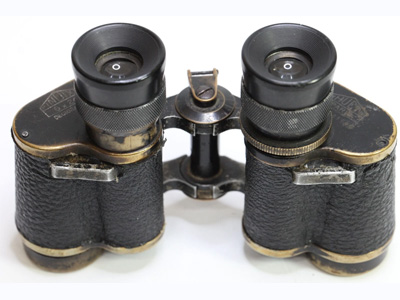
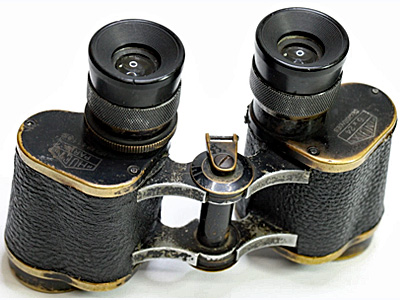
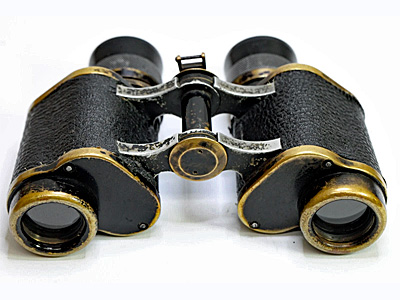
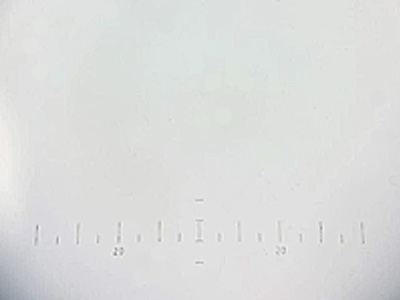
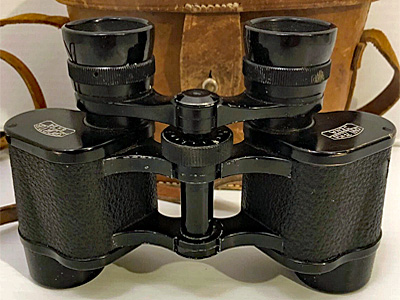
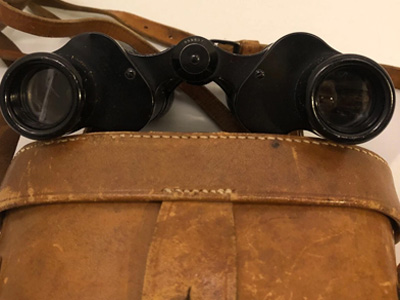
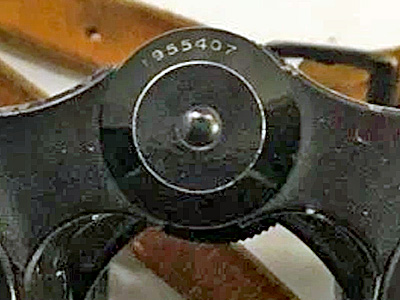
| Black “Vulkanite” body covering, brass fittings, diagonal, crosshatched knurling on focusing rings, black Bakelite rear lens fittings, left prism cover marked with “H. KOLBERG / i Ska / WARSZAWA” logo and large “WP” (Wojsko Polskie, Polish Army), right prism cover marked with Polish national eagle (early type with cross on crown) and “6×30 / 0858” logo, ⊕ reticle within right lens tube, black leather carrying strap |
|
mfg. about
November 1924
mfg. about
March 1925
| Black “Vulkanite” body covering, brass fittings, diagonal, crosshatched knurling on focusing rings, black Bakelit (Bakelite) rear lens fittings, left prism cover marked with “H. KOLBERG / i Ska / WARSZAWA” logo and large “WP” (Wojsko Polskie, Polish Army), right prism cover marked with Polish national eagle (early type with turned up wings and cross on crown) and “6×30 / xxxx” logo, ⊕ reticle within right lens tube, brown leather carrying strap, brown leather rear lens cover, brown leather Czechoslovakian Army case marked with “Ú” and Czech national lion and “38” (1938) |
mfg. about
19xx
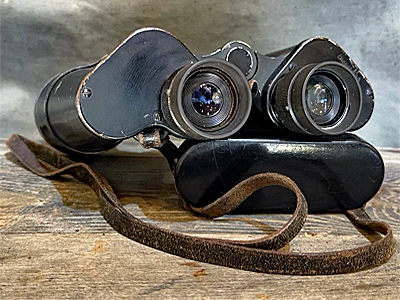
| Black “Vulkanite” body covering, brass fittings, diagonal, crosshatched knurling on focusing rings, black Bakelite rear lens fittings, left prism cover marked with “H. KOLBERG / i Ska / WARSZAWA” logo and large “WP” (Wojsko Polskie, Polish Army), right prism cover marked with Polish national eagle (early type with cross on crown) and “6×30 / 6353” logo, ⊕ reticle within right lens tube, brown leather carrying strap |
|




mfg. about
March 1926
mfg. about
July 1926
| Black “Vulkanite” body covering, brass fittings, diagonal, crosshatched knurling on focusing rings, black Bakelite rear lens fittings, left prism cover marked with “H. KOLBERG / i Ska / WARSZAWA” logo and large “WP” (Wojsko Polskie, Polish Army) lightly scratched and partially defaced, right prism cover marked with Polish national eagle (early type with turned up wings and cross on crown) and “6×30 / 8847” logo, ⊕ reticle within right lens tube |
|


mfg. about
September 1926
| Black “Vulkanite” body covering, brass fittings, diagonal, crosshatched knurling on focusing rings, black Bakelite rear lens fittings, left prism cover marked with “H. KOLBERG / i Ska / WARSZAWA” logo and large “WP” (Wojsko Polskie, Polish Army), right prism cover marked with Polish national eagle (early type with turned up wings and cross on crown) and “6×30 / 8936” logo, ⊕ reticle within right lens tube |
|


mfg. about
September 1926
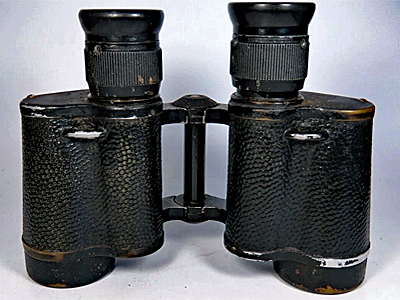
| Black “Vulkanite” body covering, brass fittings, diagonal, crosshatched knurling on focusing rings, black Bakelite rear lens fittings, left prism cover marked with “H. KOLBERG / i Ska / WARSZAWA” logo and large “WP” (Wojsko Polskie, Polish Army), right prism cover marked with Polish national eagle (early type with turned up wings and cross on crown) and “6×30 / 9357” logo, ⊕ reticle within right lens tube, black leather carrying strap |
|


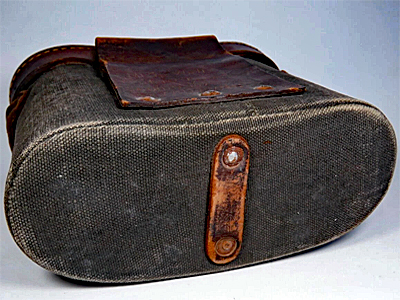


mfg. about
October 1926
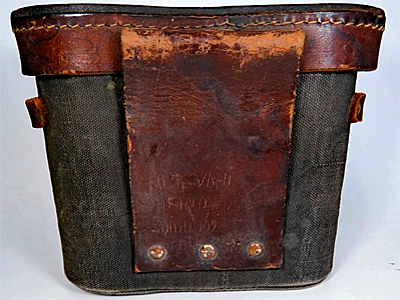
| Black “Vulkanite” body covering, brass fittings, diagonal, crosshatched knurling on focusing rings, black Bakelit (Bakelite) rear lens fittings, left prism cover marked with “H. KOLBERG / i Ska / WARSZAWA” logo and large “WP” (Wojsko Polskie, Polish Army), right prism cover marked with Polish national eagle (early type with turned up wings and cross on crown) and “6×30 / xxxx” logo, ⊕ reticle within right lens tube, brown leather carrying strap, brown leather rear lens cover, brown leather Czechoslovakian Army case marked with “Ú” and Czech national lion and “38” (1938) |
|
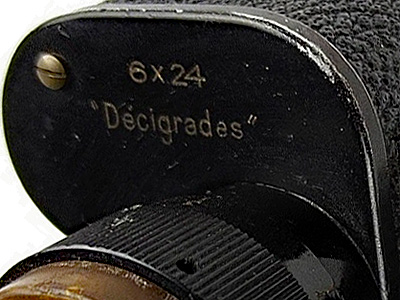
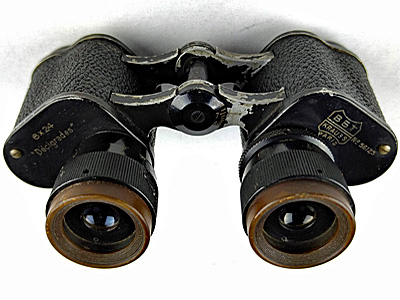
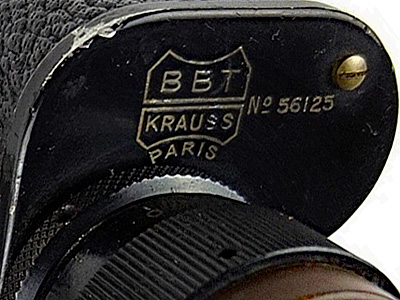

mfg. about
19xx
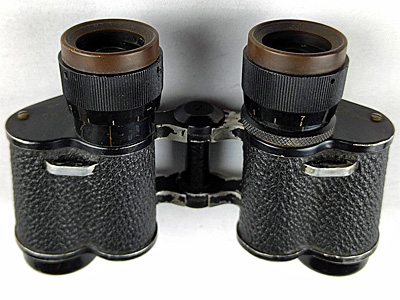
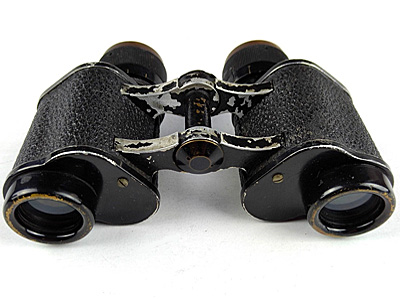
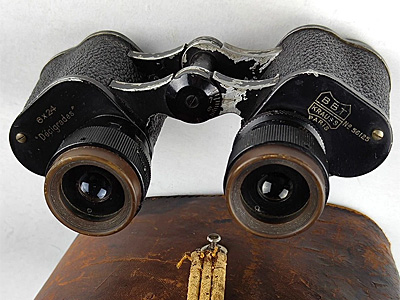
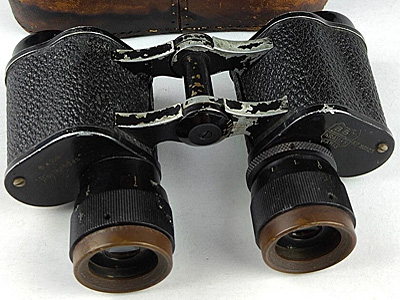
| Black “Vulkanite” body covering, brass fittings, diagonal, crosshatched knurling on focusing rings, black Bakelit (Bakelite) rear lens fittings, left prism cover marked with “H. KOLBERG / i Ska / WARSZAWA” logo and large “WP” (Wojsko Polskie, Polish Army), right prism cover marked with Polish national eagle (early type with turned up wings and cross on crown) and “6×30 / xxxx” logo, ⊕ reticle within right lens tube, brown leather carrying strap, brown leather rear lens cover, brown leather Czechoslovakian Army case marked with “Ú” and Czech national lion and “38” (1938) |
|


mfg. about
19xx
| Black “Vulkanite” body covering, brass fittings, diagonal, crosshatched knurling on focusing rings, black Bakelit (Bakelite) rear lens fittings, left prism cover marked with “H. KOLBERG / i Ska / WARSZAWA” logo and large “WP” (Wojsko Polskie, Polish Army), right prism cover marked with Polish national eagle (early type with turned up wings and cross on crown) and “6×30 / xxxx” logo, ⊕ reticle within right lens tube, brown leather carrying strap, brown leather rear lens cover, brown leather Czechoslovakian Army case marked with “Ú” and Czech national lion and “38” (1938) |
|


mfg. about
19xx
| Black “Vulkanite” body covering, brass fittings, diagonal, crosshatched knurling on focusing rings, black Bakelite rear lens fittings, left prism cover marked with “H. KOLBERG / i Ska / WARSZAWA” logo and large “WP” (Wojsko Polskie, Polish Army), right prism cover marked with Polish national eagle (early type with turned up wings and cross on crown) and “6×30 / 18282” logo, ⊕ reticle within right lens tube, brown leather carrying strap, brown leather rear lens protector, brown leather button flap, brown leather case |
|


mfg. about
July 1928
| Black “Vulkanite” body covering, brass fittings, diagonal, crosshatched knurling on focusing rings, black Bakelit (Bakelite) rear lens fittings, left prism cover marked with “H. KOLBERG / i Ska / WARSZAWA” logo and large “WP” (Wojsko Polskie, Polish Army), right prism cover marked with Polish national eagle (early type with turned up wings and cross on crown) and “6×30 / xxxx” logo, ⊕ reticle within right lens tube, brown leather carrying strap, brown leather rear lens cover, brown leather Czechoslovakian Army case marked with “Ú” and Czech national lion and “38” (1938) |
|
mfg. about
19xx
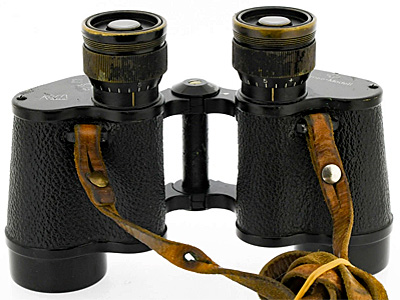
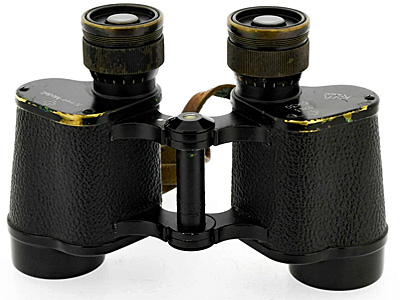
| Black “Vulkanite” body covering, brass fittings, diagonal, crosshatched knurling on focusing rings, black Bakelite rear lens fittings, left prism cover marked with “H. KOLBERG / i Ska / WARSZAWA” logo and large “WP” (Wojsko Polskie, Polish Army), right prism cover marked with Polish national eagle (early type with turned up wings and cross on crown) and “6×30 / 21715” logo, ⊕ reticle within right lens tube, brown leather carrying strap |
|
mfg. about
May 1929
| Black “Vulkanite” body covering, brass fittings, diagonal, crosshatched knurling on focusing rings, black Bakelite rear lens fittings, left prism cover marked with “H. KOLBERG / i Ska / WARSZAWA” logo and large “WP” (Wojsko Polskie, Polish Army), right prism cover marked with Polish national eagle (early type with turned up wings and cross on crown) and “6×30 / 22758” logo, ⊕ reticle within right lens tube, black leather carrying strap |
|
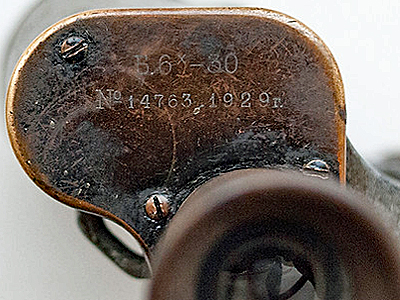
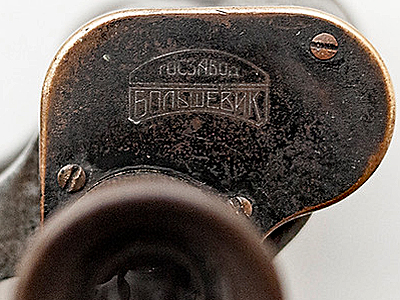
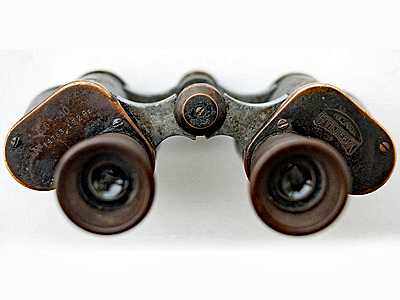
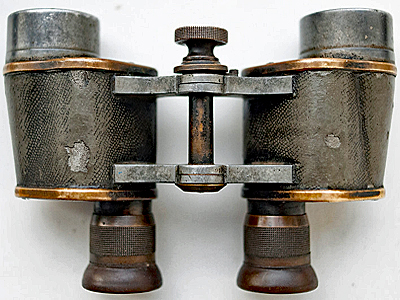
mfg. about
August 1929
| Black “Vulkanite” body covering, brass fittings, diagonal, crosshatched knurling on focusing rings, black Bakelite rear lens fittings, left prism cover marked with “H. KOLBERG / i Ska / WARSZAWA” logo and large “WP” (Wojsko Polskie, Polish Army), right prism cover marked with Polish national eagle (early type with turned up wings and cross on crown) and “6×30 / 22796” logo, ⊕ reticle within right lens tube, black leather carrying strap |
mfg. about
August 1929
| Black “Vulkanite” body covering, brass fittings, diagonal, crosshatched knurling on focusing rings, black Bakelite rear lens fittings, left prism cover marked with “H. KOLBERG / i Ska / WARSZAWA” logo and large “WP” (Wojsko Polskie, Polish Army), right prism cover marked with Polish national eagle (early type with turned up wings and cross on crown) and “6×30 / 23319” logo, ⊕ reticle within right lens tube |
|
mfg. about
Septrmber 1929
mfg. about
September 1929
| Black “Vulkanite” body covering, brass fittings, diagonal, crosshatched knurling on focusing rings, black Bakelit (Bakelite) rear lens fittings, left prism cover marked with “H. KOLBERG / i Ska / WARSZAWA” logo and large “WP” (Wojsko Polskie, Polish Army), right prism cover marked with Polish national eagle (early type with turned up wings and cross on crown) and “6×30 / 24737” logo, ⊕ reticle within right lens tube, black leather carrying strap |
|
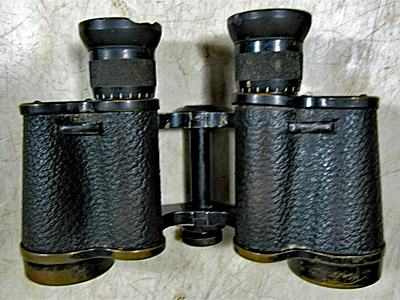
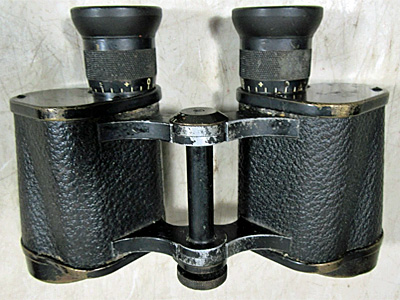
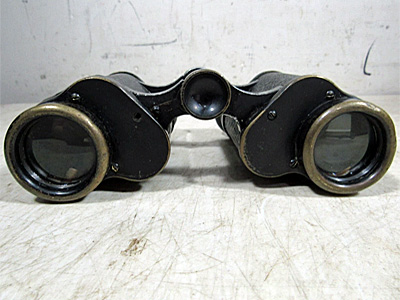
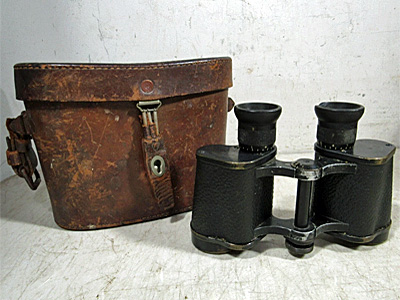
mfg. about
January 1930
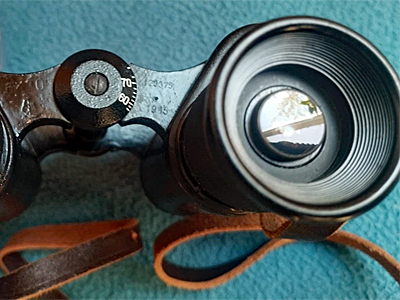
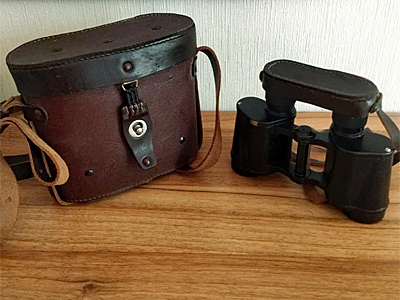
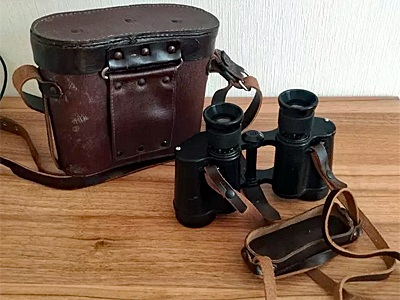
| Black leather body covering, brass fittings, diagonal, crosshatched knurling on focusing rings, black Bakelit (Bakelite) rear lens fittings, left prism cover marked with “H. KOLBERG / i Ska / WARSZAWA” logo and large “WP” (Wojsko Polskie, Polish Army), right prism cover marked with Polish national eagle (early type with turned up wings and cross on crown) and “6×30 / 26374” logo, ⊕ reticle within right lens tube [7900.1290] |
|


mfg. about
May 1930
| Black “Vulkanite” body covering, brass fittings, diagonal, crosshatched knurling on focusing rings, black Bakelit (Bakelite) rear lens fittings, left prism cover marked with “H. KOLBERG / i Ska / WARSZAWA” logo and large “WP” (Wojsko Polskie, Polish Army), right prism cover marked with Polish national eagle (early type with turned up wings and cross on crown) and “6×30 / 27531” logo, ⊕ reticle within right lens tube |
|


mfg. about
August 1930
| Black “Vulkanite” body covering, now completely stripped away and removed from the body, brass fittings, diagonal, crosshatched knurling on focusing rings, black Bakelit (Bakelite) rear lens fittings, left prism cover marked with “H. KOLBERG / i Ska / WARSZAWA” logo and large “WP” (Wojsko Polskie, Polish Army), right prism cover marked with Polish national eagle (early type with turned up wings and cross on crown) and “6×30 / 28599” logo, ⊕ reticle within right lens tube, brown leather carrying strap, brown leather rear lens cover, brown leather Czechoslovakian Army case marked with “Ú” and Czech national lion and “38” (1938) |
|


mfg. about
November 1930
mfg. about
November 1930
mfg. about
January 1931
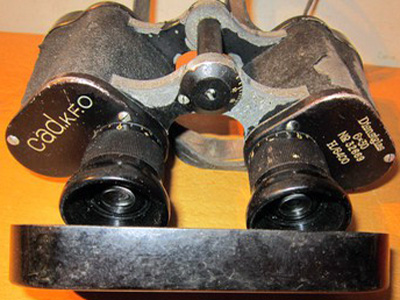
| Black “Vulkanite” body covering, brass fittings, diagonal, crosshatched knurling on focusing rings, black Bakelit (Bakelite) rear lens fittings, left prism cover marked with “H. KOLBERG / i Ska / WARSZAWA” logo and large “WP” (Wojsko Polskie, Polish Army), right prism cover marked with Polish national eagle (early type with turned up wings and cross on crown) and “6×30 / 31848” logo, ⊕ reticle within right lens tube, brown leather carrying strap |
|


mfg. about
November 1932
| H. Kolberg / Warszawa, 1924-1931 | PZO / Warszawa, 1931-1939 | H. Kolberg / Warszawa, 1937-1939 |
Polskie Zaklady Optyczne S.A. (Polish Optical Factory, Inc. – PZO, Warszawa (Warsaw), Polska (Poland) May 1931-September 5, 1939
| Black “Vulkanite” body covering, brass fittings, diagonal, crosshatched knurling on focusing rings, black Bakelit (Bakelite) rear lens fittings, left prism cover marked with “PZO / WARSZAWA” logo and large “WP” (Wojsko Polskie, Polish Army), right prism cover marked with Polish national eagle (early type with turned up wings and cross on crown) and “6×30 / 34085” logo, ⊕ reticle within right lens tube, black leather carrying strap |
|


mfg. about
July 1933
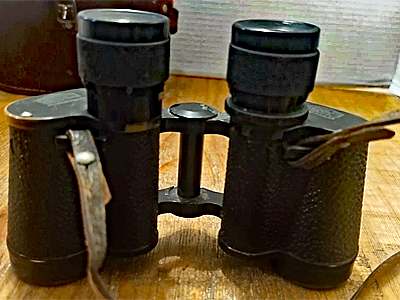
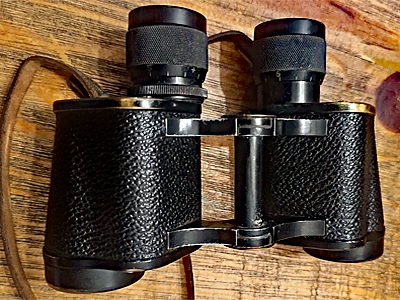
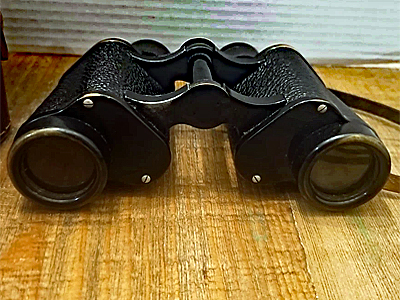
| Black “Vulkanite” body covering, brass fittings, diagonal, crosshatched knurling on focusing rings, black Bakelite rear lens fittings, left prism cover marked with “PZO / WARSZAWA” logo and large “WP” (Wojsko Polskie, Polish Army), right prism cover marked with Polish national eagle (late type without cross on crown) and “6×30 / 34941” logo, ⊕ reticle within right lens tube, brown leather carrying strap |
|
mfg. about
September 1933
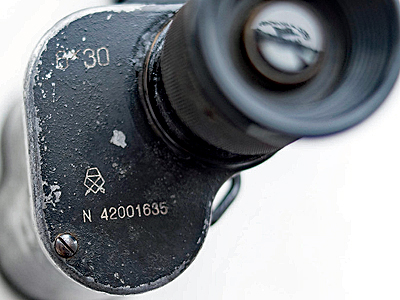
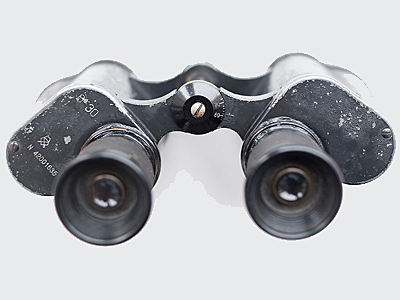
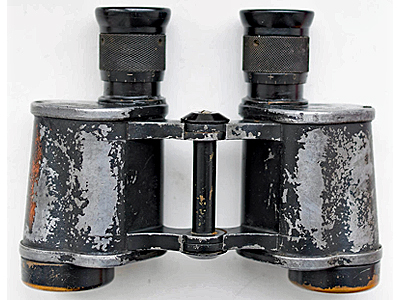
| Black “Vulkanite” body covering, brass fittings, diagonal, crosshatched knurling on focusing rings, black Bakelite rear lens fittings, left prism cover marked with “PZO / WARSZAWA” logo and large “WP” (Wojsko Polskie, Polish Army), right prism cover marked with Polish national eagle (late type without cross on crown) and “6×30 / 35337” logo, ⊕ reticle within right lens tube, brown leather carrying strap |
|
mfg. about
October 1933
mfg. about
October 1935
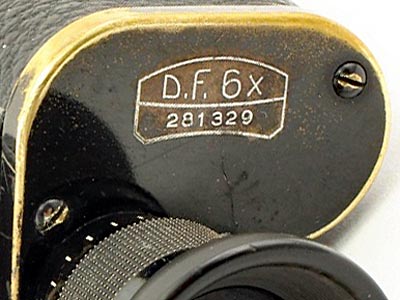
| Black “Vulkanite” body covering, brass fittings, diagonal, crosshatched knurling on focusing rings, black Bakelite rear lens fittings, left prism cover marked with “PZO / WARSZAWA” logo and large “WP” (Wojsko Polskie, Polish Army), right prism cover marked with Polish national eagle (early type with turned up wings and cross on crown) and “6×30 / 42084” logo, ⊕ reticle within right lens tube, brown leather carrying strap, very hard brown leather rear lens cover, brown leather button flap |
|




mfg. about
October 1935
mfg. about
May 1936
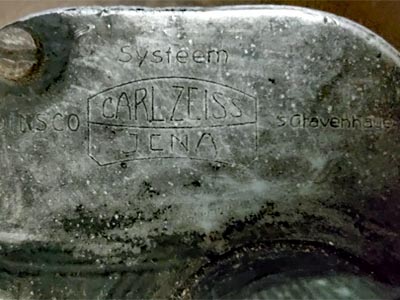
| Black “Vulkanite” body covering, brass fittings, diagonal, crosshatched knurling on focusing rings, black Bakelite rear lens fittings, left prism cover marked with “PZO / WARSZAWA” logo and large “WP” (Wojsko Polskie, Polish Army), right prism cover marked with Polish national eagle (late type without cross on crown), and “6×30 / 45656” logo, ⊕ reticle within right lens tube, brown leather carrying strap, brown leather case marked “1931” within a rectangle over “PZO” within a circle |
|


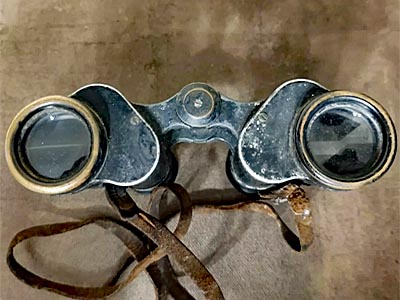


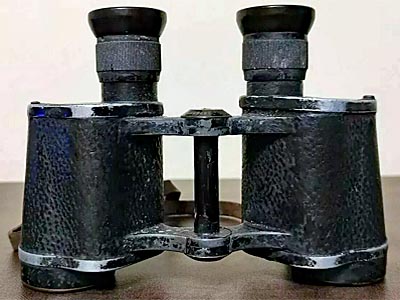
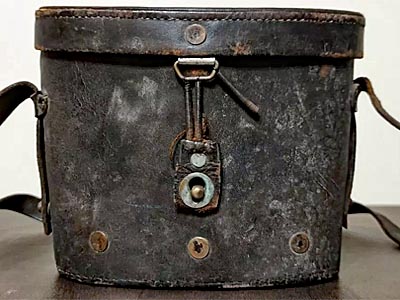


mfg. about
November 1936
| Black “Vulkanite” body covering, brass fittings, diagonal, crosshatched knurling on focusing rings, black Bakelite rear lens fittings, left prism cover marked with “PZO / WARSZAWA” logo and large “WP” (Wojsko Polskie, Polish Army), scratched and defaced, right prism cover marked with Polish national eagle (late type without cross on crown), scratched out and defaced, and “6×30 / 46230” logo, ⊕ reticle within right lens tube, brown leather carrying strap, brown leather case marked “1937” within a rectangle over “PZO” within a circle |
|

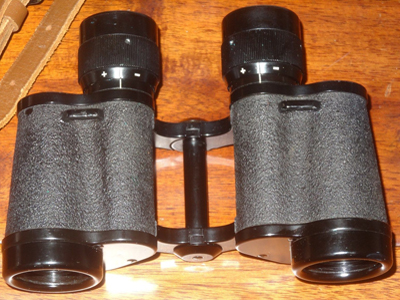


mfg. about
January 1937
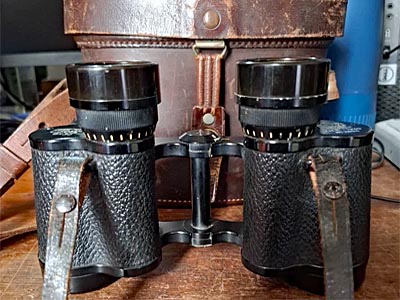
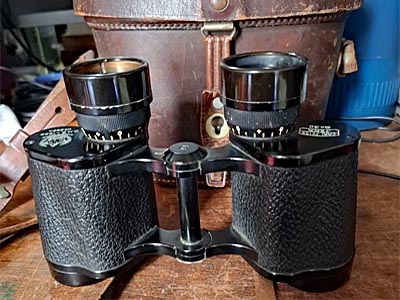
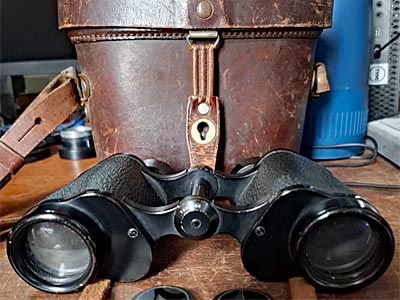
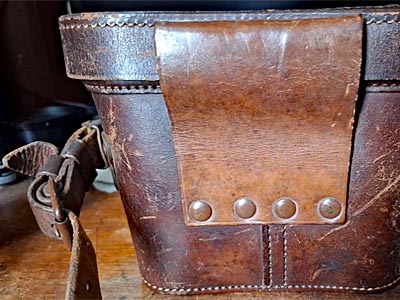
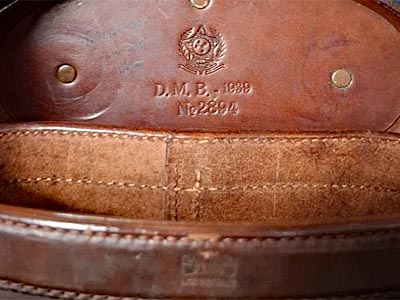
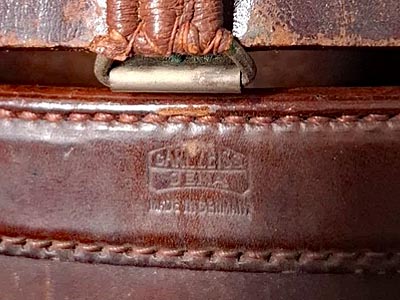
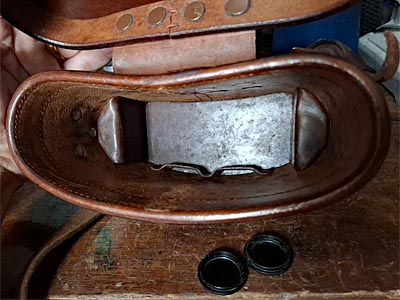
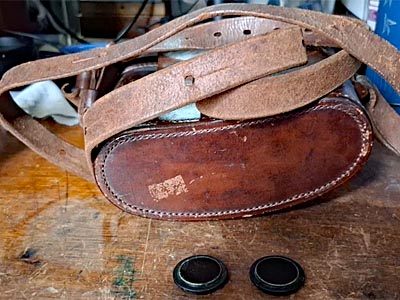
| Black “Vulkanite” body covering, brass fittings, diagonal, crosshatched knurling on focusing rings, black Bakelite rear lens fittings, left prism cover marked with “PZO / WARSZAWA” logo and large “WP” (Wojsko Polskie, Polish Army), right prism cover marked with Polish national eagle (late type without cross on crown) and “6×30 / 46358” logo, ⊕ reticle within right lens tube, brown leather carrying strap, very hard brown leather rear lens cover, brown leather button flap |
|
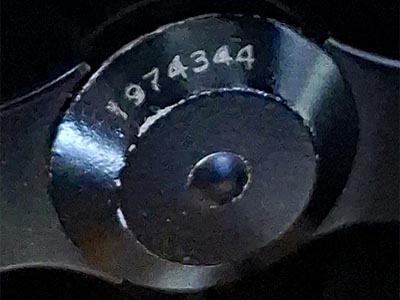
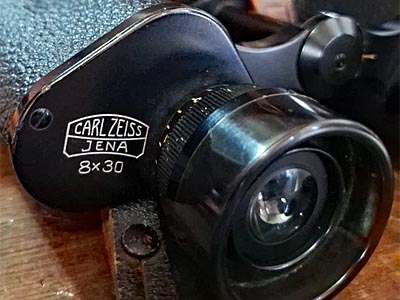
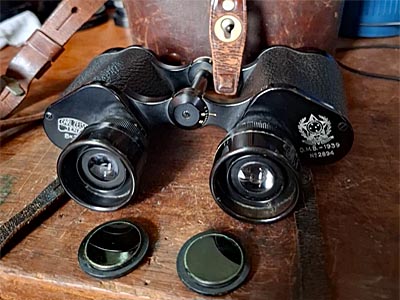
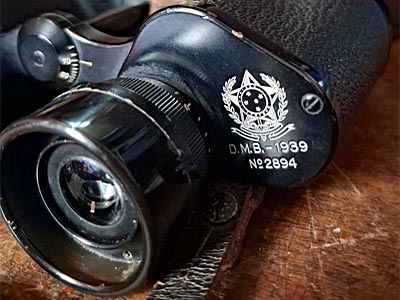
mfg. about
February 1937
| Black “Vulkanite” body covering, brass fittings, diagonal, crosshatched knurling on focusing rings, black Bakelite rear lens fittings, left prism cover marked with “PZO / WARSZAWA” logo and large “WP” (Wojsko Polskie, Polish Army), right prism cover marked with Polish national eagle (late type without cross on crown) and “6×30 / 48450” logo, ⊕ reticle within right lens tube |
mfg. about
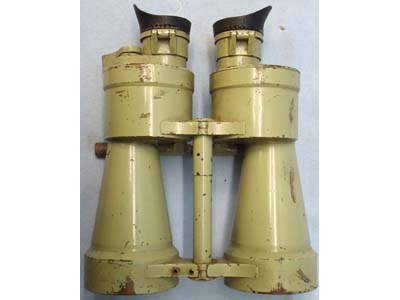
March 1938
| Black “Vulkanite” body covering, brass fittings, diagonal, crosshatched knurling on focusing rings, black Bakelite rear lens fittings, left prism cover marked with “PZO / WARSZAWA” logo and large “WP” (Wojsko Polskie, Polish Army), right prism cover marked with Polish national eagle (late type without cross on crown) and “6×30 / 48461” logo, ⊕ reticle within right lens tube |
|


mfg. about
March 1938
| Black “Vulkanite” body covering, brass fittings, diagonal, crosshatched knurling on focusing rings, black Bakelit (Bakelite) rear lens fittings, left prism cover marked with “PZO / WARSZAWA” logo and large “WP” (Wojsko Polskie, Polish Army), right prism cover marked with Polish national eagle (late type without cross on crown) and “6×30 / 48534” logo, ⊕ reticle within right lens tube, brown leather carrying strap, brown leather Czechoslovakian Army case |
|


mfg. about
March 1938
| Black “Vulkanite” body covering, brass fittings, diagonal, crosshatched knurling on focusing rings, black Bakelite rear lens fittings, left prism cover marked with “PZO / WARSZAWA” logo and large “WP” (Wojsko Polskie, Polish Army), right prism cover marked with Polish national eagle (late type without cross on crown) and “6×30 / 49563” logo, ⊕ reticle within right lens tube, brown leather carrying strap, brown leather case |
|


mfg. about
September 1938
| Black “Vulkanite” body covering, brass fittings, diagonal, crosshatched knurling on focusing rings, black Bakelite rear lens fittings, left prism cover marked with “PZO / WARSZAWA” logo and “MW/NAW” within a square, right prism cover marked with “6×30 / 51108” logo (no Polish national eagle), ⊕ reticle within right lens tube, brown leather carrying strap, brown leather rear lens protector |
mfg. about
April 1939
| Black “Vulkanite” body covering, brass fittings, diagonal, crosshatched knurling on focusing rings, black Bakelite rear lens fittings, left prism cover marked “49” and “PZO / WARSZAWA” logo and “LOPP”, right prism cover marked with Polish national eagle (late type without cross on crown) and “6×30 / 51127” logo, ⊕ reticle within right lens tube, brown leather carrying strap |
|


mfg. about
April 1939
| H. Kolberg / Warszawa, 1924-1931 | PZO / Warszawa, 1931-1939 | H. Kolberg / Warszawa, 1937-1939 |
H. Kolberg i Ska Zaklady Optyczne (H. Kolberg & Co. Ltd. Optical Factory), Warszawa (Warsaw), Polska
In 1931, Henryk Kolberg sold his shares in Fabryka Aparatur Optycznych i Precyzyjnych, H. Kolberg i Ska S.A. (Factory of Optical and Precise Instruments, H. Kolberg & Co. Ltd., S.A.). The Polish language term “S.A.” is a contemporary abbreviation of the words Spółka Akcyjna (Corporation (Inc.) in English; Société Anonyme (S.A.) in French; Aktiengesellschaft (AG) in German).
On September 28, 1933, Henryk Kolberg started a new company, named H. Kolberg i Ska Zaklady Optycznych (H. Kolberg & Co. Ltd. Optical Factory), located at 22, Chocimska Street. The Polish language term “i Ska” is a contemporary abbreviation of the words i Spółka (& Co. Ltd. in English; et Cie. in French). [Archiwum m.st. Warszawy, Rejestr Handlowy Dzial B NR LXIII 9107 Sadu Okregowego w Warszawie, National Archive of Warsaw, Book of Trade Registries]
The company became a competitor with PZO for contracts with the Polish Ministry of Defense, producing 6×30 binoculars identical to those produced by PZO. On April 25, 1937, the H. Kolberg i Ska Zaklady Optycznych (H. Kolberg & Co. Ltd. Optical Factory) signed a contract with the Polish Ministry of Defense to produce 2200 6×30 binoculars in compliance with Polish Ministry of Defense technical specification No 520096, identical to the No 520096 technical specification of the Polish Ministry of Defense to PZO.
The first 6×30 prototypes presented for inspection by the company to the Polish Ministry of Defense were serial numbered 80002 and 80003 [Central Military Archives, I 360.1.319, letter No 353, dated May 27, 1938, of Main Expert of the Headquarters of Weapon Items to the Technical Armament Institute]
From 1937 to August 31, 1939, the company produced about 2600 6×30 binoculars for the Polish Ministry of Defense. [A.I.8, The Polish Institute and Sikorsky Museum, London, U.K.]
H. Kolberg i Ska Zaklady Optyczne (H. Kolberg & Co. Ltd. Optical Factory), Warszawa (Warsaw), Polska (Poland) 1937-1939
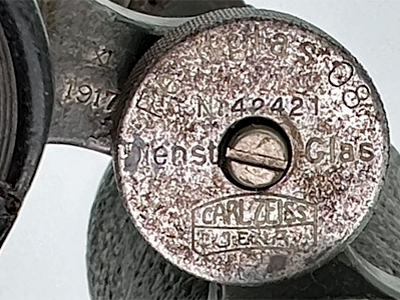
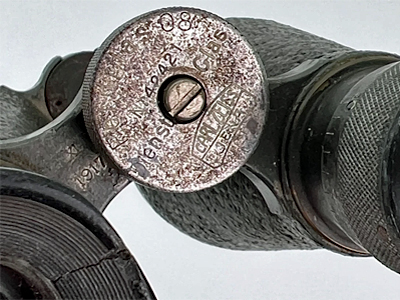
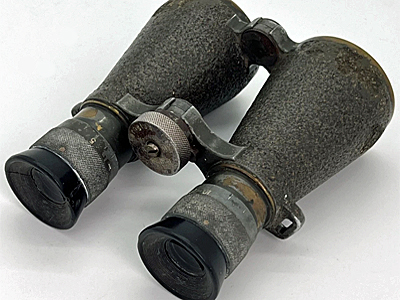
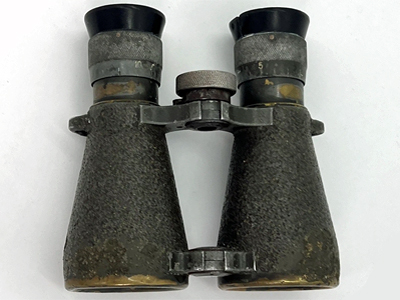
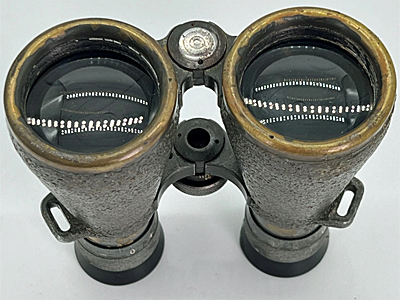
| Black “Vulkanite” body covering, brass fittings, diagonal, crosshatched knurling on focusing rings, black Bakelite rear lens fittings, left prism cover marked with “H. KOLBERG / i Ska / WARSZAWA” logo and large “WP” (Wojsko Polskie, Polish Army), right prism cover marked with Polish national eagle (late type without cross on crown) and “6×30 / xxxx” logo, ⊕ reticle within right lens tube |
|
mfg. about
19xx
| Black “Vulkanite” body covering, brass fittings, diagonal, crosshatched knurling on focusing rings, black Bakelite rear lens fittings, left prism cover marked with “H. KOLBERG / i Ska / WARSZAWA” logo and large “WP” (Wojsko Polskie, Polish Army), right prism cover marked with Polish national eagle (late type without cross on crown) and “6×30 / xxxx” logo, ⊕ reticle within right lens tube |
|


mfg. about
19xx
mfg. about
June 1938
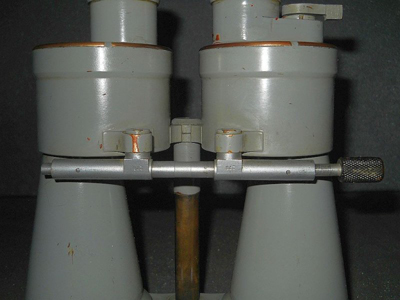
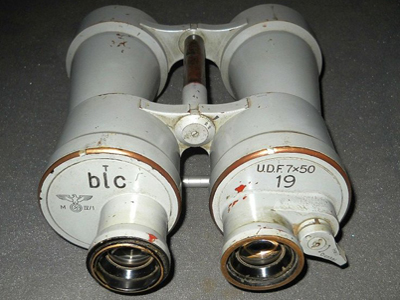
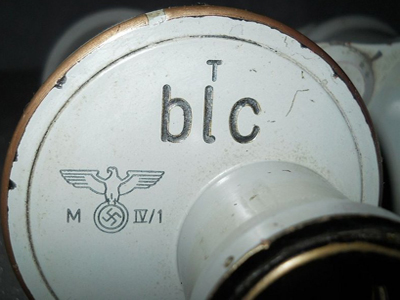
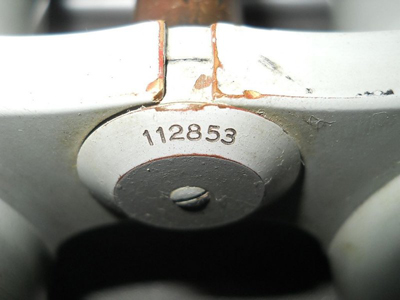
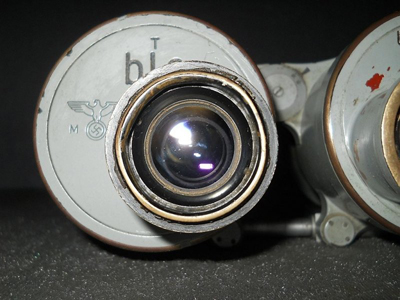
| Black “Vulkanite” body covering, brass fittings, diagonal, crosshatched knurling on focusing rings, black Bakelite rear lens fittings, left prism cover marked with “H. KOLBERG / i Ska / WARSZAWA” logo and large “WP” (Wojsko Polskie, Polish Army), right prism cover marked with Polish national eagle (late type without cross on crown) and “6×30 / 81880” logo, ⊕ reticle within right lens tube |
|






mfg. about
June 1939
mfg. about
August 1939
| Black “Vulkanite” body covering, brass fittings, diagonal, crosshatched knurling on focusing rings, black Bakelit (Bakelite) rear lens fittings, left prism cover marked with “H. KOLBERG / i Ska / WARSZAWA” logo and large “WP” (Wojsko Polskie, Polish Army), right prism cover marked with Polish national eagle (late type without cross on crown) and “6×30 / xxxx” logo, ⊕ reticle within right lens tube, brown leather carrying strap, brown leather Czechoslovakian Army case |
|


mfg. about
19xx
Military Compasses
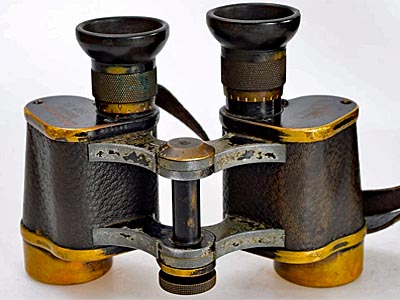
| Black “Vulkanite” body covering, brass fittings, diagonal, crosshatched knurling on focusing rings, black Bakelite rear lens fittings, left prism cover marked with “H. KOLBERG / i Ska / WARSZAWA” logo and large “WP” (Wojsko Polskie, Polish Army), right prism cover marked with Polish national eagle (late type without cross on crown) and “6×30 / xxxx” logo, ⊕ reticle within right lens tube |
|




mfg. about
19xx
| Black “Vulkanite” body covering, brass fittings, diagonal, crosshatched knurling on focusing rings, black Bakelite rear lens fittings, left prism cover marked with “H. KOLBERG / i Ska / WARSZAWA” logo and large “WP” (Wojsko Polskie, Polish Army), right prism cover marked with Polish national eagle (late type without cross on crown) and “6×30 / xxxx” logo, ⊕ reticle within right lens tube |
|


mfg. about
19xx
manufactured
1958-1977
| Black “Vulkanite” body covering, brass fittings, diagonal, crosshatched knurling on focusing rings, black Bakelite rear lens fittings, left prism cover marked with “H. KOLBERG / i Ska / WARSZAWA” logo and large “WP” (Wojsko Polskie, Polish Army), right prism cover marked with Polish national eagle (late type without cross on crown) and “6×30 / 81880” logo, ⊕ reticle within right lens tube |
|

mfg. about
March 1939
mfg. about
August 1939
| Black “Vulkanite” body covering, brass fittings, diagonal, crosshatched knurling on focusing rings, black Bakelit (Bakelite) rear lens fittings, left prism cover marked with “H. KOLBERG / i Ska / WARSZAWA” logo and large “WP” (Wojsko Polskie, Polish Army), right prism cover marked with Polish national eagle (late type without cross on crown) and “6×30 / xxxx” logo, ⊕ reticle within right lens tube, brown leather carrying strap, brown leather Czechoslovakian Army case |
|
mfg. about
19xx