
Bolshevik State Plant No. 232
• Государственный завод № 232 «Большевик»
• Gosudarstvennyy zavod № 232 «Bol’shevik»
Saint Petersburg, Russia (Санкт-Петербург, Россия) 1922-1992
In the Russian armed forces, military service binoculars are marked to identify them as government property.
Military service binoculars are issued to soldiers with specialized functions. For example, a group leader or an artillery observer was issued a set of binoculars to perform his duties.
The most common type of Russian military service binoculars used during the period of the State Optics Factory (GOZ) in Russia (1921-1930), began with the 6×30 Model AK military service binoculars. Starting in 1928, production switched to a new 6×30 Model Type G, that in 1930, was slightly updated and renamed the 6×30 Model B-1.
In 1930, the factory received a new name, which later became world-famous, State Optical-Mechanical Factory No. 349 (GOMZ), Государственный оптико-механический завод №349 (ГОМЗ), Gosudarstvennyi Optiko-Mekhanicheskii Zavod №349 (ГОМЗ).
The number “6” identifies the magnification power of the binoculars. In this case, “6” indicates that objects appear six times closer than their actual distance.
The number “30” identifies the diameter in millimeters of the front (objective) lenses — the light gathering lenses — in this case 30 millimeters in diameter.
Bolshevik State Plant No. 232
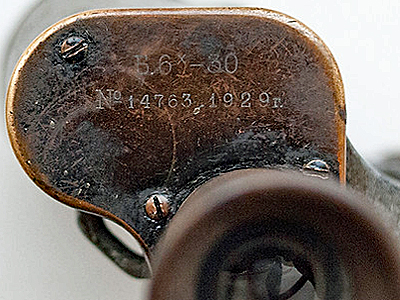
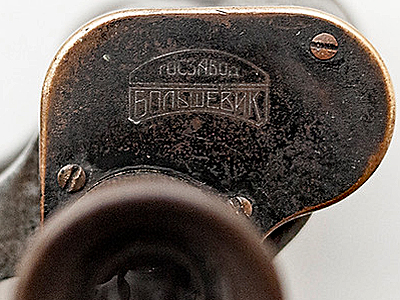
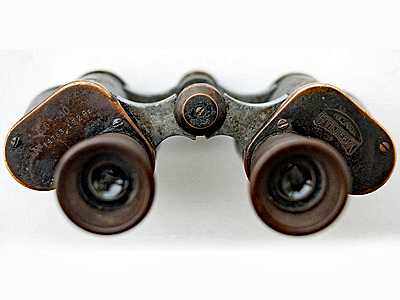
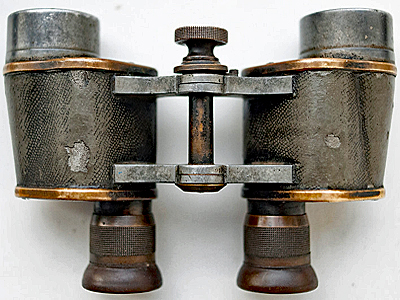
6×30 early pattern, 1929, №14763, Saint Petersburg, Russia
|
|
Soviet Russian 6×30 military service binoculars, production serial number, №14763, heavy, made of brass, early pattern body covering, manufactured in 1929 by the Bolshevik State Plant No. 232 (Государственный завод № 232 «Большевик», Gosudarstvennyy zavod № 232 «Bol’shevik»), Saint Petersburg, Russia. These Soviet Russian military service binoculars are marked with white characters stamped on the left prism cover with Б.6x-30 (Б. is the abbreviation of Бинокль, Binoculars), over № 14763 1929г. (г. is the abbreviation of год, the year, of manufacture). The right prism cover is marked with white characters stamped ГОСЗАВОД, GOSZAVOD (STATE PLANT), over БОЛЬШЕВИК, BOL’SHEVIK (BOLSHEVIK), all within a trademark logo similar to the Carl Zeiss trademark logo. |
“Bolshevik” optical factory, Leningrad (prior to 1930)
Optical-mechanical factory, Leningrad (1930-1935)
The “Bolshevik” factory in St. Petersburg was the first factory in the Russian Empire, that was not a branch of a foreign optical manufacturer, that started the production of binoculars. The first binoculars were manufactured in 1905.
The Obukhov factory was renamed the “Bolshevik” factory in 1922. The first binoculars were manufactured there in 1925.
The “Bolshevik” factory tracks its history to the Obukhov factory (in St. Petersburg), which was the first factory in the Russian Empire (that was not a branch of a foreign manufacturer) which started the production of binoculars. The first binoculars were manufactured in 1905. In 1922 the Obukhov factory was renamed the “Bolshevik” factory, first post revolution binoculars were manufactured there in 1925.
In 1930 the optics manufacturing facilities from the Bolshevik factory were moved to the Leningrad Optical-mechanical factory (LOMZ), which continued binoculars production until 1935. LOMZ mainly produced the 6×30 model (different from later B-6 model), and 8×40, 7×50, 4×50 models in much lower quantities.
LOMZ also produced the so called “civil” binoculars that did not have a range-finding graticue, they were marked without the use of a hammer and sickle.
Both of “Bolshevik” and LOMZ 6×30 binoculars had specific construction of the objectives with easily detachable caps, which allowed for the collimating of binoculars in the field. This design was used in the earlier Obukhov factory imperial period binoculars.
The Bolshevik State Plant No. 232, located in St. Petersburg, Russia, was originally known as the Obukhov State Plant and played a significant role in the production of binoculars during the Soviet era. The factory’s history in binocular manufacturing dates back to 1905, when it became the first factory in the Russian Empire to produce binoculars independently of foreign manufacturers. In 1925, the factory began producing post-revolution binoculars after being renamed Bolshevik in 1922.
In 1930, the optics manufacturing facilities were moved to the Leningrad Optical-mechanical Factory (LOMZ), which continued binocular production until 1935. LOMZ produced various models, including the 6×30, 8×40, 7×50, and 4×50 models.
The Bolshevik factory, which was the main manufacturer during the prewar period, produced all binocular models except for the 4×45 and also produced PE sniper scopes. The B-6 6×30 modification was created based on the model produced by this factory since 1931.
During World War II, the factory was evacuated to Novosibirsk and stopped production of 6×30 and 8×30 binoculars until 1945, when it resumed production of the 7×50 model.
Today, Soviet binoculars are known for their durability and robust construction, making them popular among collectors and enthusiasts.
The Obukhov State Plant
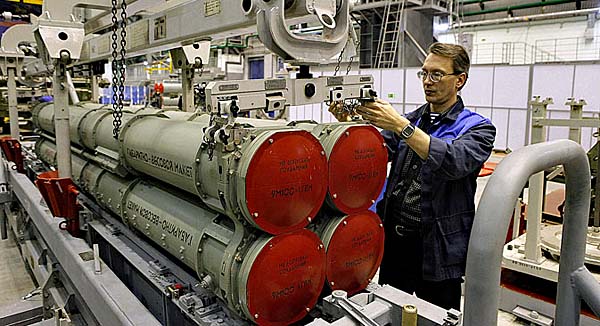
Located in present-day St. Petersburg, the Obukhov State Plant was one of the first and most successful major Russian enterprises founded with private capital. From top-of-the range 19th century naval guns to modern surface-to-air missile systems, the factory has produced world-class defense equipment since 1863, not even halting production for a day during the Siege of Leningrad in the Second World War.
In the second half of the 19th century, Russia entered the era of modernization with only a handful of factories, all of them state-owned. However, the government could not ensure the rate of growth of industrial production required to drive on the economy and ensure the fighting capacity of Russia’s army.
So when in 1863 metallurgists Nikolai Putilov and Pavel Obukhov came to the Navy Department with a proposal to create a plant near St. Petersburg that would supply the fleet with rifled artillery guns, the initiative was enthusiastically received.
Putilov invested his own capital in the project and Obukhov contributed the patent for the unique cast steel he had invented while working at the Zlatoust arms factory in the Urals.
The two men set themselves the ambitious goals of establishing a full production cycle from scratch and delivering one million rubles’ worth of weapons to the government in five years. Work began almost immediately in the marshland by the city to create one of the largest factories in the country. The planners thought well ahead in terms of the skilled workers that would be needed for the plant, and gave steel industry training to peasants from the outlying villages.
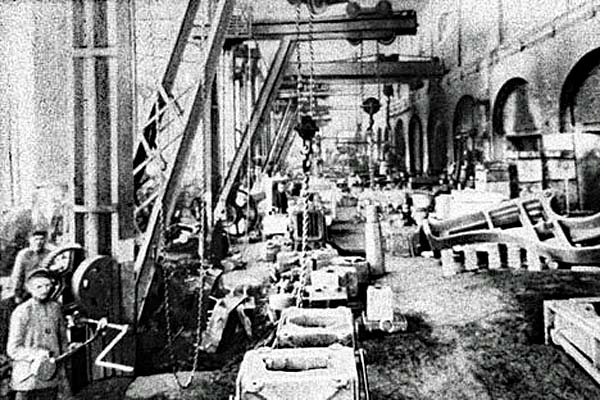
Soon named the Obukhov plant after one of its two founders, the company turned out its first products a year later. But since the costs proved to be higher than expected, the private owners had to turn to the Russian state for assistance. After receiving a powerful financial boost, the Obukhov plant had by the start of the 1870s attained parity with the world’s largest manufacturers of artillery weapons.
Bringing science to steel production
It was in St. Petersburg that a serious scientific approach was first taken to Russian steel production. To this end, the Obukhov management brought on board one of the greatest steelmakers of his time, Dmitry Chernov. Under his leadership the steel production process was tied to a clear formula, which in turn enabled breakthrough innovations such as the installation of open-hearth furnaces.
By 1872, the plant was already manufacturing the first Russian 305-mm heavy naval guns, production of which had previously been monopolized by the German company Krupp. In the 1880s, the plant also mastered the manufacture of a new kind of weapon, the torpedo.
Other innovations included engines for the first aircraft prototypes in the world, built by Alexander Mozhaisky, armored plates for warships, artillery shells, rifle scopes, binoculars and a wide range of civilian products.
The government gave constant recognition to the Obukhov plant for its outstanding work and granted it, together with a few other select companies, the right to place the imperial double-headed eagle on its products. In 1886, it was accorded “strategic” status and in 1886 was nationalized by the state.
In 1908, Tsar Nicholas II gave instructions for the plant to receive its own flag, and its products went on to win consistent acclaim at exhibitions in Paris, Philadelphia and Vienna, despite stiff competition from global armament giants like Krupp, France’s Creusot, and Britain’s Armstrong. The Obukhov plant was unrivaled on the Russian market, however, and in 1913 more than half of the imperial army’s land guns and more than 90 percent of Russia’s naval guns bore the Obukhov stamp.
New beginnings
In 1922, the enterprise was given a new name and a new mission in the Soviet era. The “Bolshevik” plant in Petrograd (later renamed Leningrad) built tractors, aircraft engines, railway carriages and drive shafts for hydroelectric power stations.
In the 1920s, the plant produced a new weapon for the Russian armed forces – the tank, the first Soviet tank being the T-18. The plant’s weapons engineers were combined into a separate design bureau.
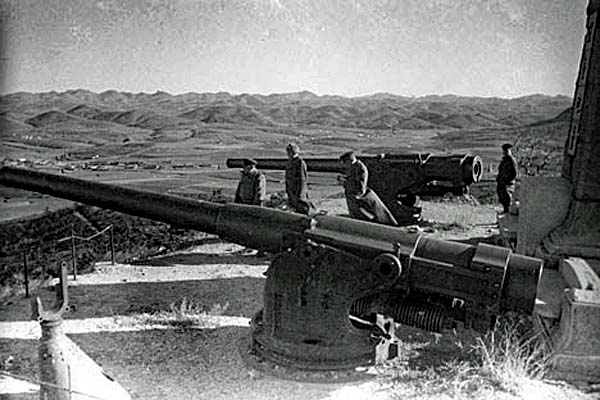
Obukhov guns massively increased the power of the Soviet army on the eve of the Second World War. Between 1941 and 1945, the plant in Leningrad did not stop production for a single day, even during the 872-day siege of Leningrad by Nazi forces. Its production lines also turned out thousands of shells and mines, while the plant workers built an additional 30 artillery batteries on railway platforms.
After the war, the industrial complex grew ever bigger and by mid-1987 employed more than 17,000 people in the development and production of a wide range of products for the navy, nuclear missile forces, and military space forces that depended on the missile industry.
The 1991 collapse of the Soviet Union and the crisis of that decade dealt a major blow to production at the plant, causing output to plummet almost 30 times over.
The turnaround came at the start of the 21st century with a decree signed in 2002 by Russian President Vladimir Putin, which added the plant to the Almaz-Antey air-defense concern.
Today the main products of the Obukhov plant are surface-to-air (SAM) missile systems, including the S-300, S-400, and S-500 systems.
Obukhov State Plant
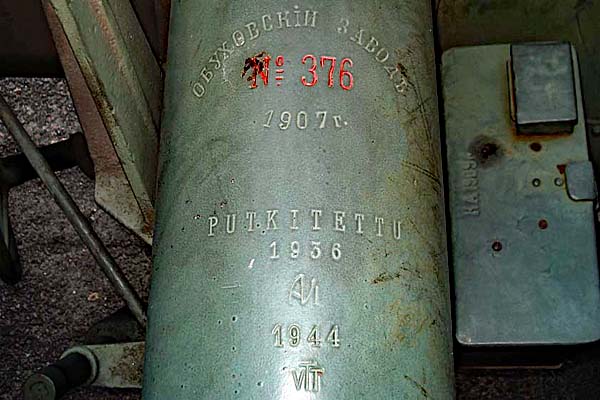
The Obukhov State Plant (also known as the Obukhovski Plant, (Государственный Обуховский Завод, Gosudarstvennyy Obukhovskiy Zavod) is a major Russian metallurgy and heavy machine-building plant in Saint Petersburg, Russia.
The Obukhov State Plant was founded in 1863 to produce naval artillery for the Russian Navy. The naval guns built by Obukhov were modeled on German designs of the Krupp Steel Works (Friedrich Krupp AG Hoesch-Krupp, formerly Friedrich Krupp AG and Friedrich Krupp GmbH).
Krupp was Germany’s premier weapons manufacturer during both world wars, and the largest company in Europe at the beginning of the 20th century.
Krupp produced battleships, submarines, tanks, howitzers, guns, utilities, and hundreds of other weapons and heavy equipment, including steel used to build railroads in the United States.
From 1922 to 1992, the Obukhov State Plant was named Bolshevik Plant No. 232.
In the late 1920s, the Obukhov State Plant became one of the two main Soviet tank factories, along with the Kharkov Locomotive Factory.
The Obukhov State Plant produced the first indigenous tank, the T-18. The company later became home to the AVO-5 tank design bureau, soon renamed OKMO, which was responsible for the T-26 infantry tank.
OKMO (Opytniy Konstruktorsko-Mekhanicheskiy Otdel, ‘Experimental Design Mechanical Department’) was the tank design team in the Soviet Union during the early 1930s. Located in Leningrad, it produced the design of the T-26 infantry tank, of which about 12,000 would be produced.
Most other designs from the bureau never saw the light of day, but it was here that Mikhail Koshkin, designer of the famous T-34 medium tank, gained his early experience. The bureau was gutted in the Great Purge and broken up by the beginning of the Second World War.
In 1930, the Bolshevik Factory No. 232 became home to the AVO-5 tank design bureau, soon renamed OKMO. In 1932, the tank department of the Bolshevik factory, became the new Factory No. 174 (K.E. Voroshilov). This new, independent enterprise was dedicated to the mass production of the T-26 tank.
In 1932, one of the former departments of the Bolshevik factory became a base for the new independent entity, named in 1935 as Factory No. 185 (S.M. Kirov), under the direction of N. Barykov and Semyon Alexandrovich Ginzburg.
The OKMO, for a few months a part of Factory No. 174, moved at the same time to Factory No. 185. The new enterprise was also dedicated to the production of tanks, while the main part of Bolshevik Factory remained focused on production of heavy artillery. Because of the same name and the same city of location, the Factory No. 185 is often mistaken in Western sources with Kirov Plant (or Factory No. 100), notably in Sewell’s “Why Three Tanks?” and works of Steven Zaloga.
They were independent factories. The Factory No. 185 was a home of OKMO bureau (Ginzburg), while the larger Factory No. 100 was a home of SKB-2 (Kotin, known for KV line of heavy tanks). In 1941, because of German threat, parts of both factories were moved to Chelyabinsk, where the large complex was given the name Chelyabinsk Kirov Plant No. 100 (unofficially Tankograd), and continued the production of Kotin’s designs.
In 1930, bureau oversaw design changes to the British Vickers E tank for construction as the T-26 light infantry tank, and later improvements to the T-26.
In 1930 OKMO also began design studies for heavy tanks. A team led by German engineer Eduard Grote worked on a 100-ton design with 107 mm gun, four sub-turrets, and pneumatic suspension and servo-controls, called the T-41 or TG-5. A slightly more practical “land battleship” was the T-35 heavy tank, designed by N. Tseits’s team and inspired by the British Vickers Independent.
In 1934, OKMO designed the T-43-2, a design for an amphibious tank with convertible drive—being able to run on tracks or wheels—as a possible replacement for the T-37 amphibious scout tank. It, and Moscow Factory no. 37’s competing T-43-1 were both rejected in favour of continuing T-37 production.
Also in 1934, N. Barykov and N. Tseits worked with graduate students from the Leningrad Technical Institute to modernize the multi-turreted T-28 medium tank by adding a Christie suspension. The resulting T-29-5 adopted the wheel-and-track running gear from the BT fast tank. Further T-29-4 and T-29-1 prototypes were built in 1935, but in testing at the NIIBT in Kubinka none of these were found satisfactory.
Following Soviet armored experience in Spain, another version was built with thicker armour and a better gun—it was considered for the A-20/T-32 competition which led to the famous T-34 medium tank, but by this time was obviously outdated. One of the Leningrad engineering students had been Mikhail Koshkin, the T-34’s chief designer.
In the 1930s, OKMO also designed a number of self-propelled artillery and antiaircraft guns, and tracked infantry, ammunition and fuel transporters, but only prototypes or trial batches of any were ever built, except for the T-26-T artillery tractor.
In 1936–37, OKMO designed the T-111 (or T-46-5), the first attempt at a Soviet tank with “shell-proof” armor, effective against more than just small arms. The engine and gun were inadequate, and only a prototype was built.
The T-100 ‘Sotka’ was a two-turreted heavy tank prototype. It became rejected in favour of the KV-1 heavy tank. A second prototype was made as a single self-propelled gun T-100Y, later designated SU-100Y, presently displayed in Kubinka Tank Museum. The bureau started work on the T-50 infantry tank in 1939, but was gutted during the Great Purge. The T-50 was handed over to the Factory No. 174.
In 1932, the tank department of Bolshevik Plant No. 232 became a new Factory, No. 174 (K. E. Voroshilov). This new, independent enterprise was dedicated to the production of the T-26 tank.
One of the former departments of the Bolshevik Factory became a base for the new independent “Factory No. 185 (S.M. Kirov).” The OKMO, for a few months a part of Factory No. 174, moved at the same time to Factory No. 185. The new enterprise was also dedicated to the production of tanks, and because of it’s name is often confused with Kirov Factory.
The main part of the Bolshevik Factory remained focused on production of heavy artillery. On the other hand, Zaloga says that in 1935, after the assassination of Sergey Kirov, the whole Bolshevik Factory No. 232 was renamed “Factory No. 185 (S.M. Kirov)”, yet Leningrad inhabitants continued to refer to it as the Bolshevik Factory.
The Leningrad factory’s historical name was restored in 1992 by the formation of a unitary enterprise, FSUE Obukhov State Plant. In 2002 it became part of the Almaz-Antey military industrial concern, and in 2003, it became a joint-stock company, OJSC GOZ Obukhov Plant.
xxxxxxxxxxxxxxxxxxxxxxxxxxxxxxxxxxxxxxxxxxxxxxxxxxxxxxxxxxxxxxxxxxxxxxxxxxxxxx
Cal name velocity Comments Used 30.5 cm M07 L/52 815 m/s Gangut class, Imp. Mariya class battleships 30.5 cm M95 L/40 Last on Andrei Pervozvanny class battleships 30.5 cm M77 L/40 792 m/s First on Sissoi Veliky 30.5 cm M77 L/35 637 m/s Like Krupp C/77 L/35 Chesma, Navarin, Georgii Pobedonosets 30.5 cm M77 L/30 569 m/s Imperator Aleksandr II-class, Dvenadsat Apostolov, Ekaterina II, Sinop 30.5 cm M67 L/20 447 m/s Petr Veliky 27.9 cm M77 L/22 454 m/s Admiral Lazarev-class monitors 27.9. cm M67 L/20 403 m/s 25.4 cm C/91 L/45 692 m/s Admiral Ushakov-class, Peresvet-class, Rostislav
First Russian Society of Communist Agricultural Workers, founded by workers from the Obukhov factory
The First Russian Society of Communist Agricultural Workers was organised early in 1918 on the initiative of workers at the Obukhov Factory in Petrograd, Russia. Lenin supported the formation of the organisation. In March 1918, members of the society with their families went to Kazakhstan, where they settled and were given land to cultivate. Civil war prevented the development of the Petrograd workers’ initiative. The communards failed to reap even their first harvest. Kulaks and White Cossacks attacked the commune, forcing it to break up.
The plant in the pre-war period (1920-1930s)
The revolutionary events of 1917 turned the established foundations and order upside down. In February 1918, the plant manager was removed, and management was entrusted to the OSZ Management Commission, chaired by A.A. Antonov. Only in 1920 was sole management of the plant introduced in the person of Manager V.D. Serov. But the enterprise’s activities were interrupted due to a lack of orders and fuel shortages. On December 22, 1917, the Obukhov Plant stopped, and on January 28, 1918, all workers, and there were 12 thousand of them, were dismissed. A similar situation developed at other industrial enterprises in Petrograd. The civil war and foreign intervention cut the city off from the main sources of raw materials and food. Many left with their families for the villages, where it was easier to feed themselves. About 200 families of Obukhovites together with workers of the Semyannikovsky plant founded one of the first agricultural communes in Altai, the “First Russian Society of Communard Farmers”, which later turned into the large state farms “Pervorossiysky” and “Obukhovsky”.
In 1918, the Obukhovites experienced difficult times – the plant was idle for 2.5 months. Only at the end of February, a decision was made to change its profile. Agriculture needed tractors, the railway needed rolling stock. Therefore, the government instructed the Obukhov plant to set up production of tracked tractors, repair of steam locomotives and freight cars, manufacture of springs, axle boxes, bearings and other parts of rolling stock. The enterprise’s program included the production of plows and metal parts for threshers.
75-horsepower Holt tractor
75-horsepower Holt tractor
About 4,000 workers, engineers and technicians were hired to fulfill the new production plan.
The order for tractors was the first and largest order for machinery by the new Soviet state. An interesting document dated December 16, 1917, has been preserved in the Historical Archives of St. Petersburg. “To the Chief of the Obukhov Plant. This order is given to the Obukhov Plant to manufacture two types of Holt tractors – 40 and 75 horsepower. 500 forty-horsepower tractors, 500 seventy-five-horsepower tractors. A total of 1,000 units.” Based on the American 75-horsepower Holt tractor, the plant’s designers improved its design and created the Russian Holt, which surpassed its predecessor in testing. The first three Soviet tracked tractors were finally ready in 1919 and sent to the front to transport large guns. The Civil War ended and it was decided to revive and revive the Petrograd industry. The Obukhovites began to actively restore the plant. Shock groups were created in the workshops, which achieved a significant increase in labor productivity.
On November 4, 1922, by decision of the Petrograd Soviet, the Obukhov Steel Foundry was renamed the Petrograd State Ordnance Optical and Steel Foundry “Bolshevik”, and 70 years later – in 1992 – it was returned to its historical name – “State Obukhov Plant”.
In 1921, steel production was revived at the plant, putting into operation a 5,000-ton open-hearth furnace – after the revolution, the first at the plant and the second in Petrograd. Tractor production was resumed. At an agricultural exhibition in 1920, the Obukhov plant tractor received a first-degree diploma, which is kept in the plant museum. The plant continued to develop tractor production, improving old designs and creating new ones. Tractors with its brand worked in the fields of “Sakharotrest”, in agricultural communes and state farms, in draining swamps, extracting peat, and in the construction of Volkhovstroy. Beginning in 1922, the plant reached the output of several hundred tractors per year. “Bolshevik” paved the way for mass tractor production in the country. Tractor production ceased in 1928 (although spare parts were manufactured by the plant until the end of the 1990s), by which time several tractor plants were already operating in the country. In 1922, the plant received a government order: to create and launch an aircraft engine into serial production. Until that time, they were bought abroad. The first domestic aircraft engine was manufactured by November 7, 1923. On June 10, 1925, two aircraft with engines manufactured at the plant successfully flew from Moscow to Beijing and Tokyo. In honor of the workers and employees of the plant, one of the aircraft was named “Leningrad Bolshevik”.
Air engine M-5, 400 hp at a festive demonstration on November 7, 1923.
Air engine M-5, 400 hp at a festive demonstration on November 7, 1923.
Air engine M-5, 400 hp at a festive demonstration
November 7, 1923.
In 1929-1937, the plant took part in the construction of the Magnitogorsk, Kuznetsk combines and a number of other metallurgical construction projects in the country. Supplies tubing, escalators and tunneling shields for the Moscow Metro. In 1935, it produces the Hammer and Sickle emblems with gemstones for the first Kremlin Stars, and then in 1937, high-quality steel frames for the ruby Kremlin Stars.
State Obukhov Plant during the Great Patriotic War
On the first day of the war, rallies were held at the plant, as at other enterprises in Leningrad. The resolution adopted by the plant’s staff and published on June 23 in the plant’s mass-circulation newspaper stated: “In the terrible days that our Motherland is experiencing, we, the workers, engineers, technicians and employees of the plant, respond to the treacherous attack of the enemy by joining the people’s militia en masse. We will work with intensity, as the emergency situation requires. We will mobilize everything and everyone for the complete destruction of the enemy…”. About 6,000 thousand workers of the plant went to the front. From among the volunteers, the following were formed: a workers’ battalion, 5 partisan detachments, an extermination battalion, a people’s militia regiment.
In the first months of the war, the composition of the plant’s workers changed greatly. The men who had gone to the front were replaced in all areas of production by women (by December 1941, the share of female labor was from 30 to 50% in different shops) and teenagers from 13 to 15 years old. Veterans returned to the machines and open-hearth furnaces. Work at the plant did not stop either day or night. Despite a significant reduction in the number of personnel, the plant did not reduce the rate of production: in July-August 1941, steelmakers smelted as much metal as in the first half of the pre-war year.
In July 1941, some of the workers, engineering and technical workers with equipment were sent to Stalingrad, then to the Urals (Perm, Sverdlovsk, Barnaul).
The plant worked for the front and at the same time was part of the front itself. Defensive fortifications and firing points were erected on the territory of the plant, rifle embrasures were pierced in the walls of the shops.
In September 1941, Leningrad was cut off from the rest of the country by a blockade. But the city continued to live and work. The chimneys of the Obukhov plant were also smoking.
The most difficult time had arrived – the winter of 1941-1942. The rolling mill, forge, steel-forming and open-hearth shops were shut down. Having mothballed the equipment of the shut-down shops, people went to other areas of production.
The food supply standards fell catastrophically. By November 20, 1941, the bread ration was: workers – 250 grams, everyone else – 125 grams. In addition, the plant was subjected to intense shelling and bombing. From September 4, 1941 to 1944, more than 3,500 artillery shells, more than 500 large and several thousand incendiary aerial bombs were dropped on the plant. Despite the lack of fuel and almost complete power outages, shelling and bombing, high mortality from exhaustion, the plant did not stop working. By candlelight and oil lamps, assemblers manually repaired crippled guns arriving from the front. From November 1941 to April 1942, a large group of plant workers worked on the construction and maintenance of the Road of Life, on the conversion of the 5th hydroelectric power station from coal to peat and on the supply of fuel.
Despite the difficult conditions of blockaded Leningrad, a movement “For the repair and manufacture of guns in free time” was born at the plant. 9,000 daggers, more than 3,000 sapper shovels were made outside of working hours, and more than 20 guns were repaired.
During the All-Union competition, a movement of innovators developed at the plant. In two months of 1942, 68 proposals were implemented, which resulted in savings of 100 thousand rubles. Enthusiasm and good organization allowed workers to increase labor productivity to 180-250%. In the spring of 1942, a large group of young people came to the plant. By decision of the party committee and the Komsomol committee, the youth began to be organized into teams, which were headed by advanced workers. In Leningrad, the name of the Komsomol member – foreman Vladimir Knyazev, who monthly fulfilled the norms by 400%, and the members of his team – by 150-200%, was well known. Among the best were the teams of G.P. Gavrilov and G.I. Krasilnikov.
The desire to bring victory closer and help the front multiplied the strength of people. During the war years, the plant continuously supplied the army with guns, mines, and shells:
more than 20 thousand armored and high-explosive shells of 130, 160, 305, 356, and 406 mm caliber were manufactured;
more than 90 thousand parts for M-13 (Katyusha) rocket mines, 11 thousand different parts for the Maxim machine gun, 125 thousand 82 mm caliber mines were produced;
30 new artillery batteries on railway platforms were created, equipped with two or four main guns up to and including 152 mm;
in the 2nd quarter of 1944, serial production of a 100 mm caliber anti-tank gun was established.
In addition, on the orders of the Leningrad Front headquarters, the plant manufactured landing sleds, protective armored breastplates for pilots, sapper and construction tools. During the Great Patriotic War, more than 4,000 plant workers were killed by bombing and died of hunger.
5,898 plant workers were awarded the medal “For Valiant Labor in the Great Patriotic War of 1941-1945”, of which 524 people posthumously, 3,201 people were awarded the medal “For the Defense of Leningrad”. Sverdlov awarded the plant workers who fought at the front
Development of the plant in 1946-1999
The damage that the war and the blockade caused to the plant was enormous and amounted to almost 60 million rubles. Over the course of several post-war years, major repairs of the workshops were carried out, their production capacities were restored.
Restoration work began in the second half of 1943. Metallurgists, with the help of the entire plant, restored and repaired the open-hearth furnace. In August of the same year, when shells were still exploding on the territory of the plant, the open-hearth gave the first smelting of steel. The repair of furnace No. 9 was also very labor-intensive. The best steelmaker of the plant I.S. Usanov put a lot of effort and energy into the revival of the open-hearth. After 1.5 years, in April 1945, this furnace – one of the largest open-hearth furnaces in Leningrad – began to operate.
During the restoration, the plant also began to reconstruct it. Military products gave way to peaceful ones. In February 1945, large orders were received for the manufacture of agricultural machinery. Continuing to develop the traditions of helping the village, the plant’s team manufactured drums for corn machines, harrows, and various parts for repairing the country’s tractor fleet. One of the largest orders was the production of tractor rollers. In the 1950s, assistance to agriculture increased. The plant took patronage over state farms in the
Luzhsky District of the Leningrad Region and participated in the development of virgin lands. Almost 150 young workers of the plant left for Altai, Kazakhstan, and the Volga region. Plant designers and workers created and launched a potato harvester into production, testing it in the fields of the sponsored state farm “Iskra”. At the same time, spare parts for these machines and tractors were manufactured.
By the end of 1948, the plant managed to completely restore the entire production cycle, refused state subsidies, and began to gain momentum in the fight for technical progress. By this time, the plant had mastered the production of oil pumping units for the chemical industry, and the production of tubing for the Moscow and then Leningrad metro was resumed. At the initiative of the plant’s innovators, an auto-surfacing section was created in the tool production, awarded the 1st degree Diploma of the All-Russian Exhibition Center, and “Bolshevik” was the initiator of high-speed metal processing. In 1957, open-hearth furnaces were automated, which made the work of steelmakers easier, steel melting was carried out more intensively, at higher temperatures, and labor productivity increased. The post-war development of the plant and its re-equipment on a modern scientific and technical basis was ensured by the advanced engineering and technical thought of designers, the initiative of innovator and inventor workers, the community of scientists and manufacturers, and mass competition. In the 1980s, the plant widely used the team form of labor organization: specialized, integrated, end-to-end, self-supporting teams and teams working on one assignment were created.
As a result of the established historical traditions, the enterprise continued to be a steel foundry and machine-building enterprise, producing a wide variety of products: different grades of steel; steel and non-ferrous castings; forgings and stampings; subway tubing; shafts for ships; large-sized sections, autoclaves, deep-well sucker rod pumps designed for oil production at a depth of 1,500 meters for the chemical industry; units and parts for nuclear power plants, bridge structures and drilling rigs; antenna systems for deep space communications with a mirror diameter from 5 to 70 meters; agricultural machinery – potato harvesters and units for forklifts. In 1982, the plant manufactured ground equipment for the universal space system “Energia-Buran” (developed by the plant’s design bureau). It produces more than 1 million electric irons annually.
For high achievements in labor, innovative work methods and scientific and technical discoveries, 14 employees of the association were awarded the title Hero of Socialist Labor: I.I. Ivanov, M.Ya. Krupchatnikov, K.F. Dobyshev, A.N. Myasnikov, A.F. Khudenkov, P.N. Ivanov, G.D. Egorov, I.S. Morozov, A.F. Skvortsov, V.I. Privalov, A.S. Spitsyn, V.A. Mamkin, V.A. Kropotkin and B.N. Tugeyev, and 29 people became Laureates of the State Prize.
In the post-war period, the plant was awarded government awards four times and the enterprise banner is decorated with six orders: the Order of Lenin (1939 and 1983); the Order of the Red Banner (1945); the Order of the Red Banner of Labor (1963 and 1976) and the Order of the October Revolution (1971).
in: Articles with Russian-language external links, Articles with Polish-language external links, Pages using ISBN magic links,
and 9 more
76 mm divisional gun M1902
76-mm divisional gun model 1902
76-mm divisional gun model 1902 in the Finnish Military Museum, Helsinki, Finland.
Type Field gun
Place of origin
Russian Empire,
Soviet Union
Production history
Produced 1903-1931
Specifications
Mass combat: 1,092 kg[1]( lbs)
travel: 2,380 kg
(5,247 lbs)
Barrel length 30 calibers
Caliber 76.2 mm (3 in)
Breech interrupted screw
Carriage fixed trail
Elevation -3° to 17°
Traverse 5°
Rate of fire 10-12 rpm
Maximum firing range 8.5 km (5.28 mi)[1]
The 76.2 mm divisional gun model 1902 (76-мм дивизионная пушка образца 1902 года) was a Russian light field gun used in the Russo-Japanese War, World War I, Russian Civil War and a number of interwar armed conflicts with participants from the former Russian Empire (Soviet Union, Poland, Finland, Estonia, etc.). Modernized versions of this gun were employed at the early stage of the Second World War.
History
This gun, known as the “three-incher”, (трёхдюймовка) was developed by Putilovski Works in Saint-Petersburg in 1902. The lead designers were L. A. Bishlyak, K. M. Sokolovskiy and K. I. Lipnitskiy. It incorporated many new features for that time – carriage with recoil devices, traverse and elevation tracking mechanisms, precision sight for direct and indirect firing, manual interrupted screw breech and single-piece ammunition loading.
For simplifying the mass production process designers used in the gun’s construction cheap types of carbonized steel without or with minimal use of rare and expensive nickel-, manganese- or chromium-added types of steel. Early version had two seats for the crew on both sides of a barrel, from 1906 they were replaced with an armoured shield.[2] The shield had a specific design: an outer shield, with a big rectangular opening, and a smaller, inner shield behind it. Upper and lower portion of a bigger shield were folding during transport.
The gun had fragmentation, shrapnel and canister ammunition. More specialized types of projectiles included smoke, incendiary and chemical ones. Many ammunition pieces were French originated. Limbers could carry 40 or 44 rounds in a light artillery and 28 rounds in a mounted artillery, while caissons carried 48 rounds in both cases.
Employment
M1902 divisional guns were the mainstay of Russian Empire artillery and were accepted well by the army. Their characteristics were at the same level with similar 75-mm French and German guns. These guns were used in the battles of the Russo-Japanese War and the First World War.
After the collapse of the Russian Empire in 1917, M1902 guns were employed by different factions: bolshevist Red Army, monarchist or counter-revolution White Guard, nationalist forces in Russian-minority areas, national armies of Poland and Finland and simply anarchists and bandits throughout the vast territories of former imperial Russia.
In some episodes the gun saw its first anti-tank usage. The White Guard and intervening Allied forces used a small number of tanks, primarily French Renault FT-17s and British Mk Vs or Whippets. The M1902 gun with its high muzzle velocity was an effective weapon against such targets with only anti-bullet armour protection. In the 1920 Polish-Soviet War M1902 guns were again used against Polish FT-17s.
Poland captured large numbers of M1902 guns in a course of the Polish-Soviet War and impressed them into service as a standard piece of the mounted artillery, designated 76,2 mm armata wz.1902. In 1923, there were 568 guns wz.1902 in inventory. Most were converted to wz.02/26 guns in 1926-1930 (see below), however, Poland also retained some of the guns in the original 76 mm caliber to use existing stocks of ammunition. There were 89 of original guns available at the outbreak of the Second World War, among others, the sole gun used during the Battle of Westerplatte on September 1, 1939.
Interwar development
Poland and the Soviet Union modernized their M1902 guns after the end of the First World War. Polish designers made their minor enhancements in 1926, resulting in the wz. 02/26 gun, which was rechambered for firing 75 mm shells used by the most numerous Polish field gun, the Canon de 75 modèle 1897.
The USSR continued mass production of M1902 gun until 1931 when it was replaced by its enhanced M1902/30 variant. Both variants were utilized in the early stages of the Second World War.
There were still 2066 guns of M1902 model available in 1941. The Soviet stockpiles of 76 mm ammunition for this gun were so large that the Soviet army decided to retain the 76 mm caliber ammunition for their modern field guns designed in the 1930s (F-22, USV and ZiS-3), even as other armies changed to larger calibers for their basic field gun.
zzzzzzzzzzzzzzzzzzzzzzzzzzzzzzzzzzzzzzzzzzzzzzzzzzzzzzzzzzzzzzzzzzzzzzzzz
76 mm divisional gun M1902
11 languages
Tools
Appearancehide
Text
- SmallStandardLarge
Width
- StandardWide
Color (beta)
- AutomaticLightDark
From Wikipedia, the free encyclopedia
| 76-mm divisional gun model 1902 | |
|---|---|
| 76-mm divisional gun model 1902 in the Finnish Military Museum, Helsinki, Finland. | |
| Type | Field gun |
| Place of origin | Russian Empire, USSR |
| Production history | |
| Produced | 1903-1931 |
| Specifications | |
| Mass | combat: 1,092 kg[1] (2,407 lbs) travel: 2,380 kg (5,247 lbs) |
| Barrel length | 2.28 m (7 ft 6 in) 30 calibers[2] |
| Shell | Fixed QF 76.2 x 385mm R[3] |
| Shell weight | 7.5 kg (17 lb) |
| Caliber | 76.2 mm (3 in) |
| Breech | Interrupted screw |
| Carriage | Pole trail |
| Elevation | -3° to 17° |
| Traverse | 5° |
| Rate of fire | 10-12 rpm |
| Muzzle velocity | 589 m/s (1,930 ft/s)[2] |
| Maximum firing range | 8.5 km (5.28 mi)[1] |

The 76.2 mm divisional gun model 1902 (Russian: 76-мм дивизионная пушка образца 1902 года) was a Russian light field gun used in the Russo-Japanese War, World War I, the Russian Civil War, and a number of interwar armed conflicts with participants from the former Russian Empire (the Soviet Union, Poland, Finland, Estonia, etc.). Modernized versions of this gun were employed in the early stages of World War II.
History
[edit]
This gun, known as the “three-incher”, (трёхдюймовка) was developed by Putilovski Works in Saint-Petersburg in 1902. The lead designers were L. A. Bishlyak, K. M. Sokolovskiy, and K. I. Lipnitskiy. It incorporated many new features for that time: a carriage with recoil devices, traverse and elevation tracking mechanisms, a precision sight for direct and indirect firing, a manual interrupted screw breech, and single-piece ammunition loading.
To simplify the mass production process, the designers used cheap types of carbonized steel in the gun’s construction, without or with minimal use of rare and expensive nickel-, manganese– or chromium-added types of steel. Early versions had two seats for the crew, one on each sides of the barrel; from 1906, the seats were replaced with an armoured shield.[4] The shield had a specific design: an outer shield with a large rectangular opening and a smaller, inner shield behind it. The upper and lower portion of the outer shield were folded during transport.
The gun had fragmentation (shrapnel) and canister ammunition. More specialized types of projectiles included smoke, incendiary, and chemical rounds. Many ammunition pieces were French originated. Limbers could carry 40 or 44 rounds in a light artillery and 28 rounds in a mounted artillery, while caissons carried 48 rounds in both cases.[4]
Employment
[edit]
Russo-Japanese War
[edit]
M1902 divisional guns were the mainstay of Russian Empire artillery and were accepted well by the army. Their characteristics were at the same level with similar 75-mm French and German guns. The gun was used in action for the first time in the Russo-Japanese War at the Battle of Telissu, but proved ineffective due to lack of crew training and the outdated conceptions of the senior artillery officers.[5]
World War I
[edit]
The M1902 was also used during World War I. After the collapse of the Russian Empire in 1917 M1902 guns were employed by different factions: bolshevist Red Army, monarchist or counter-revolution White Guard, nationalist forces in Russian-minority areas, national armies of Poland and Finland and simply anarchists and bandits throughout the vast territories of former imperial Russia. In some episodes the gun saw its first anti-tank usage. The White Guard and intervening Allied forces used a small number of tanks, primarily French Renault FTs and British Mk Vs or Whippets. The M1902 gun with its high muzzle velocity was an effective weapon against such targets with only anti-bullet armour protection. In the 1920 Polish-Soviet War M1902 guns were again used against Polish FTs.
German Use
[edit]

Due to a string of Russian defeats during the first two years of World War I large numbers of M1902’s and their ammunition ended up in German hands. A combination of factors led the Germans to issue M1902’s to their troops as replacements.
These factors included:
- An underestimation of light field artillery losses during the first two years of the war and an inadequate number of replacement guns being produced.
- An underestimation of ammunition consumption, inadequate production and resulting shortages.
- The superior ballistic performance of the M1902 compared to German designs.
Once production of German guns and ammunition caught up during the last two years of the war the M1902’s were converted to anti-aircraft guns on a number of different high-angle mounts and these continued in German service until the end of the war with German ammunition.[6]
Romanian service
[edit]
Romania had a considerable number of World War I guns of 75 mm and 76.2 mm. Some models were modernized at Resita works in 1935 including M1902. The upgrade was made with removable barrels. Several types of guns of close caliber were barreled to use the best ammunition available for 75 mm caliber which was explosive projectile model 1917 “Schneider”. The new barrel was made of steel alloy with chrome and nickel with excellent mechanical resistance to pressure which allowed, after modifying the firing brake, the recovery arch and the sighting devices an increase of the range from 8.5 km to 11.2 km and a rate of fire of 20 rounds/minute. During World War 2 these guns also used Costinescu 75 mm anti-tank round. These upgraded field guns were used in all infantry divisions in World War II.[7][8]
Polish Use
[edit]
Poland captured large numbers of M1902 guns in the course of the Polish-Soviet War and pressed them into service as a standard piece of the mounted artillery, designated 76,2 mm armata wz.1902. In 1923, there were 568 guns wz.1902 in inventory.[9] Most were converted to wz.02/26 guns in 1926-1930 (see below), however, Poland also retained some of the guns in the original 76 mm caliber to use existing stocks of ammunition. There were 89 of original guns available at the outbreak of World War II, among others, a single gun was used during the Battle of Westerplatte on 1 September 1939.[10]
Interwar development
[edit]

Poland and Soviet Union modernized their M1902 guns after the end of World War I. Polish designers made their minor enhancements in 1926, resulting in the Armata 75 mm wz.02/26 gun, which was rechambered for firing 75 mm shells used by the most numerous Polish field gun, the Canon de 75 modèle 1897. The USSR continued mass production of M1902 gun until 1931 when it was replaced by its enhanced M1902/30 variant. For Soviet modernization see 76 mm divisional gun M1902/30. Both variants were utilized in the early stages of World War II. There were still 2066 guns of M1902 model available in 1941.[1] The Soviet stockpiles of 76 mm ammunition for this gun were so large that the Soviet army decided to retain the 76 mm caliber ammunition for their modern field guns designed in the 1930s (F-22, USV and ZiS-3), even as other armies changed to larger calibers for their basic field gun.
Estonian use
[edit]
Estonia used 16 M1902s on eight railway artillery platforms from 1920 to 1934, when the platforms were transferred to the Estonian Armored Train Regiment, in which they served from 1934 to 1941.[11]
See also
[edit]

Wikimedia Commons has media related to 76.2 mm divisional gun M1902.
Weapons of comparable role, performance and era
[edit]
- 7.7 cm FK 96 n.A. German equivalent
- Canon de 75 modèle 1897 French equivalent
- Ordnance BLC 15-pounder British equivalent
- 3-inch M1902 field gun US equivalent
- 10 cm M. 14 Feldhaubitze Austrian equivalent
References and external links
[edit]
- ^ Jump up to:a b c Ivanov, A. Artilleriya SSSR vo vtoroy mirovoy voynye. Sankt Petersburg: Neva, 2003, p.11 (in Russian)
- ^ Jump up to:a b Chamberlain, Peter (1975). Light and medium field artillery. Gander, Terry. New York: Arco. p. 57. ISBN 0668038209. OCLC 2067331.
- ^ “77-77 MM CALIBRE CARTRIDGES”. www.quarryhs.co.uk. Archived from the original on 17 January 2015. Retrieved 5 September 2017.
- ^ Jump up to:a b Voycekhovich, Sergey. Rossiyskaya polyevaya artilleria. 1382-1917 gody. Series “Artilleriyski muzyey” (Artillery muzeum) No.13. BTV-Kniga, 2008. p.79-83 (in Russian)
- ^ Kowner, Rotem. Historical Dictionary of the Russo-Japanese War, The Scarecrow Press, Inc., 2006, p. 372.
- ^ Fleischer, Wolfgang (February 2015). German artillery : 1914-1918. Barnsley. pp. 89–90. ISBN 9781473823983. OCLC 893163385.
- ^ “Ministerul Apărării Naționale – Revista Forțelor Terestre |”.
- ^ “Ministerul Apărării Naționale – Revista Forțelor Terestre |”.
- ^ Konstankiewicz, Andrzej (2003). Broń strzelecka i sprzęt artyleryjski formacji polskich i Wojska Polskiego w latach 1914-1939, Lublin, ISBN 83-227-1944-2, (in Polish)
- ^ Rozdżestwieński, Paweł. Armata wz. 1902/26 w pułkach piechoty II Rzeczypospolitej, Militaria XX Wieku Nr. 1(46)/2012 (in Polish)
- ^ Salo, U (2005). Eesti kaitseväe valmisolek sõjaks ja vastupanuvõimalused 1939. aastal (PDF) (in Estonian). Tartu: University of Tartu.
Bibliography
[edit]
- Shunkov V. N. – The Weapons of the Red Army, Mn. Harvest, 1999 (Шунков В. Н. – Оружие Красной Армии. – Мн.: Харвест, 1999.) ISBN 985-433-469-4
- Russian Putilov 76.2mm m/02 Field Gun at Landships II
- 76 K/02 at FlamesOfWar