
CARL ZEISS / LONDON (Carl Zeiss, London, United Kingdom)
Carl Zeiss, London, United Kingdom, 1893-1917
Carl Zeiss (London) Limited was a British subsidiary of the German Carl Zeiss company, established to represent the brand in the UK. It operated from the early 20th century, with a presence in London by 1901. The company was active in selling optical and photographic apparatus, including microscopes, cameras, binoculars, telescopes, and ophthalmic instruments.
However, its operations were disrupted during World War I, and the UK arm was closed down in 1917 under the Trading with the Enemy Act; the Mill Hill factory was sold to Ross and later to United Kingdom Optical Co. After World War I, the Carl Zeiss brand was represented in the UK again from around 1926 by Carl Zeiss (London) Limited, which functioned as an instrument supplier and agent.
The modern successor to this legacy is Carl Zeiss Limited, a UK-registered company established on 18 December 1954, with its registered office at Zeiss House, 1030 Cambourne Business Park, Cambourne, Cambridge, CB23 6DW. This company is active and operates in the field of professional, scientific, and technical activities.
It is distinct from Carl Zeiss Vision UK Limited, which was founded in 1973 and specializes in manufacturing ophthalmic frames, lenses, and sunglass lenses, with its registered office in Holford, B6 7AX.
The current Carl Zeiss Limited in the UK continues to serve as a key entity within the global Zeiss Group, which is headquartered in Oberkochen, Germany, and operates in multiple business segments worldwide.
Carl Zeiss (London) Limited was an early British representative of the Carl Zeiss company, established in London by 1901 and operating from locations such as 13–14 Great Castle Street, Oxford Circus, and later Winsle House, Well Street, Oxford Circus, from 1928 to 1931. The UK arm of the business was closed in 1917 under the Trading with the Enemy Act during World War I, and the factory at Mill Hill was sold to Ross and later to the United Kingdom Optical Co.
After the First World War, the Carl Zeiss brand was represented in the UK by Carl Zeiss (London) from approximately 1926.
Today, the primary UK entity associated with Carl Zeiss is Carl Zeiss Limited, located at Zeiss House, 1030 Cambourne Business Park, Cambourne, CB23 6DW, United Kingdom, with contact details including a phone number (+44 1223 401-500), fax (+44 1223 401-501), and email (micro.uk@zeiss.com). This company, incorporated on 18 December 1954, operates in the field of professional, scientific, and technical activities.
Another related entity, Carl Zeiss Vision UK Ltd, was founded in 1973 and is based in Holford, B6 7AX, with a telephone number of 44-845-300-7788.
Historically, the first representative office outside Germany was established in London in 1893, marking the beginning of Carl Zeiss’s international expansion. The company’s legacy in the UK includes the production and distribution of optical instruments such as microscopes, binoculars, surveying instruments, and ophthalmic devices. While the original Carl Zeiss (London) Limited ceased operations, the modern Carl Zeiss Limited continues to serve the UK market through its headquarters in Cambourne, Cambridge.
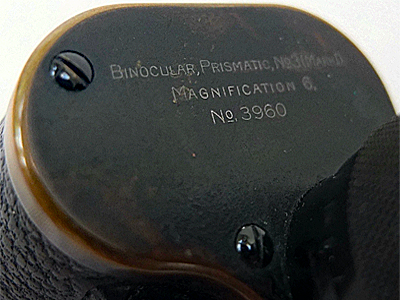
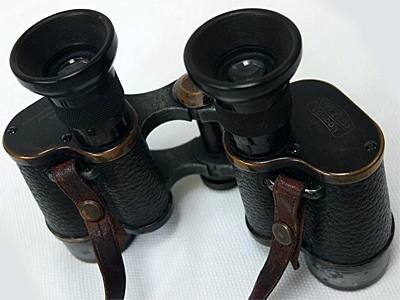
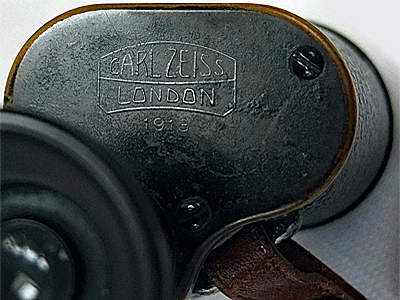
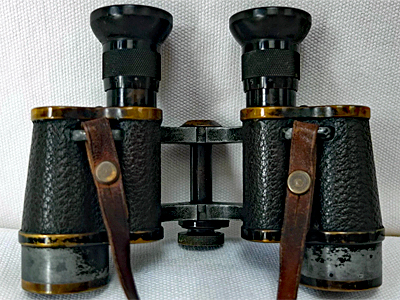
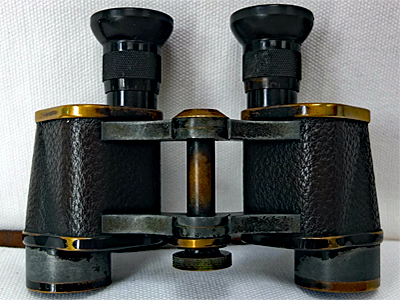
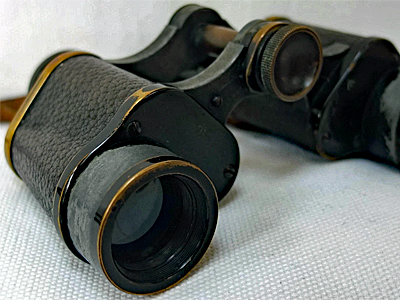
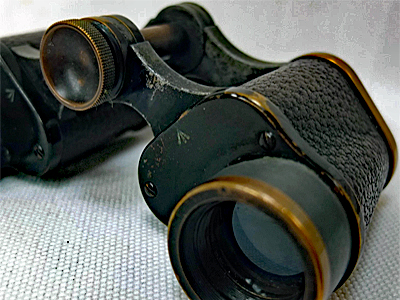
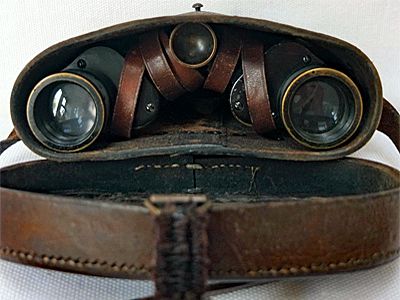
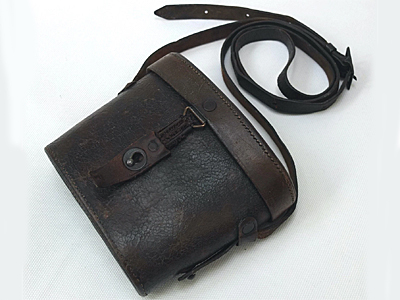
Carl Zeiss, London, 6×24 military binoculars, dating from 1913. The binoculars have a leather covered brass and aluminium body, dioptre eyepieces, and silver embossed lettering on the prism covers (this type of lettering replaced the earlier cursive script Zeiss logo in 1902). The top left hand prism cover is marked: ‘Binocular Prismatic No. 3 (Mark I)’, Magnification 6, № 3960′, the top right prism cover is marked ‘Carl Zeiss, London, 1913’. The binoculars have flat prism covers made of brass (the earlier models were made of aluminum) and a central hinge. This model’s objective lens diameter is 24mm, and it has a 6x magnification. There is a Woolwich Arsenal acceptance number ‘3960’, and War Department ‘Broad Arrow’ marks to the lower prism plates. The binoculars come complete with their original leather neck strap, leather case and shoulder strap.
Specifications: Magnification: 6x Aperture (objective diameter): 24 mm Field of view: 6.8° Visible field of view (eyepiece FOV): 41° Closest focusing distance: 5 m Width: 145 mm Height: 105 mm Weight: 470 g Production date: 1913 Woolwich Arsenal acceptance No: 3960 Date manufactured: 1913
Carl Zeiss (London) Ltd: Zeiss had premises in London from the middle of the 19th century, and by 1897 they were at 29 Margaret Street, London. Carl Zeiss (London) Ltd was established in 1909, making prism binoculars primarily for British Government contracts. By 1913 Zeiss were assembling their No. 3 (Mark I) British designated military binoculars at their Mill Hill, London factory.
In 1914, just before the outbreak of WW1, Carl Zeiss Jena ordered a stock of 700 binoculars from the London factory to be sent to Germany, but the shipments were blocked at British and Dutch ports, and the binoculars were instead delivered to the Woolwich Arsenal. When war broke out, the British government seized the assets of Zeiss (London) Ltd, including the factory and all manufacturing equipment, which were later sold to Ross Ltd in January 1917. Ross continued to fufill the Zeiss British Military contracts, but with the Zeiss branding on the binoculars being replaced by that of Ross Ltd.
The Royal Arsenal, Woolwich is an establishment on the south bank of the River Thames in Woolwich in south-east London, England, that was used for the manufacture of armaments and ammunition, proofing, and explosives research for the British armed forces. It was originally known as the Woolwich Warren, having begun on land previously used as a domestic warren in the grounds of a mid-16th century Tudor house, Tower Place. Much of the initial history of the site is linked with that of the Office of Ordnance, which purchased the Warren in the late 17th century in order to expand an earlier base at Gun Wharf in Woolwich Dockyard.
Over the next two centuries, as operations grew and innovations were pursued, the site expanded massively. At the time of the First World War the Arsenal covered 1,285 acres (520 ha) and employed close to 80,000 people. Thereafter its operations were scaled down. It finally closed as a factory in 1967 and the Ministry of Defence moved out in 1994. Today the area, so long a secret enclave, is open to the public and is being redeveloped for housing and community use.Condition: In very good condition and good working order. The view through the binoculars is very good for a set more than 100 years old, clean and clear, with good focus and an unobstructed view. It seems likely that the binoculars optics have been serviced and cleaned at some time in the past. The bakelite eyecups are in very good condition. There is some wear to the original black finish, but most of the paintwork is still intact. The embossed script on the prism covers is in good condition. The leather covering is securely attached and in very good condition. The leather case is in good condition, with general signs of wear and use.
Date: 1913 Model: Carl Zeiss (London), Prismatic, No.3 Mark I Dimensions : 105mm x 145mm Magnification: 6x
After the First World War, according to terms of the Treaty of Versailles, Germany was prohibited from producing military optical equipment in its home factories in Germany. As a result, the Carl Zeiss optical firm of Jena, Thuringia, Germany, on January 21, 1921 founded the Nederlandse Instrumenten Compagnie – Netherlands Instruments Company, NEDINSCO), in the city of ‘sGravenhage (The Hague) in the Netherlands to produce military optical equipment.
The most common type of NEDINSCO service glass was the 6×30, based on the 6×30 Carl Zeiss Silvamar, introduced in 1910. The 6×30 Silvamar was light weight, 365 grams after 1935. Production of the 6×30 Silvamar was eventualy halted around 1975.
The number “6” identifies the magnification power (in this case, “6” indicates that objects appear six times closer than their actual distance).
The number “30” identifies the diameter in millimeters of the front (objective) lenses — the light gathering lenses — in this case 30 millimeters in diameter.
Another type of NEDINSCO service glass was the 8×30, based on the 8×30 Carl Zeiss Deltrentis, that first appeared in 1920.
The body was made of magnesium and was featherlight at just 390 grams. The wideangle eyepieces, designed by Albert Koenig, were free of distortion and contained 4 lens-elements. A single layer anti-reflection coating with a bluish color was first added during the Second World War. Production of the 8×30 Deltrentis was eventualy halted around 1995.
The number “8” identifies the magnification power (in this case, “8” indicates that objects appear eight times closer than their actual distance).
The number “30” identifies the diameter in millimeters of the front (objective) lenses — the light gathering lenses — in this case 30 millimeters in diameter.
 In Germany in the 1930s, an early type of black plastic synthetic leather called “Vulkanite” was used as the body covering of military and commercial Dienstgläser (service glasses) manufactured before World War II.
This “Vulkanite” schwarzes Kunstleder (black synthetic leather) Körperbedeckung (body covering) was the most common Dienstglas body covering used by the German armed forces (and also by most of the other armed forces of Europe) during the early years of the Second World War.
TM 30-506, WAR DEPARTMENT TECHNICAL MANUAL, GERMAN-ENGLISH MILITARY DICTIONARY, WAR DEPARTMENT, 20 MAY I944
The TM 30-506 manual describes “Vulkanite” schwarzes Kunstleder (black synthetic leather) Körperbedeckung (body covering) as “Kunstleder n” artificial leather.
 Early in the Second World War, a black Rauhlack (rough lacquer) body covering called schwarz „Reis“ Körperbedeckung (black “rice” body covering) also became a common Dienstglas body finish.
This new Dienstglas body covering began to replace the black “Vulkanite” (synthetic, leather-like, early plastic) body covering material on the housings of German field glasses.
The particular consistency of this schwarz „Reis“ (black “rice”) Rauhlack (rough lacquer) Körperbedeckung (body covering) was achieved by mixing crushed rice or finely granulated cork meal with black lacquer paint.
This schwarz „Reis“ Rauhlack Körperbedeckung (black “rice” rough lacquer body covering) became the most common Dienstglas body covering as the war progressed through 1942 and 1943.
This is a list of 6×24, 6×30, 8×30, and 8×40 military service binoculars, listed in serial number sequence, manufactured by the Carl Zeiss optical company, of Jena, Germany, dba NEDINSCO (Nederlandse Instrumenten Compagnie – Netherlands Instruments Company) in ‘sGravenhage (The Hague) and Venlo, Netherlands, for domestic sale and export to other countries from 1921 to 1933, prior to the Second World War, and later in Jena, Germany, during the Second World War, observed in collections and recorded from sources online.
Carl Zeiss (London) Ltd: Zeiss had premises in London from the middle of the 19th century, and by 1897 they were at 29 Margaret Street, London. Carl Zeiss (London) Ltd was established in 1909, making prism binoculars primarily for British Government contracts. By 1913 Zeiss were assembling their No. 3 (Mark I) British designated military binoculars at their Mill Hill, London factory. In 1914, just before the outbreak of WW1, Carl Zeiss Jena ordered a stock of 700 binoculars from the London factory to be sent to Germany, but the shipments were blocked at British and Dutch ports, and the binoculars were instead delivered to the Woolwich Arsenal. When war broke out, the British government seized the assets of Zeiss (London) Ltd, including the factory and all manufacturing equipment, which were later sold to Ross Ltd in January 1917. Ross continued to fufill the Zeiss British Military contracts, but with the Zeiss branding on the binoculars being replaced by that of Ross Ltd.
After the end of World War I, according to Versailles Peace Treaty terms, Germany could not produce military optics in its factories. Therefore, Carl Zeiss founded the Nedinsco company (Nederlandse Instrumenten Compagnie) in the city of Venlo in the Netherlands on January 21, 1921 for military optics production (this country did not sign the Treaty of Versailles).
This is a list of 6×24 military service binoculars, manufactured by the Carl Zeiss optical company of London, United Kingdom, for domestic sale within the United Kingdom and for export to other countries from 1893 to 1917, observed in collections and recorded from sources online.
6×24 Production Serial Numbers
Carl Zeiss United Kingdom domestic and overseas sales
6×24 D.F. 03, 1913, 3960, London, United Kingdom
|
|
D.F. 03 6×24 military service binoculars, production serial number unknown, light construction, made of aluminum alloy, black “Vulkanite” schwarzes Kunstleder (black synthetic leather) Körperbedeckung (body covering), brass prism and objective covers, aluminum alloy objective extensions, brass objective lens rings, manufactured in 1913 by Carl Zeiss, London, United Kingdom for domestic and overseas sales. Left prism cover marked in white with “BINOCULAR, PRISMATIC, № 3 (Mark I)” over “MAGNIFICATION 6,” over “№ 3960” (Woolwich Arsenal acceptance number). Right prism cover marked in white with “CARL ZEISS / LONDON” trademark logo over “1913”. This Carl Zeiss 6×24 serial number is unknown, but would have been produced in 1913 (327142 – 382926), within the serial number sequence of the original Carl Zeiss production serial number series established in 1894. |