
This is a list of serial numbers, observed in collections and recorded from sources online, of German 10×50 binoculars manufactured from 1933 to 1945, marked as equipment of the German Armed Forces during World War II.
xxxxxxxxxxxxxxxxxxxxxxxxxxxxxxxxxxxxxxxxxxxxxxxxxxxxxxxxxxxxxxxxxxxxxxxxxxxxxxxxxxxxxxxxxxxxx
BINOCULAR TERMS
Power : Power means the degree to which the subject being looked at is magnified or enlarged. A 10x power means that you are magnifying something 10 times. Say you are looking at a tree that is 100m away. With a 10x binocular it would look ten times closer (or, only 10m away). The greater the power, the smaller the field of view, and in general the lower the brightness of the image.
Occular : The Occular lens is the lens that is closest to your eyes when you hold a pair of binoculars up to look through (the smallest lens).
Objective Lens : The objective lens is the lens at the other end (the larger lens). It’s purpose is to gather light from a sharply focused image of a distant subject. The larger the objective, the more light it gathers, all else being equal. Conversely, the smaller the objective, the lighter weight and more compact the unit will be – an important factor in back packing, etc.
Exit Puple : The most important number associated with binoculars is actually the exit puple It is the diameter of the beam (in mm) that leaves the eyepiece. The larger the exit pupil, the brighter the image. and the better they are for viewing things in low light situations (like dawn or dusk). The exit pupil is calculated by dividing the diameter of the objective lens by the power (objective diameter/power). Exit pupils of 6-7mm are generally found in “night glasses, while exit pupils of 4-5mm are found in general purpose binoculars.
Relative Brightness : The term relative brightness refers to how much light a binocular gathers. It is calculated by squaring the exit pupil (objective diameter/power)². If the optics are fully-coated the relative brightness is increased by 50%.
Field of View : Field of view is the width of the the viewing area seen through the binoculars – it decreases as magnification increases. It is expressed in degrees and also in feet. A 7×50 binocular may include 7.1º and include 375 feet at 100 yards.
Porro-Prism : Binoculars with porro-prisms have the traditional binocular shape with the eyepiece offset from the objective lenses on each side.
Roof prisms : Roof Prism binoculars feature in-line optics, and are lighter, more compact, but generally cost more.
Lens Coating : Lenses can be coated to increase the transmission of light. Fully-coated (FC) means all the air-glass surfaces are coated. Multi-coated (MC) means that one or more surfaces, of one or more lenses, have been coated with multiple layers. Fully Multiple-coated (FMC) means that all air-glass surfaces have multiple layers of coating. Uncoated glass will waste about 6% of all the light that strikes it , meaning that an uncoated binocular will throw away over half the light coming in to an objective.
Definitions — Essential Basic Information |
|||
| Doppelfernrohr (literally “double telescope”) |
D.F. or DF |
Doppelfernrohr (literally “double telescope”) — “binoculars” — was marked in weißer Schrift (white letters “D.F.” or “DF”) on Dienstglas manufactured before and during World War II. | |
| Strichplatte (Reticle) | m or MH/6400 |
A Strichplatte (reticle) range finding scale, measured in millimeters, was often built into the right prism of a Dienstglas, and marked on the right prism cover by “m” or “M” followed by “H/6400” in weißer Schrift (white letters).
The letter “m” or “M” (indicating millimeters) preceded the designation “H/6400” (indicating that the millimeter scale is graduated into 6400 segments measured in mils). Between 1938 and 1939, the “m” or “M” was discontinued, and only the “H/6400” was retained to show that a Strichplatte (reticle) range finding scale was built into a particular Dienstglas. The “m” or “M” preceding “H/6400” is often confused with the capital letter “M” marked beneath or near the Nazi Eagle symbol that identifies property of the German Marine (Navy). The term reticle (from Latin, rēticulum, a little net) describes a network of fine lines etched within the focal plane of an optical instrument, and used to measure the size or position of objects under observation. Another term for reticle is graticule, first encountered in British military technical manuals of World War I, and currently in British publications and web sites. |
|
| Schwarz leder oder Vulkanite Körperbedeckung | Black leather or “Vulkanite” (a synthetic, leather-like, early form of plastic) was used as a body covering on Dienstglas manufactured before World War II. Early in the war, a black “rice” body covering (black paint mixed with crushed rice to give a rough body texture) also became a common Dienstglas body finish.
As wartime material shortages and minimal manufacturing techniques went into effect, paint alone became the prominent Dienstglas body covering, notably the use of dark gray paint and Sandgelb (sand yellow) paint from September 1943 to the end of the war. Sandgelb was ordered to be used on new optical equipment made after September 1943, and existing optics were also ordered to be repainted with the new sand yellow color. Sellers on eBay often erroneously claim the Sandgelb sand yellow color to be somehow related to the German Afrika Korps. |
||
| Brass, Aluminum, and Bakelite | Brass was a common metal used in Dienstglas construction before World War II, but was quickly replaced by aluminum as wartime material shortages became apparent. Toward the end of the war, even Presstoff (Bakelite) was used as a Dienstglas production material. | ||
| Okularshutz (eye piece protector) or Regenschutzdeckel (rain protection cover) or Benutzerkappe (user cap) | An Okularshutz (eye piece protector) is an oval lens shield placed over Dienstglas rear lenses to keep out rain and dirt. Usually made of Leder (leather), Presstoff (Bakelite), or Gummi (rubber), the device was attached to the Dienstglas carrying strap, or by a fabric covered spring system attached to the Dienstglas spindle.
The Okularshutz (eye piece protector) is also referred to as a Regenschutzdeckel (rain protection cover) or a Benutzerkappe (user cap) for rear lenses. |
||
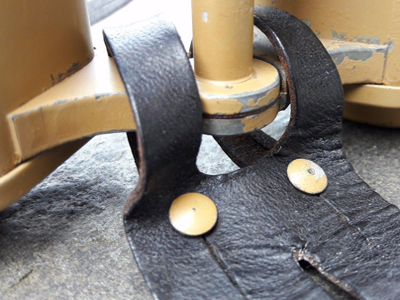
| Anknöpflasche (button flap) | In the German armed forces, in addition to the leather neck strap, an Anknöpflasche (leather button flap) could be connected through the front spindle of the Dienstglas for attachment to a jacket button to keep the Dienstglas from bouncing and swinging while running. The button flap is often found attached to German WW II Dienstglas, especiallly the light in weight 6x30s. | ||
| Presstoff (Bakelite) | Before and during World War II, Presstoff (Bakelite), an early form of plastic, was used in the manufacture of Dienstglas carrying cases, bayonet handles, pilot goggles, field telephones, water bottles, storage boxes, anti-personnel and anti-tank mines, and hundreds of other items of military equipment. | ||
| Cold resistant greases | K.F. or KF |
K.F. or KF — Kälte Fett — referred to the cold resistant grease “Invarol” that was marked in weißer Schrift (white letters “K.F”. or “KF”) on Dienstglas manufactured (or returned to repair facilities for maintenance, repair, or regreasing) during 1940 and 1941. | |
| O | O — Vakuumfett 1416 — referred to the cold resistant grease “Vacuum” that was marked with a hellblaue Kreis (light blue circle “O”) during 1942. | ||
| + | + — Instrumentenfett 1442 — referred to the cold resistant grease “Instrument Grease 1442” that was marked with a hellblaue Kreuz (light blue cross “+”) during 1942 and 1943. | ||
| Δ | Δ — referred to the cold resistant grease of an unknown name that was marked with a hellblaue Dreieck (light blue triangle “Δ”) during 1943 to 1945. | ||
xxxxxxxxxxxxxxxxxxxxxxxxxxxxxxxxxxxxxxxxxxxxxxxxxxxxxxxxxxxxxxxxxxxxxxxxxxxxxxxxxxxxxxxxxxxxx
Definitions — Essential Basic Information
Doppelfernrohr (literally “double telescope”) D.F. or DF
Doppelfernrohr (literally “double telescope”) — “binoculars” — was the name given to German service glasses introduced in 1915, the second year of World War I, by its manufacturer, Carl Zeiss / Jena, and designated Doppelfernrohr (D.F.) 6×30. Produced from 1915 to 1940, the D.F. 6×30 service glass, and another Carl Zeiss / Jena service glass, the Silvamar 6×30 (produced from 1910 to 1975), set the design standard for the basic service glasses in the armed forces of Germany. The Army models were already introduced in 1896 for the German Army
as service glasses. The German Navy followed later with the Marine Model. Nearly all other countries followed Germany in this respect.
Among all military binoculars after the end of the First World War, the D.F. 6×30 service glass became predominant in both the army and the navy, and was the army’s most used service glass for decades. Army regulations of 1927 and 1940 described the D.F. 6×30 service glass “As a standard double telescope for all branches of the Army of the Reich . . .” Marked in weißer Schrift (white letters) “D.F.” or “DF” on service glasses manufactured before and during World War II, the D.F. 6×30 was produced in larger quantities than any other German service glass.
The Dienstglas 6×30 was introduced in the 1920s, and was the primary service glass of the German armed forces during World War II. During the war, it was produced in the hundreds of thousands by many different optical manufacturers in Germany and occupied countries.
Except for small details, the 6×30 Dienstglas of the German armed forces is mechanically and optically the same as the Carl Zeiss Silvamar 6×30 commercial field glasses (manufactured from 1910 to 1975).
In 1935, the Carl Zeiss firm of Jena introduced a new lightweight version of its Silvamar commercial field glass under the trade name “Federleicht” (Featherlight, light as a feather). The Zeiss Silvamar “Federleicht” weighed 365 grams – 12.87 ounces (avoirdupois),11.74 ounces (troy) – using metal housings made of a newly developed alloy of magnesium and aluminum – “Elektron” – which is unusually light, about 36% lighter than aluminum alloy. Magnesium’s relatively low density makes its alloy variants suitable for use in auto racing and aerospace engineering. In 1935, the Carl Zeiss company of Jena, Germany began using metal housings made of Elekton to manufacture binoculars.
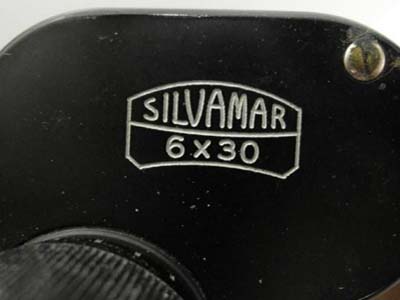
6×30 “Silvamar” (1910-1975) |
|||||
| S/N | Identifying Features | Year of Mfg |
|||
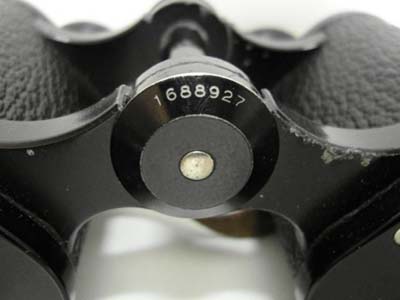
| 1688927 |
|
May 1935 | |||
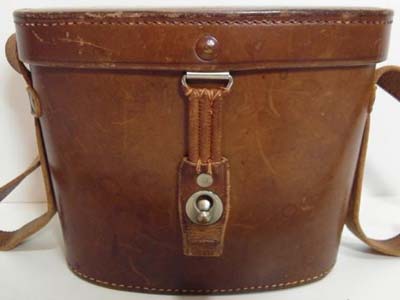
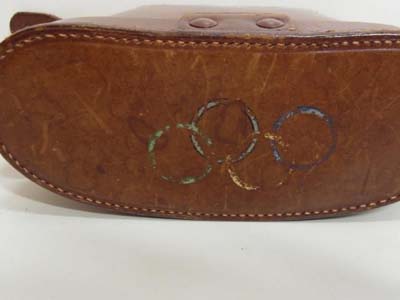
| The 6×30 “Silvamar” was launched by Carl Zeiss / Jena in 1910, and continued in production until 1975. The one shown here, serial number 1688927, was manufactured in May 1935, the year before the the Berlin Summer Olympic Games (Olympische Sommerspiele 1936), officially known as the Games of the XI Olympiad. The brown leather case of this “Silvamar” is marked with the symbol of the five interlocking rings of the Olympic Games.
Its outstanding feature was its very light weight — only 330g (12ozs) — making it the ideal companion for walkers and hikers to whom it was actively marketed. Key to its light weight was the use of a revolutionary new magnesium / alumunium alloy, specially developed by Zeiss. The 6×24 “Sportur” is not very common these days. This one, serial number 1758242 (1937), is still virtually new, with optics nearly as good as new, and center focus and right diopter both working perfectly. In spite of being more than 80 years old, the paintwork is in top condition, and the lettering is still crisp and white. This 6×24 “Sportur” may be one of the best remaining examples outside the Zeiss museum in Jena. It was sold in Britain, and has a high quality English brown leather case. The Dienstglas 6×30 was introduced in the 1920s, and was the primary service glass of the German armed forces during World War II. During the war, it was produced in the hundreds of thousands by many different optical manufacturers in Germany and occupied countries. Except for small details, the 6×30 Dienstglas of the German armed forces is mechanically and optically the same as the Carl Zeiss Silvamar 6×30 commercial field glasses (manufactured from 1910 to 1975). In 1935, the Carl Zeiss firm of Jena introduced a new lightweight version of its Silvamar commercial field glass under the trade name “Federleicht” (Featherlight, light as a feather). The Zeiss Silvamar “Federleicht” weighed 365 grams, 10.61 ounces (troy) using metal housings made of “Elektron”, a newly developed alloy of aluminum and zinc. |
|||||
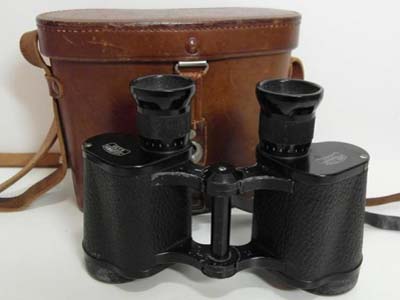
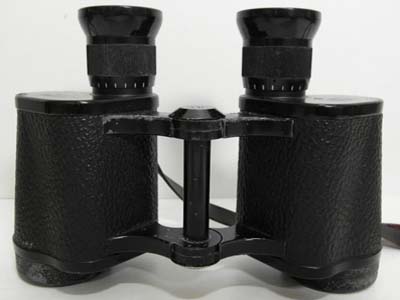
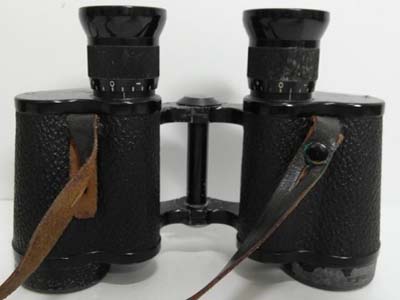
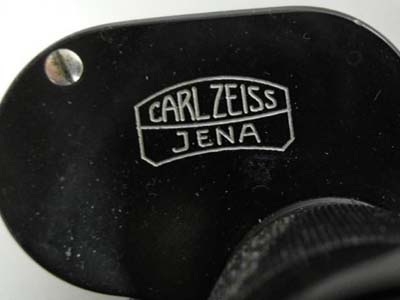
In Germany in the 1930s, the bulk of metal parts used to manufacture commercial field glasses and military service glasses was reduced to save valuable brass and to reduce weight. Brass had been a common metal used in Dienstglas construction up to 1939, but it was quickly replaced by aluminum and zinc, as wartime material shortages became apparent in a nation beset by lack of raw materials and manpower.
Military service glasses made before 1940 are noticeably heavier than service glasses made later in the war. For example, one of my service glasses, made about 1938 by Ernst Leitz / Wetzlar, weighs 17.4 oz (1.085 lbs), compared to the lighter weight 13.2 oz (0.825 lbs) of one of my ddx (Voigtländer u. Söhne AG / Braunschweig) service glasses made about 1940. The 1938 Dienstglas is 24% heavier than the 1940 Dienstglas.
In February 1942, the Reichsministerium für Bewaffnung und Munition (Reich Ministry of Armament and Munitions) assigned three letter codes to all companies engaged in manufacturing military equipment for the German armed forces. For example, among optical equipment manufacturers, Carl Zeiss / Jena was assigned the code “blc” in the early war years, and later “rln” in later war years. Ernst Leitz / Wetzlar was assigned “beh”, and every other manufacturer was also assigned its own individual code.
Service glasses produced near the end of the war, sometimes had neither the manufacturer code, nor any other mark, except perhaps the designation “6×30” (stamped into the right prism cover) of “finished” products. This was Germany’s last gasp of desperate wartime production, in which certain finishing details were simply omitted.
Early in WWII, a black Rauhlack (rough lacquer) body covering called schwarz „Reis“ Körperbedeckung (black “rice” body covering) began to replace the black “Vulkanite” (synthetic, leather-like, early plastic) body covering material on the housings of German field glasses. The particular consistency of this „Reis“ (“rice”) Rauhlack (rough lacquer) body covering was achieved by mixing finely granulated rice or cork meal into black lacquer paint.
As the war entered its fifth year in 1943, shortages in Germany of industrial materials became so severe that even black pigments were unavailable for wartime production. In September 1943, a sand colored lacquer called Sandgelb (sand yellow) was designated “standard camouflage paint Europe”, and was introduced for use on military vehicles and equipment, including optical equipment.
Zeiss optics figured prominently in the success of many weapons systems. For examples there were the pressure resistant U-boat U.D.F. surface target bearing transmitter binoculars, ultra wide angle large aperture binoculars, the stereoscopic range finders and sights used to direct fearsome weapons such as the outstanding 88mm anti-tank guns.
Strichplatte (Reticle) markings : “m” or “M” and “H/6400”
 Strichplatte / graduated range plate (MG mount); reticle (Optics). TM 30-506, WAR DEPARTMENT TECHNICAL MANUAL, GERMAN-ENGLISH MILITARY DICTIONARY, WAR DEPARTMENT, 20 MAY I944
Often built into the right lens of German military and naval binoculars was a Strichplatte (Reticle), a horizontal range finding scale, measured in millimeters, with vertical lines extending from 0 in the center to 40 mils to the right and left in increments of 10 mils.
German Dienstglas that have the range finding scale built into the right lens are marked in weißer Schrift (white letters) on the right prism cover with “m” or “M” (indicating millimeters) followed by “H/6400” (indicating that the millimeter scale is graduated into 6400 segments measured in mils).
Between 1938 and 1939, the “m” or “M” was discontinued, and only the “H/6400” was retained to show that a Strichplatte (reticle) range finding scale was built into a particular Dienstglas.
The “m” or “M” preceding “H/6400” is often confused with the capital letter “M” marked beneath or near the Reichsadler symbol that identifies property of the Marine (Navy).
“Vulkanite” schwarzes Kunstleder (black synthetic leather) Körperbedeckung (body covering)
 Kunstleder, noun, artificial leather. TM 30-506, WAR DEPARTMENT TECHNICAL MANUAL, GERMAN-ENGLISH MILITARY DICTIONARY, WAR DEPARTMENT, 20 MAY I944
In Germany in the 1930s, a black synthetic leather called “Vulkanite” (an early type of very hard rubber) was used as the body covering of service glasses manufactured before World War II.
“Vulkanite” is the German name for “Ebonite”, a brand name for very hard rubber first obtained by vulcanizing natural rubber for prolonged periods. “Ebonite” was discovered by Charles Goodyear in the United States as a byproduct of his experiments that led to the patenting of vulcanized rubber in the United States on June 15, 1844.
Besides natural rubber, Ebonite contains about 25–80% sulfur and linseed oil. Its name comes from its intended use as an artificial substitute for ebony wood. Ebonite, called Vulkanite in Germany, was used as a body covering for the manufacture of binoculars. When heated, the hard rubber compound was formed to the shape of the service glass body. The material is brittle, and after nearly 80 years since the end of World War II, is often seen cracked and broken on service glasses that have seen hard use. Today, the term “Vulkanite” refers to the mineral vulcanite.
Schwarz „Reis“ Körperbedeckung (black “rice” body covering)
 Early in the war, material shortages led to the absence of all kinds of critical manufacturing materials. Among these was natural rubber (used before the war to make the black “Vulkanite” very hard rubber body covering of military and naval services glasses).
Traditional manufacturing materials began to disappear as a result of the British Navy’s blockade of Germany, and the use of “Vulkanite” as a body covering in the manufacture of service glasses began to diminish.
The black “Vulkanite” synthetic leather body covering on the housings of German field glasses began to be replaced by the black Rauhlack (rough lacquer) body covering called schwarz „Reis“ Körperbedeckung (black “rice” body covering). The consistency of this „Reis“ (“rice”) Rauhlack (rough lacquer) body covering was achieved by mixing finely granulated rice or cork meal with black lacquer paint. From about mid-1941, it became the standard Dienstglas body covering until about mid-1943.
Sandgelb (sand yellow) paint finish introduced in September 1943
 As wartime material shortages and minimal manufacturing techniques went into effect, paint alone became the prominent Dienstglas body covering.
Dark gray paint and dark green paint were used, instead of the previous “Vulkanite” (very hard rubber simulated leather body covering) and the black “rice” rough finished body covering. Eventually, Sandgelb (sand yellow) paint was ordered to be used on new optical equipment made after September 1943, and existing optics were ordered to be repainted with the new sand yellow color.
Sellers on eBay often falsely claim that service glasses painted with the Sandgelb sand yellow color are somehow related to the German Afrika Korps.
THE REAL AND THE FAKE
Afrikakorps fakes come in three basic forms
- continental and late tropical items, described as “Afrikakorps“
- clearly described reproductions, not originally intended to deceive
- out and out fakes, absolutely, definitely intended to deceive
Typical of the first group are late war metal equipment items, such as binoculars, which were painted Sandgelb (sand yellow) at the factories and used by German armed forces in all theaters of operation, not just in North Africa, Greece, and other ‘tropical’ theaters.
Whenever I see items of German military equipment for sale on auction sites like eBay, or some other similar site, I immediately ask, “Is it real, or is it fake?” The next question follows quickly, “Is the seller knowingly selling a counterfeit item, or does the seller simply not know any better?” The eBay myth that every tan painted German military item must be “Afrikakorps” is similar to the eBay myth that every French military item must be “Foreign Legion.” Is everyone so ignorant they just follow the crowd like a pack of lemmings?
For the record, the Afrika Korps, outflanked, outnumbered, and outgunned in Tunisia, was compelled to surrender on May 13, 1943, four months before September 1943 when the Sandgelb specification was ordered for use on all kinds of metal equipment, including small items like binoculars, and large items like vehicles, tanks, and artillery, throughout the German armed forces.
Bakelit (Bakelite) used in Dienstglas construction from 1944 to 1945
 Preßstoff m plastic. TM 30-506, WAR DEPARTMENT TECHNICAL MANUAL, GERMAN-ENGLISH MILITARY DICTIONARY, WAR DEPARTMENT, 20 MAY I944
Bakelit is the German word for Bakelite, an early plastic developed by the Belgian-American chemist Leo Baekeland in Yonkers, New York, in 1907.
——————————————————————
Somethink about the logo on the bakelitcases and the rain guards, …,…,…..
The markings on most pre-war items are easily identified as makers logos. However the German military, perhaps thinking ahead realised that such logos could easily provide enemy intelligence with potential targets for bombing. It was the German Federation of Electrical Engineers who first attempted to present guidelines for material classification in 1924, as many of their members were involved in the process of bakelite production. The national material proofing house (materialprüfungsamt), based in Berlin Dahlem to come up with the solution. In December 1938 the “MP” devised the common logo, around which information on the maker of the item, as well as the chemical composition of the bakelite could easily be displayed.
The logo you see on bakelit parts is an “outer circle”
an “M” for Material and a “P” for Prüfung (Testing)
for example:
43. Dynamit AG, vormals Alfred Nobel und Co, Abt. Zelluloidfabrik, Werk Troisdorf.
T
Carbolic Resin (Bakelite) with a textile based filler
hope it helps you to know what this logo is
—————————————————————————————–
Before and during World War II, Bakelit was used in the manufacture of carrying cases for Dienstgläser (Service glasses), as well as bayonet handles, pilot goggles, field telephones, water bottles, storage boxes, anti-personnel and anti-tank mines, and thousands of other items of military equipment.
Toward the end of the war, Bakelit was even used as the last gasp, last ditch major production material for some of the very last production service glasses of the German armed forces.
Okularshutz (eye piece protector) or Regenschutzdeckel (rain protection cover) or Benutzerkappe (user cap)
An Okularshutz (eye piece protector) is an oval lens shield placed over Dienstglas rear lenses to keep out rain and dirt. Usually made of Leder (leather), Presstoff (Bakelite), or Gummi (rubber), the device was attached to the Dienstglas carrying strap, or by a fabric covered spring system attached to the Dienstglas spindle.
The Okularshutz (eye piece protector) is also referred to as a Regenschutzdeckel (rain protection cover) or a Benutzerkappe (user cap) for rear lenses.
In the German armed forces, in addition to the leather neck strap, a leather Anknöpflasche (button flap) could be connected through the front spindle of the Dienstglas for attachment to a jacket button to keep the Dienstglas from bouncing and swinging while running. The button flap is often found attached to German WW II Dienstglas, especiallly the light in weight 6x30s.
Bakelit (Bakelite) Preßstoff m plastic. TM 30-506, WAR DEPARTMENT TECHNICAL MANUAL, GERMAN-ENGLISH MILITARY DICTIONARY, WAR DEPARTMENT, 20 MAY I944
Before and during World War II, Presstoff (Bakelite), an early form of plastic, was used in the manufacture of Dienstglas carrying cases, bayonet handles, pilot goggles, field telephones, water bottles, storage boxes, anti-personnel and anti-tank mines, and hundreds of other items of military equipment.
Kältefettmarkierungen — Cold Resistant Grease MarkingsThe production records of German optical equipment manufacturers (except for some serial number series of the Carl Zeiss firm in Jena) were destroyed during the war, so there is no way to verify serial numbers and date of manufacture of most Dienstgläser (Service glasses) and other German optical equipment produced during World War II. One way to estimate the approximate year of manufacture of German military optical equipment is by their cold resistant grease markings. The German chemical industry experimented with cold resistant greases in response to German combat experience in the extraordinarily bitter cold operating conditions in Russia. Four distinct cold resistant greases were developed from early to late in the war, each identified by a unique marking that was applied to optical equipment as new cold resistant greases were introduced into service.
The earliest marking seen on optical equipment, adopted May 27, 1940, indicates the optic is lubricated with the cold resistant grease “Invarol”, which was serviceable to -20 degrees Celsius.
The next marking indicated new cold resistant grease, Vacuum grease (Vakuumfett) 1416, suitable for use under lower temperatures as to -40 degrees Celsius. The earliest document referring to this “O” is the German manual for winter warfare “Taschenbuch für den Winterkrieg”, first version dated August 5, 1942.
Evidently, Vakuumfett 1416 soon turned out to be unsatisfactory in actual field operations. In the new revised version of the “Taschenbuch für den Winterkrieg” dated November 1, 1942, another marking “+” was mentioned. Although there is no explanation for the reason of the adoption, it is said that with the mark the instrument is perfectly serviceable to -40 degrees Celsius and “in Zukunft wird das gesamte Beobachtungs und Vermessungsgerät des Heeres nur mit Instrumentenfett 1442 gefettet (in the future, all observation and surveying instruments of the Army will be only lubricated with instrument grease 1442)”.
In late 1943, a new cold resistant grease, suitable for use between -40 and -50 degrees Celsius, was introduced, indicated by a “triangle” marked on optical equipment. There is no known document that describes the name of this grease and its suitability for use. The exact date when cold resistant greases were used at various factories in Germany and occupied countries was inexact, and varied according to when old greases were used up and new greases arrived for use, however it is clear that they were adopted in this order. A reasonable estimate of year of manufacture can be inferred according to the year of adoption of cold resistant lubricant markings. K.F. : 1940 – 1941 O : 1942 + : 1942 – 1944 (mainly in 1943) Triangle : 1943 – 1945 (mainly in 1944) Cold resistant grease markings were applied when optical equipment was manufactured, and also added later when instruments were returned to a support facility for repair, maintenance, and regreasing. It is common to see optical equipment with two or more cold resistant grease markings applied. Knowing the order in which cold resistant grease markings were adopted provides an understanding of an item’s service history. |
|||
| Cold resistant greases | K.F. or KF |
“K.F.” or “KF” — kältebeständiges Fett (cold resistant grease) — “Invarol” (also known as Busch “Calypsol W 11 fest” (“Calypsol W 11 hard”), “C-fette”, (“C-grease”) — marked in weißer Schrift (white letters) “K.F.” or “KF” on Dienstgläser (Service glasses) manufactured (or returned to repair facilities for maintenance, repair, or regreasing) during 1940 and 1941.
According to Allgemeine Heeresmitteilungen (General Army Releases), the cold resistant grease “Invarol” was introduced on May 27, 1940, and was certified to be fully operational for use on equipment to -20° Celsius (-4° Fahrenheit). According to United States War Department Technical Manual TM 30-506 : GERMAN-ENGLISH MILITARY DICTIONARY, dated 20 MAY 1944, “Invarol” was described simply as a cold resistant (kältebeständig) grease. |
|
| O | “O” — kältebeständiges Fett (cold resistant grease) — “Vakuumfett 1416” (“Vaccuum Grease 1416”), also known simply as “Vacuum” — marked with a hellblaue Kreis (light blue circle) “O” on Dienstgläser (Service glasses) manufactured (or returned to repair facilities for maintenance, repair, or regreasing) during 1942.
According to Allgemeine Heeresmitteilungen (General Army Releases), the cold resistant grease “Vakuumfett 1416” was introduced no later than January 26, 1942, and was certified to be fully operational for use on equipment to -40° Celsius (-40° Fahrenheit). The earliest document referring to “Vakuumfett 1416” — “O” — is the German Taschenbuch für den Winterkrieg” (Manual for Winter Warfare), first version dated August 5, 1942. |
||
| + | “+” — kältebeständiges Fett (cold resistant grease) — “Instrumentenfett 1442” (“Instrument Grease 1442”) — marked with a hellblaue Kreuz (light blue cross) “+” on Dienstgläser (Service glasses) manufactured (or returned to repair facilities for maintenance, repair, or regreasing) during 1942 and 1943.
According to Allgemeine Heeresmitteilungen (General Army Releases), the cold resistant grease “Instrumentenfett 1442” was introduced no later than August 6, 1942, and was certified to be fully operational for use on equipment to -40° Celsius (-40° Fahrenheit). The earliest document referring to “Instrumentenfett 1442” — “+” — is the German Taschenbuch für den Winterkrieg” (Manual for Winter Warfare), revised version dated November 1, 1942. |
||
| Δ | “Δ” — kältebeständiges Fett (cold resistant grease) — “Instrumentenfett 6009” (“Instrument Grease 6009”) — marked with a hellblaue Dreieck (light blue triangle “Δ”) on Dienstgläser (Service glasses) manufactured (or returned to repair facilities for maintenance, repair, or regreasing) from 1943 to 1945.
Although no document exists referring to “Instrumentenfett 6009” — “Δ” — it is believed that this final cold resistant grease was introduced in late 1943 or early 1944, and was certified to be fully operational for use on equipment between -40° and -50° Celsius (-40° and -58° Fahrenheit). |
||
Definitions — Essential Basic Information |
|||
| Doppelfernrohr (literally “double telescope”) |
D.F. or DF |
Doppelfernrohr (literally “double telescope”) — “binoculars” — was marked in weißer Schrift (white letters “D.F.” or “DF”) on Dienstglas manufactured before and during World War II.
Doppelfernglas, Doppelfern-glas, Doppelfernrohr, Doppelglas n field glass, binocular. TM 30-506, WAR DEPARTMENT TECHNICAL MANUAL, GERMAN-ENGLISH MILITARY DICTIONARY, WAR DEPARTMENT, 20 MAY I944 |
|
| Strichplatte (Reticle) | m or M
H/6400 |
A Strichplatte (reticle) range finding scale, measured in millimeters, was often built into the right prism of a Dienstglas, and marked on the right prism cover by “m” or “M” followed by “H/6400” in weißer Schrift (white letters).
Strichplatte / graduated range plate (MG mount); reticle (Optics). TM 30-506, WAR DEPARTMENT TECHNICAL MANUAL, GERMAN-ENGLISH MILITARY DICTIONARY, WAR DEPARTMENT, 20 MAY I944 The letter “m” or “M” (indicating millimeters) preceded the designation “H/6400” (indicating that the millimeter scale is graduated into 6400 segments measured in mils). Between 1938 and 1939, the “m” or “M” was discontinued, and only the “H/6400” was retained to show that a Strichplatte (reticle) range finding scale was built into a particular Dienstglas. The “m” or “M” preceding “H/6400” is often confused with the capital letter “M” marked beneath or near the Nazi Eagle symbol that identifies property of the German Marine (Navy). The term reticle (from Latin, rēticulum, a little net) describes a network of fine lines etched within the focal plane of an optical instrument, and used to measure the size or position of objects under observation. Another term for reticle is graticule, first encountered in British military technical manuals of World War I, and currently in British publications and web sites. |
|
| Schwarz leder oder Vulkanite Körperbedeckung | Black leather or “Vulkanite” (a synthetic, leather-like, early form of plastic) was used as a body covering on Dienstglas manufactured before World War II. Early in the war, a black “rice” body covering (black paint mixed with crushed rice to give a rough body texture) also became a common Dienstglas body finish.
As wartime material shortages and minimal manufacturing techniques went into effect, paint alone became the prominent Dienstglas body covering, notably the use of dark gray paint and Sandgelb (sand yellow) paint from September 1943 to the end of the war. Sandgelb was ordered to be used on new optical equipment made after September 1943, and existing optics were also ordered to be repainted with the new sand yellow color. Sellers on eBay often erroneously claim the Sandgelb sand yellow color to be somehow related to the German Afrika Korps. |
||
| Brass, Aluminum, and Bakelite | Brass was a common metal used in Dienstglas construction before World War II, but was quickly replaced by aluminum as wartime material shortages became apparent. Toward the end of the war, even Presstoff (Bakelite) was used as a Dienstglas production material.
Somethink about the logo on the bakelitcases and the rain guards, …,…,….. The markings on most pre-war items are easily identified as makers logos. However the German military, perhaps thinking ahead realised that such logos could easily provide enemy intelligence with potential targets for bombing. It was the German Federation of Electrical Engineers who first attempted to present guidelines for material classification in 1924, as many of their members were involved in the process of bakelite production. The national material proofing house (materialprüfungsamt), based in Berlin Dahlem to come up with the solution. In December 1938 the “MP” devised the common logo, around which information on the maker of the item, as well as the chemical composition of the bakelite could easily be displayed. The logo you see on bakelit parts is an “outer circle” T |
||
| Okularshutz (eye piece protector) or Regenschutzdeckel (rain protection cover) or Benutzerkappe (user cap) | An Okularshutz (eye piece protector) is an oval lens shield placed over Dienstglas rear lenses to keep out rain and dirt.
At the beginning of the war, they were made of Leder (leather). Later in the war, as material shortages became apparent and minimal manufacturing techniques went into effect, they were made of Baklit (Bakelite), and finally at the end of the war they were made of Gummi or Buna (rubber). The device was attached to the Dienstglas carrying strap, or by a fabric covered spring system attached to the Dienstglas bridge supports rear spindle. The Okularshutz (eye piece protector) is also referred to as a Regenschutzdeckel (rain protection cover) or a Benutzerkappe (user cap) for rear lenses. |
||
| Anknöpflasche (button flap) | In the German armed forces, in addition to the leather Trageriemen or Tragegurt (carrying strap), a Dienstglas often had a leather Anknöpflasche (button flap) connected through the Dienstglas bridge supports front spindle for attachment to a jacket button to prevent uncontrolled bouncing and swinging, and to keep the Dienstglas from being damaged while the wearer is running. All Anknöpflaschen were made of leather and Anknöpflaschen are often attached to German Dienstgläser (field glasses), especially the light in weight 6x30s.
Some Anknöpflaschen were marked with a manufacturer mark and year of production, and more rarely with a Waffenamtabnahme “WaA” stamp of acceptance by the weapons office. Such markings were either embossed or stamped into the leather. The Anknöpflasche shown here is marked with the “E.LEITZ / WETZLAR” logo and the year of production “1936”. Trageriemen m carrying strap, carrying sling. TM 30-506, WAR DEPARTMENT TECHNICAL MANUAL, GERMAN-ENGLISH MILITARY DICTIONARY, WAR DEPARTMENT, 20 MAY I944 |
||
| Presstoff (Bakelite) | Before and during World War II, Presstoff (Bakelite), an early form of plastic, was used in the manufacture of Dienstglas carrying cases, bayonet handles, pilot goggles, field telephones, water bottles, storage boxes, anti-personnel and anti-tank mines, and hundreds of other items of military equipment. | ||
| Cold resistant greases | K.F. or KF |
K.F. or KF — Kälte Fett — referred to the cold resistant grease “Invarol” that was marked in weißer Schrift (white letters “K.F”. or “KF”) on Dienstglas manufactured (or returned to repair facilities for maintenance, repair, or regreasing) during 1940 and 1941. | |
| O | O — Vakuumfett 1416 — referred to the cold resistant grease “Vacuum” that was marked with a hellblaue Kreis (light blue circle “O”) during 1942. | ||
| + | + — Instrumentenfett 1442 — referred to the cold resistant grease “Instrument Grease 1442” that was marked with a hellblaue Kreuz (light blue cross “+”) during 1942 and 1943. | ||
| Δ | Δ — referred to the cold resistant grease of an unknown name that was marked with a hellblaue Dreieck (light blue triangle “Δ”) during 1943 to 1945. | ||
Doppelfernrohr 10×80 Flakfernrohr
In 1935, several companies, including Emil Busch, Leitz, and Möller, competed for a Wehrmacht contract to produce a 10 power binocular for aircraft observation. In 1936, Emil Busch AG of Rathenow won the contract with their design chosen for its lighter weight and wider field of view over the models by Möller and Leitz. Full production by Busch began almost immediately, and continued throughout the war.
The Busch design was produced by other firms in Germany and occupied Europe, with all models using identical optical dimensions of 80mm cemented achromatic objectives, 280mm focal length, 70 degree eyepieces, and 45 degree Schmidt roof prisms. Some models differ only in coated lens or other minor details.
Characteristic markings engraved on the body of the 10×80 Flakfernrohr include “D.F.” (Doppelfernrohr), the three letter manufacturer code, the production serial number, and markings indicating use of cold resistant greases.
Pre-war Busch Flakfernrohr were engraved with the Busch logo. After 1942, only the three letter manufacturer codes were used.
beh (E. Leitz, Wetzlar)
bpd (C.P. Goerz, Vienna)
cro (R. Fuess, Berlin Steglitz)
cxn (E. Busch, Rathenow).
dkl (Schneider, Bad Kreuznach)
eug (Optische Präzisions-Werke, Warsaw
Flakfernrohr came with an aiming sight, mounting cradle, rubber padded forehead cushion, rain shields, elevation drums, heavy tripod, spirit levels, filters, and in a wooden storage case.
|
Although made with later war cost saving features, build quality is high and better than that of the cxn (Busch) 10×50 Dienstglas. Optically, the 10×50 Dienstglas is very good, particularly when the plastic eye cups are removed, enabling the user to see the entire field of view. Visibility is improved with the eye cups removed, because the metal rings that the eye cups screw into project 4 mm beyond the surface of the rear lens, preventing the user’s eyes from getting too close to them. This feature may have been introduced so that the dienstglas could be used while wearing glasses, goggles, or gas mask. of Manufacture: 302223 = Probably 1944-1945 Notes: Dienstglas = service glass; cxn = 3 letter wartime German coding for the manufacturer Emil Busch Rathenow; K.F. = a code for the lubricant Kältefest; H/6400 = a marking often seen on German WW II army binoculars referencing the graticule’s mil graduations. The Dienstglas 6X30 was introduced during the 1920’s and during WWII was the German army’s primary binocular. During the war it was produced in the hundreds of thousands by many different optical manufacturers in Germany, and except for minor variations most are mechanically and optically the same as the civilian model Zeiss Silvamar 6X30 (manufactured 1910– 1975 with the 365 gr lightweight version introduced 1935). Beginning in late 1940, manufacturers’ names were not marked on weapons and equipment supplied to German armed forces. Instead, three letter codes came into existence to prevent the Allies from determining where the instrument was made. Also, later in the war the coverings and finishing of Dienstglas 6X30 binoculars were changed due to shortages of materials. Initially most were covered in a synthetic leatherette called “Vulkanite” and painted black, but by war’s end “Vulkanite” coverings were discontinued and they were finished with only a black or tan coloured textured paint. It is an eBay myth that tan coloured Dienstglas binoculars are Afrika Corps binoculars – research indicates the Deutsches Afrikacorps were equipped with conventionally coloured black binoculars and that tan coloured binoculars were not introduced until later 1943-1944. Some later war Dienstglas binoculars such as the above cxn example were alternatively covered with a lacquered black painted composite paper. Although such Dienstglas binoculars are not rare, they are not seen as frequently as the leatherette or texturized paint finished ones. The leather button flap (Anknopflasche) attached to the front of German binoculars is meant to be attached to a jacket button to keep the binocular from swinging during activity. It is often found on German WWII binoculars particularly the light in weight 6X30s. German binoculars were also supplied with a leather or bakelite rain cover (Regenschutzdeckel) attached to the neck strap.
The German 6×30 is equal to other WW II 6×30 military binoculars with uncoated lenses, and has a slightly wider field of view. The build quality is very good, and provides an excellent field of vision. Weighing just 377 grams, the German 6×30 is easily lighter in weight than other WWI binoculars. For example, the Canadian REL CGB 37MA weighs 897 grams, the British Taylor-Hobson No. 2 Mk III weighs 872 grams, the U.S. Nash-Kelvinator M3 weighs 624 grams, and the U.S. Wollensak M5 weighs 521 grams. With a Bausch & Lomb type body, the U.S. M3 and Canadian REL, had a stronger and more weatherproof body, and many U.S. 6x30s made in 1944-1945 had coated lenses, giving them increased light transmission. Some Carl Zeiss Kriegsmarine 6x30s did have coated lenses, but the German Army Dienstglas did not. |
Unmarked |
||||||||||||||||||||||||
| S/N | C/R Mark | Identifying Features | Mfg / Maintenance | |||||||||||||||||||||
|
||||||||||||||||||||||||


Definitions — Essential Basic Information |
|||
| Doppelfernrohr (literally “double telescope”) |
D.F. or DF |
Doppelfernrohr (literally “double telescope”) — “binoculars” — was marked in weißer Schrift (white letters “D.F.” or “DF”) on Dienstglas manufactured before and during World War II. | |
| Strichplatte (Reticle) | m or MH/6400 |
A Strichplatte (reticle) range finding scale, measured in millimeters, was often built into the right prism of a Dienstglas, and marked on the right prism cover by “m” or “M” followed by “H/6400” in weißer Schrift (white letters).
The letter “m” or “M” (indicating millimeters) preceded the designation “H/6400” (indicating that the millimeter scale is graduated into 6400 segments measured in mils). Between 1938 and 1939, the “m” or “M” was discontinued, and only the “H/6400” was retained to show that a Strichplatte (reticle) range finding scale was built into a particular Dienstglas. The “m” or “M” preceding “H/6400” is often confused with the capital letter “M” marked beneath or near the Nazi Eagle symbol that identifies property of the German Marine (Navy). The term reticle (from Latin, rēticulum, a little net) describes a network of fine lines etched within the focal plane of an optical instrument, and used to measure the size or position of objects under observation. Another term for reticle is graticule, first encountered in British military technical manuals of World War I, and currently in British publications and web sites. |
|
| Schwarz leder oder Vulkanite Körperbedeckung | Black leather or “Vulkanite” (a synthetic, leather-like, early form of plastic) was used as a body covering on Dienstglas manufactured before World War II. Early in the war, a black “rice” body covering (black paint mixed with crushed rice to give a rough body texture) also became a common Dienstglas body finish.
As wartime material shortages and minimal manufacturing techniques went into effect, paint alone became the prominent Dienstglas body covering, notably the use of dark gray paint and Sandgelb (sand yellow) paint from September 1943 to the end of the war. Sandgelb was ordered to be used on new optical equipment made after September 1943, and existing optics were also ordered to be repainted with the new sand yellow color. Sellers on eBay often erroneously claim the Sandgelb sand yellow color to be somehow related to the German Afrika Korps. |
||
| Brass, Aluminum, and Bakelite | Brass was a common metal used in Dienstglas construction before World War II, but was quickly replaced by aluminum as wartime material shortages became apparent. Toward the end of the war, even Presstoff (Bakelite) was used as a Dienstglas production material. | ||
| Okularshutz (eye piece protector) or Regenschutzdeckel (rain protection cover) or Benutzerkappe (user cap) | An Okularshutz (eye piece protector) is an oval lens shield placed over Dienstglas rear lenses to keep out rain and dirt. Usually made of Leder (leather), Presstoff (Bakelite), or Gummi (rubber), the device was attached to the Dienstglas carrying strap, or by a fabric covered spring system attached to the Dienstglas spindle.
The Okularshutz (eye piece protector) is also referred to as a Regenschutzdeckel (rain protection cover) or a Benutzerkappe (user cap) for rear lenses. |
||
| Anknöpflasche (button flap) | In the German armed forces, in addition to the leather neck strap, an Anknöpflasche (leather button flap) could be connected through the front spindle of the Dienstglas for attachment to a jacket button to keep the Dienstglas from bouncing and swinging while running. The button flap is often found attached to German WW II Dienstglas, especiallly the light in weight 6x30s. | ||
| Presstoff (Bakelite) | Before and during World War II, Presstoff (Bakelite), an early form of plastic, was used in the manufacture of Dienstglas carrying cases, bayonet handles, pilot goggles, field telephones, water bottles, storage boxes, anti-personnel and anti-tank mines, and hundreds of other items of military equipment.
Bakelite (/ˈbeɪkəlaɪt/ BAY-kə-lyt, sometimes spelled Baekelite[3]), or polyoxybenzylmethylenglycolanhydride, is an early plastic. It is a thermosetting phenol formaldehyde resin, formed from a condensation reaction of phenol with formaldehyde. It was developed by the Belgian-American chemist Leo Baekeland in Yonkers, New York, in 1907. |
||
| Cold resistant greases | K.F. or KF |
K.F. or KF — Kälte Fett — referred to the cold resistant grease “Invarol” that was marked in weißer Schrift (white letters “K.F”. or “KF”) on Dienstglas manufactured (or returned to repair facilities for maintenance, repair, or regreasing) during 1940 and 1941. | |
| O | O — Vakuumfett 1416 — referred to the cold resistant grease “Vacuum” that was marked with a hellblaue Kreis (light blue circle “O”) during 1942. | ||
| + | + — Instrumentenfett 1442 — referred to the cold resistant grease “Instrument Grease 1442” that was marked with a hellblaue Kreuz (light blue cross “+”) during 1942 and 1943. | ||
| Δ | Δ — referred to the cold resistant grease of an unknown name that was marked with a hellblaue Dreieck (light blue triangle “Δ”) during 1943 to 1945. | ||
xxxxxxxxxxxxxxxxxxxxxxxxxxxxxxxxxxxxxxxxxxxxxxxxxxxxxxxxxxxxxxxxxxxxxxxxxxxxxxxxxxxxxxxxxx
xxxxxxxxxxxxxxxxxxxxxxxxxxxxxxxxxxxxxxxxxxxxxxxxxxxxxxxxxxxx
Definitions — Essential Basic Information |
|||
| Doppelfernrohr (literally “double telescope”) |
D.F. or DF |
Doppelfernrohr (literally “double telescope”) — “binoculars” — was marked in weißer Schrift (white letters “D.F.” or “DF”) on Dienstglas manufactured before and during World War II. | |
| Strichplatte (Reticle) | m or MH/6400 |
A Strichplatte (reticle) range finding scale, measured in millimeters, was often built into the right prism of a Dienstglas, and marked on the right prism cover by “m” or “M” followed by “H/6400” in weißer Schrift (white letters).
The letter “m” or “M” (indicating millimeters) preceded the designation “H/6400” (indicating that the millimeter scale is graduated into 6400 segments measured in mils). Between 1938 and 1939, the “m” or “M” was discontinued, and only the “H/6400” was retained to show that a Strichplatte (reticle) range finding scale was built into a particular Dienstglas. The “m” or “M” preceding “H/6400” is often confused with the capital letter “M” marked beneath or near the Nazi Eagle symbol that identifies property of the German Marine (Navy). The term reticle (from Latin, rēticulum, a little net) describes a network of fine lines etched within the focal plane of an optical instrument, and used to measure the size or position of objects under observation. Another term for reticle is graticule, first encountered in British military technical manuals of World War I, and currently in British publications and web sites. |
|
| Schwarz leder oder Vulkanite Körperbedeckung | Black leather or “Vulkanite” (a synthetic, leather-like, early form of plastic) was used as a body covering on Dienstglas manufactured before World War II. Early in the war, a black “rice” body covering (black paint mixed with crushed rice to give a rough body texture) also became a common Dienstglas body finish.
As wartime material shortages and minimal manufacturing techniques went into effect, paint alone became the prominent Dienstglas body covering, notably the use of dark gray paint and Sandgelb (sand yellow) paint from September 1943 to the end of the war. Sandgelb was ordered to be used on new optical equipment made after September 1943, and existing optics were also ordered to be repainted with the new sand yellow color. Sellers on eBay often erroneously claim the Sandgelb sand yellow color to be somehow related to the German Afrika Korps. |
||
| Brass, Aluminum, and Bakelite | Brass was a common metal used in Dienstglas construction before World War II, but was quickly replaced by aluminum as wartime material shortages became apparent. Toward the end of the war, even Presstoff (Bakelite) was used as a Dienstglas production material. | ||
| Okularshutz (eye piece protector) or Regenschutzdeckel (rain protection cover) or Benutzerkappe (user cap) | An Okularshutz (eye piece protector) is an oval lens shield placed over Dienstglas rear lenses to keep out rain and dirt. Usually made of Leder (leather), Presstoff (Bakelite), or Gummi (rubber), the device was attached to the Dienstglas carrying strap, or by a fabric covered spring system attached to the Dienstglas spindle.
The Okularshutz (eye piece protector) is also referred to as a Regenschutzdeckel (rain protection cover) or a Benutzerkappe (user cap) for rear lenses. |
||
| Anknöpflasche (button flap) | In the German armed forces, in addition to the leather neck strap, an Anknöpflasche (leather button flap) could be connected through the front spindle of the Dienstglas for attachment to a jacket button to keep the Dienstglas from bouncing and swinging while running. The button flap is often found attached to German WW II Dienstglas, especiallly the light in weight 6x30s. | ||
| Presstoff (Bakelite) | Before and during World War II, Presstoff (Bakelite), an early form of plastic, was used in the manufacture of Dienstglas carrying cases, bayonet handles, pilot goggles, field telephones, water bottles, storage boxes, anti-personnel and anti-tank mines, and hundreds of other items of military equipment. | ||
| Cold resistant greases | K.F. or KF |
K.F. or KF — Kälte Fett — referred to the cold resistant grease “Invarol” that was marked in weißer Schrift (white letters “K.F”. or “KF”) on Dienstglas manufactured (or returned to repair facilities for maintenance, repair, or regreasing) during 1940 and 1941. | |
| O | O — Vakuumfett 1416 — referred to the cold resistant grease “Vacuum” that was marked with a hellblaue Kreis (light blue circle “O”) during 1942. | ||
| + | + — Instrumentenfett 1442 — referred to the cold resistant grease “Instrument Grease 1442” that was marked with a hellblaue Kreuz (light blue cross “+”) during 1942 and 1943. | ||
| Δ | Δ — referred to the cold resistant grease of an unknown name that was marked with a hellblaue Dreieck (light blue triangle “Δ”) during 1943 to 1945. | ||
xxxxxxxxxxxxxxxxxxxxxxxxxxxxxxxxxxxxxxxxxxxxxxxxxxxxxxxxxxxxxxxxxxxxxxxxxxxxxxxxxxxxx
xxxxxxxxxxxxxxxxxxxxxxxxxxxxxxxxxxxxxxxxxxxxxxxxxxxxxxxxxxxxxxxxxxxxxxxxxxxxxxxxxxxxxxxxxx
Definitions — Essential Basic Information |
|||
| Doppelfernrohr (literally “double telescope”) |
D.F. or DF |
Doppelfernrohr (literally “double telescope”) — “binoculars” — was marked in weißer Schrift (white letters “D.F.” or “DF”) on Dienstglas manufactured before and during World War II. | |
| Strichplatte (Reticle) | m or MH/6400 |
A Strichplatte (reticle) range finding scale, measured in millimeters, was often built into the right prism of a Dienstglas, and marked on the right prism cover by “m” or “M” followed by “H/6400” in weißer Schrift (white letters).
The letter “m” or “M” (indicating millimeters) preceded the designation “H/6400” (indicating that the millimeter scale is graduated into 6400 segments measured in mils). Between 1938 and 1939, the “m” or “M” was discontinued, and only the “H/6400” was retained to show that a Strichplatte (reticle) range finding scale was built into a particular Dienstglas. The “m” or “M” preceding “H/6400” is often confused with the capital letter “M” marked beneath or near the Nazi Eagle symbol that identifies property of the German Marine (Navy). The term reticle (from Latin, rēticulum, a little net) describes a network of fine lines etched within the focal plane of an optical instrument, and used to measure the size or position of objects under observation. Another term for reticle is graticule, first encountered in British military technical manuals of World War I, and currently in British publications and web sites. |
|
| Schwarz leder oder Vulkanite Körperbedeckung | Black leather or “Vulkanite” (a synthetic, leather-like, early form of plastic) was used as a body covering on Dienstglas manufactured before World War II. Early in the war, a black “rice” body covering (black paint mixed with crushed rice to give a rough body texture) also became a common Dienstglas body finish.
As wartime material shortages and minimal manufacturing techniques went into effect, paint alone became the prominent Dienstglas body covering, notably the use of dark gray paint and Sandgelb (sand yellow) paint from September 1943 to the end of the war. Sandgelb was ordered to be used on new optical equipment made after September 1943, and existing optics were also ordered to be repainted with the new sand yellow color. Sellers on eBay often erroneously claim the Sandgelb sand yellow color to be somehow related to the German Afrika Korps. |
||
| Brass, Aluminum, and Bakelite | Brass was a common metal used in Dienstglas construction before World War II, but was quickly replaced by aluminum as wartime material shortages became apparent. Toward the end of the war, even Presstoff (Bakelite) was used as a Dienstglas production material. | ||
| Okularshutz (eye piece protector) or Regenschutzdeckel (rain protection cover) or Benutzerkappe (user cap) | An Okularshutz (eye piece protector) is an oval lens shield placed over Dienstglas rear lenses to keep out rain and dirt. Usually made of Leder (leather), Presstoff (Bakelite), or Gummi (rubber), the device was attached to the Dienstglas carrying strap, or by a fabric covered spring system attached to the Dienstglas spindle.
The Okularshutz (eye piece protector) is also referred to as a Regenschutzdeckel (rain protection cover) or a Benutzerkappe (user cap) for rear lenses. |
||
| Anknöpflasche (button flap) | In the German armed forces, in addition to the leather neck strap, an Anknöpflasche (leather button flap) could be connected through the front spindle of the Dienstglas for attachment to a jacket button to keep the Dienstglas from bouncing and swinging while running. The button flap is often found attached to German WW II Dienstglas, especiallly the light in weight 6x30s. | ||
| Presstoff (Bakelite) | Before and during World War II, Presstoff (Bakelite), an early form of plastic, was used in the manufacture of Dienstglas carrying cases, bayonet handles, pilot goggles, field telephones, water bottles, storage boxes, anti-personnel and anti-tank mines, and hundreds of other items of military equipment. | ||
| Cold resistant greases | K.F. or KF |
K.F. or KF — Kälte Fett — referred to the cold resistant grease “Invarol” that was marked in weißer Schrift (white letters “K.F”. or “KF”) on Dienstglas manufactured (or returned to repair facilities for maintenance, repair, or regreasing) during 1940 and 1941. | |
| O | O — Vakuumfett 1416 — referred to the cold resistant grease “Vacuum” that was marked with a hellblaue Kreis (light blue circle “O”) during 1942. | ||
| + | + — Instrumentenfett 1442 — referred to the cold resistant grease “Instrument Grease 1442” that was marked with a hellblaue Kreuz (light blue cross “+”) during 1942 and 1943. | ||
| Δ | Δ — referred to the cold resistant grease of an unknown name that was marked with a hellblaue Dreieck (light blue triangle “Δ”) during 1943 to 1945. | ||
xxxxxxxxxxxxxxxxxxxxxxxxxxxxxxxxxxxxxxxxxxxxxxxxxxxxxxxxxxxxxxxxxxxxxxxxxxxxxxxxxxxxxxxxxxx
xxxxxxxxxxxxxxxxxxxxxxxxxxxxxxxxxxxxxxxxxxxxxxxxxxxxxxxxxxxxxxxxxxxxxxxxxxxxxxxxxxxxxxxxxxxxx
Definitions — Essential Basic Information |
|||
| Doppelfernrohr (literally “double telescope”) |
D.F. or DF |
Doppelfernrohr (literally “double telescope”) — “binoculars” — was marked in weißer Schrift (white letters “D.F.” or “DF”) on Dienstglas manufactured before and during World War II. | |
| Strichplatte (Reticle) | m or MH/6400 |
A Strichplatte (reticle) range finding scale, measured in millimeters, was often built into the right prism of a Dienstglas, and marked on the right prism cover by “m” or “M” followed by “H/6400” in weißer Schrift (white letters).
The letter “m” or “M” (indicating millimeters) preceded the designation “H/6400” (indicating that the millimeter scale is graduated into 6400 segments measured in mils). Between 1938 and 1939, the “m” or “M” was discontinued, and only the “H/6400” was retained to show that a Strichplatte (reticle) range finding scale was built into a particular Dienstglas. The “m” or “M” preceding “H/6400” is often confused with the capital letter “M” marked beneath or near the Nazi Eagle symbol that identifies property of the German Marine (Navy). The term reticle (from Latin, rēticulum, a little net) describes a network of fine lines etched within the focal plane of an optical instrument, and used to measure the size or position of objects under observation. Another term for reticle is graticule, first encountered in British military technical manuals of World War I, and currently in British publications and web sites. |
|
| Schwarz leder oder Vulkanite Körperbedeckung | Black leather or “Vulkanite” (a synthetic, leather-like, early form of plastic) was used as a body covering on Dienstglas manufactured before World War II. Early in the war, a black “rice” body covering (black paint mixed with crushed rice to give a rough body texture) also became a common Dienstglas body finish.
As wartime material shortages and minimal manufacturing techniques went into effect, paint alone became the prominent Dienstglas body covering, notably the use of dark gray paint and Sandgelb (sand yellow) paint from September 1943 to the end of the war. Sandgelb was ordered to be used on new optical equipment made after September 1943, and existing optics were also ordered to be repainted with the new sand yellow color. Sellers on eBay often erroneously claim the Sandgelb sand yellow color to be somehow related to the German Afrika Korps. |
||
| Brass, Aluminum, and Bakelite | Brass was a common metal used in Dienstglas construction before World War II, but was quickly replaced by aluminum as wartime material shortages became apparent. Toward the end of the war, even Presstoff (Bakelite) was used as a Dienstglas production material. | ||
| Okularshutz (eye piece protector) or Regenschutzdeckel (rain protection cover) or Benutzerkappe (user cap) | An Okularshutz (eye piece protector) is an oval lens shield placed over Dienstglas rear lenses to keep out rain and dirt. Usually made of Leder (leather), Presstoff (Bakelite), or Gummi (rubber), the device was attached to the Dienstglas carrying strap, or by a fabric covered spring system attached to the Dienstglas spindle.
The Okularshutz (eye piece protector) is also referred to as a Regenschutzdeckel (rain protection cover) or a Benutzerkappe (user cap) for rear lenses. |
||
| Anknöpflasche (button flap) | In the German armed forces, in addition to the leather neck strap, an Anknöpflasche (leather button flap) could be connected through the front spindle of the Dienstglas for attachment to a jacket button to keep the Dienstglas from bouncing and swinging while running. The button flap is often found attached to German WW II Dienstglas, especiallly the light in weight 6x30s. | ||
| Presstoff (Bakelite) | Before and during World War II, Presstoff (Bakelite), an early form of plastic, was used in the manufacture of Dienstglas carrying cases, bayonet handles, pilot goggles, field telephones, water bottles, storage boxes, anti-personnel and anti-tank mines, and hundreds of other items of military equipment. | ||
| Cold resistant greases | K.F. or KF |
K.F. or KF — Kälte Fett — referred to the cold resistant grease “Invarol” that was marked in weißer Schrift (white letters “K.F”. or “KF”) on Dienstglas manufactured (or returned to repair facilities for maintenance, repair, or regreasing) during 1940 and 1941. | |
| O | O — Vakuumfett 1416 — referred to the cold resistant grease “Vacuum” that was marked with a hellblaue Kreis (light blue circle “O”) during 1942. | ||
| + | + — Instrumentenfett 1442 — referred to the cold resistant grease “Instrument Grease 1442” that was marked with a hellblaue Kreuz (light blue cross “+”) during 1942 and 1943. | ||
| Δ | Δ — referred to the cold resistant grease of an unknown name that was marked with a hellblaue Dreieck (light blue triangle “Δ”) during 1943 to 1945. | ||
xxxxxxxxxxxxxxxxxxxxxxxxxxxxxxxxxxxxxxxxxxxxxxxxxxxxxxxxxxxxxxxxxxxxxxxxxxxxxxxxxxxxxxxxxxxxxxxxxx
Definitions — Essential Basic Information |
|||
| Doppelfernrohr (literally “double telescope”) |
D.F. or DF |
Doppelfernrohr (literally “double telescope”) — “binoculars” — was marked in weißer Schrift (white letters “D.F.” or “DF”) on Dienstglas manufactured before and during World War II. | |
| Strichplatte (Reticle) | m or MH/6400 |
A Strichplatte (reticle) range finding scale, measured in millimeters, was often built into the right prism of a Dienstglas, and marked on the right prism cover by “m” or “M” followed by “H/6400” in weißer Schrift (white letters).
The letter “m” or “M” (indicating millimeters) preceded the designation “H/6400” (indicating that the millimeter scale is graduated into 6400 segments measured in mils). Between 1938 and 1939, the “m” or “M” was discontinued, and only the “H/6400” was retained to show that a Strichplatte (reticle) range finding scale was built into a particular Dienstglas. The “m” or “M” preceding “H/6400” is often confused with the capital letter “M” marked beneath or near the Nazi Eagle symbol that identifies property of the German Marine (Navy). The term reticle (from Latin, rēticulum, a little net) describes a network of fine lines etched within the focal plane of an optical instrument, and used to measure the size or position of objects under observation. Another term for reticle is graticule, first encountered in British military technical manuals of World War I, and currently in British publications and web sites. |
|
| Schwarz leder oder Vulkanite Körperbedeckung | Black leather or “Vulkanite” (a synthetic, leather-like, early form of plastic) was used as a body covering on Dienstglas manufactured before World War II. Early in the war, a black “rice” body covering (black paint mixed with crushed rice to give a rough body texture) also became a common Dienstglas body finish.
As wartime material shortages and minimal manufacturing techniques went into effect, paint alone became the prominent Dienstglas body covering, notably the use of dark gray paint and Sandgelb (sand yellow) paint from September 1943 to the end of the war. Sandgelb was ordered to be used on new optical equipment made after September 1943, and existing optics were also ordered to be repainted with the new sand yellow color. Sellers on eBay often erroneously claim the Sandgelb sand yellow color to be somehow related to the German Afrika Korps. |
||
| Brass, Aluminum, and Bakelite | Brass was a common metal used in Dienstglas construction before World War II, but was quickly replaced by aluminum as wartime material shortages became apparent. Toward the end of the war, even Presstoff (Bakelite) was used as a Dienstglas production material. | ||
| Okularshutz (eye piece protector) or Regenschutzdeckel (rain protection cover) or Benutzerkappe (user cap) | An Okularshutz (eye piece protector) is an oval lens shield placed over Dienstglas rear lenses to keep out rain and dirt. Usually made of Leder (leather), Presstoff (Bakelite), or Gummi (rubber), the device was attached to the Dienstglas carrying strap, or by a fabric covered spring system attached to the Dienstglas spindle.
The Okularshutz (eye piece protector) is also referred to as a Regenschutzdeckel (rain protection cover) or a Benutzerkappe (user cap) for rear lenses. |
||
| Anknöpflasche (button flap) | In the German armed forces, in addition to the leather neck strap, an Anknöpflasche (leather button flap) could be connected through the front spindle of the Dienstglas for attachment to a jacket button to keep the Dienstglas from bouncing and swinging while running. The button flap is often found attached to German WW II Dienstglas, especiallly the light in weight 6x30s. | ||
| Presstoff (Bakelite) | Before and during World War II, Presstoff (Bakelite), an early form of plastic, was used in the manufacture of Dienstglas carrying cases, bayonet handles, pilot goggles, field telephones, water bottles, storage boxes, anti-personnel and anti-tank mines, and hundreds of other items of military equipment. | ||
| Cold resistant greases | K.F. or KF |
K.F. or KF — Kälte Fett — referred to the cold resistant grease “Invarol” that was marked in weißer Schrift (white letters “K.F”. or “KF”) on Dienstglas manufactured (or returned to repair facilities for maintenance, repair, or regreasing) during 1940 and 1941. | |
| O | O — Vakuumfett 1416 — referred to the cold resistant grease “Vacuum” that was marked with a hellblaue Kreis (light blue circle “O”) during 1942. | ||
| + | + — Instrumentenfett 1442 — referred to the cold resistant grease “Instrument Grease 1442” that was marked with a hellblaue Kreuz (light blue cross “+”) during 1942 and 1943. | ||
| Δ | Δ — referred to the cold resistant grease of an unknown name that was marked with a hellblaue Dreieck (light blue triangle “Δ”) during 1943 to 1945. | ||
Doppelfernrohr 10×80 Flakfernrohr
In 1935, several companies, including Emil Busch, Leitz, and Möller, competed for a Wehrmacht contract to produce a 10 power binocular for aircraft observation. In 1936, Emil Busch AG of Rathenow won the contract with a design chosen for its lighter weight and wider field of vision than the prototypes submitted by Leitz and Möller. Full production by Busch began almost immediately, and continued throughout the war.
The Busch design was produced by other firms in Germany and occupied Europe, with all models using identical optical dimensions of 280mm focal length, 80mm cemented achromatic objectives, 70 degree eyepieces, and 45 degree Schmidt roof prisms. Some variations differ only in regard to coated lenses or other minor details.
Markings engraved on the body of each 10×80 Flakfernrohr include the letters “D.F.” (Doppelfernrohr), the wartime three letter manufacturer code, the production serial number, and markings of the cold resistant greases used.
Pre-war Busch Flakfernrohr were engraved with the Busch logo. After 1942, only the three letter manufacturer codes were used.
beh (E. Leitz, Wetzlar)
bpd (C.P. Goerz, Vienna)
cro (R. Fuess, Berlin Steglitz)
cxn (E. Busch, Rathenow).
dkl (Schneider, Bad Kreuznach)
eug (Optische Präzisions-Werke, Warsaw
Each Flakfernrohr came with an aiming sight, mounting cradle, rubber padded forehead cushion, rain shields, elevation drums, heavy tripod, spirit levels, and filters in a wooden storage case.
In 1936, Emil Busch AG of Rathenow won a contract to produce a 10x binocular for air observation for the German military. Leitz and Möller each produced competing prototypes, but the Busch model was chosen for its lighter weight (6.5 kg vs. 9.25kg for the Möller and 8.5kg for the Leitz) and greater field of view (131m at 1000m vs. 105m/113m for the Möller/Leitz models). Production began soon afterwards and continued through the war, when the Busch design was also produced by other firms in Germany and occupied Poland. The markings of the different factories are listed in the following section. All models have identical optical systems: 80mm cemented achromatic objectives with 280mm focal length, 70-deg eyepieces, 45-deg Schmidt roof prisms. Due to allied bombing, the 10x80s were primarily used for identifying attacking aircraft and directing the large 4m rangefinders, searchlights and cannons of the anti-aircraft batteries around German cities. They also proved useful on the battlefield, and a version with 20-deg inclined eyepieces was produced for use at sea. A single half of the 10×80 binocular served as Z.F. (Zielfernrohr) 10×80, a sight for the 8.8cm artillery.
|
Although made with later war cost saving features, build quality is high and better than that of the cxn (Busch) 10×50 Dienstglas. Optically, the 10×50 Dienstglas is very good, particularly when the plastic eye cups are removed, enabling the user to see the entire field of view. Visibility is improved with the eye cups removed, because the metal rings that the eye cups screw into project 4 mm beyond the surface of the rear lens, preventing the user’s eyes from getting too close to them. This feature may have been introduced so that the dienstglas could be used while wearing glasses, goggles, or gas mask. of Manufacture: 302223 = Probably 1944-1945 Notes: Dienstglas = service glass; cxn = 3 letter wartime German coding for the manufacturer Emil Busch Rathenow; K.F. = a code for the lubricant Kältefest; H/6400 = a marking often seen on German WW II army binoculars referencing the graticule’s mil graduations. The Dienstglas 6X30 was introduced during the 1920’s and during WWII was the German army’s primary binocular. During the war it was produced in the hundreds of thousands by many different optical manufacturers in Germany, and except for minor variations most are mechanically and optically the same as the civilian model Zeiss Silvamar 6X30 (manufactured 1910– 1975 with the 365 gr lightweight version introduced 1935). Beginning in late 1940, manufacturers’ names were not marked on weapons and equipment supplied to German armed forces. Instead, three letter codes came into existence to prevent the Allies from determining where the instrument was made. Also, later in the war the coverings and finishing of Dienstglas 6X30 binoculars were changed due to shortages of materials. Initially most were covered in a synthetic leatherette called Vulkanite and painted black, but by war’s end leatherette coverings were discontinued and they were finished with only a black or tan coloured textured paint. It is an eBay myth that tan coloured Dienstglas binoculars are Afrika Corps binoculars – research indicates the Deutsches Afrikacorps were equipped with conventionally coloured black binoculars and that tan coloured binoculars were not introduced until later 1943-1944. Some later war Dienstglas binoculars such as the above cxn example were alternatively covered with a lacquered black painted composite paper. Although such Dienstglas binoculars are not rare, they are not seen as frequently as the leatherette or texturized paint finished ones. The leather button flap (Anknopflasche) attached to the front of German binoculars is meant to be attached to a jacket button to keep the binocular from swinging during activity. It is often found on German WWII binoculars particularly the light in weight 6X30s. German binoculars were also supplied with a leather or bakelite rain cover (Regenschutzdeckel) attached to the neck strap.
The German 6×30 is equal to other WW II 6×30 military binoculars with uncoated lenses, and has a slightly wider field of view. The build quality is very good, and provides an excellent field of vision. Weighing just 377 grams, the German 6×30 is easily lighter in weight than other WWI binoculars. For example, the Canadian REL CGB 37MA weighs 897 grams, the British Taylor-Hobson No. 2 Mk III weighs 872 grams, the U.S. Nash-Kelvinator M3 weighs 624 grams, and the U.S. Wollensak M5 weighs 521 grams. With a Bausch & Lomb type body, the U.S. M3 and Canadian REL, had a stronger and more weatherproof body, and many U.S. 6x30s made in 1944-1945 had coated lenses, giving them increased light transmission. Some Carl Zeiss Kriegsmarine 6x30s did have coated lenses, but the German Army Dienstglas did not. |
Unmarked |
|||
| S/N | C/R Mark | Identifying Features | Mfg / Maintenance |
xxxxxxxxxxxxxxxxxxxxxxxxxxxxxxxxxxxxxxxxxxxxxxxxxxxxxxxxxxxxxxxxxxxxxxxxxxxxxxxxxxxxxxxxxxxxxxx