

Kharkov Machine-Building Factory (FED) • Харківське машинобудівне конструкторське (ФЭД)
Kharkov, Ukraine (Харьков, Украина), 1940-1941
In the Russian armed forces, military service binoculars were marked to identify them as government property.
Military service binoculars were issued to soldiers with specialized functions. For example, a group leader or an artillery observer was issued a set of binoculars to perform his duties.
The most common type of military service binoculars was the 6×30 Standardized Model B-6 military service binoculars.
The number “6” identifies the magnification power of the binoculars (in this case, “6” indicates that objects appear six times closer than their actual distance).
The number “30” identifies the diameter in millimeters of the front (objective) lenses — the light gathering lenses — in this case 30 millimeters in diameter.
|
|
Soviet Russian 6×30 Standardized Model B-6 military service binoculars, production serial number, N41048860, heavy, made of brass, manufactured in 1941 by the State Optical-Mechanical Factory (Gosudarstvennyi Optiko-Mekhanicheskii Zavod (ГОМЗ), of Tomsk, Siberia. These Russian military binoculars are marked with white characters stamped on the left prizm cover with 6×30 at the top, followed by the Soviet hammer, sickle, and star insignia, then by the manufacturer’s trademark logo, and finally by the production serial number, N41048860. The first two numbers, 41, indicate year of manufacture. These 6×30 Standardized Model B-6 military binoculars are accompanied by the original brown leather carrying strap. The Kazan Optical-Mechanical Factory (Казанский оптико-механический завод, KOMZ), established in 1940, was a company based in Kazan, Russia. |

This D.F. (“Doppelfernrohr” – “binoculars”) Model 03 (1903) “Dienstglas” (“Service glass”) was manufactured by “OIGEE” (Optische Anstalt Optikal Industrie-G.M.B.H.) of “BERLIN” (Berlin-Schöneberg), in the early years, 1914-1915, of the First World War.
This 6×30 Standardized Model B-6 military binoculars is accompanied by its original brown leather and fabric case bearing the “CARL ZEISS JENA” logo stamped into the leather case behind the brass connection clip for the brown leather carrying strap.
During World War II, many industrial plants and factories to the west were relocated in Kazan, making the city a center of the military industry, producing tanks and planes. After the war Kazan consolidated as an industrial and scientific center. In 1979, the city’s population reached one million.
The Kazan Optical-Mechanical Plant (Казанский оптико-механический завод), established in 1940, is a company based in Kazan, Russian Federation.
The Kazan Optical-Mechanical Plant Production Association is one of the largest Russian optical companies. It develops and produces a wide range of optical-electronic and optical-mechanical instruments, including submarine periscopes, aerial cameras, satellite cameras, laser rangefinders, binoculars and night-vision instruments.
The Soviet hammer, sickle and star was adopted in 1923 and finalized in the 1924 Soviet Constitution.
1. State optical-mechanical factory (GOMZ), Leningrad (1940-1941);
Optical-mechanical factory No. 237 NKV (KOMZ), Kazan (since late 1941) .
The GOMZ factory produced binoculars in the 1920’s-1930’s, it stopped production of their own design B-1 6×30 model in 1936. In 1940 it restored binocular production, but this time it produced the standardized B-6 6×30 model. Production continued until the Autumn of 1941, when due to the German and Finn offensive on Leningrad, part of the GOMZ factory was evacuated to Kazan, and included into the structure of Kazan optical-mechanical factory. Technically, production of GOMZ binoculars ended in Autumn 1941, but during the initial production period in Kazan, the factory still used the GOMZ logo (stylized ray of light).
The post-evacuation marking is missing the hammer and sickle, which were used during 1940-1941 production in Leningrad. In early 1942, the factory marking was moved to the bridge instead of the left plate. Also, in early 1942, the factory finally started to use the GOMZ logo on binoculars (also a stylized ray of light). During 1940-1944, the production year was coded into the two first letters of the serial number (40, 41, and so on), starting in mid 1944 and later, a full year marking under the serial number was used.
After evacuation factory introduced many simplifications to construction. Late 1941 – early 1942 binoculars had plates made from silicium – aluminum alloy (sometime alloy plates are mixed with old design brass plates at one binoculars), later in 1942 alloy plates were replaced with steel plates, and steel plates in 1944 were replaced with copper plated steel plates. Also in early 1942 was eliminated rubber finish on the tubes (tubes were painted only with black paint), brass eyepiece diopter adjustment sleeves were replaced with cast sleeves also made from the silicium – aluminum alloy, also alloy was used in production of the other parts instead of brass, brass caps of the objective lens assemblies were replaced with steel caps. Because of these reason original condition early-mid war KOMZ binoculars are very difficult to find, alloy became very brittle after some use, and many of these binoculars had replaced parts.
In 1943 (possibly late 1942) rubber finish of the tubes was returned to production (prewar pattern was changed to unique to KOMZ dot pattern), cast alloy eyepiece sleeves remained in production up to 1945. In 1946 was returned into production prewar pattern with brass parts, also was changed style of the markings – they were moved to the left pate, and hammer and sickle marking was used again.
Kharkiv Machine Factory
The Kharkiv Machine-Building Factory, known in Ukrainian as Харківське машинобудівне конструкторське бюро ім. О.О. Морозова (Kharkivs’ke mashynobud’ivne konstruktors’ke byuro im. O.O. Morozova), is a state-owned Ukrainian company that designs and manufactures armored vehicles. It was established in 1927 and is closely associated with the Malyshev Factory.23
- Харківське машинобудівне конструкторське бюро ім. О.О. Морозова (Kharkivs’ke mashynobud’ivne konstruktors’ke byuro im. O.O. Morozova): State-owned Ukrainian company that designs armored vehicles, established in 1927.
Kharkiv Morozov Machine Building Design Bureau (Ukrainian: Харківське Конструкторське Бюро з Машинобудування ім. О.О. Морозова, or ХКБМ, KhKBM), often simply called Morozov Design Bureau or abbreviated KMDB, is a state-owned Ukrainian company in Kharkiv which designs armoured vehicles, including the T-80UD and T-84 main battle tanks, as well as military prime movers. It was responsible for designing and creating many important Soviet-era armoured fighting vehicles, including the BT tank series, with its most famous designs being the T-34, T-54, and T-64 tanks. It is closely associated with the Malyshev Factory.
History
[edit]
This section does not cite any sources. Please help improve this section by adding citations to reliable sources. Unsourced material may be challenged and removed. (January 2022) (Learn how and when to remove this message)

KMDB started as the Tank Design Team of the Kharkiv Locomotive Factory Komintern (KhPZ, now Malyshev Factory) in 1927, in Kharkiv, Ukrainian Soviet Socialist Republic, and was responsible for the T-12 and T-24 light tanks. In the 1930s, the design team was designated as the independent T2K Tank Design Bureau, and began work on the BT tank series. In 1936 the plant was re-designated “Plant No. 183”, and the design bureau “KB-190”. The plant also produced small quantities of multi-turreted T-35 tanks, and had a separate design bureau (KB-35) to assist in their development.


In 1937, a separate design bureau was established to build a replacement for the BT tank series, under the supervision of Mikhail Koshkin. Koshkin pushed the boundaries of the specification given to him, and further development led to the T-34, the most-produced and one of the best known tanks of World War II. Series production began in June 1940 in Kharkiv, and followed by production at the Stalingrad Tractor Plant and the Sormovo Shipbuilding Plant in Gorky . In the same year, Koshkin died and Alexander Morozov was appointed Chief Designer of the T-34 Main Design Bureau (GKB T-34), a post he would hold for the remaining thirty-six years of his life.
In 1939, the tank design bureaux of Kharkiv were merged into a single agency called Department 520. In 1941, due to German advances, the factory and design shops were evacuated to the Ural Mountains. The plant was combined with the Uralvagonzavod Plant in Nizhny Tagil into one enterprise called Urals Tank Plant No. 183.
Although design improvements and production continued to concentrate on the T-34 and improved T-34-85, new design work was also continued during the war. The T-44 began production in the recaptured Kharkiv factory in 1945, and the first prototypes of the T-54 were built.
After the war was over, the factory gradually transferred operations back to Ukraine (now named “Kharkiv Diesel Factory No. 75”). T-54 production was started in the Urals and Kharkiv in 1947–48, and the move ended with the 1951 establishment of the KB-60M Design Bureau in Kharkiv.
During the post-war period, Morozov turned over further development of the T-54/55 to the Leonid N. Kartsev Design Bureau at Uralvagonzavod, and began work on a next-generation main battle tank, which would become the T-64, for which Morozov would receive the Order of Lenin.
Factory No. 75, renamed Malyshev Plant in 1957, built tank engines, and later took up production of T-54, T-55 (1958, the most-produced tank ever), and T-64 (from 1967) tanks. The T-64 was also built in the Leningrad Kirov Plant and Uralvagonzavod Plant. In the 1960s the bureau also designed OT-54 and TO-55 flame-thrower tanks, for production at the Omsk Transport Machine Construction Plant.
In 1966, the tank design bureau (Department 60) and experimental tank production shop (Shop 190) were combined into the Kharkiv Machine Building Design Bureau (KMDB). In 1979, after the death of Morozov, it was renamed in his honor.
KMDB designed the T-80UD, a diesel-engined variant of the gas turbine-powered T-80, in 1985.
Production
[edit]
Military products
[edit]


After the break-up of the Soviet Union, KMDB and the Malyshev factory became the main tank design and manufacture enterprise in Ukraine. However, they were highly dependent on manufacture of components in Russian facilities, especially the Uralvagonzavod factory in Nizhny Tagil. In 1996, Ukraine and Pakistan signed a $650 million contract for delivery of 320 T-80UD tanks.[1] Deliveries were hampered by politically motivated problems with supply of Russian components.[citation needed] Ukraine was forced to develop new manufacturing capabilities and the contract was concluded in 1999. KMDB then began supplying Pakistan with the 6TD-2 diesel engine for installation on the Al-Khalid main battle tank, and has assisted with Pakistan’s Al-Zarrar tank project.
The T-84 entered service with the Military of Ukraine in 1999, and the more advanced Oplot version in 2001. The tank is actively marketed for export, and can incorporate Russian countermeasure systems and a French fire-control system. The T-84-120 and Yatagan has been developed employing an auto-loaded 120mm tank gun which fires NATO ammunition as well as anti-tank guided missiles. Versions have seen trials in Greece, Turkey, and Malaysia.
KMDB also produces military tractors, trainers and simulators, and upgrade packages for Soviet tanks and armoured personnel carriers. KMDB’s BTR-4 armoured personnel carrier has been supplied to Iraq.[2]
Armoured personnel carriers
[edit]
- BTR-3U – developed in 2000/01 by a consortium comprising KMDB, State Scientific Technical Centre of Artillery & Rifle Arms (Ukraine) and ADCOM Manufacturing Company Ltd. of the United Arab Emirates.[3]
- BTR-4 – further development after the BTR-3 with an improved hull and better protection
- Dozor-B – developed in 2005, used by Ukraine
- BMP-55 (AFV-55) – armored personnel carrier, converted from T-55, weighing 28,5 tons. [4]
Main battle tanks
[edit]
Diesel engines
[edit]
- 6TD-1
- 6TD-2 – supplied to Pakistan for the Al-Khalid MBT
Civil products
[edit]
- Dozor-A – high mobility vehicle developed in 2005, used by Ukraine[5]
- UPG-92 – tracked self-propelled powder-type pulse-action fire-fighting vehicle is intended to suppress fires of A type (firm substances), B type (liquid substances), C type (gas-type substances) and fires[6]
- KGS-25 – tracked crane[7]
- BG-1 – tracked bulldozer[8]
- MT-3 – small-size tractor[9]
References
[edit]
- ^ “Ukraine and Pakistan sign $650 million contract”. findarticles.com. Archived from the original on 2004-09-10. Retrieved 2005-11-07.
- ^ “Kharkiv Morozov Machine Building Design Bureau”. Archived from the original on 2016-12-15. Retrieved 6 May 2011.
- ^ “The BTR-3U Armoured Personnel Carrier”. Morozovkmdb.com. Retrieved 6 May 2011.
- ^ “BMP-55 Heavy Armored Personnel Carrier | Military-Today.com”. 2023-02-23. Archived from the original on 2023-02-23. Retrieved 2023-04-15.
- ^ “Archived copy”. Archived from the original on 2014-12-29. Retrieved 2014-11-26.
- ^ “Archived copy”. Archived from the original on 2016-03-04. Retrieved 2014-11-26.
- ^ “Archived copy”. Archived from the original on 2015-02-27. Retrieved 2014-11-26.
- ^ “Archived copy”. Archived from the original on 2016-03-03. Retrieved 2014-11-26.
- ^ “Archived copy”. Archived from the original on 2016-07-06. Retrieved 2014-11-26.
External links
[edit]
- KMDB – official site
- History of the first tanks on Ukrainian territory, Maksym Sayenko, at Vasyl Chobitok’s Bronze-Site (Russian: История создания первых танков на территории украины)
State enterprise “Kharkov machinery plant “FED” (SE KMP “FED”) is a leading enterprise in manufacture and repair of integrated drive generators, hydraulic devices and fuel control units for aviation, as well as products for other industries. Recently “FED” products are operated in more than 60 countries worldwide.
The Russian company Avia FED Service supplied the Russian aviation industry with spare parts for at least 650 million rubles (from 2022 to July 2023) during the war. Most of them, worth 370 million, came from Ukraine.
In particular, according to customs data, the company imported parts for the repair of An-124 airplanes produced by the Kharkiv FED machine-building plant for almost 120 million rubles, parts for Ka-32 helicopter locating stations produced by the Kiev Radar plant for more than 67 million rubles, parts for the repair of An-24 and An-12 engines produced by Motor Sich (in the Soviet era, the Zaporizhzhia Motorostroitel production association), products of the Kiev Artem plant, the Kharkiv aggregate design bureau, the Volchansk aggregate plant, and other Ukrainian enterprises for about 170 million. Supplies were also made from France, the USA and the UK.
After the conflict in eastern Ukraine began, the main supplier of Avia FED Service — the Kharkiv-based FED plant (the name comes from the name of Felix Edmundovich Dzerzhinsky, the founder of the All-Russian Extraordinary Commission) — officially stopped all supplies to Russia. This was a serious blow for the company — Russia accounted for about 70% of sales.
The Russian company Avia FED Service was founded in 1993 as a representative office of the Kharkiv FED machine-building plant and, as the Ukrainian media wrote, was affiliated with the plant’s top management. The current director of the company, Alexander Reshetnik, was born in Lugansk, studied at the Kharkiv Aviation Institute, and his personal website has a page with photos of FED employees.
According to government procurement data, Avia FED Service’s clients include the Russian Ministry of Defense, enterprises of state corporation Rostec and the presidential Special Flying Squadron Rossiya.
Even before the war, in 2018, Avia FED Service was subject to Ukrainian sanctions. Therefore, in 2022–2023, it was supplied not directly, but through Linker, a company registered in the United Arab Emirates (UAE).
The company has a website in several languages, including Russian; it says that Linker specializes in supplying aircraft parts for Mi-8, Mi-17, and Ka-32 helicopters “anywhere in the world.” A profile of the company’s managing director — his name is Andrew Kurta — can be found on LinkedIn. Kurta’s VK social network profile states that he was born in Chernihiv and graduated from the Nizhyn Gogol State University.
The owner of Linker on LinkedIn is listed as Aleksey Palchyk. As IStories figured out, this person may be a native of Poltava, a graduate of the Irkutsk High Military Aviation School Aleksey Palchyk.
How did we figure that out?
Linker received Ukrainian products from, among others, Motor Sich, whose director, Vyacheslav Boguslaev, was detained last October on suspicion of state treason for “illegal deliveries of military goods for Russian attack aircraft.” The website of Linker’s related company Amis says that the company is the official representative of Motor Sich in the UAE and “has all the necessary permits and licenses.”
The last supply from Linker to Avia FED Service was made, according to customs data at our disposal, in January 2023. After that, deliveries were made through the company Bakaytorg1 from Kyrgyzstan, which was registered in April 2023. It has already managed to sell the Kharkiv FED machine-building plant to Avia FED Service worth almost 40 million rubles. The director and owner of Bakaytorg1 is Bakai Saadaev. He graduated from the Kyrgyz State Law Academy, and in July 2020 he tried to get a job in the state traffic police, at that time working as a courier in the restaurant chain Pizza Empire.
Support IStories
So we can keep telling the truth about the Russian-Ukrainian war
IStories contacted the owner of Linker, Aleksey Palchyk. He said that he is not engaged in supplies to Russia: “Don’t ask me questions… Linker has never supplied and does not supply anything from Ukraine to Russia.” When asked whether Linker had supplied goods to Avia FED Service, Palchyk said he was “not ready” to answer.
Alexander Reshetnik, Avia FED Service’s director, told IStories that the products of Ukrainian plants, which arrived to the company in 2022–2023, were purchased by his company earlier, in 2020–2021, and were just “laying abroad.” When asked how this was possible in the case of supplies through Bakaytorg1, which was registered only a few months ago, he did not answer.
IStories did not manage to talk to Bakai Saadaev.
KHARKIV MACHINE-TOOL BUILDING PLANT
Kharkiv Machine-Tool Building Plant, PJSC (Kharverst, PJSC) is the largest CIS manufacturer of roll and circularl grinding machines.
• The plant was put into operation in January 1936 and during its 75-year history the plant deservedly has gained the worldwide fame. The Kharverst products were exported to 41 countries, including the USA, Italy, France, Belgium, Japan, China, India and the UK. Over the years of operation more than 90 thousand units of equipment have been manufactured, there have been more than six hundred different models among them, many of which are unique and have been manufactured exclusively at Kharkiv machine-tool building plant.
1927 – 1945
The Kharkiv Machine-Building Factory (FED), known in Ukrainian as Харківське машинобудівне конструкторське бюро ім. О.О. Морозова (Kharkivs’ke mashynobud’ivne konstruktors’ke byuro im. O.O. Morozova), is a state-owned Ukrainian company that designs and manufactures armored vehicles. It was established in 1927 and is closely associated with the Malyshev Factory.
In 1927, a children’s labor commune, named after Felix Dzerzhinsky, was founded. In 1932, the commune mechanical shop became a factory to manufacture electric drills for sale in the Soviet Union. In 1934, a second factory was founded to manufacture the first portable film cameras in the Soviet Union.
In 1938, the two factories were merged into an industrial complex, and in 1941, became a State Union Plant, named after F. E. Dzerzhinsky, to manufacture products for the aviation engineering industry of the Soviet Union.
During the Great Patriotic War, the plant was evacuated to the town of Berdsk, and started to produce artillery sights, trench periscopes and telescopic sights for sniper rifles. The company also began the manufacture of direct-injection fuel pumps for injecting fuel into cylinders of LA-5 and La-7 aviation engines for Soviet combat aircraft.
1950 to 1970
In the postwar years, the factory continued to manufacture aviation and aerospace equipment, as well as cameras of the FED series, and other photographic equipment.
1971 to 1990
In 1971, the Kharkiv Machine-Building Association was founded. This consisted of the Kharkiv Machine-Building Factory, named after F. Е. Dzerzhynskyi, the Pervomaysk Machine-Building Factory, the Vovchansk Machine-Building Factory, and the Kharkov Machine-Building Factory Design Bureau, named after F. Е. Dzerzhynskyi, was created.
In 1973, the Kharkiv Production Machine-Building Association “FED” was founded.
In 1990, the Kharkiv Production Machine-Building Association “FED” became the Kharkiv Scientific and Production Association “FED”.
In addition to aerospace manufacturing, the factory produced a wide range of consumer products, including cameras of the “FED” camera series, pruners, hydraulic cutters, and mixers.
1993 to 1997
In 1993, Scientific and Production Corporation of State-Owned Enterprises “FED” consisting of the following members was created:
- Kharkov Machine-Building Plant “FED”
- Kharkov Aggregate Design Bureau
- Pervomaysk Machine-Building Plant; Volchansk Aggregate Plant
Scientific and Production Corporation of State-Owned Enterprises “FED” became the successor of the Scientific and Production Association “FED”. The company ceased to manufacture all types of cameras; production of units for aerospace became its main activity.
1998 to 2005
In 1998, SPC “FED” was reorganized in Joint-Stock Company “Corporation “FED”. Since 2007, the company’s name was “FED”. During these years, the company repaired and modernized main aircraft equipment and manufactured railway brake systems.
2005 to 2018
Today, the «FED» company is the premier design, manufacture, and repair facility for aircraft, ships, and ground transport vehicles in Ukraine.
Past and present
JSC “FED” is one of the leading enterprises in Ukraine that specializes in developing, manufacturing, maintenance and repair of aviation, space, and general-purpose units. Flight control systems manufactured by the FED company are of crucial importance for ensuring safety of fixed-wing aircraft and helicopters. Equipment manufactured by the company are successfully used on airplanes and helicopters of Ukrainian and foreign make.
The FED company has a modern fleet of high-precision metal-processing equipment allowing the company to produce products that meet the highest world standards and compete successfully in the global aviation market.
The FED company is one of the leaders in exports of aerospace engineering products. More than 60 % of products manufactured by the company is exported. The company’s products are supplied to the European Union, China, South Korea, India, and United Arab Emirates. The company actively cooperates with the United States, Canada, Brazil on joint projects related to aircraft engineering.
The FED company is the holder of patents for a series of innovative technologies in the field of machine-building that are used in the manufacture of aviation and space equipment. In many countries, the FED company’s innovative solutions are used in civilian transport aircraft, in helicopter engineering, and spacecraft.
In 2016, the FED company (JSC “FED”) successfully completed the certification audit and received the certificate of compliance of the quality management system with international standards (AS/EN 9100: 2009 No.6186490-Rev1) in the field of design, development, production and repair or aerospace engineering products. The FED company is the only Ukrainian company in the aerospace industry that has such certificate.
The FED company is awarded for its achievements with the State Prize of Ukraine in the field of Science and Technology for development, construction and putting into operation of the family of aircrafts An-148-100/An-158.
Kharkov Machine-Building Plant (FED)
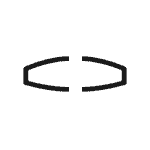
This is their military logo which appears as a “broken” lens
All examples I have seen are dated 1940


FED
FED is a camera manufacturer based in Kharkov, Ukraine. The plant is best known for its many Leica copies, although FED was actually a machine-building plant in the largest sense of the word. (The product catalog on their website still illustrates that).
FED had a very flexible logo policy: although almost all cameras are stamped on the back with the small “swirl logo” shown above, the typography on the cameras themselves (particularly on the FED-1) has enormous variations.
F.E. Dzerzhinsky Factory, Kharkov, Ukraine. FED are the initials of F. E. Dzerzhinsky, the founder of the NKVD, and the factory was named in his honor. The NKVD was the People’s Commissariat for Internal Affairs (= Народный комиссариат внутренних дел = Narodnyy Komissariat Vnutrennikh Del, (НКВД = NKVD), a secret police organization and predecessor of the KGB. The factory’s original workforce was comprised of orphaned youths living and working together in a communal arrangement. After the groundbreaking introduction of the Leica II in 1932, Soviet leaders ordered a halt to the importation of photographic equipment and set the FED factory to the task of creating a Soviet Leica equivalent. Only 18 months later, in 1934, the FED factory began churning out its first clone of the Leica II rangefinder camera. Since then, they have produced millions of cameras, some good and some not so good. The variations in the engravings on the FED camera cover plates are worth a special mention, reflecting historical changes within the Soviet Union.
F.E. Dzerzhinsky Factory, Kharkov, Ukraine. FED are the initials of F. E. Dzerzhinsky, the founder of the NKVD, and the factory was named in his honor. The NKVD was the People’s Commissariat for Internal Affairs (= Народный комиссариат внутренних дел = Narodnyy Komissariat Vnutrennikh Del, (НКВД = NKVD), a secret police organization and predecessor of the KGB. The factory’s original workforce was comprised of orphaned youths living and working together in a communal arrangement. After the groundbreaking introduction of the Leica II in 1932, Soviet leaders ordered a halt to the importation of photographic equipment and set the FED factory to the task of creating a Soviet Leica equivalent. Only 18 months later, in 1934, the FED factory began churning out its first clone of the Leica II rangefinder camera. Since then, they have produced millions of cameras, some good and some not so good. The variations in the engravings on the FED camera cover plates are worth a special mention, reflecting historical changes within the Soviet Union.
FED
FED is a camera manufacturer based in Kharkov, Ukraine. The plant is best known for its many Leica copies, although FED was actually a machine-building plant in the largest sense of the word. (The product catalog on their website still illustrates that).
FED had a very flexible logo policy: although almost all cameras are stamped on the back with the small “swirl logo” shown above, the typography on the cameras themselves (particularly on the FED-1) has enormous variations.
ФЭД
Харьковский машиностроительный завод «ФЭД», №3 НКВД, №296 НКАП — Харьков, Украина.
За всю историю предприятия существовало множество вариантов знака для гражданской продукции, но все они, так или иначе, представляли собой логотип — название завода — инициалы Феликса Эдмундовича Дзержинского.
 | Первоначальный логотип. |
 | Одна из старых эмблем завода. Появилась примерно в 1949 году. |
 | Стилизация названия завода под линзу. Знак перекликается с заводским клеймом, ставившимся на военную продукцию (см. ниже). |
 | Один из последних логотипов. |
 | Для военной продукции завод ФЭД не мог использовать собственный логотип, поэтому применялся другой знак: «разорванная» линза, как бы образующая букву «Ф». |
THE F. E. DZERZHINSKY LABOUR COMMUNE
The association of the FED camera with a youth colony is unlikely enough, but the fact that this colony was administered by the Soviet police is the most unusual feature of all. Felix Edmundovich Dzerzhinsky (1877-1926), whose initials the camera would bear, was the founder and first leader of the Soviet secret police, or Cheka as it was originally called, from the time of its inception in late 1917. The name Cheka came from the Russian initials of its formidable formal title, All-Russian Extraordinary Commission for Combating Counter-Revolution, Sabotage and Speculation. Frightening as the organization was, it apparently engaged in some activities which were not of a security-related nature at all. In 1920, the Narkompros proposed the creation of a State Council for the Defence of Children to deal with the besprizorniki problem [14]. Dzerzhinsky read the proposal and felt moved to put his personal energy and the energy of the Cheka into the problem. He told the Commissar of Education, ‘I think that our apparatus is one of those which works most efficiently. Its branches are everywhere. People take notice of it. They are rather afraid of it . . .’ [15]. Early in 1921, the All-Russian Central Executive Committee (VTsIK) established the Commission for the Improvement of the Life of Children, with Dzerzhinsky as its president. The announcement caused quite a stir, it seems, and even the Narkompros journal carried an article largely devoted to calming its readers.
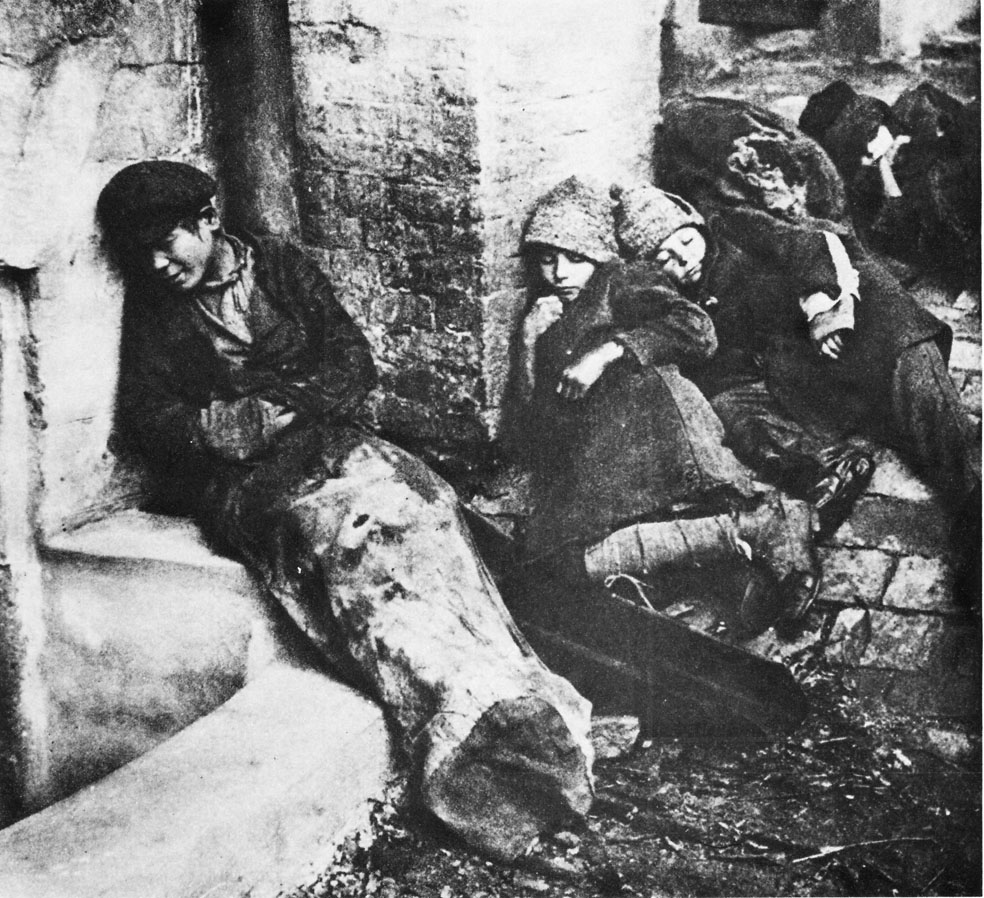
Figure 5. Russian ‘besprizorniki’ [homeless ones] in the 1920s. (From `USSR in Construction’, April 1934.)
In the years and famine that followed, the situation of the children in fact grew only worse, but Dzerzhinsky’s gesture was remembered. When he died in 1926, the Ukrainian political police, now called the OGPU (Unified State Political Administration), decided to build a children’s commune in his honour [16]. The F. E. Dzerzhinsky Labour Commune [Trudkommuna imeni F. E. Dzerzhinskogo] was officially opened on 29th December 1927. Under eight years of Makarenko’s leadership, the institution won a great reputation, and received visitors from many countries.
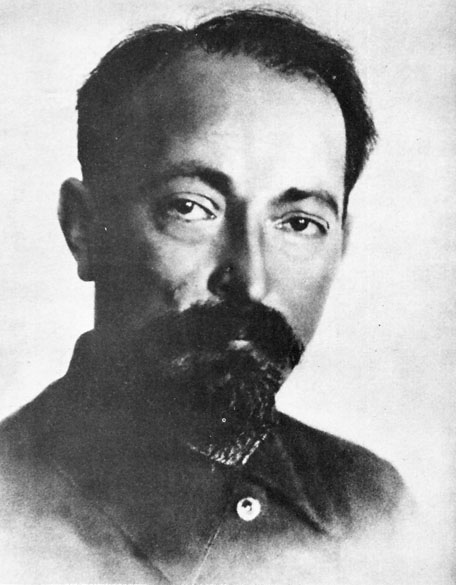
Figure 6. Unknown photographer: Felix Edmundovich Dzerzhinsky, founder of the Soviet secret police. (From `USSR in Construction’, April 1934.)
From the start the Dzerzhinsky Commune differed from the Gorky Colony. Makarenko had already built and tested his educational system at the Gorky Colony, and was able to apply his methods more confidently at the Dzerzhinsky Commune. Here he had the full support of the authorities and was freed from the distractions of disapproving supervision. And unlike the Gorky Colony, which began its life in the dilapidated ruins of a former estate, the buildings and workshops of the Dzerzhinsky Commune were new, in fact lavish in comparison, having been built and in part furnished by contributions from local Cheka officers.
At first the commune had 150 members, boys and girls ranging from 13 to 17 years of age and including a nucleus of 50 former Gorky Colonists. The wards of the commune, or communards as they might be called, were still classed as besprizorniki, but now more in the Western sense of delinquents. Their number would grow to 600 by 1935.
Makarenko’s methods combined productive work and secondary education in a Marxist system of polytechnical education which sought to eliminate the distinction between physical and mental labour. This was accomplished by dividing each day into two four-hour shifts, with one shift devoted to productive work and the other to classroom instruction.
Whereas agricultural labour had been the main emphasis of the Gorky Colony, more complex types of work were developed at the Dzerzhinsky Commune. Initially, the commune engaged in handicraft-type productions, with workshops for locksmithing, carpentry, shoemaking and sewing. The commune also had a small foundry. Production was started with the aid of outside craftsmen, but as commune members developed their own skills, outside help was reduced to a minimum.
The products themselves, including clothes and crudely-made furniture, initially went to serve the commune’s own needs, but orders were soon accepted from outside as well. In this way, the commune became a completely self-supporting institution, a source of considerable pride. By late 1929, the commune was making and selling various kinds of furniture and other products. The resulting income allowed the improvement of facilities and expansion of the carpentry shops. Production of desks and chairs soon reached the thousands. The value of the daily production rose steadily, and communards also received wages which rose as the skill and value of their work increased. The commune even had a marching band and a wide range of clubs, including drama, various sports, photography, and service-type clubs for improving conditions within the commune. There were also the Komsomol and Pioneer youth organizations. The Dzerzhinsky Commune had become a complex community and would soon undertake even greater challenges.
During this time the Soviet Union had begun to undergo great changes. Stalin consolidated his immense powers in the late 1920s and in 1928 launched the First Five-Year Plan. The first three Five-Year Plans would transform the USSR from an agricultural country with virtually unutilized resources into an industrial nation no longer requiring large imports to fill her economic needs.
It was the Soviet intention, as expounded by both Lenin and Stalin, to establish an autarkic economy completely independent of and isolated from the economy of the capitalist world [17]. The First Five-Year Plan sought to bring about the wholesale collectivization of agriculture together with rapid industrialization, including the construction of heavy industry, development of transportation and harnessing of new power sources. But to industrialize in such a short time, Russia had first to rely heavily on the technology of the West. Books, research, scientists, technicians and machinery enabled the Russians to obtain some of the most advanced industrial technology in the world, without having to pay the tremendous cost, in time and money, of experimentation and development [18]. In this scheme, international patent agreements and the fact that the Leica, for example, was of foreign design and manufacture would become largely incidental and irrelevant.
The forced collectivization of the peasants resulted in the dispossession of millions of people, and thousands died. Forced labour employed on heavy construction projects also exacted its toll. Makarenko managed to survive this period while many other educators did not. Sudden shifts in policy often had fatal consequences.
It was also during this period, largely as a result of the drive towards industrialization and self-sufficiency, that the Soviet camera industry was born. In 1929 the first EFTE plate cameras were produced in limited numbers by the Foto-Trud co-operative in Moscow, and by late 1930 came the Fotokor-1 [19]. A 9×12 cm folding plate camera produced by the State Optical Mechanical Works [Gosudarstvennyi Optiko-Mekhanicheskii Zavod or GOMZ] in Leningrad, the Fotokor became the first Soviet camera to be produced in large numbers. Close to one million were manufactured before the Second World War [20]. It was designed along Western lines and featured a four-element 13·5 cm f4·5 Ortagoz lens. Soviet camera production increased from zero in 1928-29 to 2973 in 1929-30 and 23 008 in 1931 [21].
The First Five-Year Plan covered virtually every phase of life in the Soviet Union, and also placed heavy emphasis on education. Schools were required to produce more technically-trained people to take part in the industrial fight [22]. The Dzerzhinsky Commune was affected in both its educational and its productive capacities. In September 1930 a rabfak [workers’ faculty] of the Kharkov Engineering Institute was established at the commune to bring the worker-students up to normal university entrance standards. More importantly, the commune decided to construct its own full-fledged factory and begin a new industrial phase in its life. This undertaking would lay the groundwork and create the experience for the even more ambitious project soon to follow.
Using funds accumulated from the sale of their products, and with the aid of a state loan, a new two-storey building was erected for the manufacture of portable electric hand-drills. Planning began in early 1931, and the cornerstone was laid that May [23]. The communards took an active part in the construction, and the building, designed to house the machinery for the manufacture and assembly of the drills as well as additional sleeping quarters, was completed in November. All aspects of planning and construction were carried on in co-operation with qualified engineers, designers and other specialists from outside the commune.
In January 1932, the new factory was festively dedicated and soon thereafter the first drills were completed. They were designated type FD-1 and were patterned after certain Austrian drills [24]. The FD stood, of course, for Felix Dzerzhinsky. These drills were the very first electric hand-drills to be manufactured in the Soviet Union. In fact, one of the requirements in deciding what the commune would produce was that whatever it was to be, it should free the country from depending on its import.
To cope with the commune’s new activities, the number of communards was increased to 300, now with an average age of between 15 and 20, and including 50 girls. By the end of 1932, the number reached 340, at which point there was, in addition, one adult for about every four communards [25]. These adults directed the work; they included engineers, technicians, mechanics, instructors, managers, clerks and hired workers who did some of the difficult operations and machinery repairs. Communards participated in all aspects of the production and had the opportunity to learn several different skills.
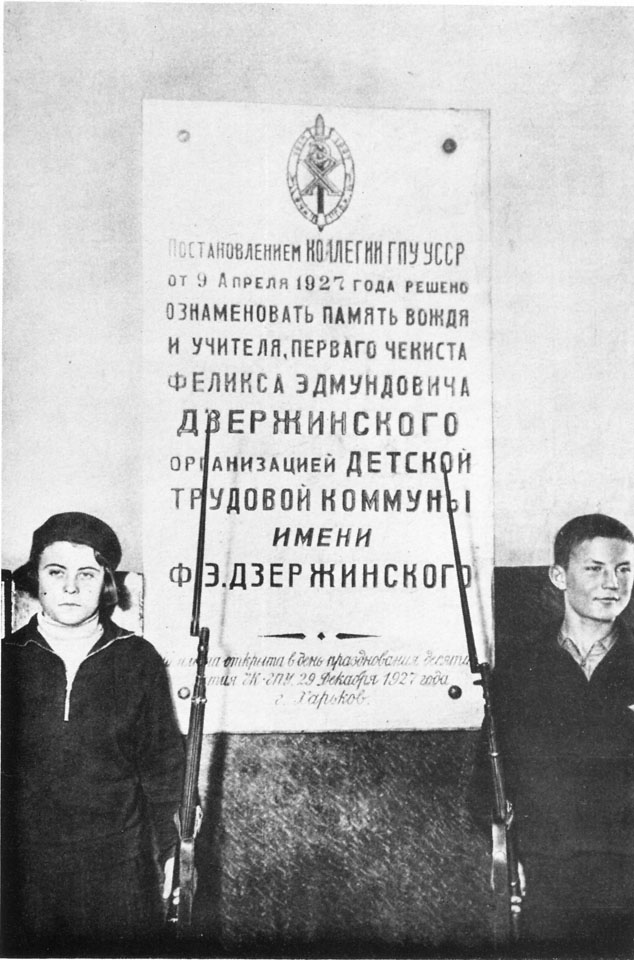
Figure 7. K. Kuznetsov: Plaque commemorating the organization of the Dzerzhinsky Commune in the Ukrainian city of Kharkov in 1927. (From `USSR in Construction’, April 1934.
The production of the electric drills proved to be a successful enterprise. In June 1932 it was decided to begin the design of several new models [26]. These were based on Black & Decker models from the United States and were designated FD-2 and FD-3. A goal of 11 500 drills was set for 1933, mostly of the FD-1 type.
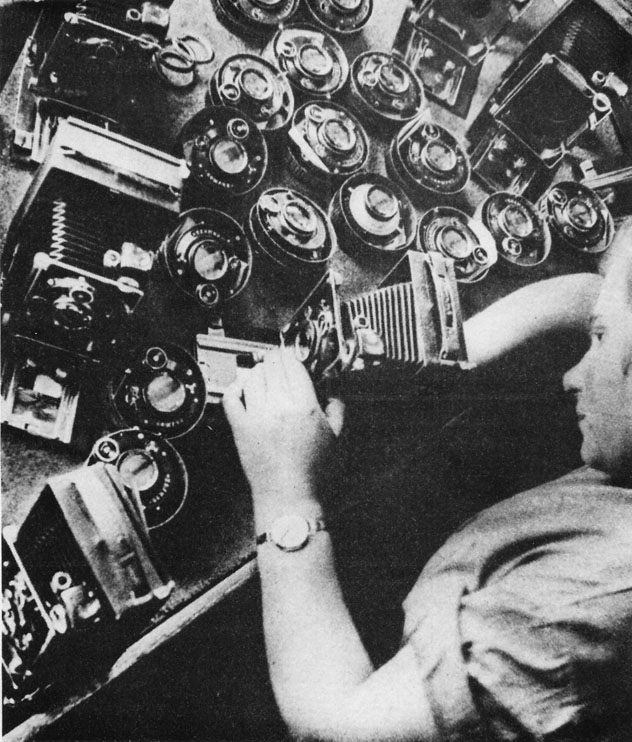
Figure 8. Fotokors being assembled in Leningrad in 1931. Early examples had imported Compur shutters as shown here. (From `USSR in Construction’, November 1931.)
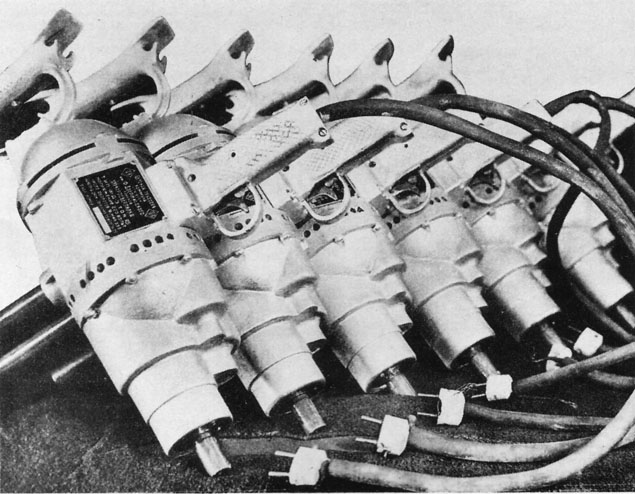
Figure 9. K. Kuznetsov: The first Soviet-made electric hand-drills, first industrial product of the Dzerzhinsky Commune. (From `USSR in Construction’, April 1934.)
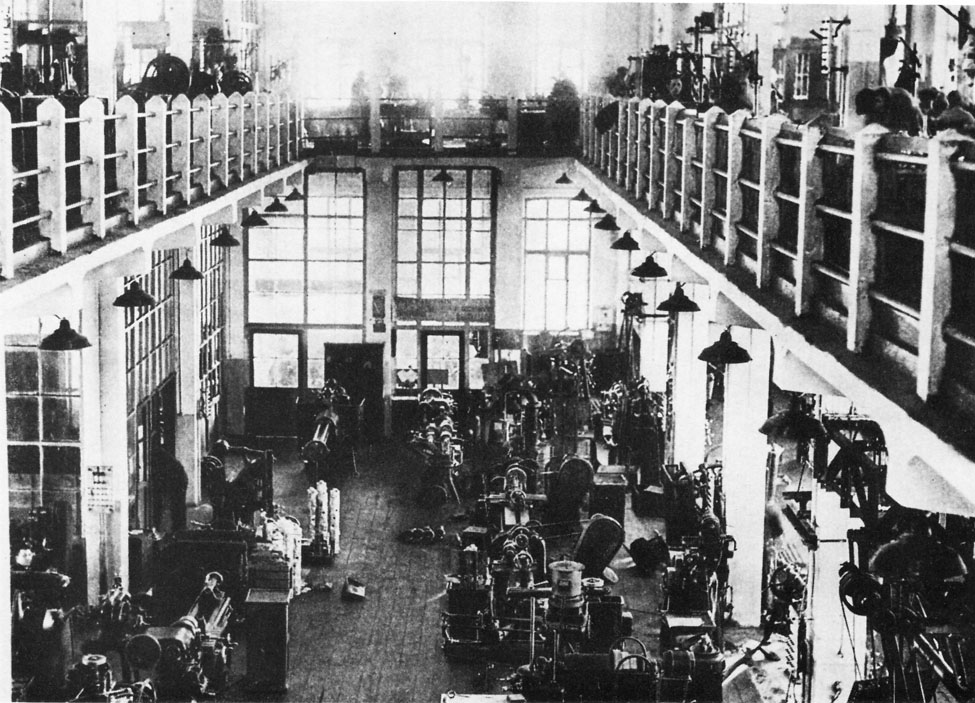
Figure 10. K. Kuznetsov: Drills were manufactured in this two-storey hall constructed in 1931. (From ‘USSR in Construction’, April 1934.)
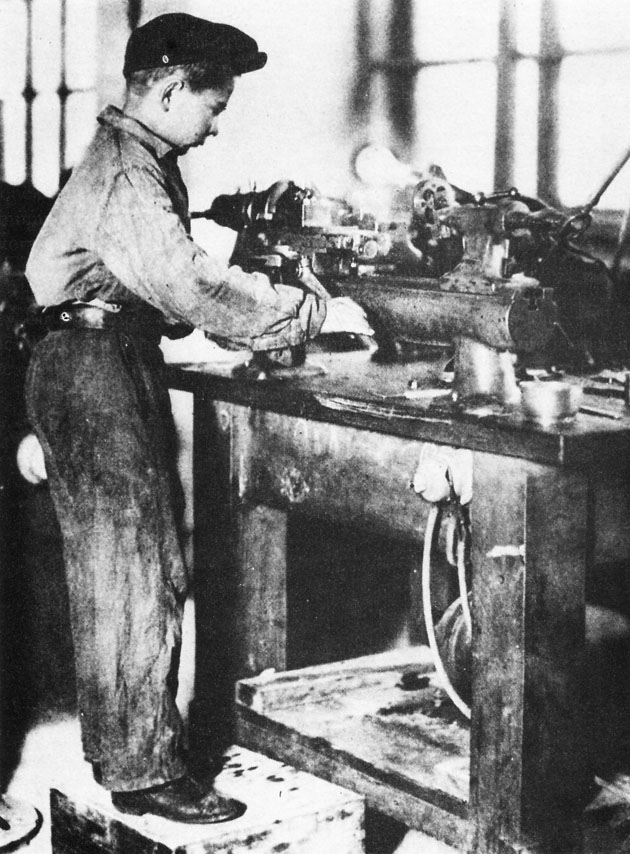
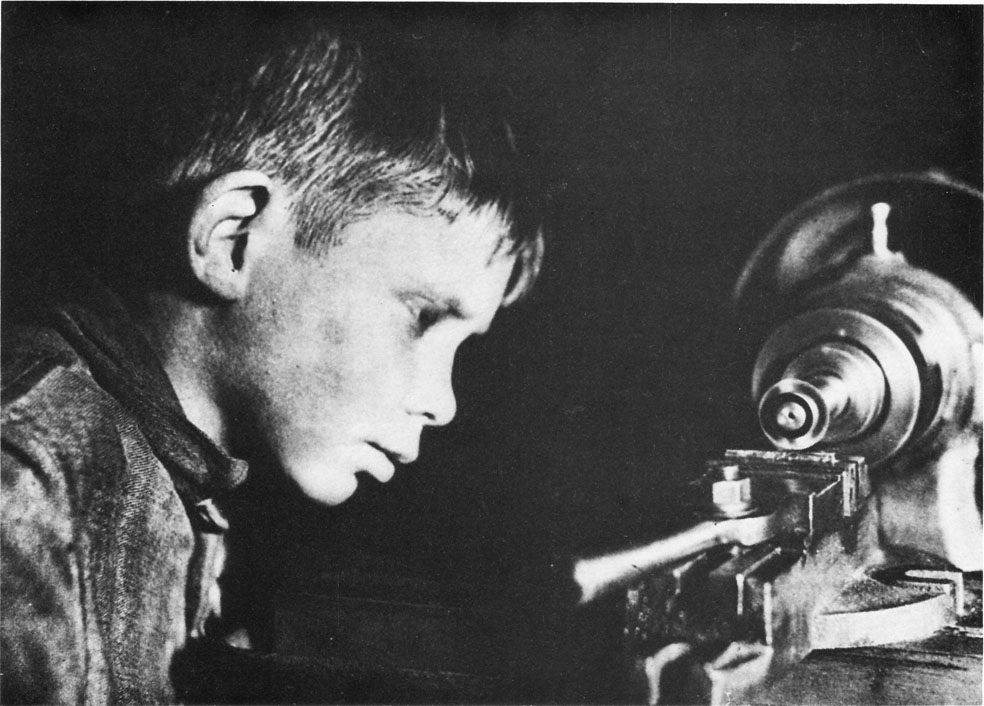
Figure 11(a) and 11(b). K. Kuznetsov: Young communards working in the Dzerzhinsky Commune machine shop in 1934. (From ‘USSR in Construction’, April 1934.)