
This page shows examples of fake military binoculars that were never used by the German Armed Forces from 1933 to 1945. The items shown on this page are counterfeit military service glasses, that were never genuine military optical equipment and property of the German Armed Forces during World War II.
Every item presented here is fake, counterfeit, fraudulent, spurious, not genuine, not original, fabricated, fictitious, imitation, false, faux, phony, bogus, artificial, synthetic, simulated, pretend, reproduction, ersatz. These are forgeries, frauds, replicas, copies, shams, hoaxes, imitations, mock-ups, dummies, duds, rip-offs, knockoffs, dupes, non-genuine, non-original, inauthentic, invalid distortions of “the real thing” — genuine, original German military service glasses, marked Dienstglas, indicating property used by the German Armed Forces during World War II.
Shown below are examples of fake military binoculars that were never genuine, original military property of the German Armed Forces from 1933 to 1945, and, contrary to the false impression intentionally portrayed by the counterfeiters who made them, were never used by the German Armed Forces during World War II.
The fake military binoculars shown here are forgeries made by counterfeiters for the purpose of intentionally deceiving collectors into believing that these counterfeit binoculars are truly genuine, original German military service glasses, marked Dienstglas, indicating property used by the German Armed Forces during World War II.
Essentially, counterfeiters use fake binocular bodies or genuine Dienstglas bodies, then remove or manipulate one or more prism covers and other parts, and replace these parts with cleaned up, repainted replacements, sometimes salvaged from genuine World War II German Dienstgläs service glasses. The counterfeit binoculars are then offered for sale to unwary buyers who are led to believe that the counterfeit binoculars are truly genuine, original, unmanipulated Dienstglas service glasses used by the German Armed Forces during World War II.
Dienstglas 6×30 Forgeries
Fälschungen “cag” 6×30, 79677 “Manipulated” Forgery
|
|


This Dienstglas (“cag” 6×30, 79677) is a “manipulated” forgery. Here is an example of a genuine Dienstglas, manufactured by the firm of Daniel Swarovski Tirol, Wattens, Tyrol, Österreich (“cag”), that was originally manufactured with a black “rice” body covering, and more recently has been intentionally manipulated (stripped to bare metal and painted) to portray instead a “Dienstglas” with a Sandgelb (sand yellow) painted body.
Original : Black “rice” body covering, aluminum fittings, black Bakelit (Bakelite) rear lens fittings, left prism cover marked “cag” over “Δ” (blue, filled in, cold resistant grease marking, 1943 – 1945), right prism cover marked “Dienstglas” over “6×30” over “79677” over “H/6400” Strichplatte (reticle), black leather Trageriemen (carrying strap), black Bakelit (Bakelite) Okularshutz (eye piece protector) or Regenschutzdeckel (rain protection cover) or Benutzerkappe (user cap) for rear lenses.
Manipulated Forgery : This Dienstglas (“cag” 6×30, 79677) should be black. Originally manufactured with a black “rice” body covering, the body of this service glass has since been stripped to bare metal, then painted with a modern application of Sandgelb (sand yellow) paint, and intentionally distressed to look deceptively old and well used in active military service.
It is true that in September 1943, the standard Reichsluftfahrt Ministerium (German Ministry of Aviation) listed paint, RLM-79, SANDGELB (sand-yellow), was designated einheitsfarbe Europa (single color Europe), and was ordered to be used on all military equipment of the German armed forces, including tanks, trucks, other vehicles, artillery, and all kinds of smaller equipment, including Dienstgläser, and other optical equipment. However, this does not appear to be the case with this particular service glass (“cag” 6×30, 79677).
In this clearly documented case, the photographic evidence of obvious, blatant modern manipulation emphatically and conclusively hammers the nail of intentional deception firmly into the coffin of stark reality. This Dienstglas (“cag” 6×30, 79677) is a manipulated forgery.
Also, no longer included are the original black leather Trageriemen (carrying strap) and black Bakelit (Bakelite) Okularshutz (eye piece protector) or Regenschutzdeckel (rain protection cover) or Benutzerkappe (user cap) for the rear lenses.
Fälschungen “cag” 6×30, 113764 “Assembled” Forgery
|
|


This Dienstglas (“cag” 6×30, 113764) is an “assembled” forgery. Here is an example of a fake service glass portrayed as a genuine Dienstglas manufactured by the firm of Daniel Swarovski Tirol, Wattens, Tyrol, Österreich (“cag”). The true manufacturer of this fake military service glass — Meopta – optika, s.r.o. of the Czech Republic — has never produced any service glasses with a Sandgelb (sand yellow) painted body.
Original : Black “rice” body covering, aluminum fittings, black Bakelit (Bakelite) rear lens fittings, left prism cover marked “cag” over “Δ” (blue, filled in, cold resistant grease marking, 1943 – 1945), right prism cover marked “Dienstglas” over “6×30” over “113764” over “H/6400” Strichplatte (reticle).
Assembled Forgery : The real manufacturer of this fake military service glass is Meopta – optika, s.r.o. of the Czech Republic — formerly called Waffenwerke Brünn (Brno), Prerau (Přerov) plant, Moravia, Czechoslovakia, renamed ‘Opticotechna GmbH, Werk Prerau / Protektorat’ in 1943 (“dow”). The modern Meopta original black “rice” body covering has been removed, and the bare metal then painted with a modern version of Sandgelb (sand yellow) paint. The modern Meopta prism covers have been replaced by what appear to be genuine World War II “cag” prism covers to complete the deception.
This Dienstglas (“cag” 6×30, 113764) should be black. Originally manufactured with a black “rice” body covering, which has since been stripped and removed, the bare metal was then painted with a modern application of Sandgelb (sand yellow) paint, and intentionally distressed to look deceptively old and well used in active military service. With its new Sandgelb (sand yellow) color, this Dienstglas stands glaringly out of place when compared with other documented black Dienstgläser within its serial number range.
The straight carrying strap attachments seen here on this modern Meopta body (a dead giveaway) are very different from the rectangular loops of genuine German service glasses of World War II. Different also are the Bakelit (Bakelite) rear lens fittings — the modern Meopta rear lens fittings are straighter than the slightly more flared rear lens fittings of genuine German service glasses of World War II. To the experienced eye, the photographic evidence is conclusive. This Dienstglas (“cag” 6×30, 113764) is an assembled forgery.
It is true that in September 1943, the standard Reichsluftfahrt Ministerium (German Ministry of Aviation) listed paint, RLM-79, SANDGELB (sand-yellow), was designated einheitsfarbe Europa (single color Europe), and was ordered to be used on all military equipment of the German armed forces, including tanks, trucks, other vehicles, artillery, and all kinds of smaller equipment, including Dienstgläser, and other optical equipment. However, this does not appear to be the case with this particular service glass (“cag” 6×30, 113764).
During World War II, Waffenwerke Brünn (Brno), Prerau (Přerov) plant, Moravia, Czechoslovakia (renamed ‘Opticotechna GmbH, Werk Prerau / Protektorat’ in 1943) — “dow” — never produced any service glasses with a Sandgelb (sand yellow) painted body. Now, more than 70 years after the end of World War II, Meopta – optika, s.r.o., Kabelikova 1, 750 02 Přerov, Czech Republic, the modern manufacturer of this fake military service glass (“cag” 6×30, 113764), also has never produced any service glasses with a Sandgelb (sand yellow) painted body.
Fälschungen “ddx” 6×30, 223757 “Assembled” Forgery
|
|


This Dienstglas (“ddx” 6×30, 223757) is an “assembled” forgery. Here is an example of a fake service glass portrayed as a genuine Dienstglas manufactured by the firm of Voigtländer u. Söhne AG, Braunschweig (Brunswick), Lower Saxony, Deutschland (“ddx”). The true manufacturer of this fake military service glass — Meopta – optika, s.r.o. of the Czech Republic — has never produced any service glasses with a Sandgelb (sand yellow) painted body.
Original : Black “rice” body covering, aluminum fittings, black Bakelit (Bakelite) rear lens fittings, left prism cover blank, right prism cover marked “Dienstglas” over “6×30” over “223757” over “ddx” and “+” (cold resistant grease marking, 1942 – 1944), black Trageriemen (carrying strap), black leather Anknöpflasche (button flap).
Assembled Forgery : The real manufacturer of this fake military service glass is Meopta – optika, s.r.o. of the Czech Republic — formerly called Waffenwerke Brünn (Brno), Prerau (Přerov) plant, Moravia, Czechoslovakia, renamed ‘Opticotechna GmbH, Werk Prerau / Protektorat’ in 1943 (“dow”). The modern Meopta original black “rice” body covering has been removed, and the bare metal then painted with a modern version of Sandgelb (sand yellow) paint. The modern Meopta prism covers have been replaced by what appear to be genuine World War II “ddx” prism covers to complete the deception.
This Dienstglas (“ddx” 6×30, 223757) should be black. Originally manufactured with a black “rice” body covering, which has since been stripped and removed, the bare metal body was then painted with a modern application of Sandgelb (sand yellow) paint, and intentionally distressed to look deceptively old and well used in active military service. With its new Sandgelb (sand yellow) color, this Dienstglas stands glaringly out of place when compared with other documented black Dienstgläser within its serial number range.
The straight carrying strap attachments seen here on this modern Meopta body (a dead giveaway) are very different from the rectangular loops of genuine German service glasses of World War II. Different also are the Bakelit (Bakelite) rear lens fittings — the modern Meopta rear lens fittings are straighter than the slightly more flared rear lens fittings of genuine German service glasses of World War II. To the experienced eye, the photographic evidence is conclusive. This Dienstglas (“ddx” 6×30, 223757) is an assembled forgery.
It is true that in September 1943, the standard Reichsluftfahrt Ministerium (German Ministry of Aviation) listed paint, RLM-79, SANDGELB (sand-yellow), was designated einheitsfarbe Europa (single color Europe), and was ordered to be used on all military equipment of the German armed forces, including tanks, trucks, other vehicles, artillery, and all kinds of smaller equipment, including Dienstgläser, and other optical equipment. However, this does not appear to be the case with this particular service glass (“ddx” 6×30, 223757).
During World War II, Waffenwerke Brünn (Brno), Prerau (Přerov) plant, Moravia, Czechoslovakia (renamed ‘Opticotechna GmbH, Werk Prerau / Protektorat’ in 1943) — “dow” — never produced any service glasses with a Sandgelb (sand yellow) painted body. Now, more than 70 years after the end of World War II, Meopta – optika, s.r.o., Kabelikova 1, 750 02 Přerov, Czech Republic, the modern manufacturer of this fake military service glass (“ddx” 6×30, 223757), also has never produced any service glasses with a Sandgelb (sand yellow) painted body.
Fälschungen “ddx” 6×30, 271453 “Manipulated” Forgery
|
|


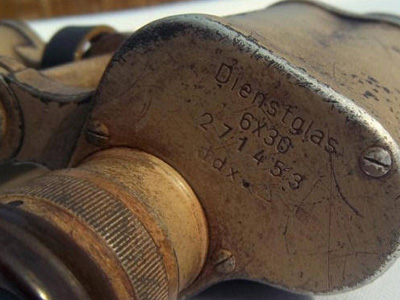
This Dienstglas (“ddx” 6×30, 271453) is a “manipulated” forgery. Here is an example of a genuine Dienstglas, manufactured by the firm of Voigtländer u. Söhne AG, Braunschweig (Brunswick), Lower Saxony, Deutschland (“ddx”), that was originally manufactured with a black “rice” body covering, and more recently has been intentionally manipulated (stripped to bare metal and painted) to portray instead a “Dienstglas” with a Sandgelb (sand yellow) painted body.
Original : Black “rice” body covering, aluminum fittings, brown Bakelit (Bakelite) rear lens fittings, left prism cover blank, right prism cover marked “Dienstglas” over “6×30” over “271453” over “ddx.” and “Δ” (cold resistant grease marking, 1943 – 1945), black leather Trageriemen (carrying strap), black leather Anknöpflasche (button flap).
Manipulated Forgery : This Dienstglas (“ddx” 6×30, 271453) should be black. Originally manufactured with a black “rice” body covering, the body of this service glass has since been stripped to bare metal, then painted with a modern application of Sandgelb (sand yellow) paint, and intentionally distressed to look deceptively old and well used in active military service.
It is true that in September 1943, the standard Reichsluftfahrt Ministerium (German Ministry of Aviation) listed paint, RLM-79, SANDGELB (sand-yellow), was designated einheitsfarbe Europa (single color Europe), and was ordered to be used on all military equipment of the German armed forces, including tanks, trucks, other vehicles, artillery, and all kinds of smaller equipment, including Dienstgläser, and other optical equipment. However, this does not appear to be the case with this particular service glass (“ddx” 6×30, 271453).
In this clearly documented case, the photographic evidence of obvious, blatant modern manipulation emphatically and conclusively hammers the nail of intentional deception firmly into the coffin of stark reality. This Dienstglas (“ddx” 6×30, 271453) is a manipulated forgery.
The original black leather Trageriemen (carrying strap) is no longer included, although the black leather Anknöpflasche (button flap) remains.
Fälschungen “dow” 6×30, 113710 “Assembled” Forgery
|
|


This Dienstglas (“dow” 6×30, 113710) is an “assembled” forgery. Here is an example of a fake service glass portrayed as a genuine Dienstglas manufactured by the firm of Waffenwerke Brünn (Brno), Prerau (Přerov) plant, Moravia, Czechoslovakia, renamed ‘Opticotechna GmbH, Werk Prerau / Protektorat’ in 1943 (“dow”). Evidently, unknown to the forger, the purported manufacturer (“dow”) never produced any service glasses with a Sandgelb (sand yellow) painted body. As it turns out, the true manufacturer of this fake military service glass — Meopta – optika, s.r.o. of the Czech Republic — also has never produced any service glasses with a Sandgelb (sand yellow) painted body.
Original : Black “Vulkanite” or black “rice” body covering, aluminum fittings, black Bakelit (Bakelite) rear lens fittings, left prism cover marked “dow”, right prism cover marked “Dienstglas” over “6×30” over “113710” over “H/6400” Strichplatte (reticle), shown with black leather Trageriemen (carrying strap), and black rubber Okularshutz (eye piece protector) or Regenschutzdeckel (rain protection cover) or Benutzerkappe (user cap) to cover the rear lenses.
Assembled Forgery : The real manufacturer of this fake military service glass is Meopta – optika, s.r.o. of the Czech Republic — formerly called Waffenwerke Brünn (Brno), Prerau (Přerov) plant, Moravia, Czechoslovakia, renamed ‘Opticotechna GmbH, Werk Prerau / Protektorat’ in 1943 (“dow”). The modern Meopta original black “rice” body covering has been removed, and the bare metal then painted with a “not quite right” modern version of Sandgelb (sand yellow) paint. The modern Meopta prism covers have been replaced with what appear to be cleaned up, spraypainted genuine World War II “dow” prism covers to complete the deception.
This Dienstglas (“dow” 6×30, 113710) should be black. Originally manufactured with a black “Vulkanite” or black “rice” body covering, which has since been stripped and removed, the bare metal was then spraypainted (still radiating an amazingly ageless complexion, even after more than 70 years since the end of World War II). The modern interpretation of Sandgelb (sand yellow) paint sprayed on this fake service glass is so bright and clean as to show hardly any evidence of active military service at all — sort of a minty “NOS” (new old stock) almost unissued, hardly ever used look, as it were. With its bright, new Sandgelb (sand yellow) spraypainted finish, this Dienstglas stands glaringly out of place when compared with other documented “dow” black Dienstgläser within its serial number range, especially since “dow” never produced any service glasses with a Sandgelb (sand yellow) painted body during World War II.
The straight carrying strap attachments seen here on this modern Meopta body (a dead giveaway) — very different from the rectangular loops of genuine German service glasses of World War II — are not seen in any of the images, because the photographer has very carefully avoided showing (intentional concealed) this crucial, incriminating, bit of fraudulent, convicting evidence. Different also are the Bakelit (Bakelite) rear lens fittings — the modern Meopta rear lens fittings are straighter than the slightly more flared rear lens fittings of genuine German service glasses of World War II. The carefully staged, cover up photography screams about things to hide, and to the knowing observer, the photographic evidence is conclusive enough. This Dienstglas (“dow” 6×30, 113710) is an assembled forgery.
It is true that in September 1943, the standard Reichsluftfahrt Ministerium (German Ministry of Aviation) listed paint, RLM-79, SANDGELB (sand-yellow), was designated einheitsfarbe Europa (single color Europe), and was ordered to be used on all military equipment of the German armed forces, including tanks, trucks, other vehicles, artillery, and all kinds of smaller equipment, including Dienstgläser, and other optical equipment. However, this does not appear to be the case with this particular service glass (“dow” 6×30, 113710).
During World War II, Waffenwerke Brünn (Brno), Prerau (Přerov) plant, Moravia, Czechoslovakia (renamed ‘Opticotechna GmbH, Werk Prerau / Protektorat’ in 1943) — “dow” — never produced any service glasses with a Sandgelb (sand yellow) painted body. Now, more than 70 years after the end of World War II, Meopta – optika, s.r.o., Kabelikova 1, 750 02 Přerov, Czech Republic, the modern manufacturer of this fake military service glass (“dow” 6×30, 113710), also has never produced any service glasses with a Sandgelb (sand yellow) painted body.
Fälschungen “dow” 6×30, 123762 “Assembled” Forgery
|
|
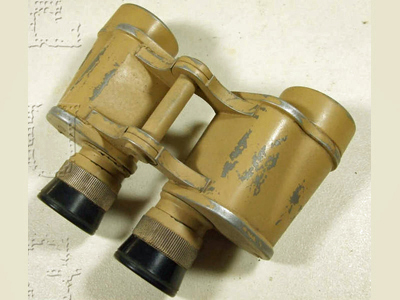


This Dienstglas (“dow” 6×30, 123762) is an “assembled” forgery. Here is an example of a fake service glass portrayed as a genuine Dienstglas manufactured by the firm of Waffenwerke Brünn (Brno), Prerau (Přerov) plant, Moravia, Czechoslovakia, renamed ‘Opticotechna GmbH, Werk Prerau / Protektorat’ in 1943 (“dow”). Evidently, unknown to the forger, the purported manufacturer (“dow”) never produced any service glasses with a Sandgelb (sand yellow) painted body. As it turns out, the true manufacturer of this fake military service glass — Meopta – optika, s.r.o. of the Czech Republic — also has never produced any service glasses with a Sandgelb (sand yellow) painted body.
Original : Black “rice” body covering, aluminum fittings, black Bakelit (Bakelite) rear lens fittings, left prism cover marked “dow” over “Δ” (blue, filled in, cold resistant grease marking, 1943 – 1945), right prism cover marked “Dienstglas” over “6×30” over “123762” over “H/6400” Strichplatte (reticle).
Assembled Forgery : The real manufacturer of this fake military service glass is Meopta – optika, s.r.o. of the Czech Republic — formerly called Waffenwerke Brünn (Brno), Prerau (Přerov) plant, Moravia, Czechoslovakia, renamed ‘Opticotechna GmbH, Werk Prerau / Protektorat’ in 1943 (“dow”). The modern Meopta original black “rice” body covering has been removed, and the bare metal then painted with a modern version of Sandgelb (sand yellow) paint. The modern Meopta prism covers have been replaced by what appear to be genuine World War II “dow” prism covers to complete the deception.
This Dienstglas (“dow” 6×30, 123762) should be black. Originally manufactured with a black “rice” body covering, which has since been stripped and removed, the bare metal body was then painted with a modern application of Sandgelb (sand yellow) paint, and intentionally distressed to look deceptively old and well used in active military service. With its new Sandgelb (sand yellow) color, this Dienstglas stands glaringly out of place when compared with other documented black Dienstgläser within its serial number range, especially since “dow” never produced any service glasses with a Sandgelb (sand yellow) painted body during World War II.
The straight carrying strap attachments seen here on this modern Meopta body (a dead giveaway) are very different from the rectangular loops of genuine German service glasses of World War II. Different also are the Bakelit (Bakelite) rear lens fittings — the modern Meopta rear lens fittings are straighter than the slightly more flared rear lens fittings of genuine German service glasses of World War II. To the experienced eye, the photographic evidence is conclusive. This Dienstglas (“dow” 6×30, 123762) is an assembled forgery.
It is true that in September 1943, the standard Reichsluftfahrt Ministerium (German Ministry of Aviation) listed paint, RLM-79, SANDGELB (sand-yellow), was designated einheitsfarbe Europa (single color Europe), and was ordered to be used on all military equipment of the German armed forces, including tanks, trucks, other vehicles, artillery, and all kinds of smaller equipment, including Dienstgläser, and other optical equipment. However, this does not appear to be the case with this particular service glass (“dow” 6×30, 123762).
During World War II, Waffenwerke Brünn (Brno), Prerau (Přerov) plant, Moravia, Czechoslovakia (renamed ‘Opticotechna GmbH, Werk Prerau / Protektorat’ in 1943) — “dow” — never produced any service glasses with a Sandgelb (sand yellow) painted body. Now, more than 70 years after the end of World War II, Meopta – optika, s.r.o., Kabelikova 1, 750 02 Přerov, Czech Republic, the modern manufacturer of this fake military service glass (“dow” 6×30, 123762), also has never produced any service glasses with a Sandgelb (sand yellow) painted body.
Fälschungen “dow” 6×30, 123763 “Assembled” Forgery
|
|


This Dienstglas (“dow” 6×30, 123763) is an “assembled” forgery. Here is an example of a fake service glass portrayed as a genuine Dienstglas manufactured by the firm of Waffenwerke Brünn (Brno), Prerau (Přerov) plant, Moravia, Czechoslovakia, renamed ‘Opticotechna GmbH, Werk Prerau / Protektorat’ in 1943 (“dow”). Evidently, unknown to the forger, the purported manufacturer (“dow”) never produced any service glasses with a Sandgelb (sand yellow) painted body. As it turns out, the true manufacturer of this fake military service glass — Meopta – optika, s.r.o. of the Czech Republic — also has never produced any service glasses with a Sandgelb (sand yellow) painted body.
Original : Black “rice” body covering, aluminum fittings, black Bakelit (Bakelite) rear lens fittings, left prism cover marked “dow” over “Δ” (blue, filled in, cold resistant grease marking, 1943 – 1945), right prism cover marked “Dienstglas” over “6×30” over “123763” over “H/6400” Strichplatte (reticle).
Assembled Forgery : The real manufacturer of this fake military service glass is Meopta – optika, s.r.o. of the Czech Republic — formerly called Waffenwerke Brünn (Brno), Prerau (Přerov) plant, Moravia, Czechoslovakia, renamed ‘Opticotechna GmbH, Werk Prerau / Protektorat’ in 1943 (“dow”). The modern Meopta original black “rice” body covering has been removed, and the bare metal then painted with a modern version of Sandgelb (sand yellow) paint. The modern Meopta prism covers have been replaced by what appear to be genuine World War II “dow” prism covers to complete the deception.
This Dienstglas (“dow” 6×30, 123763) should be black. Originally manufactured with a black “rice” body covering, which has since been stripped and removed, the bare metal body was then painted with a modern application of Sandgelb (sand yellow) paint, and intentionally distressed to look deceptively old and well used in active military service. With its new Sandgelb (sand yellow) color, this Dienstglas stands glaringly out of place when compared with other documented black Dienstgläser within its serial number range, especially since “dow” never produced any service glasses with a Sandgelb (sand yellow) painted body during World War II.
The straight carrying strap attachments seen here on this modern Meopta body (a dead giveaway) are very different from the rectangular loops of genuine German service glasses of World War II. Different also are the Bakelit (Bakelite) rear lens fittings — the modern Meopta rear lens fittings are straighter than the slightly more flared rear lens fittings of genuine German service glasses of World War II. To the experienced eye, the photographic evidence is conclusive. This Dienstglas (“dow” 6×30, 123763) is an assembled forgery.
It is true that in September 1943, the standard Reichsluftfahrt Ministerium (German Ministry of Aviation) listed paint, RLM-79, SANDGELB (sand-yellow), was designated einheitsfarbe Europa (single color Europe), and was ordered to be used on all military equipment of the German armed forces, including tanks, trucks, other vehicles, artillery, and all kinds of smaller equipment, including Dienstgläser, and other optical equipment. However, this does not appear to be the case with this particular service glass (“dow” 6×30, 123763).
During World War II, Waffenwerke Brünn (Brno), Prerau (Přerov) plant, Moravia, Czechoslovakia (renamed ‘Opticotechna GmbH, Werk Prerau / Protektorat’ in 1943) — “dow” — never produced any service glasses with a Sandgelb (sand yellow) painted body. Now, more than 70 years after the end of World War II, Meopta – optika, s.r.o., Kabelikova 1, 750 02 Přerov, Czech Republic, the modern manufacturer of this fake military service glass (“dow” 6×30, 123763), also has never produced any service glasses with a Sandgelb (sand yellow) painted body.
Dienstglas 10×50 Forgeries
Fälschungen “beh” 10×50, 461712 “Manipulated” Forgery
|
|


This Dienstglas (“beh” 10×50, 461712) is a “manipulated” forgery. Here is an example of a genuine Dienstglas, manufactured by the firm of Ernst Leitz, Wetzlar, Hesse, Deutschland (“beh”), that was originally manufactured with a black “rice” body covering, and more recently has been intentionally manipulated (stripped to bare metal and painted) to portray instead a “Dienstglas” with a Sandgelb (sand yellow) painted body.
Original : Black “rice” body covering, black anodized aluminum fittings, black anodized aluminum and black Bakelit (Bakelite) rear lens fittings, left prism cover blank, right prism cover marked “Dienstglas” over “10×50” over “461712” over “beh” over “+” (cold resistant grease marking, 1942 – 1944), black leather Trageriemen (carrying strap), black leather Anknöpflasche (button flap).
Manipulated Forgery : This Dienstglas (“beh” 10×50, 461712) should be black. Originally manufactured with a black “rice” body covering, the body of this service glass has since been stripped to bare metal, then painted with a modern application of Sandgelb (sand yellow) paint, and intentionally distressed and darkened to look deceptively old and well used in active military service.
It is true that in September 1943, the standard Reichsluftfahrt Ministerium (German Ministry of Aviation) listed paint, RLM-79, SANDGELB (sand-yellow), was designated einheitsfarbe Europa (single color Europe), and was ordered to be used on all military equipment of the German armed forces, including tanks, trucks, other vehicles, artillery, and all kinds of smaller equipment, including Dienstgläser, and other optical equipment. However, this does not appear to be the case with this particular service glass (“beh” 10×50, 461712).
This Dienstglas (“beh” 10×50, 461712) is a manipulated forgery. In this clearly documented case, seeing the photographic evidence of counterfeiting makes the deception seem obvious. Unfortunately, fakes like this are often recognized only after seeing “before and after” photos of changes made to service glasses with known serial numbers. The ultimate defense is learning by experience — meeting enough fakes to know when you see the next one.
The original black leather Trageriemen (carrying strap) is no longer included, although the black leather Anknöpflasche (button flap) remains.
Fälschungen “blc” 10×50, 2231874 “Manipulated” Forgery
|
|


This Dienstglas (“blc” 10×50, 2231874) is a “manipulated” forgery. Here is an example of a genuine Dienstglas, manufactured by the firm of blc — Carl Zeiss, Jena, Thuringia, Deutschland (“blc”), that was originally manufactured with a black “rice” body covering, and more recently has been intentionally manipulated (stripped to bare metal and painted) to portray instead a “Dienstglas” with a Sandgelb (sand yellow) painted body.
Original : Black “rice” body covering, black anodized aluminum fittings, black anodized aluminum and black Bakelit (Bakelite) rear lens fittings, left prism cover blank, right prism cover marked “Dienstglas” over “10×50” over “2231874” over “blc” and “+” (cold resistant grease marking, 1942 – 1944), black leather Trageriemen (carrying strap), black leather Anknöpflasche (button flap).
Manipulated Forgery : This Dienstglas (“blc” 10×50, 2231874) should be black. Originally manufactured with a black “rice” body covering, the body of this service glass has since been stripped to bare metal, and the entire service glass, including even the black anodized aluminum fittings and the black Bakelit (Bakelite) rear lens fittings, spraypainted with a “not quite right” modern attempt at Sandgelb (sand yellow) paint. The new spraypaint finish radiates a rather unbelievably bright appearance after more than 70 years since the end of World War II. This astounding spraypaint job is so bright and clean as to show remarkably little evidence of any active military service. Instead, we see an astonishingly minty “NOS” (new old stock) almost unissued, hardly ever used “hideousity”. The original black aluminum prism covers have been cleaned up and spraypainted with Sandgelb (sand yellow) paint to complete the deception.
It is true that in September 1943, the standard Reichsluftfahrt Ministerium (German Ministry of Aviation) listed paint, RLM-79, SANDGELB (sand-yellow), was designated einheitsfarbe Europa (single color Europe), and was ordered to be used on all military equipment of the German armed forces, including tanks, trucks, other vehicles, artillery, and all kinds of smaller equipment, including Dienstgläser, and other optical equipment. However, this does not appear to be the case with this particular service glass (“blc” 10×50, 2231874).
This Dienstglas (“blc” 10×50, 2231874) is a manipulated forgery. In this clearly documented case, seeing the photographic evidence of counterfeiting makes the deception seem obvious. Unfortunately, fakes like this are often recognized only after seeing “before and after” photos of changes made to service glasses with known serial numbers. The ultimate defense is learning by experience — meeting enough fakes to know when you see the next one.
The original black leather Trageriemen (carrying strap) and black leather Anknöpflasche (button flap) are included.
 Meopta – optika, s.r.o.
Kabelikova 1
750 02 Přerov, Czech Republic
|
|
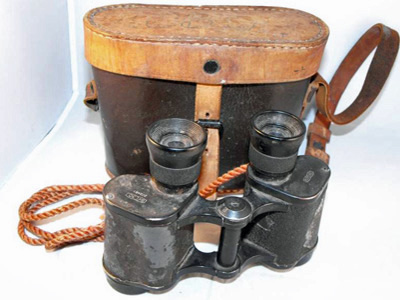
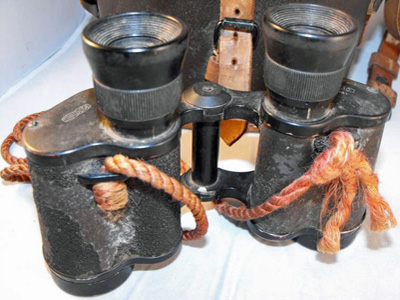
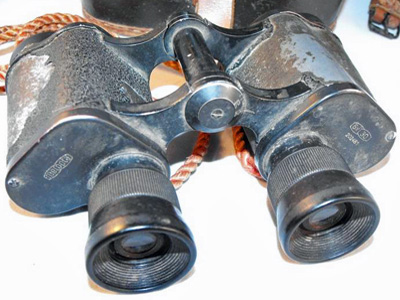
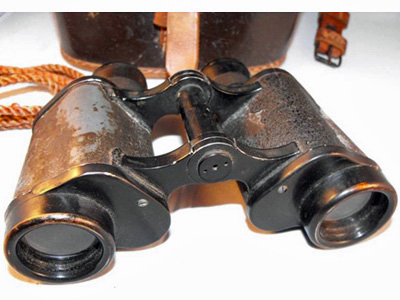
The products of a well respected company, Meopta – optika, s.r.o. of the Czech Republic — formerly called Waffenwerke Brünn (Brno), Prerau (Přerov) plant, Moravia, Czechoslovakia, renamed ‘Opticotechna GmbH, Werk Prerau / Protektorat’ in 1943 (“dow”) — have been a favorite source of legitimate binoculars used to create counterfeit binoculars sold online as authentic German binoculars of World War II.
Meopta – optika, s.r.o. is an optical manufacturing firm in Přerov, Czech Republic that makes optical, opto-mechanical, and opto-electronic systems for worldwide consumer, industrial, and military applications. Meopta U.S.A., Inc. of Hauppauge, New York is a separate American company that manufactures and assembles optical and opto-mechanical systems.
Founded in 1933 under the name Optikotechna in Přerov, Czechoslovakia, Meopta optika sro is descended from two earlier makers of optical devices, the C. P. Göerz subsidiary of Bratislava, Slovakia and Optikotechna of Přerov.
In 1907, the Vienna based company C. P. Göerz established factory in Bratislava called “Meopta” to make optical and mechanical devices for the civilian market, and military optical equipment for the Austro-Hungarian army and navy. “Meopta” is the acronym for Mechanická optická výroba (mechanical optical manufacturing), and was the name given to the C. P. Göerz factory of Bratislava. After World War I, the company again made products for the civilian market.
|
|
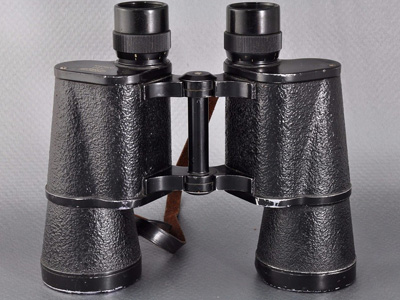
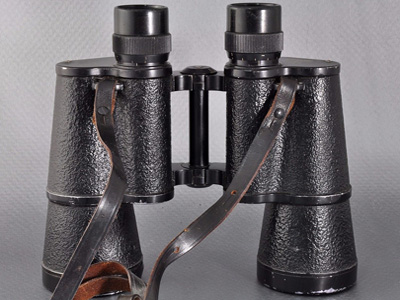
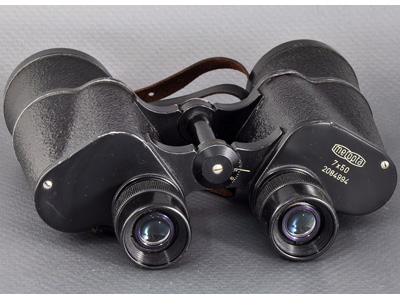
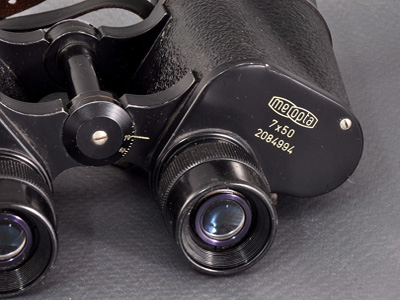
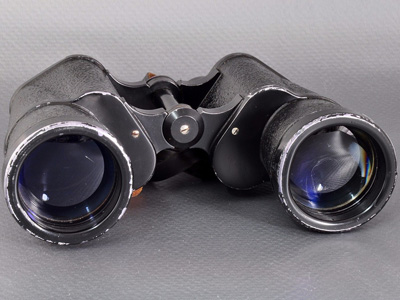
After 1935, the company became a subsidiary of Zbrojovka Brno, and a major supplier of military optical equipment for the Czechoslovak Army. In 1938, the company was seized by the Germans during the occupation of Czechoslovakia.
In 1939, the production of consumer products ceased, and under the name Optikotechna (German optical manufacturer code “dow”), the company began to make military optical equipment, including binoculars, rifle scopes, rangefinders, and periscopes, for the German Armed Forces until the end of the war. After World War II, Optikotechna was renamed Meopta.
In 1958, the C. P. Göerz firm was renamed Meopta. In August 1968, after the Warsaw Pact invasion of Czechoslovakia, the company was nationalized by the Czechoslovak Socialist Republic.
In 1991, after the collapse of the Soviet Union and the dissolution of the Warsaw Pact, the abrupt halt of military contracts for military optical equipment forced the company to focus again on the civilian market.
Today, Meopta – optika, s.r.o. is a well respected company in the Czech Republic that manufactures optical, opto-mechanical, and opto-electronic systems for worldwide consumer, industrial, and military applications.