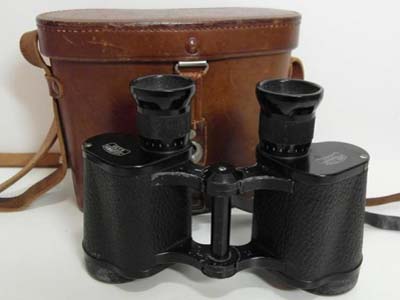
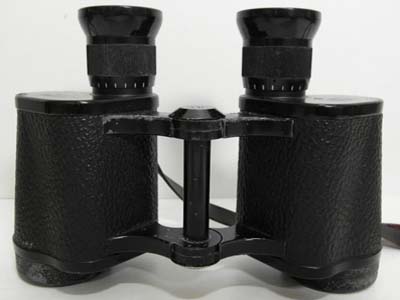
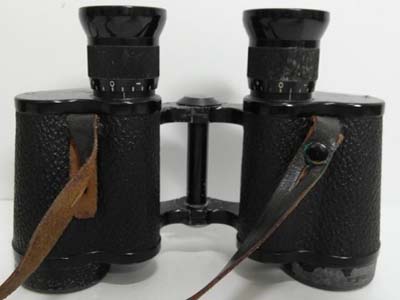
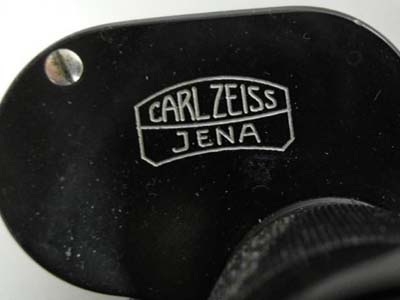
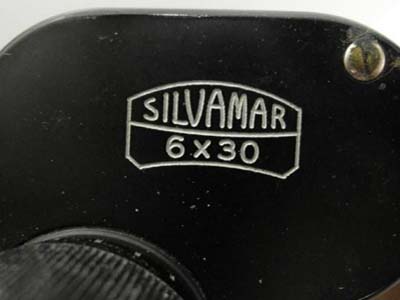
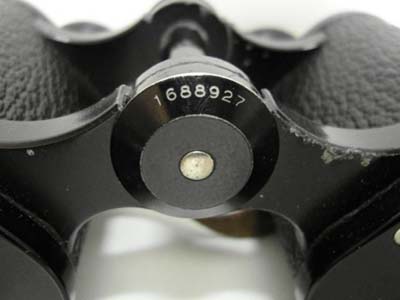
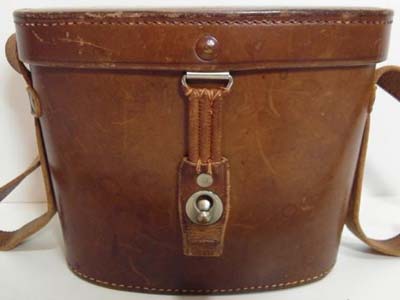
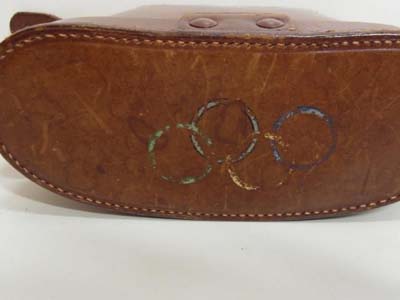
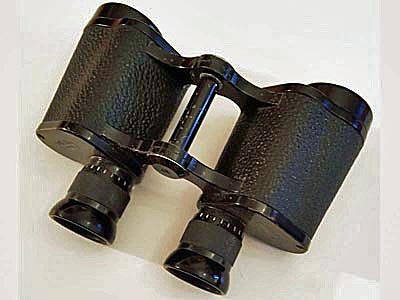
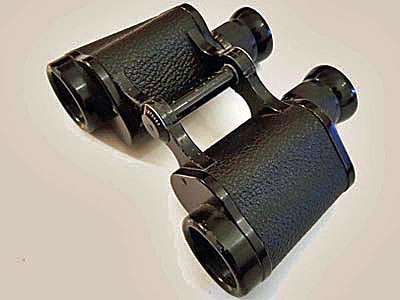
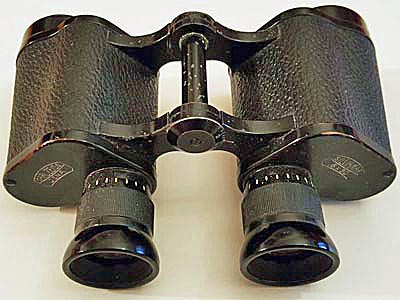
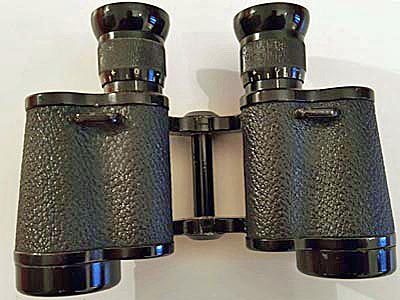
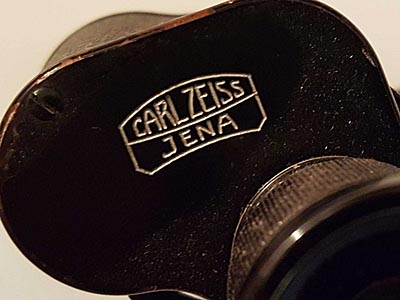
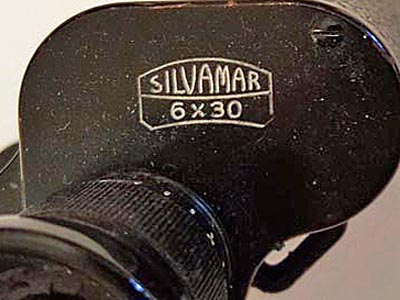
6×30 “Silvamar” (1910-1975)The 6×30 “Silvamar” was launched by Carl Zeiss / Jena in 1910, and continued in production until 1975. The one shown here, serial number 1688927, was manufactured in May 1935, the year before the IV Winter Olympic Games (IV Olympische Winterspiele 1936) in Garmisch-Partenkirchen, Bavaria, Germany (February 6-16, 1936), and the XI Summer Olympic Games (XI Olympische Sommerspiele 1936) in Berlin, Germany (August 1-16, 1936), officially known as the Winter Games of the IV Olympiad and the Summer Games of the XI Olympiad. |
|||||
| S/N | Identifying Features | Year of Mfg |
|||
| 1688927 |
|
CZ : 1688927 mfg. about May 1935
|
|||
| Except for small details, the Carl Zeiss 6×30 Silvamar commercial Fernglas, Feldstecher (field glass), manufactured from 1910 to 1975, was mechanically and optically the same as the 6×30 Dienstglas used by the German armed forces during World War II.
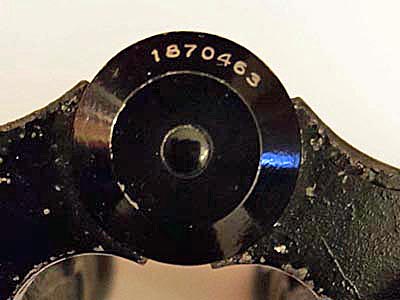
The term Dienstglas (Serviceglass) identified property of the German Armed Forces, and the 6×30 was the primary service glass of the German armed forces during World War II. During the war, the 6×30 Dienstglas was produced in the hundreds of thousands by many different optical equipment manufacturers in Germany and occupied countries in Europe. In 1935, the Carl Zeiss firm of Jena introduced a new lightweight version of its Silvamar commercial field glass under the trade name “Federleicht” (Featherlight, light as a feather). The Zeiss Silvamar “Federleicht” weighed 365 grams, using metal housings made of a revolutionary new magnesium / alumunium alloy, called “Elektron“, specially developed by Zeiss. The one shown here, serial number 1870463, was manufactured in October 1938. |
|||||
| 1870463 |
|
CZ : 1870463 mfg. about October 1938
|
|||
 Military and Naval Binoculars