
Optical Factory of the Main Artillery Directorate
• Оптический завод Главного артиллерийского управления
• Opticheskiy zavod Glavnogo artilleriyskogo upravleniya
Prior to 1926, Подольск (Podolsk), Московская область (Moscow Region)
Podolsk Optical Factory
• Подольский оптический завод
• Podol’skiy opticheskiy zavod
1926-1928, Подольск (Podolsk), Московская область (Moscow Region)
Factory of Precise Mechanics No. 19
• Завод Точной Механики № 19
• Zavod Tochnoy Mekhaniki № 19
1928-1936, Павшино (Pavshino), Красногорск (Krasnogorsk), Московская область (Moscow Region)
Factory of Precise Mechanics No. 69
• Завод Точной Механики № 69
• Zavod Tochnoy Mekhaniki № 69
After 1936, Красногорск (Krasnogorsk), Московская область (Moscow Region)
Starting in late 1941, Новосибирск (Novosibirsk), Новосиби́рская о́бласть (Novosibirsk Region)
Main Artillery Directorate
The Optical Factory of the Main Artillery Directorate (Оптический завод Главного артиллерийского управления, Opticheskiy zavod Glavnogo artilleriyskogo upravleniya), also known as Factory No. 357 NKV (“Progress” factory) in Leningrad, was a significant producer of military optics during the early to mid-1930s.
This factory manufactured the PE rifle scope, a complex and expensive device, which led to the development of a simplified version of the PE rifle scope without diopter adjustment in the fall of 1936. After successful trials, the Main Artillery Directorate recommended replacing the original PE rifle scope with the new model. Production of the modernized PE rifle scope began in Leningrad in early 1937 and ceased in mid-1940, after which the factory switched to producing PU rifle scopes.
The Main Artillery Directorate (Главное артиллерийское управление, Glavnoye artilleriyskoye upravleniye) or Directorate of Military Devices of the Main Artillery Directorate (Управление военных приборов Главного артиллерийского управления, Upravleniye voyennykh priborov Glavnogo artilleriyskogo upravleniya), was the military agency that placed orders for rifle scopes at manufacturing factories. These rifle scopes were marked with the factory’s emblem, production year, and serial number, and sometimes included the model name and abbreviations indicating the order of production.
In addition, Factory No. 349 NKV (State Optical-Mechanical Factory, GOMZ) in Leningrad also produced military optics, including the PEM rifle scope. The production of the PEM rifle scope stopped in 1940, but a small number were assembled at GOMZ in Leningrad during 1942-1943.
—————————————-
In 1917 The Main Artillery directorate optical factory was moved from Petrograd to Podolsk, Moscow region, and was temporarily placed in the area of the Podolsk mechanical factory (former Singer sewing machine factory). In 1928 it was included into the newly created optical factory in Pavshino, Moscow region (Krasnogorsk starting in the early 1930’s).
The factory was renamed several times between the 1920’s-1940’s and was the main manufacturer during the prewar period. It produced all binoculars models except for the 4×45, also it produced PE sniper scopes. The B-6 6×30 modification was created on the base of the model, produced by this factory, since 1931. In the 1930’s this factory also produced so called “civil” binoculars, they were marked without the use of a hammer and sickle and did not have a range-finding graticule.
In 1941 the factory was evacuated to Novosibirsk and stopped 6×30 and 8×30 binocular production, until 1945 it still produced the 7×50 model.
Main Artillery Directorate Optical Factory
• Оптический завод Главного артиллерийского управления
• Opticheskiy zavod Glavnogo artilleriyskogo upravleniya
Podolsk, Moscow region, Russia (Подольск, Россия) 1921-1930
In the Russian armed forces, military service binoculars are marked to identify them as government property.
Military service binoculars are issued to soldiers with specialized functions. For example, a group leader or an artillery observer was issued a set of binoculars to perform his duties.
The most common type of Russian military service binoculars used during the period of the State Optics Factory (GOZ) in Russia (1921-1930), began with the 6×30 Model AK military service binoculars. Starting in 1928, production switched to a new 6×30 Model Type G, that in 1930, was slightly updated and renamed the 6×30 Model B-1.
In 1930, the factory received a new name, which later became world-famous, State Optical-Mechanical Factory No. 349 (GOMZ), Государственный оптико-механический завод №349 (ГОМЗ), Gosudarstvennyi Optiko-Mekhanicheskii Zavod №349 (ГОМЗ).
The number “6” identifies the magnification power of the binoculars. In this case, “6” indicates that objects appear six times closer than their actual distance.
The number “30” identifies the diameter in millimeters of the front (objective) lenses — the light gathering lenses — in this case 30 millimeters in diameter.
Main Artillery Directorate
Optical Factory of the Main Artillery Directorate
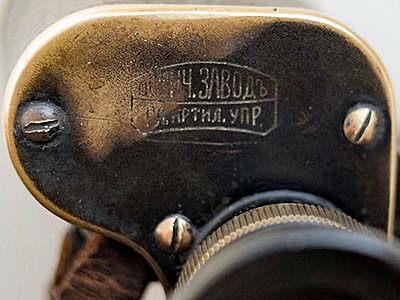
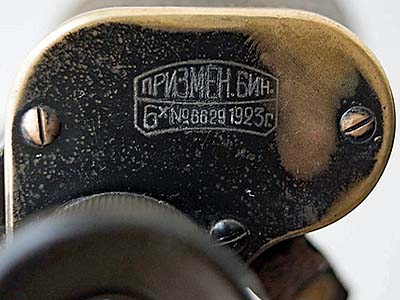
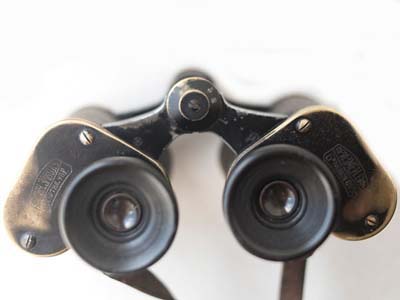
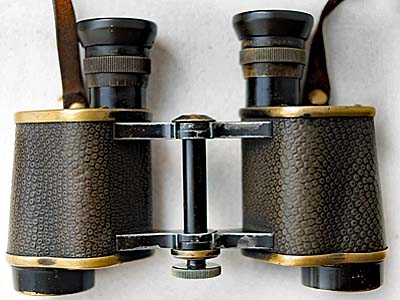
6×30 Model B-1, 1923, №6629, Podolsk, Moscow region, Russia
|
|
Soviet Russian 6×30 Model B-1 military service binoculars, production serial number, №6629, heavy, made of brass, early pattern body covering, manufactured in 1923 by the Main Artillery Directorate (Главное артиллерийское управление, Glavnogo artilleriyskogo upravleniya), Podolsk, Moscow region. These Soviet Russian military service binoculars are marked with white characters stamped on the left prism cover with ОПТИЧ.ЗАВОДЪ (abbreviation of Оптический Завод, Optical Factory) over ГЛ.АРТИЛ.УПР. (abreviation of Главное артиллерийское управление, Main Artillery Directorate), all within a trademark logo similar to the Carl Zeiss trademark logo. The right prism cover is marked with white characters stamped ПРИЗМЕН.БИН (abbreviation of ПризменнЫй Бинокль, Prism Binoculars), over 6x№6629 1923г. (abbreviation of год, year, of manufacture), all within a trademark logo similar to the Carl Zeiss trademark logo. These 6×20 binoculars are accompanied by the original brown leather carrying strap, |
E. Krauss et Compagnie
8×20 STÉRÉO-JUMELLE, 1913, № 35392, Paris, France
E. Krauss et Cie. was founded by Emile Krauss in Germany in 1882. The company produced photographic equipment and Galilean binoculars. In 1892 the company moved from Berlin to Paris at which time a license was obtained from Zeiss to manufacture “Zeiss-Anastigmate” photographic objective lenses.
In 1896, this business relationship grew when Zeiss licensed E. Krauss et Cie to manufacture prismatic binoculars with the objective lenses spaced horizontally farther apart to enhance stereo three dimensional depth perception, which was a design patented by Zeiss until 1908.
During the same time period, Zeiss also licensed Bausch & Lomb in the United States to manufacture stereoscopic binoculars. Another maker, Hensoldt in Germany, violated the Zeiss patent by manufacturing stereoscopic binoculars prior to 1908 without having a license.
Krauss Stéréo-Jumelle Zeiss binoculars were made from 1896/97 until 1908/09. After 1902, the Zeiss name was no longer marked on the binoculars. The binoculars were available in various powers of magnification. Although they were not exact copies of the Zeiss Feldstecher models, they very much resembled them.
The Krauss binoculars were built with a military type clamping knob at the end of the center bar which when tightened immovably fixed the halves of the binocular at a selected setting. The Zeiss Feldstechers were built with a spring tensioned click stop knob which when tightened applied a click stop tension at a selected setting but still allowed the halves of the binocular to be moved out of the click stop setting to another position.
Other than the crossed rifles with bayonets insignia, there are no actual French or Russian military markings on these binoculars.
During this same time period, some Zeiss binoculars were offered for sale as “Armee Modell” Feldstechers, presumably meant for private purchase by German and foreign military personnel.
It could be that these 8×20 Krauss Stéréo-Jumelle Zeiss binoculars were also intended for private purchase by French and foreign army officers.
The 8×20 Krauss Stéréo-Jumelle Zeiss binoculars are just as well constructed as the 8×20 Zeiss Feldstechers, and the optical performance of the binoculars is exactly the same.
Imperial Russian Officer Schools
In 1913, the officer schools of the Imperial Russian Army included eleven infantry schools, two Cossack schools, three cavalry schools, three artillery schools, and one engineer school.
Imperial Russian Army Officer Training: Officers were trained in various military skills, including marksmanship, which was crucial for infantry, cavalry, and artillery units. These schools were designed to train officers for various roles within the military, ensuring a structured and specialized education for future leaders.
There is no specific mention of a shooting school in the Imperial Russian Army school system. However, officer training in the Imperial Russian Army included various military skills, and marksmanship would have been an essential part of the curriculum for most branches, such as infantry, cavalry, and artillery.
Military Schools: These schools provided comprehensive military education, including tactical and strategic training. The schools were part of the military education system for commissioned officers from the page corps, cadet corps, junker and military schools. The junker schools were re-designated as military schools in 1910. There is no specific information regarding marksmanship shooting schools.
Main Artillery Directorate Optical Factory
• Оптический завод Главного артиллерийского управления
• Opticheskiy zavod Glavnogo artilleriyskogo upravleniya
Podolsk, Moscow region, Russia (Подольск, Россия) 1921-1930
In the Russian armed forces, military service binoculars are marked to identify them as government property.
Military service binoculars are issued to soldiers with specialized functions. For example, a group leader or an artillery observer was issued a set of binoculars to perform his duties.
The most common type of Russian military service binoculars used during the period of the State Optics Factory (GOZ) in Russia (1921-1930), began with the 6×30 Model AK military service binoculars. Starting in 1928, production switched to a new 6×30 Model Type G, that in 1930, was slightly updated and renamed the 6×30 Model B-1.
In 1930, the factory received a new name, which later became world-famous, State Optical-Mechanical Factory No. 349 (GOMZ), Государственный оптико-механический завод №349 (ГОМЗ), Gosudarstvennyi Optiko-Mekhanicheskii Zavod №349 (ГОМЗ).
The number “6” identifies the magnification power of the binoculars. In this case, “6” indicates that objects appear six times closer than their actual distance.
The number “30” identifies the diameter in millimeters of the front (objective) lenses — the light gathering lenses — in this case 30 millimeters in diameter.
Podolsk Optical Factory
Podolsk Optical Factory
• Подольский оптический завод
• Podol’skiy opticheskiy zavod
Г.У.В.П.
• Управление военных приборов Артиллерийского управления
• Upravleniye voyennykh priborov Artilleriyskogo upravleniya
• Directorate of Military Devices of the Artillery Directorate
Г.В.
• Управление военных
• Upravleniye voyennykh
• Military Administration
А.У.
• Артиллерийское управление
• Artilleriyskoye upravleniye
• Artillery Directorate
6×30 Model B-1, 1928, №18721, Podolsk, Moscow region, Russia
|
|
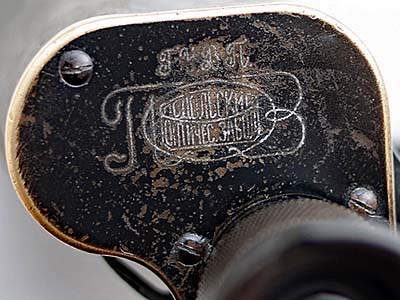
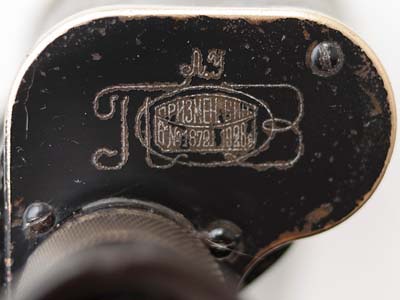
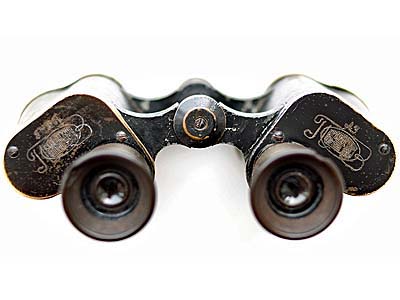
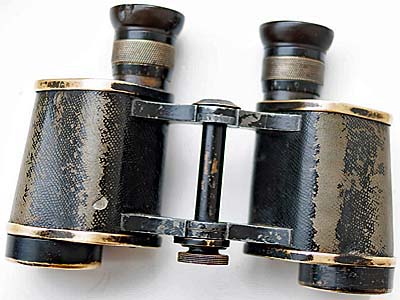
Soviet Russian 6×30 Model B-1 military service binoculars, production serial number, №18721, heavy, made of brass, early pattern body covering, manufactured in 1928 by the Podolsk Optical Factory (Подольский оптический завод), Podolsk, Moscow region. These Soviet Russian military service binoculars are marked with white characters stamped on the left prism cover with Г.У.В.П. (abbreviation of Управление военных приборов Артиллерийского управления, Directorate of Military Devices of the Artillery Directorate) over Подольский оптичес. завод, Podolsk Optical Factory) all within a horizontal oval, superimposed upon the horizontally expanded initials ГВ (abbreviation of Управление военных, Military Administration). The right prism cover is marked with white characters stamped А.У. (abbreviation of Артиллерийское управление, Artillery Directorate) over Призмен. Бин. (abbreviation of ПризменнЫй Бинокль, Prism Binoculars), over 6x№18721 1928г. (abbreviation of год, year, of manufacture), all within a trademark logo similar to the Carl Zeiss trademark logo, superimposed upon the horizontally expanded initials ГВ (abbreviation of Управление военных, Military Administration). |
E. Krauss et Compagnie
8×20 STÉRÉO-JUMELLE, 1913, № 35392, Paris, France
E. Krauss et Cie. was founded by Emile Krauss in Germany in 1882. The company produced photographic equipment and Galilean binoculars. In 1892 the company moved from Berlin to Paris at which time a license was obtained from Zeiss to manufacture “Zeiss-Anastigmate” photographic objective lenses.
In 1896, this business relationship grew when Zeiss licensed E. Krauss et Cie to manufacture prismatic binoculars with the objective lenses spaced horizontally farther apart to enhance stereo three dimensional depth perception, which was a design patented by Zeiss until 1908.
During the same time period, Zeiss also licensed Bausch & Lomb in the United States to manufacture stereoscopic binoculars. Another maker, Hensoldt in Germany, violated the Zeiss patent by manufacturing stereoscopic binoculars prior to 1908 without having a license.
Krauss Stéréo-Jumelle Zeiss binoculars were made from 1896/97 until 1908/09. After 1902, the Zeiss name was no longer marked on the binoculars. The binoculars were available in various powers of magnification. Although they were not exact copies of the Zeiss Feldstecher models, they very much resembled them.
The Krauss binoculars were built with a military type clamping knob at the end of the center bar which when tightened immovably fixed the halves of the binocular at a selected setting. The Zeiss Feldstechers were built with a spring tensioned click stop knob which when tightened applied a click stop tension at a selected setting but still allowed the halves of the binocular to be moved out of the click stop setting to another position.
Other than the crossed rifles with bayonets insignia, there are no actual French or Russian military markings on these binoculars.
During this same time period, some Zeiss binoculars were offered for sale as “Armee Modell” Feldstechers, presumably meant for private purchase by German and foreign military personnel.
It could be that these 8×20 Krauss Stéréo-Jumelle Zeiss binoculars were also intended for private purchase by French and foreign army officers.
The 8×20 Krauss Stéréo-Jumelle Zeiss binoculars are just as well constructed as the 8×20 Zeiss Feldstechers, and the optical performance of the binoculars is exactly the same.
Imperial Russian Officer Schools
In 1913, the officer schools of the Imperial Russian Army included eleven infantry schools, two Cossack schools, three cavalry schools, three artillery schools, and one engineer school.
Imperial Russian Army Officer Training: Officers were trained in various military skills, including marksmanship, which was crucial for infantry, cavalry, and artillery units. These schools were designed to train officers for various roles within the military, ensuring a structured and specialized education for future leaders.
There is no specific mention of a shooting school in the Imperial Russian Army school system. However, officer training in the Imperial Russian Army included various military skills, and marksmanship would have been an essential part of the curriculum for most branches, such as infantry, cavalry, and artillery.
Military Schools: These schools provided comprehensive military education, including tactical and strategic training. The schools were part of the military education system for commissioned officers from the page corps, cadet corps, junker and military schools. The junker schools were re-designated as military schools in 1910. There is no specific information regarding marksmanship shooting schools.
Factory of Precise Mechanics No. 19
Factory of Precise Mechanics No. 19
• Завод Точной Механики № 19
• Zavod Tochnoy Mekhaniki № 19
1928-1936, Павшино (Pavshino), Красногорск (Krasnogorsk), Московская область (Moscow Region)
У.В.П.
• Управление военных приборов
• Upravleniye voyennykh priborov
• Directorate of Military Devices
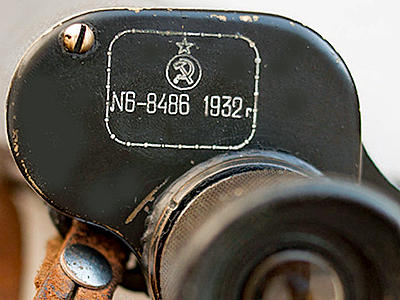
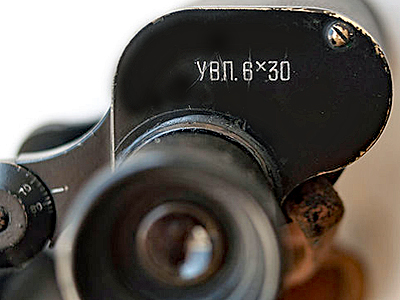
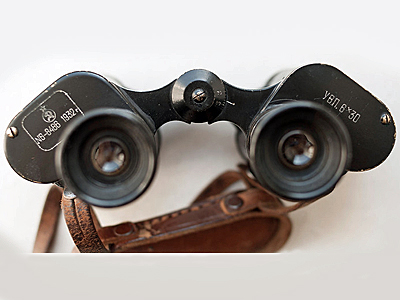
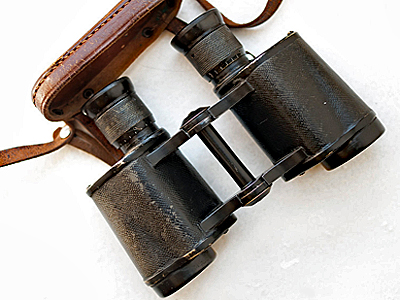
6×30 Model B-1, 1932, N6-8486, Factory of Precise Mechnics No. 19, Moscow region, Russia
|
|
Soviet Russian 6×30 Model B-1 military service binoculars, production serial number, N6-8486, heavy, made of brass, early pattern body covering, manufactured in 1932 by the Factory of Precise Mechanics №19 (Завод Точной Механики №19), Podolsk, Moscow region. These Soviet Russian military service binoculars are marked with white characters stamped on the left prism cover with the early patterm Soviet Hammer, Sickle, and Star insignia, over a horizontal line showing the production serial number, N6-8486, followed by 1932 г (abbreviation of год, year, of manufacture), all within a round corner —.—.— rectangle. The right prism cover is marked with white characters stamped УВП. (abbreviation of Управление военных приборов, Directorate of Military Devices) followed by 6×30. These 6×30 military service binoculars are accompanied by the original brown leather carrying strap, and brown leather eye piece protector. |
E. Krauss et Compagnie
8×20 STÉRÉO-JUMELLE, 1913, № 35392, Paris, France
E. Krauss et Cie. was founded by Emile Krauss in Germany in 1882. The company produced photographic equipment and Galilean binoculars. In 1892 the company moved from Berlin to Paris at which time a license was obtained from Zeiss to manufacture “Zeiss-Anastigmate” photographic objective lenses.
In 1896, this business relationship grew when Zeiss licensed E. Krauss et Cie to manufacture prismatic binoculars with the objective lenses spaced horizontally farther apart to enhance stereo three dimensional depth perception, which was a design patented by Zeiss until 1908.
During the same time period, Zeiss also licensed Bausch & Lomb in the United States to manufacture stereoscopic binoculars. Another maker, Hensoldt in Germany, violated the Zeiss patent by manufacturing stereoscopic binoculars prior to 1908 without having a license.
Krauss Stéréo-Jumelle Zeiss binoculars were made from 1896/97 until 1908/09. After 1902, the Zeiss name was no longer marked on the binoculars. The binoculars were available in various powers of magnification. Although they were not exact copies of the Zeiss Feldstecher models, they very much resembled them.
The Krauss binoculars were built with a military type clamping knob at the end of the center bar which when tightened immovably fixed the halves of the binocular at a selected setting. The Zeiss Feldstechers were built with a spring tensioned click stop knob which when tightened applied a click stop tension at a selected setting but still allowed the halves of the binocular to be moved out of the click stop setting to another position.
Other than the crossed rifles with bayonets insignia, there are no actual French or Russian military markings on these binoculars.
During this same time period, some Zeiss binoculars were offered for sale as “Armee Modell” Feldstechers, presumably meant for private purchase by German and foreign military personnel.
It could be that these 8×20 Krauss Stéréo-Jumelle Zeiss binoculars were also intended for private purchase by French and foreign army officers.
The 8×20 Krauss Stéréo-Jumelle Zeiss binoculars are just as well constructed as the 8×20 Zeiss Feldstechers, and the optical performance of the binoculars is exactly the same.
Imperial Russian Officer Schools
In 1913, the officer schools of the Imperial Russian Army included eleven infantry schools, two Cossack schools, three cavalry schools, three artillery schools, and one engineer school.
Imperial Russian Army Officer Training: Officers were trained in various military skills, including marksmanship, which was crucial for infantry, cavalry, and artillery units. These schools were designed to train officers for various roles within the military, ensuring a structured and specialized education for future leaders.
There is no specific mention of a shooting school in the Imperial Russian Army school system. However, officer training in the Imperial Russian Army included various military skills, and marksmanship would have been an essential part of the curriculum for most branches, such as infantry, cavalry, and artillery.
Military Schools: These schools provided comprehensive military education, including tactical and strategic training. The schools were part of the military education system for commissioned officers from the page corps, cadet corps, junker and military schools. The junker schools were re-designated as military schools in 1910. There is no specific information regarding marksmanship shooting schools.
Factory of Precise Mechanics No. 19
Factory of Precise Mechanics No. 19
• Завод Точной Механики № 19
• Zavod Tochnoy Mekhaniki № 19
1928-1936, Павшино (Pavshino), Красногорск (Krasnogorsk), Московская область (Moscow Region)
У.В.П.
• Управление военных приборов
• Upravleniye voyennykh priborov
• Directorate of Military Devices
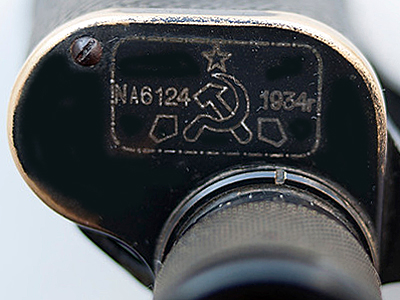
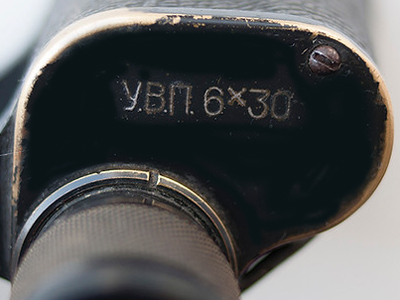
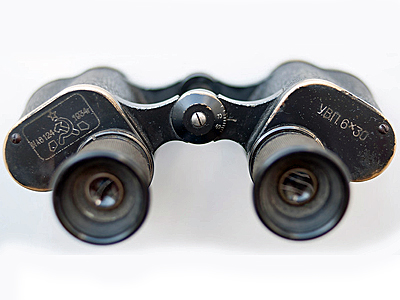
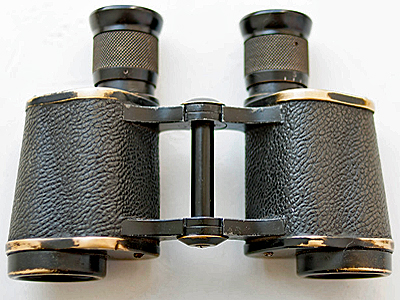
6×30 Model B-1, 1934, NA6124, Factory of Precise Mechnics No. 19, Moscow region, Russia
|
|
Soviet Russian 6×30 Model B-1 military service binoculars, production serial number, NA6124, heavy, made of brass, early pattern body covering, manufactured in 1934 by the Factory of Precise Mechanics №19 (Завод Точной Механики №19), Podolsk, Moscow region. These Soviet Russian military service binoculars are marked with white characters stamped on the left prism cover with the production serial number, NA6124, followed by the Soviet hammer, sickle, and star insignia, incorporating the manufacturer’s trademark logo, followed by 1934 г (abbreviation of год, year, of manufacture), all within a round corner —.—.— rectangle. The right prism cover is marked with white characters stamped У.В.П. (abbreviation of Управление военных приборов, Directorate of Military Devices) followed by 6×30. |
E. Krauss et Compagnie
8×20 STÉRÉO-JUMELLE, 1913, № 35392, Paris, France
E. Krauss et Cie. was founded by Emile Krauss in Germany in 1882. The company produced photographic equipment and Galilean binoculars. In 1892 the company moved from Berlin to Paris at which time a license was obtained from Zeiss to manufacture “Zeiss-Anastigmate” photographic objective lenses.
In 1896, this business relationship grew when Zeiss licensed E. Krauss et Cie to manufacture prismatic binoculars with the objective lenses spaced horizontally farther apart to enhance stereo three dimensional depth perception, which was a design patented by Zeiss until 1908.
During the same time period, Zeiss also licensed Bausch & Lomb in the United States to manufacture stereoscopic binoculars. Another maker, Hensoldt in Germany, violated the Zeiss patent by manufacturing stereoscopic binoculars prior to 1908 without having a license.
Krauss Stéréo-Jumelle Zeiss binoculars were made from 1896/97 until 1908/09. After 1902, the Zeiss name was no longer marked on the binoculars. The binoculars were available in various powers of magnification. Although they were not exact copies of the Zeiss Feldstecher models, they very much resembled them.
The Krauss binoculars were built with a military type clamping knob at the end of the center bar which when tightened immovably fixed the halves of the binocular at a selected setting. The Zeiss Feldstechers were built with a spring tensioned click stop knob which when tightened applied a click stop tension at a selected setting but still allowed the halves of the binocular to be moved out of the click stop setting to another position.
Other than the crossed rifles with bayonets insignia, there are no actual French or Russian military markings on these binoculars.
During this same time period, some Zeiss binoculars were offered for sale as “Armee Modell” Feldstechers, presumably meant for private purchase by German and foreign military personnel.
It could be that these 8×20 Krauss Stéréo-Jumelle Zeiss binoculars were also intended for private purchase by French and foreign army officers.
The 8×20 Krauss Stéréo-Jumelle Zeiss binoculars are just as well constructed as the 8×20 Zeiss Feldstechers, and the optical performance of the binoculars is exactly the same.
Imperial Russian Officer Schools
In 1913, the officer schools of the Imperial Russian Army included eleven infantry schools, two Cossack schools, three cavalry schools, three artillery schools, and one engineer school.
Imperial Russian Army Officer Training: Officers were trained in various military skills, including marksmanship, which was crucial for infantry, cavalry, and artillery units. These schools were designed to train officers for various roles within the military, ensuring a structured and specialized education for future leaders.
There is no specific mention of a shooting school in the Imperial Russian Army school system. However, officer training in the Imperial Russian Army included various military skills, and marksmanship would have been an essential part of the curriculum for most branches, such as infantry, cavalry, and artillery.
Military Schools: These schools provided comprehensive military education, including tactical and strategic training. The schools were part of the military education system for commissioned officers from the page corps, cadet corps, junker and military schools. The junker schools were re-designated as military schools in 1910. There is no specific information regarding marksmanship shooting schools.
Factory of Precise Mechanics No. 19
Factory of Precise Mechanics No. 19
• Завод Точной Механики № 19
• Zavod Tochnoy Mekhaniki № 19
1928-1936, Павшино (Pavshino), Красногорск (Krasnogorsk), Московская область (Moscow Region)
У.В.П.
• Управление военных приборов
• Upravleniye voyennykh priborov
• Directorate of Military Devices
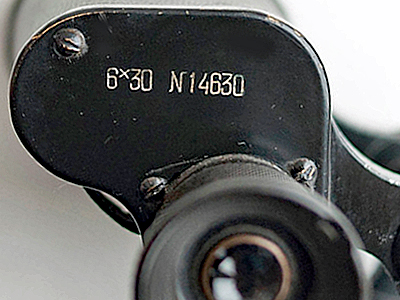
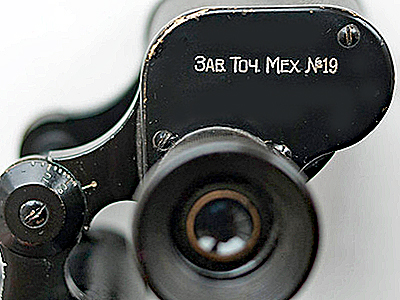
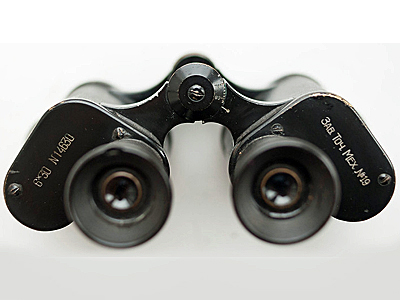
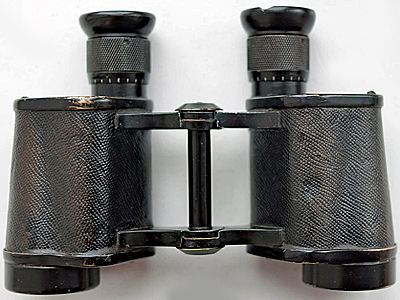
6×30 Model B-1, unknown year of manufacture, NA14630, Factory of Precise Mechnics No. 19, Moscow region, Russia
|
|
Soviet Russian 6×30 Model B-1 military pattern binoculars sold on the civilian market, production serial number, N14630, heavy, made of brass, early pattern body covering, unknown year of manufacture (likely about 1932) by the Factory of Precise Mechanics №19 (Завод Точной Механики №19), Podolsk, Moscow region. These Soviet Russian military pattern binoculars are marked with white characters stamped on the left prism cover with 6×30 followed by the production serial number, N14630. The right prism cover is marked with white characters stamped Зав. Точ. Мех. № 19 (abbreviation of Завод Точной Механики № 19, Factory of Precise Mechanics No. 19). |
E. Krauss et Compagnie
8×20 STÉRÉO-JUMELLE, 1913, № 35392, Paris, France
E. Krauss et Cie. was founded by Emile Krauss in Germany in 1882. The company produced photographic equipment and Galilean binoculars. In 1892 the company moved from Berlin to Paris at which time a license was obtained from Zeiss to manufacture “Zeiss-Anastigmate” photographic objective lenses.
In 1896, this business relationship grew when Zeiss licensed E. Krauss et Cie to manufacture prismatic binoculars with the objective lenses spaced horizontally farther apart to enhance stereo three dimensional depth perception, which was a design patented by Zeiss until 1908.
During the same time period, Zeiss also licensed Bausch & Lomb in the United States to manufacture stereoscopic binoculars. Another maker, Hensoldt in Germany, violated the Zeiss patent by manufacturing stereoscopic binoculars prior to 1908 without having a license.
Krauss Stéréo-Jumelle Zeiss binoculars were made from 1896/97 until 1908/09. After 1902, the Zeiss name was no longer marked on the binoculars. The binoculars were available in various powers of magnification. Although they were not exact copies of the Zeiss Feldstecher models, they very much resembled them.
The Krauss binoculars were built with a military type clamping knob at the end of the center bar which when tightened immovably fixed the halves of the binocular at a selected setting. The Zeiss Feldstechers were built with a spring tensioned click stop knob which when tightened applied a click stop tension at a selected setting but still allowed the halves of the binocular to be moved out of the click stop setting to another position.
Other than the crossed rifles with bayonets insignia, there are no actual French or Russian military markings on these binoculars.
During this same time period, some Zeiss binoculars were offered for sale as “Armee Modell” Feldstechers, presumably meant for private purchase by German and foreign military personnel.
It could be that these 8×20 Krauss Stéréo-Jumelle Zeiss binoculars were also intended for private purchase by French and foreign army officers.
The 8×20 Krauss Stéréo-Jumelle Zeiss binoculars are just as well constructed as the 8×20 Zeiss Feldstechers, and the optical performance of the binoculars is exactly the same.
Imperial Russian Officer Schools
In 1913, the officer schools of the Imperial Russian Army included eleven infantry schools, two Cossack schools, three cavalry schools, three artillery schools, and one engineer school.
Imperial Russian Army Officer Training: Officers were trained in various military skills, including marksmanship, which was crucial for infantry, cavalry, and artillery units. These schools were designed to train officers for various roles within the military, ensuring a structured and specialized education for future leaders.
There is no specific mention of a shooting school in the Imperial Russian Army school system. However, officer training in the Imperial Russian Army included various military skills, and marksmanship would have been an essential part of the curriculum for most branches, such as infantry, cavalry, and artillery.
Military Schools: These schools provided comprehensive military education, including tactical and strategic training. The schools were part of the military education system for commissioned officers from the page corps, cadet corps, junker and military schools. The junker schools were re-designated as military schools in 1910. There is no specific information regarding marksmanship shooting schools.
Factory of Precise Mechanics No. 19
Factory of Precise Mechanics No. 19
• Завод Точной Механики № 19
• Zavod Tochnoy Mekhaniki № 19
1928-1936, Павшино (Pavshino), Красногорск (Krasnogorsk), Московская область (Moscow Region)
У.В.П.
• Управление военных приборов
• Upravleniye voyennykh priborov
• Directorate of Military Devices
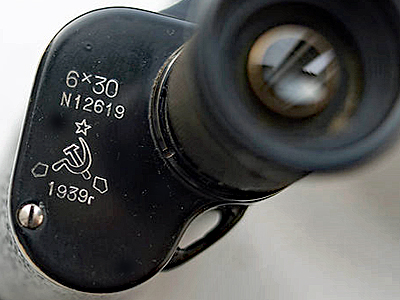
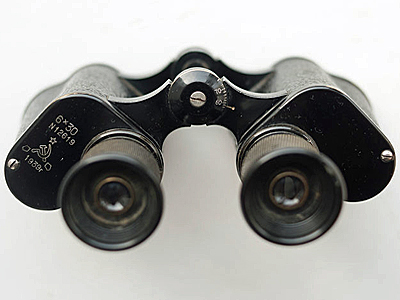
6×30 Model B-1, 1939, N12619, Factory of Precise Mechnics No. 19, Moscow region, Russia
|
|
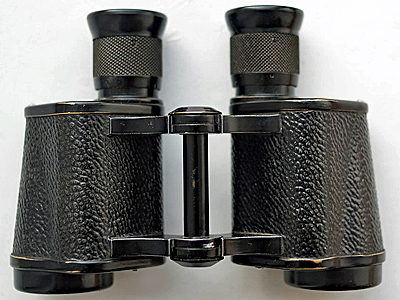
Soviet Russian 6×30 Model B-1 military service binoculars, production serial number, N12619, heavy, made of brass, early pattern body covering, manufactured in 1939 by the Factory of Precise Mechanics №19 (Завод Точной Механики №19), Podolsk, Moscow region. These Russian military binoculars are marked with white characters stamped on the left prism cover with 6×30 at the top, followed by the production serial number, N12619, then by the manufacturer’s trademark logo, incorporating the Soviet hammer, sickle, and star insignia, and finally by 1939г (год, year) of manufacture. The right prism cover is blank. |
E. Krauss et Compagnie
8×20 STÉRÉO-JUMELLE, 1913, № 35392, Paris, France
E. Krauss et Cie. was founded by Emile Krauss in Germany in 1882. The company produced photographic equipment and Galilean binoculars. In 1892 the company moved from Berlin to Paris at which time a license was obtained from Zeiss to manufacture “Zeiss-Anastigmate” photographic objective lenses.
In 1896, this business relationship grew when Zeiss licensed E. Krauss et Cie to manufacture prismatic binoculars with the objective lenses spaced horizontally farther apart to enhance stereo three dimensional depth perception, which was a design patented by Zeiss until 1908.
During the same time period, Zeiss also licensed Bausch & Lomb in the United States to manufacture stereoscopic binoculars. Another maker, Hensoldt in Germany, violated the Zeiss patent by manufacturing stereoscopic binoculars prior to 1908 without having a license.
Krauss Stéréo-Jumelle Zeiss binoculars were made from 1896/97 until 1908/09. After 1902, the Zeiss name was no longer marked on the binoculars. The binoculars were available in various powers of magnification. Although they were not exact copies of the Zeiss Feldstecher models, they very much resembled them.
The Krauss binoculars were built with a military type clamping knob at the end of the center bar which when tightened immovably fixed the halves of the binocular at a selected setting. The Zeiss Feldstechers were built with a spring tensioned click stop knob which when tightened applied a click stop tension at a selected setting but still allowed the halves of the binocular to be moved out of the click stop setting to another position.
Other than the crossed rifles with bayonets insignia, there are no actual French or Russian military markings on these binoculars.
During this same time period, some Zeiss binoculars were offered for sale as “Armee Modell” Feldstechers, presumably meant for private purchase by German and foreign military personnel.
It could be that these 8×20 Krauss Stéréo-Jumelle Zeiss binoculars were also intended for private purchase by French and foreign army officers.
The 8×20 Krauss Stéréo-Jumelle Zeiss binoculars are just as well constructed as the 8×20 Zeiss Feldstechers, and the optical performance of the binoculars is exactly the same.
Imperial Russian Officer Schools
In 1913, the officer schools of the Imperial Russian Army included eleven infantry schools, two Cossack schools, three cavalry schools, three artillery schools, and one engineer school.
Imperial Russian Army Officer Training: Officers were trained in various military skills, including marksmanship, which was crucial for infantry, cavalry, and artillery units. These schools were designed to train officers for various roles within the military, ensuring a structured and specialized education for future leaders.
There is no specific mention of a shooting school in the Imperial Russian Army school system. However, officer training in the Imperial Russian Army included various military skills, and marksmanship would have been an essential part of the curriculum for most branches, such as infantry, cavalry, and artillery.
Military Schools: These schools provided comprehensive military education, including tactical and strategic training. The schools were part of the military education system for commissioned officers from the page corps, cadet corps, junker and military schools. The junker schools were re-designated as military schools in 1910. There is no specific information regarding marksmanship shooting schools.