
Sublime Ottoman State contract
Carl Zeiss, Jena, Thuringia, Germany, 1913
In the armed forces of the Austro-Hungarian Monarchy, military service binoculars were marked to identify them as government military property.
Military service binoculars were issued to soldiers with specialized functions. For example, group leaders and artillery observers were issued military service binoculars to perform their duties.
The most common types of service glasses used by the armed forces of the Austro-Hungarian Monarchy during the First World War were the 6×24 and 6×30 military service binoculars.
The number “6” identifies the magnification power (in this case, “6” indicates that objects appear six times closer than their actual distance).
The numbers “24” or “30” identify the diameter in millimeters of the (front) objective light gathering lenses — in this case either 24 or 30 millimeters in diameter.
“Vulkanite” schwarzes Kunstleder (black synthetic leather) Körperbedeckung (body covering)
 In Germany, and other European countries, in the years before the First World War, an early type of black plastic synthetic leather called “Vulkanite” was used as the body covering of military and commercial Dienstgläser (service glasses) manufactured before the Second World War.
This “Vulkanite” schwarzes Kunstleder (black synthetic leather) Körperbedeckung (body covering) was the most common Dienstglas body covering used by the armed forces of Germany, and most of the other armed forces of Europe.
TM 30-506, WAR DEPARTMENT TECHNICAL MANUAL, GERMAN-ENGLISH MILITARY DICTIONARY, WAR DEPARTMENT, 20 MAY I944
The TM 30-506 manual describes “Vulkanite” schwarzes Kunstleder (black synthetic leather) Körperbedeckung (body covering) as “Kunstleder n” artificial leather.
Schwarz „Reis“ Raulack (black “rice” rough lacquer) Körperbedeckung (body covering)
 Early in the Second World War, a black Rauhlack (rough lacquer) body covering called schwarz „Reis“ Körperbedeckung (black “rice” body covering) also became a common Dienstglas body finish.
This new Dienstglas body covering began to replace the black “Vulkanite” (synthetic, leather-like, early plastic) body covering material on the housings of German field glasses.
The particular consistency of this schwarz „Reis“ (black “rice”) Rauhlack (rough lacquer) Körperbedeckung (body covering) was achieved by mixing crushed rice or finely granulated cork meal with black lacquer paint.
This schwarz „Reis“ Rauhlack Körperbedeckung (black “rice” rough lacquer body covering) became the most common Dienstglas body covering as the war progressed through 1942 and 1943.
This is a list of production serial numbers, observed in collections and recorded from sources online, of 6×24 TELEX, 6×30 M 9/13 Z, 6×30 MARINEGLAS, 6×30 SILVAMAR, and 6×30 D.F. 6×30 military service binoculars, manufactured by Carl Zeiss, Jena, Germany, Carl Zeiss, Wien, Austria, and Zeiss Károly, Győr, Hungary, for the armed forces of the Austro-Hungarian Monarchy from 1913 to 1918, during the First World War.
Carl Zeiss Austro-Hungarian Monarchy Contract
6×24 TELEX Production Serial Number Series
Carl Zeiss Austro-Hungarian Monarchy contract
6×24 TELEX, November 1913, 373857, 21. 8. 14., Jena, Thuringia, Germany
|
|
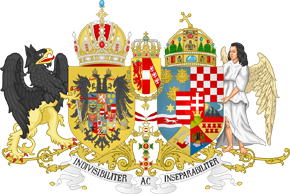
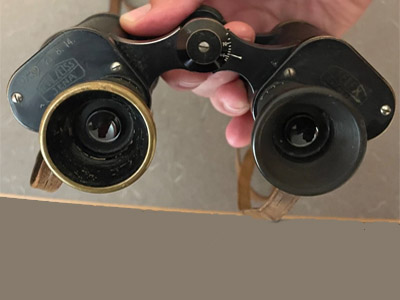
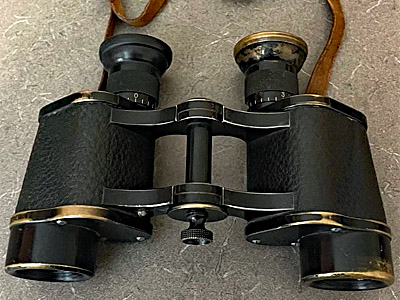
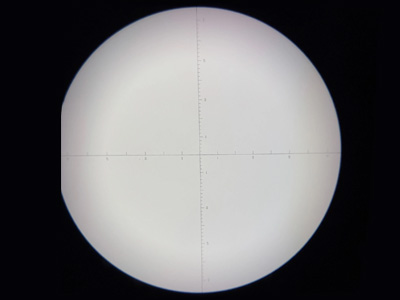
Austro-Hungarian Monarchy 6×24 military service binoculars, with ⊕ Strichplatte (graduated range finding scale) in right lens, production serial number, 373857, heavy construction, made of brass, black “Vulkanite” schwarzes Kunstleder (black synthetic leather, hard rubber) Körperbedeckung (body covering), brass prism and objective covers, brass objective lens rings, manufactured about November 1913 by Carl Zeiss, Jena, Thuringia, Germany. Left prism cover marked in white at the top with “Ü.K.” (Abnahme Stempel, ÜK-property acceptance stamp) / “Austro-Hungarian Monarchy coat of arms” / “21. 8. 14.” (21 August 1914, Austro-Hungarian armed forces property acceptance date) over “CARL ZEISS / JENA” trademark logo. Right prism cover marked in white with “TELEX” / “373857” production serial number logo over “6 X”. This Carl Zeiss 6×24, serial number, 373857, was produced about November 1913, within the original Carl Zeiss production serial number series established in 1894. |


Carl Zeiss Austro-Hungarian Monarchy contract
6×24 TELEX, December 1913, 378625, 21. 8. 14., Jena, Thuringia, Germany
|
|
Austro-Hungarian Monarchy 6×24 civilian binoculars, without ⊕ Strichplatte (graduated range finding scale) in right lens, production serial number, 378625, heavy construction, made of brass, brass prism and objective covers, brass objective lens rings, black synthetic leather body covering, brass fittings, manufactured about December 1913 by Carl Zeiss, Jena, Germany. Left prism cover marked in white at the top with “Ü.K.” (Abnahme Stempel, ÜK-property acceptance stamp) / “Austro-Hungarian Monarchy coat of arms” / “21. 8. 14.” (21 August 1914, Austro-Hungarian armed forces property acceptance date) over “CARL ZEISS / JENA” trademark logo. Right prism cover marked in white with “TELEX” / “378625” production serial number logo, over “6 X”. This Carl Zeiss 6×24, serial number, 378625, was produced about December 1913, within the original Carl Zeiss production serial number series established in 1894. |




Carl Zeiss Austro-Hungarian Monarchy Contract
6×30 M 9/13 Z, MARINEGLAS, SILVAMAR, and D.F. 6×30
Production Serial Number Series
Zeiss Károly / Győr Austro-Hungarian Monarchy contract
6×30 M 9/13 Z Feldstecher, November 1914, 446387, Győr, Hungary
|
|
Austro-Hungarian Monarchy 6×30 military service binoculars, with ⊕ Strichplatte (graduated range finding scale) in right lens, production serial number, 446387, heavy construction, made of brass, brass prism and objective covers, brass objective lens rings, black synthetic leather body covering, manufactured about November 1914 by Zeiss Károly (Carl Zeiss), Győr, Hungary. Left prism cover marked in white at the top with “ZEISS KÁROLY” / “GYŐR” trademark logo. Right prism cover marked in white with “M 9/13 Z Feldstecher / mit Skala 6 fach / Nr. 446387” (Model 1909/1913 Binoculars or Field glasses / with graduated rangefinding scale 6 power / Number 446387 production serial number). This Carl Zeiss 6×30, serial number, 446387, was produced about November 1914, within the original Carl Zeiss production serial number series established in 1894. |
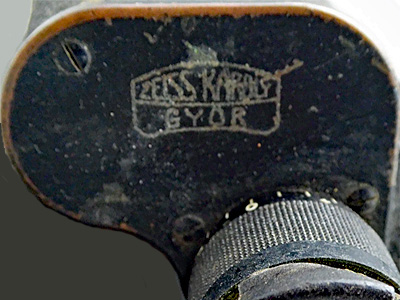
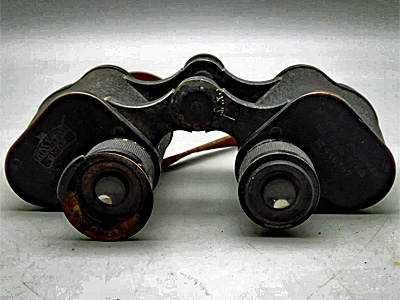
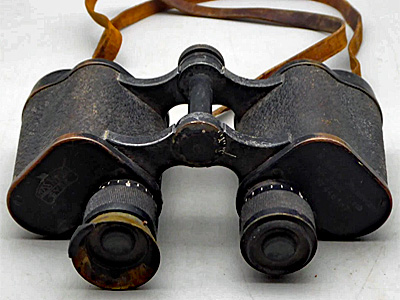
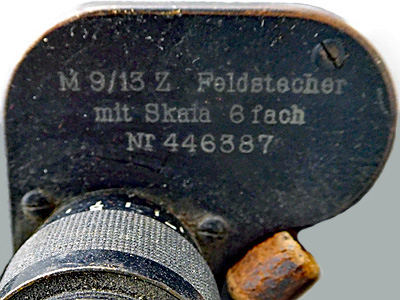

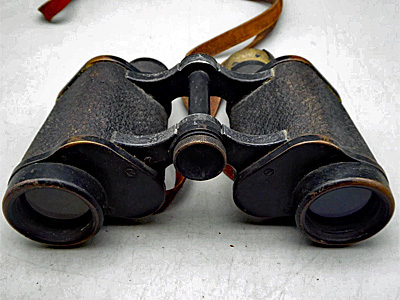
The M 9/13 Z Feldstecher mit Skala 6 fach is a 6×30 military service binocular that was used by the (K.u.K., Kaiserlich und Königlich, “Imperial and Royal”) armed forces of Austria-Hungary during the First World War. The M 9/13 Z was primarily manufactured by Carl Zeiss Wien (Vienna, Austria) and Zeiss Karoly Győr (Győr, Hungary).
The M 9/13 Z, based on the Carl Zeiss SILVAMAR (1910-1975), MARINEGLAS (1915-), and D.F. 6×30 (1915-1940) models (they are all the same) is a porro-prism binocular with a 16.7 cm width that weighs approximately 647–649 grams.
Győr is the main city of northwest Hungary, the capital of Győr-Moson-Sopron County and Western Transdanubia region, halfway between Budapest and Vienna, on one of the important roads of Central Europe.
Feldstecher is a German masculine noun that translates to “binoculars” or “field glasses” in English. The term, Feldstecher, specifically refers to a handheld, portable “telescope” (prism binocular) to view distant objects.
The literal meaning combines Feld (field) and Stecher (literally “stabber” or “field spyglass”), to pierce the distance. The synonym in German is Fernglas (the general term for binoculars).
Zeiss Károly / Győr Austro-Hungarian Monarchy contract
6×30 M 9/13 Z Feldstecher, October 1915, 553544, 20. 12. 15., Győr, Hungary
|
|
Austro-Hungarian Monarchy 6×30 military service binoculars, with ⊕ Strichplatte (graduated range finding scale) in right lens, production serial number, 553544, heavy construction, made of brass, brass prism and objective covers, brass objective lens rings, black synthetic leather body covering, brass fittings, manufactured about October 1915 by Zeiss Károly (Carl Zeiss), Győr, Hungary. Left prism cover marked in white at the top with “Ü.K.” (Abnahme Stempel, ÜK-property acceptance stamp) / “Austro-Hungarian Monarchy coat of arms” / “20. 12. 15.” (20 December 1915, Austro-Hungarian armed forces property date) over “ZEISS KÁROLY / GYŐR” trademark logo. Right prism cover marked in white with “M 9/13 Z Feldstecher / mit Skala 6 fach / Nr. 553544” (Model 1909/1913 Binoculars or Field glasses / with graduated rangefinding scale 6 power / Number 553544 production serial number). This Carl Zeiss 6×30, serial number, 553544, was produced about October 1915, within the original Carl Zeiss production serial number series established in 1894. |
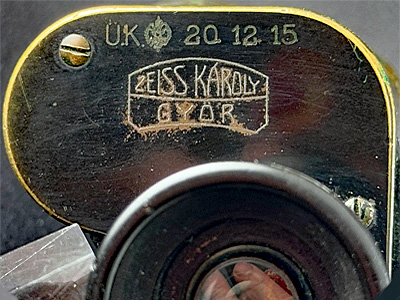
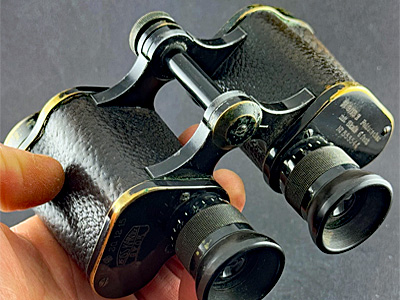
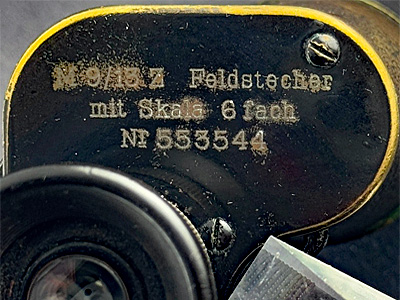
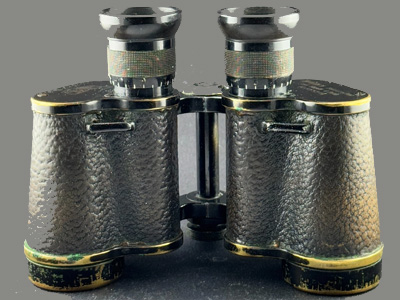
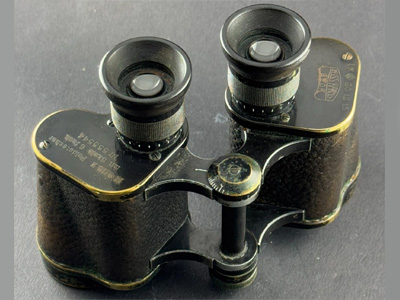
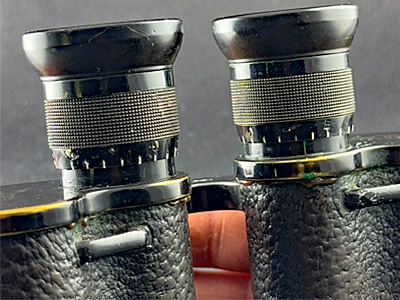
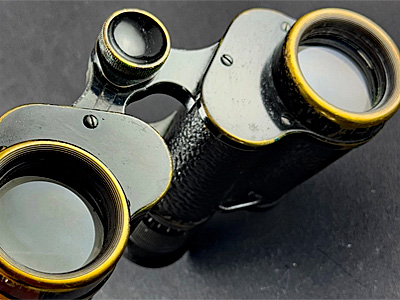
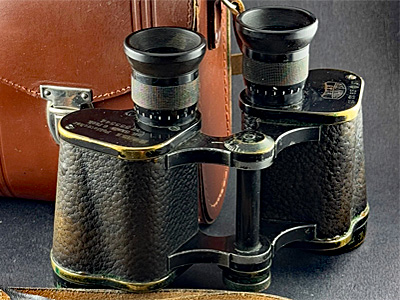

The M 9/13 Z Feldstecher mit Skala 6 fach is a 6×30 military service binocular that was used by the (K.u.K., Kaiserlich und Königlich, “Imperial and Royal”) armed forces of Austria-Hungary during the First World War. The M 9/13 Z was primarily manufactured by Carl Zeiss Wien (Vienna, Austria) and Zeiss Karoly Győr (Győr, Hungary).
The M 9/13 Z, based on the Carl Zeiss SILVAMAR (1910-1975), MARINEGLAS (1915-), and D.F. 6×30 (1915-1940) models (they are all the same) is a porro-prism binocular with a 16.7 cm width that weighs approximately 647–649 grams.
Each M 9/13 Z is typically marked in white on the left prism cover with the ÜK-Abnahme Stempel (ÜK-property acceptance stamp), Austro-Hungarian imperial coat of arms, and armed forces acceptance date, (for example, “Ü.K. 17.7.17”).
Győr is the main city of northwest Hungary, the capital of Győr-Moson-Sopron County and Western Transdanubia region, halfway between Budapest and Vienna, on one of the important roads of Central Europe.
Feldstecher is a German masculine noun that translates to “binoculars” or “field glasses” in English. The term, Feldstecher, specifically refers to a handheld, portable “telescope” (prism binocular) to view distant objects.
The literal meaning combines Feld (field) and Stecher (literally “stabber” or “field spyglass”), to pierce the distance. The synonym in German is Fernglas (the general term for binoculars).
|
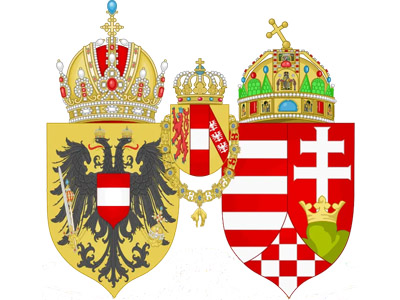
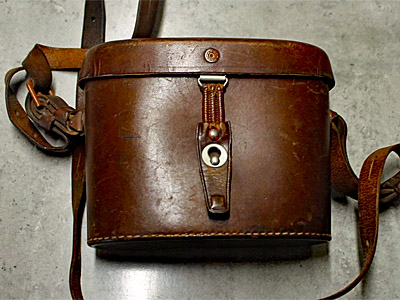
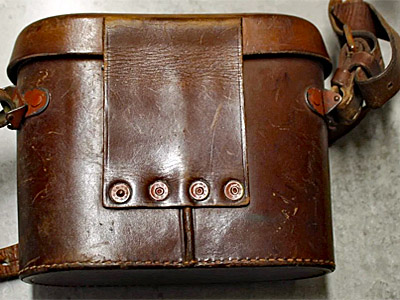
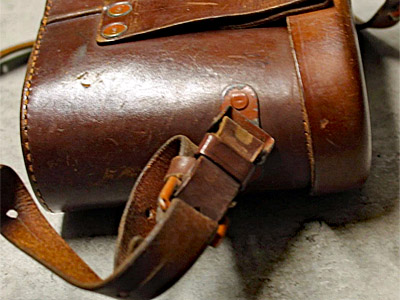
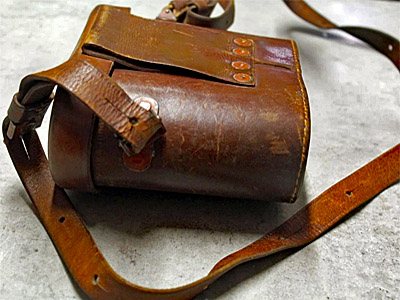
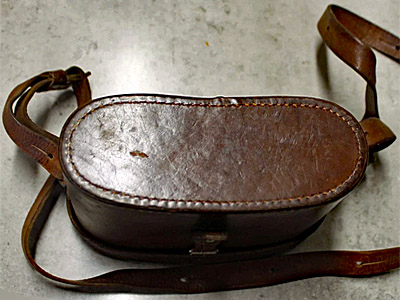
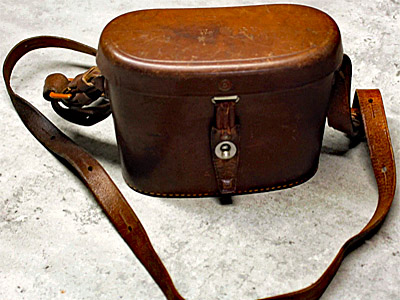
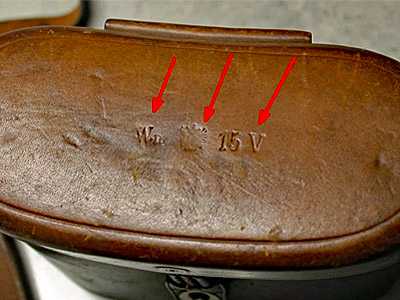
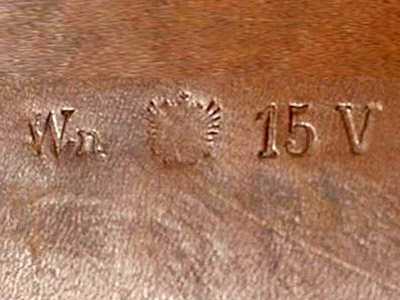
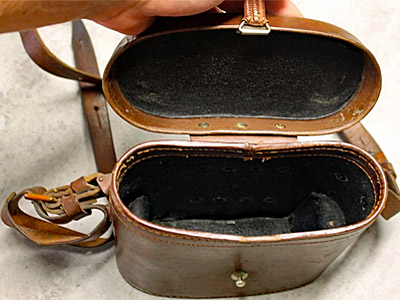
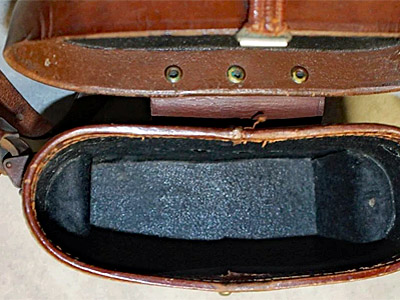
Austro-Hungarian Monarchy brown leather case with Abnahme Stempel “W-n” (Wiener-Neustadt, the main military equipment acceptance bureau) / “Austro-Hungarian Monarchy coat of arms” / “15” (1915) / “V” (Roman numeral, 5th month, May), armed forces property acceptance date, with brown leather carrying strap. The Habsburgs loved their Ks. The German words for Emperor, Empress, King, Queen, Imperial, and Royal, all begin with the letter “K” (Emperor is Kaiser, Imperial is Kaiserlich, Queen is Königin, and Royal is Königlich. “K. u. K.” (Kaiserlich und Königlich, Imperial and Royal) was used in the Austro-Hungarian Monarchy to refer to the Emperor of Austria and King of Hungary, and for state institutions in the Kaisertum Österreich, Empire of Austria (1804 – 1867), and the Austrian half of the successor Austro-Hungarian Monarchy (1867 – 1918). The K. u. K. Kriegsministerium in 1911 was the Ministry of War in the Austro-Hungarian Monarchy (national defense was one function that the semi-autonomous Hungarians did not control). |
|
Carl Zeiss / Wien Austro-Hungarian Monarchy contract
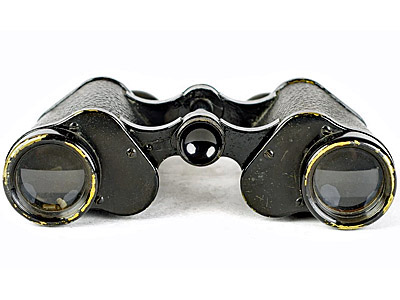
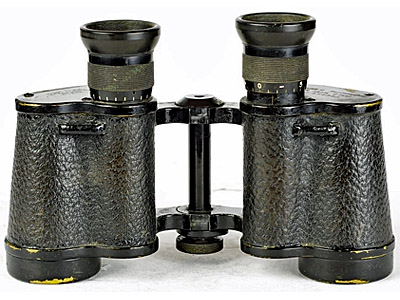
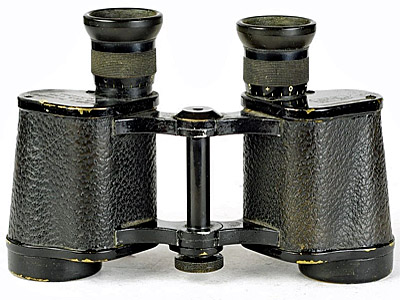
6×30 M 9/13 Z Feldstecher, October 1915, 554392, 25. 3. 16., Vienna, Austria
|
|
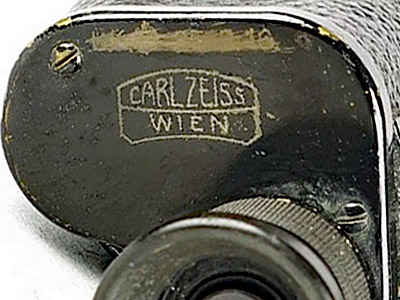
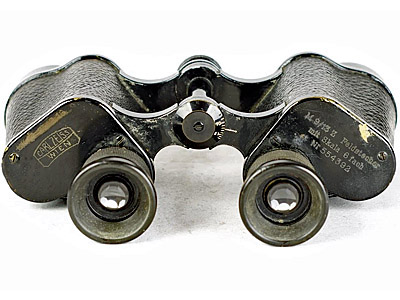
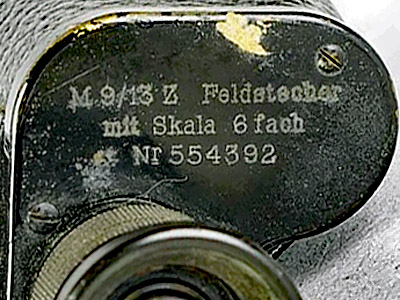
Austro-Hungarian Monarchy 6×30 military service binoculars, with ⊕ Strichplatte (graduated range finding scale) in right lens, production serial number, 554392, heavy construction, made of brass, brass prism and objective covers, brass objective lens rings, black synthetic leather body covering, manufactured about October 1915 by Carl Zeiss, Vienna, Austria. Left prism cover marked in white at the top with “Ü.K.” (Abnahme Stempel, ÜK-property acceptance stamp) / “Austro-Hungarian Monarchy coat of arms” / “25. 3. 16.” (25 March 1915, Austro-Hungarian armed forces property date) over “CARL ZEISS / WIEN” trademark logo. Right prism cover marked in white with “M 9/13 Z Feldstecher / mit Skala 6 fach / Nr. 554392” (Model 1909/1913 Binoculars or Field glasses / with graduated rangefinding scale 6 power / Number 554392 production serial number). This Carl Zeiss 6×30, serial number, 554392, was produced about October 1915, within the original Carl Zeiss production serial number series established in 1894. |
Vienna is the capital, primary city, and cultural, economic, and political center of Austria. The city’s larger metropolitan area has a population of about 2.9 million people, nearly one-third of the country’s population, and the fifth-largest city in the European Union.
Vienna lies in the northernmost foothills of the Alps, on the river Danube, at the eastern edge of the Vienna Woods (Wienerwald).
Feldstecher is a German masculine noun that translates to “binoculars” or “field glasses” in English. The term, Feldstecher, specifically refers to a handheld, portable “telescope” (prism binocular) to view distant objects.
The literal meaning combines Feld (field) and Stecher (literally “stabber” or “field spyglass”), to pierce the distance. The synonym in German is Fernglas (the general term for binoculars).
Carl Zeiss / Jena Austro-Hungarian Monarchy contract
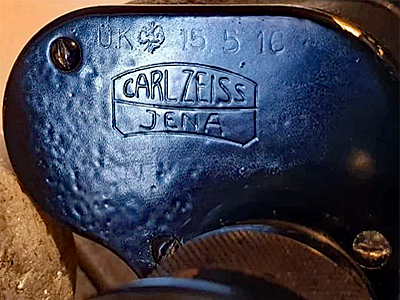
6×30 MARINEGLAS, June 1916, 613902, 15. 5. 16., Jena, Thuringia, Germany
|
|
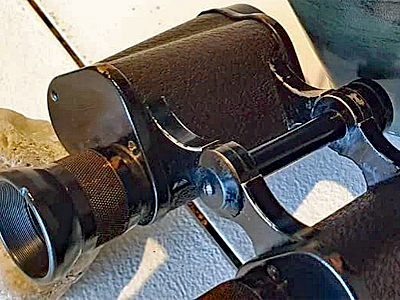
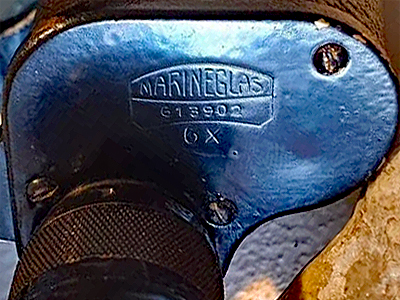
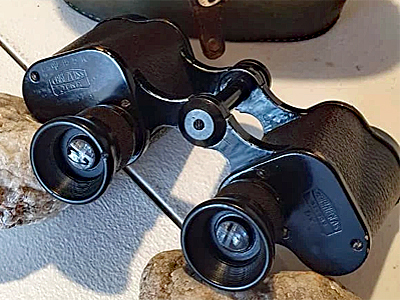
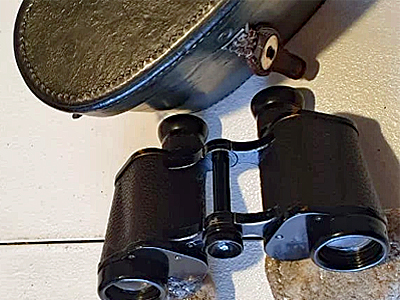
Austro-Hungarian Monarchy 6×30 military service binoculars, with ⊕ Strichplatte (graduated range finding scale) in right lens, production serial number, 613902, heavy construction, made of brass, black “Vulkanite” schwarzes Kunstleder (black synthetic leather, hard rubber) Körperbedeckung (body covering), aluminum alloy prism and objective covers, brass objective lens rings, manufactured about June 1916 by Carl Zeiss, Jena, Germany. Left prism cover marked in white at the top with “Ü.K.” (Abnahme Stempel, ÜK-property acceptance stamp) / “Austro-Hungarian Monarchy coat of arms” / “15. 5. 16.” (15 May 1916, Austro-Hungarian armed forces property date) over “CARL ZEISS” / “JENA” trademark logo. Right prism cover marked in white with “MARINEGLAS” / “613902” (production serial number) logo over “6 X”. This Carl Zeiss 6×30, serial number, 613902, was produced about June 1916, within the original Carl Zeiss production serial number series established in 1894. |
Carl Zeiss / Wien Austro-Hungarian Monarchy contract
6×30 M9/13Z, October 1916, 650844, unknown, Wien, Austria
|
|
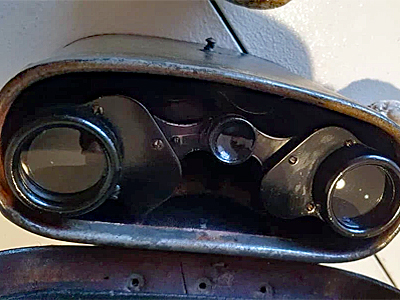
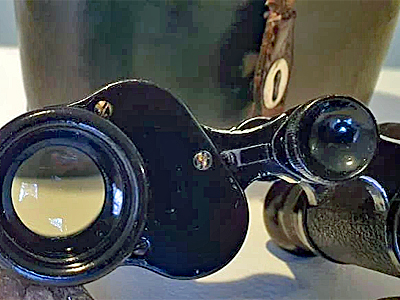
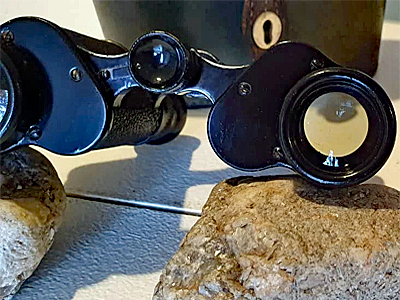
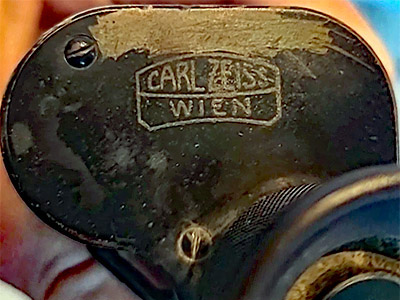
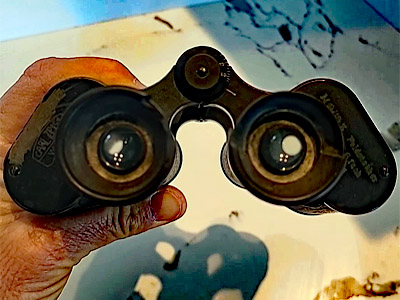
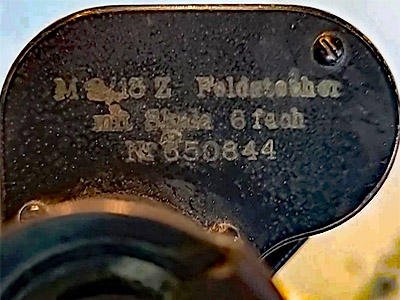
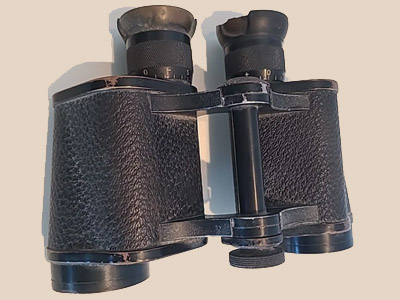
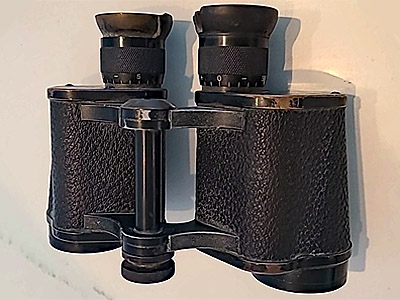
Austro-Hungarian Monarchy 6×30 military service binoculars, with ⊕ Strichplatte (graduated range finding scale) in right lens, production serial number, 650844, heavy construction, made of brass, black “Vulkanite” schwarzes Kunstleder (black synthetic leather, hard rubber) Körperbedeckung (body covering), brass prism and objective covers, brass objective lens rings, manufactured about October 1916 by Carl Zeiss, Wien, Austria. Left prism cover marked in white at the top with “Ü.K.” (Abnahme Stempel, ÜK-property acceptance stamp) / “Austro-Hungarian Monarchy coat of arms” / unknown Austro-Hungarian armed forces property date over “CARL ZEISS” / “WIEN” trademark logo. Right prism cover marked in white with “M 9/13 Z Feldstecher / mit Skala 6 fach / Nr. 650844” (Model 1909/1913 Binoculars or Field glasses / with graduated rangefinding scale 6 power / Number 650844 production serial number). This Carl Zeiss 6×30, serial number, 650844, was produced about October 1916, within the original Carl Zeiss production serial number series established in 1894. |
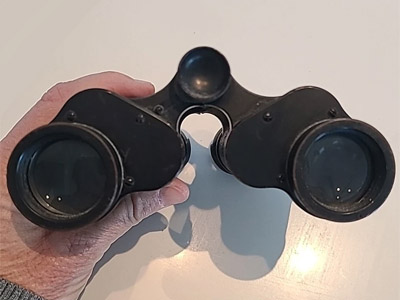
Zeiss Károly, Győr Austro-Hungarian Monarchy contract
6×30 M9/13Z, December 1916, 669877, Kriegsmarine (Navy), Zeiss Károly / Győr, Hungary
|
|
Austro-Hungarian Monarchy 6×30 military service binoculars, without ⊕ Strichplatte (graduated range finding scale) in right lens, production serial number, 669877, heavy construction, made of brass, black “Vulkanite” schwarzes Kunstleder (black synthetic leather, hard rubber) Körperbedeckung (body covering), brass prism and objective covers, brass objective lens rings, manufactured about December 1916 by Zeiss Károly, Győr, Hungary. Left prism cover marked in white at the top with “K . M .” (Kriegsmarine, Navy) over “Zeiss Károly” / Győr” trademark logo. Right prism cover marked in white with “M. 9/13 Z. / Feldstecher 6fach / Nr 669877” (Model 1909/1913 Binoculars or Field glasses (without graduated range finding scale) 6 power / Number 669877 production serial number). This Zeiss Károly 6×30, serial number, 669877, was produced about December 1916, within the original Carl Zeiss production serial number series established in 1894. |
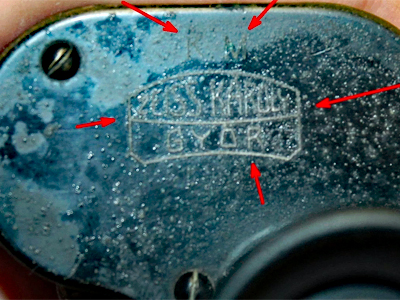
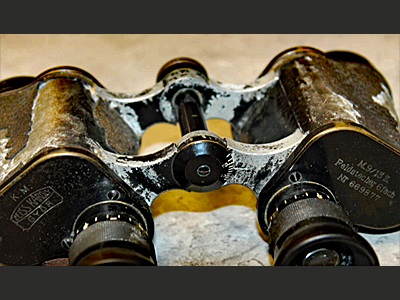
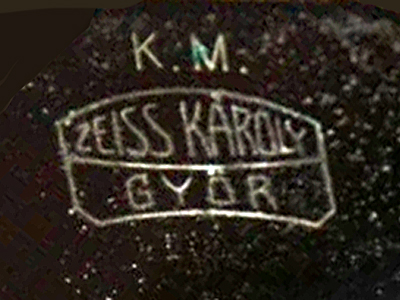
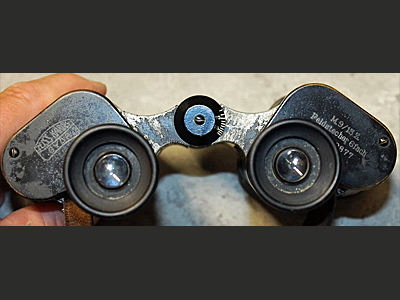
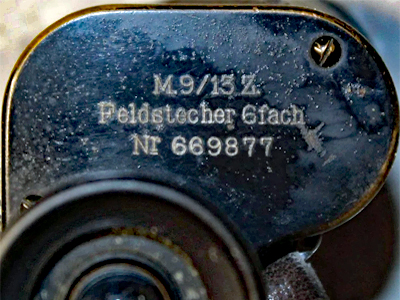
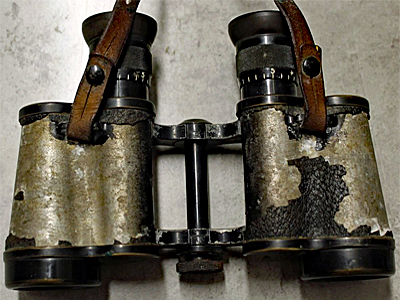
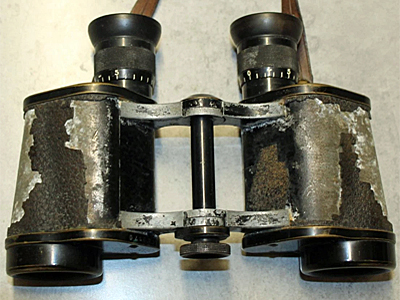
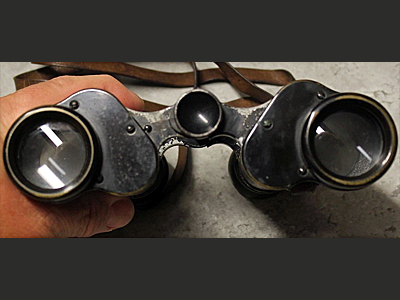
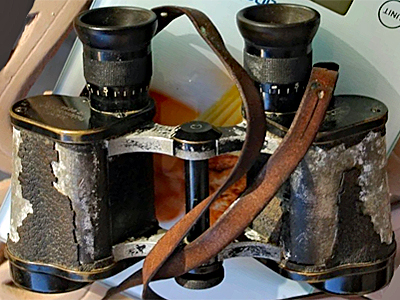
The navy of the Austro-Hungarian Monarchy, (k.u.k. Kriegsmarine), German: kaiserliche und königliche Kriegsmarine (Imperial and Royal Navy) / Hungarian: Császári és Királyi Haditengerészet) was the naval force of the Austro-Hungarian Monarchy.
Ships of the Austro-Hungarian Navy were designated SMS, for Seiner Majestät Schiff (His Majesty’s Ship). The k.u.k. Kriegsmarine came into being after the formation of the Austro-Hungarian Monarchy in 1867, and ceased to exist in 1918 upon the Empire’s defeat and subsequent collapse at the end of the First World War.
Carl Zeiss / Jena Austro-Hungarian Monarchy contract
6×30 MARINEGLAS, April 1917, 717247, 10. 10. 17., Jena, Thuringia, Germany
|
|
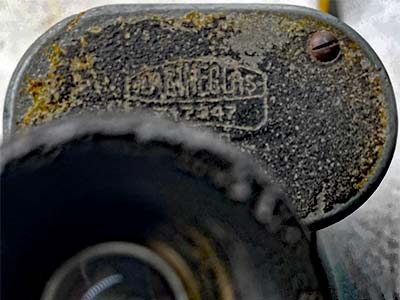
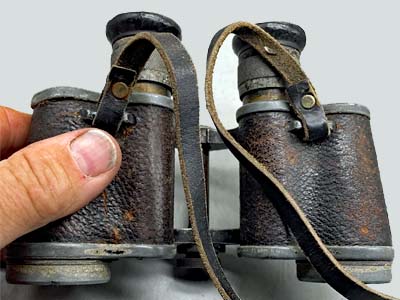
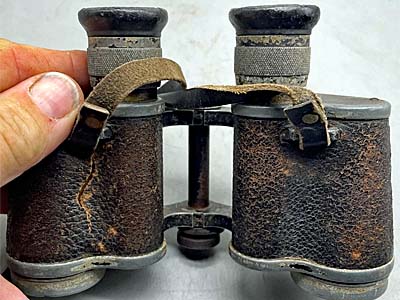
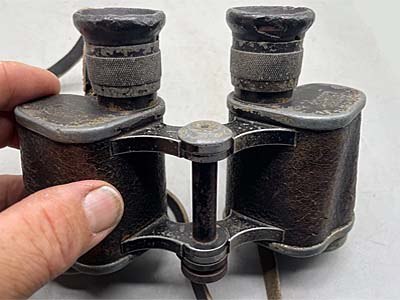
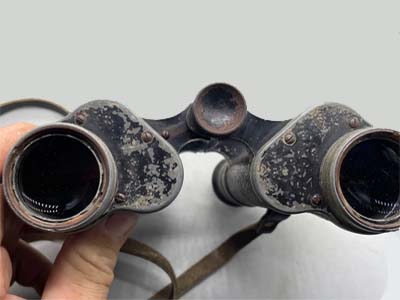
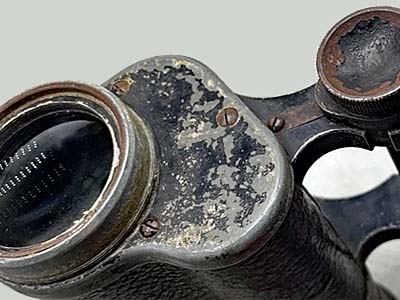
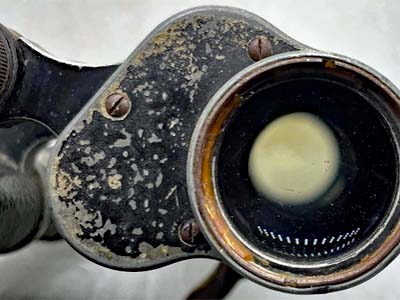
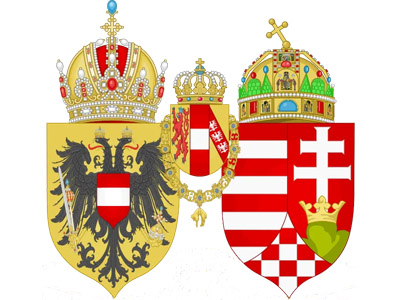
Austro-Hungarian Monarchy 6×30 military service binoculars, with ⊕ Strichplatte (graduated range finding scale) in right lens, production serial number, 717247, heavy construction, made of brass, black “Vulkanite” schwarzes Kunstleder (black synthetic leather, hard rubber) Körperbedeckung (body covering), aluminum alloy prism and objective covers, aluminum alloy objective lens rings, manufactured about April 1917 by Carl Zeiss, Jena, Germany. Left prism cover marked in white at the top with “Ü.K.” (Abnahme Stempel, ÜK-property acceptance stamp) / “Austro-Hungarian Monarchy coat of arms” / “10. 10. 17.” (10 October 1917, Austro-Hungarian armed forces property date) over “CARL ZEISS” / “JENA” trademark logo. Right prism cover marked in white with “MARINEGLAS” / “717247” (production serial number) logo over “6 X”. This Carl Zeiss 6×30, serial number, 717247, was produced about April 1917, within the original Carl Zeiss production serial number series established in 1894. |
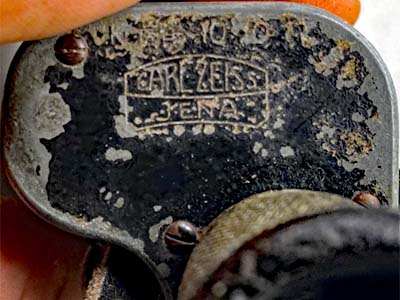
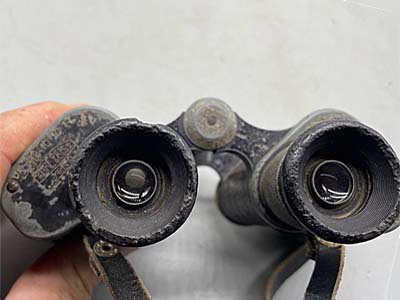
Zeiss Károly / Győr Austro-Hungarian Monarchy contract
6×30 M 9/13 Z Feldstecher, May 1917, 738966, 10. 7. 17., Győr, Hungary
|
|
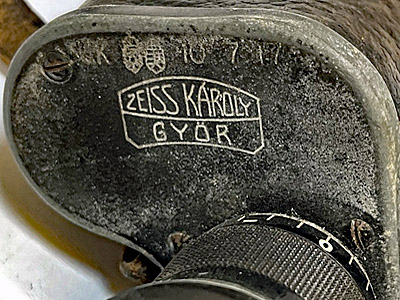
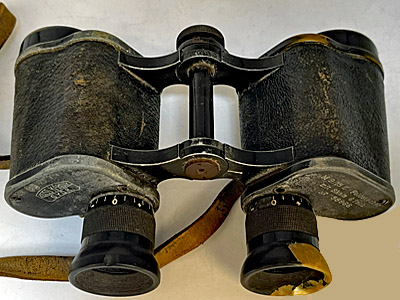
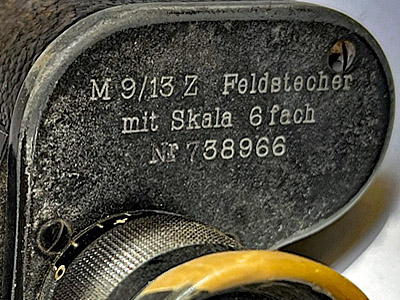
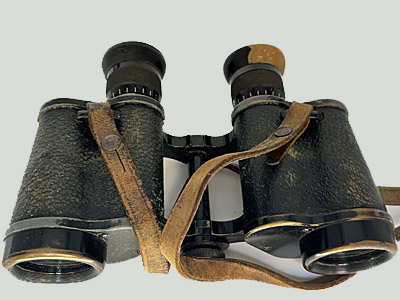
Austro-Hungarian Monarchy 6×30 military service binoculars, with ⊕ Strichplatte (graduated range finding scale) in right lens, production serial number, 738966, heavy construction, made of brass, aluminum alloy prism and objective covers, brass objective lens rings, black synthetic leather body covering, brass fittings, manufactured about May 1917 by Zeiss Károly (Carl Zeiss), Győr, Hungary. Left prism cover marked in white at the top with “Ü.K.” (Abnahme Stempel, ÜK-property acceptance stamp) / “Austro-Hungarian Monarchy coat of arms” / “10. 7. 17.” (10 July 1917, Austro-Hungarian armed forces property date) over “ZEISS KÁROLY / GYŐR” trademark logo. Right prism cover marked in white with “M 9/13 Z Feldstecher / mit Skala 6 fach / Nr. 738966” (Model 1909/1913 Binoculars or Field glasses / with graduated rangefinding scale 6 power / Number 738966 production serial number). This Carl Zeiss 6×30, serial number, 738966, was produced about May 1917, within the original Carl Zeiss production serial number series established in 1894. |
Győr is the main city of northwest Hungary, the capital of Győr-Moson-Sopron County and Western Transdanubia region, halfway between Budapest and Vienna, on one of the important roads of Central Europe.
Feldstecher is a German masculine noun that translates to “binoculars” or “field glasses” in English. The term, Feldstecher, specifically refers to a handheld, portable “telescope” (prism binocular) to view distant objects.
The literal meaning combines Feld (field) and Stecher (literally “stabber” or “field spyglass”), to pierce the distance. The synonym in German is Fernglas (the general term for binoculars).
Zeiss Károly / Győr Austro-Hungarian Monarchy contract
6×30 M 9/13 Z Feldstecher, June 1917, 747437, Győr, Hungary
|
|
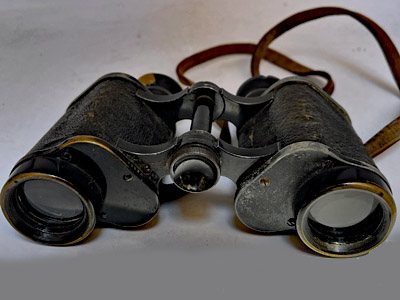
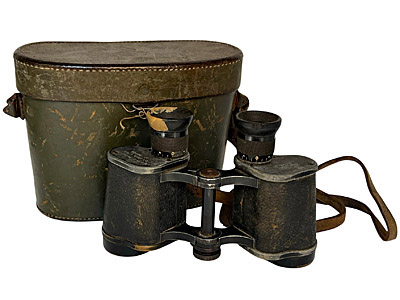
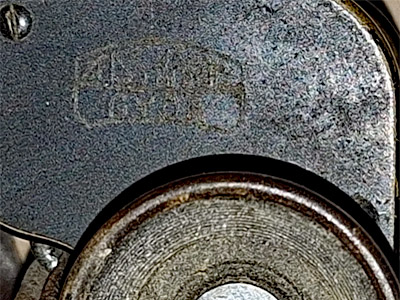
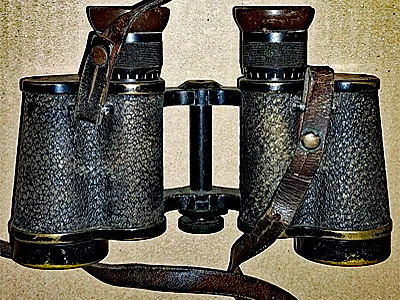
Austro-Hungarian Monarchy 6×30 military service binoculars, with ⊕ Strichplatte (graduated range finding scale) in right lens, production serial number, 747437, heavy construction, made of brass, aluminum alloy prism and objective covers, brass objective lens rings, black synthetic leather body covering, manufactured about June 1917 by Zeiss Károly (Carl Zeiss), Győr, Hungary. Left prism cover marked in white with “ZEISS KÁROLY / GYŐR” trademark logo. Right prism cover marked in white with “M 9/13 Z Feldstecher / mit Skala 6 fach / Nr. 747437” (Model 1909/1913 Binoculars or Field glasses / with graduated rangefinding scale 6 power / Number 747437 production serial number). This Carl Zeiss 6×30, serial number, 747437, was produced about June 1917, within the original Carl Zeiss production serial number series established in 1894. |
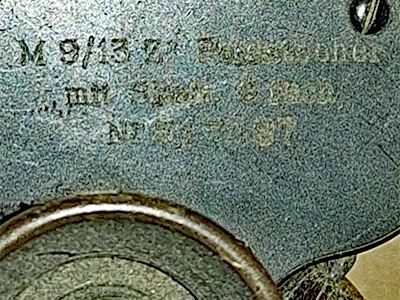
Győr is the main city of northwest Hungary, the capital of Győr-Moson-Sopron County and Western Transdanubia region, halfway between Budapest and Vienna, on one of the important roads of Central Europe.
Feldstecher is a German masculine noun that translates to “binoculars” or “field glasses” in English. The term, Feldstecher, specifically refers to a handheld, portable “telescope” (prism binocular) to view distant objects.
The literal meaning combines Feld (field) and Stecher (literally “stabber” or “field spyglass”), to pierce the distance. The synonym in German is Fernglas (the general term for binoculars).
Zeiss Károly / Győr Austro-Hungarian Monarchy contract
6×30 M 9/13 Z Feldstecher, July 1917, 759695, 17. 7. 17., Győr, Hungary
|
|
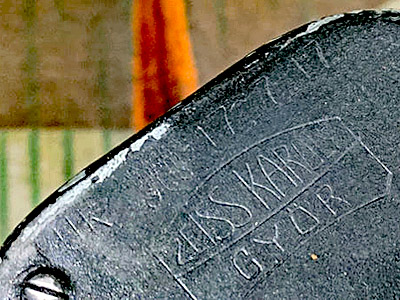
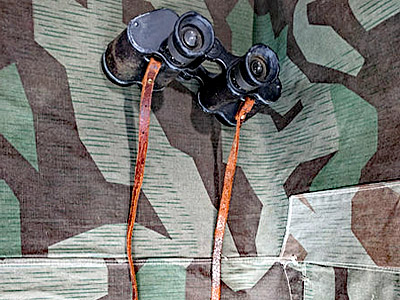
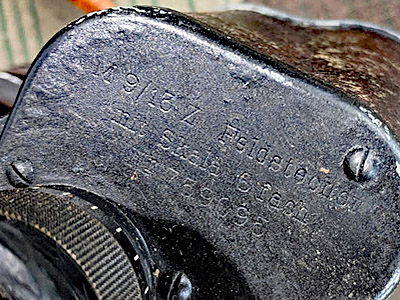
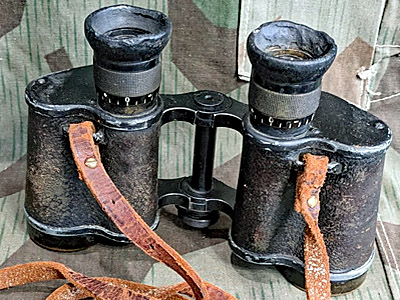
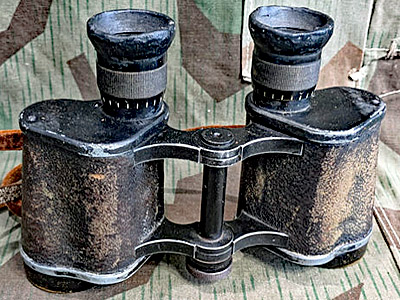
Austro-Hungarian Monarchy 6×30 military service binoculars, with ⊕ Strichplatte (graduated range finding scale) in right lens, production serial number, 759695, heavy construction, made of brass, aluminum alloy prism and objective covers, brass objective lens rings, black synthetic leather body covering, brass fittings, manufactured about July 1917 by Zeiss Károly (Carl Zeiss), Győr, Hungary. Left prism cover marked in white at the top with “Ü.K.” (Abnahme Stempel, ÜK-property acceptance stamp) / “Austro-Hungarian Monarchy coat of arms” / “17. 7. 17.” (17 July 1917, Austro-Hungarian armed forces property date) over “ZEISS KÁROLY / GYŐR” trademark logo. Right prism cover marked in white with “M 9/13 Z Feldstecher / mit Skala 6 fach / Nr. 759695” (Model 1909/1913 Binoculars or Field glasses / with graduated rangefinding scale 6 power / Number 759695 production serial number). This Carl Zeiss 6×30, serial number, 759695, was produced about July 1917, within the original Carl Zeiss production serial number series established in 1894. |
Győr is the main city of northwest Hungary, the capital of Győr-Moson-Sopron County and Western Transdanubia region, halfway between Budapest and Vienna, on one of the important roads of Central Europe.
Feldstecher is a German masculine noun that translates to “binoculars” or “field glasses” in English. The term, Feldstecher, specifically refers to a handheld, portable “telescope” (prism binocular) to view distant objects.
The literal meaning combines Feld (field) and Stecher (literally “stabber” or “field spyglass”), to pierce the distance. The synonym in German is Fernglas (the general term for binoculars).
Carl Zeiss Austro-Hungarian Monarchy contract
6×30 MARINEGLAS, August 1917, 773058, 11. 10. 17., Jena, Thuringia, Germany
|
|
Austro-Hungarian Monarchy 6×30 military service binoculars, with ⊕ Strichplatte (graduated range finding scale) in right lens, production serial number, 773058, heavy construction, made of brass, aluminum alloy prism and objective covers, brass objective lens rings, black synthetic leather body covering, brass fittings, manufactured about August 1917 by Carl Zeiss, Jena, Germany. Left prism cover marked in white at the top with “Ü.K.” (Abnahme Stempel, ÜK-property acceptance stamp) / “Austro-Hungarian Monarchy coat of arms” / “11. 10. 17.” (11 October 1917, Austro-Hungarian armed forces property date) over “CARL ZEISS / JENA” trademark logo. Right prism cover marked in white with “MARINEGLAS” / “773058” production serial number logo, over “6×30”. This Carl Zeiss 6×30, serial number, 773058, was produced about August 1917, within the original Carl Zeiss production serial number series established in 1894. |


Carl Zeiss Austro-Hungarian Monarchy contract
6×30 SILVAMAR, September 1917, 783132, Wien, Austria
|
|
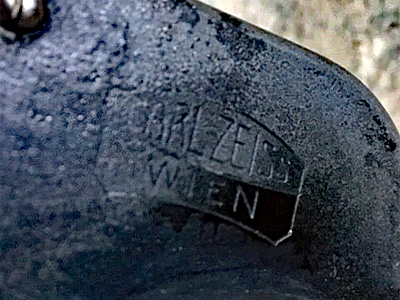
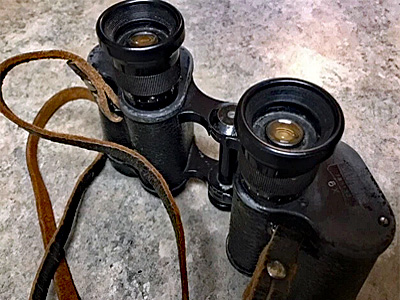
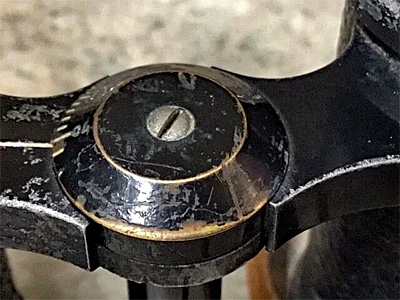
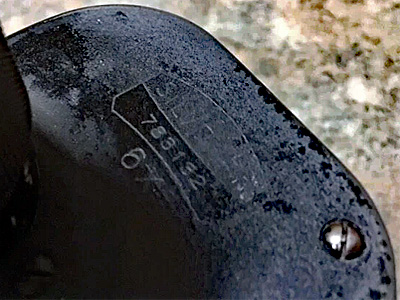
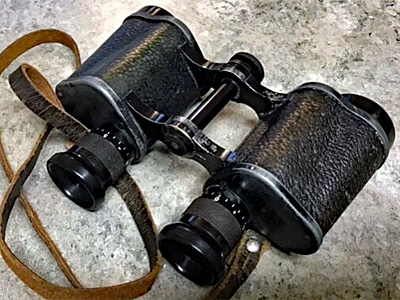
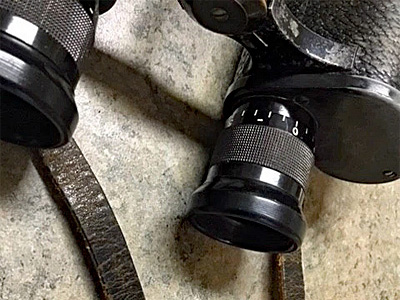
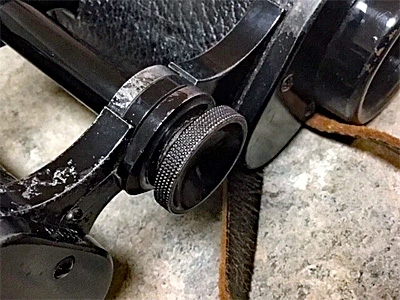
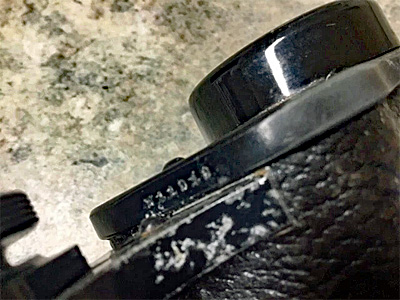
Austro-Hungarian Monarchy 6×30 civilian or military service binoculars, without ⊕ Strichplatte (graduated range finding scale) in right lens, production serial number, 783132, heavy construction, made of brass, black “Vulkanite” schwarzes Kunstleder (black synthetic leather, hard rubber) Körperbedeckung (body covering), aluminum alloy prism and objective covers, aluminum alloy objective lens rings, manufactured about September 1917 by Carl Zeiss, Wien, Austria (closed in 1926). Left prism cover marked in white with “CARL ZEISS / WIEN” trademark logo. Right prism cover marked in white with “SILVAMAR” / “783132” production serial number logo, over “6 X”. Inside edge of right objective cover stamped in very small numbers with “W11919” (perhaps an Austro-Hungarian armed forces property number). This Carl Zeiss 6×30, serial number, 783132, was produced about September 1917, within the original Carl Zeiss production serial number series established in 1894. |
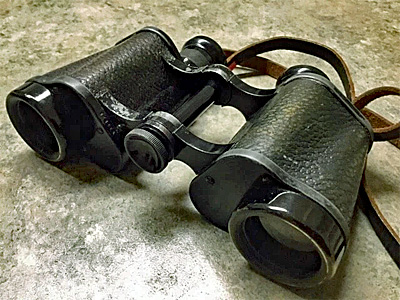
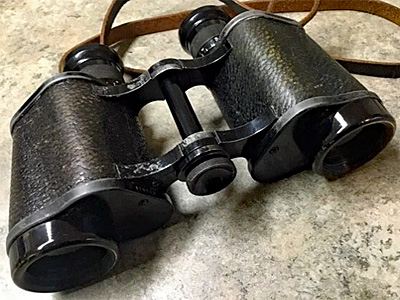
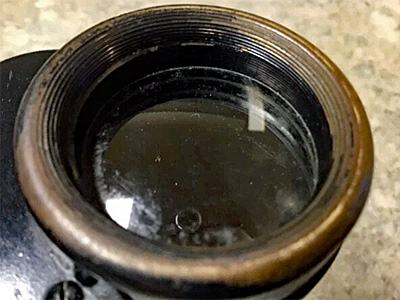
Weight 500 gms
Carl Zeiss Austro-Hungarian Monarchy contract
D.F. 6×30, February 1918, 858868, 22. 4. 18., Jena, Thuringia, Germany
|
|
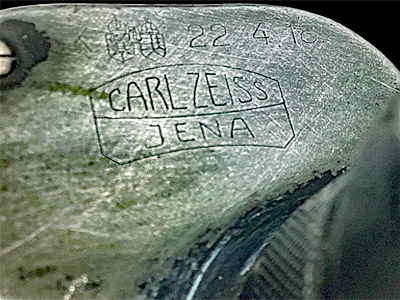
Austro-Hungarian Monarchy D.F. 6×30 military service binoculars, with ⊕ Strichplatte (graduated range finding scale) in right lens, production serial number, 858868, heavy construction, made of brass, aluminum alloy prism and objective covers, aluminum alloy objective lens rings, black synthetic leather body covering, brass fittings, manufactured about February 1918 by Carl Zeiss, Jena, Germany. Left prism cover marked in white at the top with “Ü.K.” (Abnahme Stempel, ÜK-property acceptance stamp) / “Austro-Hungarian Monarchy coat of arms” / “22. 4. 18.” (22 April 1918, Austro-Hungarian armed forces property date) over “CARL ZEISS / JENA” trademark logo. Right prism cover marked in white with “D.F. 6×30″ / “858868” production serial number logo. This Carl Zeiss D.F. 6×30, serial number, 858868, was produced about February 1918, within the original Carl Zeiss production serial number series established in 1894. |