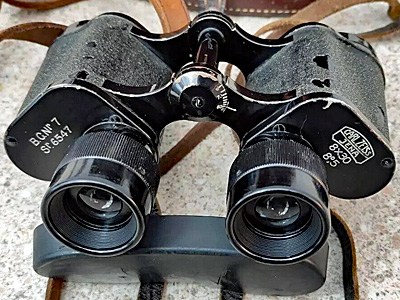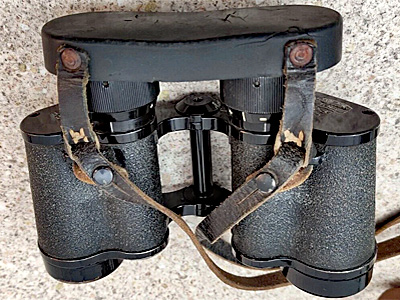

Kingdom of Romania contract
Carl Zeiss, Jena, Thuringia, Germany, 1943
In the Kingdom of Romania armed forces, military service binoculars were marked to identify them as government military property.
Military service binoculars were issued to soldiers with specialized functions. For example, group leaders and artillery observers were issued military service binoculars to perform their duties.
The most common type of service glass used by the armed forces of the Kingdom of Romania during the Second World War was the 8×30 B.C.Nr 7 (Binoclu Camp Număr 7, Field Binoculars Number 7). The B.C.Nr7 was based on the 8×30 Carl Zeiss Deltrentis, that first appeared in 1920.
The body was made of magnesium and was featherlight at just 390 grams. The wideangle eyepieces, designed by Albert Koenig, were free of distortion and contained 4 lens-elements. A single layer anti-reflection coating with a bluish color was first added during the Second World War. Production of the 8×30 Carl Zeiss Deltrentis was eventualy halted around 1995.
The number “8” identifies the magnification power (in this case, “8” indicates that objects appear eight times closer than their actual distance).
The number “30” identifies the diameter in millimeters of the front (objective) lenses — the light gathering lenses — in this case 30 millimeters in diameter.
“Vulkanite” schwarzes Kunstleder (black synthetic leather) Körperbedeckung (body covering)
 In Germany in the 1930s, an early type of black plastic synthetic leather called “Vulkanite” was used as the body covering of military and commercial Dienstgläser (service glasses) manufactured before World War II.
This “Vulkanite” schwarzes Kunstleder (black synthetic leather) Körperbedeckung (body covering) was the most common Dienstglas body covering used by the German armed forces (and also by most of the other armed forces of Europe) during the early years of the Second World War.
TM 30-506, WAR DEPARTMENT TECHNICAL MANUAL, GERMAN-ENGLISH MILITARY DICTIONARY, WAR DEPARTMENT, 20 MAY I944
The TM 30-506 manual describes “Vulkanite” schwarzes Kunstleder (black synthetic leather) Körperbedeckung (body covering) as “Kunstleder n” artificial leather.
Schwarz „Reis“ Raulack (black “rice” rough lacquer) Körperbedeckung (body covering)
 Early in the Second World War, a black Rauhlack (rough lacquer) body covering called schwarz „Reis“ Körperbedeckung (black “rice” body covering) also became a common Dienstglas body finish.
This new Dienstglas body covering began to replace the black “Vulkanite” (synthetic, leather-like, early plastic) body covering material on the housings of German field glasses.
The particular consistency of this schwarz „Reis“ (black “rice”) Rauhlack (rough lacquer) Körperbedeckung (body covering) was achieved by mixing crushed rice or finely granulated cork meal with black lacquer paint.
This schwarz „Reis“ Rauhlack Körperbedeckung (black “rice” rough lacquer body covering) became the most common Dienstglas body covering as the war progressed through 1942 and 1943.
This is a list of production serial numbers, observed in collections and recorded from sources online, of 8×30 military service binoculars manufactured by Carl Zeiss, Jena, Germany, for the Armed Forces of the Kingdom of Romania from 1943 to 1945, during the Second World War.
Carl Zeiss (rln) – B.C.Nr 7 / Sr. 386
8×30 Dienstglas, March 1943, unknown, Jena, Thuringia, Germany
|
|
Romanian 8×30 military service binoculars, with reticul (graduated range finding scale) in right lens, production serial number, unknown, light construction, made of aluminum alloy, black “Vulkanite” schwarzes Kunstleder (black synthetic leather) Körperbedeckung (body covering), aluminum alloy prism and objective covers, brass objective lens rings. Manufactured about March 1943 by Carl Zeiss (rln), Jena, Thuringia, Germany for the armed forces of the Kingdom of Romania. Front bridge spindle button marked in white with unknown production serial number. Left prism cover marked in white with “Sr. 386” (Romanian armed forces property number). Right prism cover marked in white with “CARL ZEISS” / “JENA” trademark logo over “8×30” over “8°,5”. |
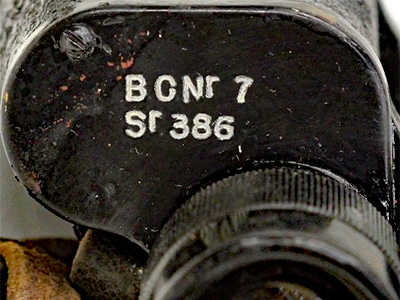
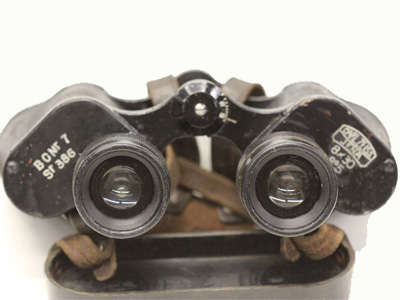
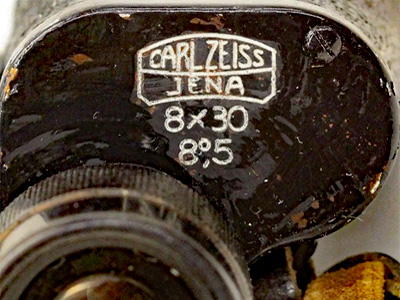
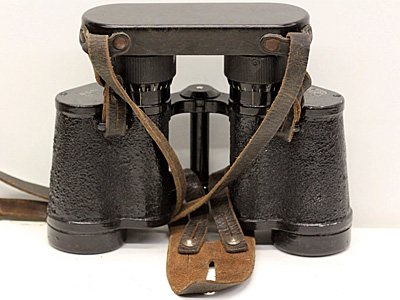
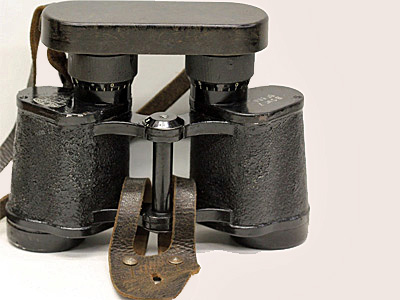
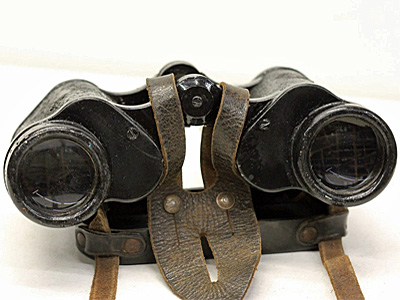
This Carl Zeiss (rln) 8×30 serial number, unknown, was produced within the original Carl Zeiss production serial number series established in 1894.
An estimated 3000 to 3500 8×30 military service binoculars were made by the Carl Zeiss firm for the Romanian Army in the Second World War.
Carl Zeiss (rln) – B.C.Nr 7 / Sr. 1518
8×30 Dienstglas, March 1943, 2196675, Jena, Thuringia, Germany
|
|
Romanian 8×30 military service binoculars, with reticul (graduated range finding scale) in right lens, production serial number, 2196675, light construction, made of aluminum alloy, black “Vulkanite” schwarzes Kunstleder (black synthetic leather) Körperbedeckung (body covering), aluminum alloy prism and objective covers, brass objective lens rings. Manufactured about March 1943 by Carl Zeiss (rln), Jena, Thuringia, Germany for the armed forces of the Kingdom of Romania. Front bridge spindle button marked in white with production serial number 2196675. Left prism cover marked in white with “Sr. 1518” (Romanian armed forces property number). Right prism cover marked in white with “CARL ZEISS” / “JENA” trademark logo over “8×30” over “8°,5”. |


This Carl Zeiss (rln) 8×30 serial number, 2196675, was produced within the original Carl Zeiss production serial number series established in 1894.
An estimated 3000 to 3500 8×30 military service binoculars were made by the Carl Zeiss firm for the Romanian Army in the Second World War.
Carl Zeiss (rln) – B.C.Nr 7 / Sr.2011
8×30 Dienstglas, March 1943, 2196811, Jena, Thuringia, Germany
|
|
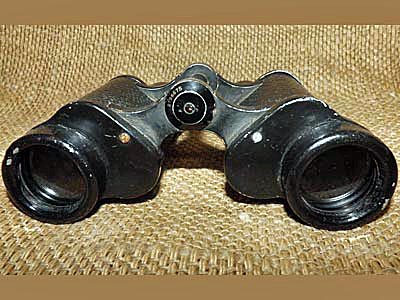
Romanian 8×30 military service binoculars, with reticul (graduated range finding scale) in right lens, production serial number, 2196811, light construction, made of aluminum alloy, black “Vulkanite” schwarzes Kunstleder (black synthetic leather) Körperbedeckung (body covering), aluminum alloy prism and objective covers, brass objective lens rings. Manufactured about March 1943 by Carl Zeiss (rln), Jena, Thuringia, Germany for the armed forces of the Kingdom of Romania. Front bridge spindle button marked in white with production serial number 2196811. Left prism cover marked in white with “B.C.Nr 7” (Binoclu Camp Număr 7, Field Binoculars Number 7), over “Sr.2011” (Romanian armed forces property number). Right prism cover marked in white with “CARL ZEISS” / “JENA” trademark logo over “8×30” over “8°,5”. |


This Carl Zeiss (rln) 8×30 serial number, 2196811, was produced within the original Carl Zeiss production serial number series established in 1894.
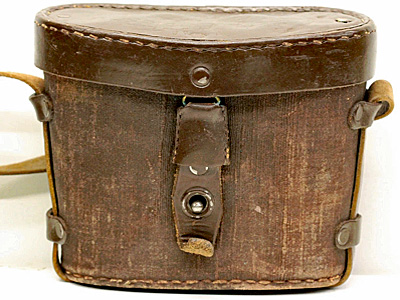
These 8×30 military service binoculars are accompanied by the original black leather carrying strap, black plastic eyepiece protector, black leather button flap, brown leather case marked with “CARL ZEISS” / “JENA” trademark logo over “MADE IN GERMANY” over “WaA202” (WaffenAmpt202, Weapons Inspection Office 202), and two eyepiece filters secured under case top flap.
An estimated 3000 to 3500 8×30 military service binoculars were made by the Carl Zeiss firm for the Romanian Army in the Second World War.
Carl Zeiss (rln) – B.C.Nr 7 / Sr.2349
8×30 Dienstglas, March 1943, 219xxxx, Jena, Thuringia, Germany
|
|
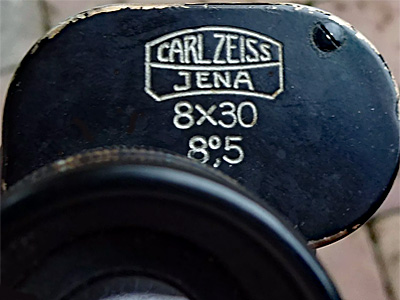
Romanian 8×30 military service binoculars, with reticul (graduated range finding scale) in right lens, unknown production serial number, 219xxxx, (painted over), light construction, made of aluminum alloy, black “Vulkanite” schwarzes Kunstleder (black synthetic leather) Körperbedeckung (body covering), aluminum alloy prism and objective covers, brass objective lens rings. Manufactured about March 1943 by Carl Zeiss (rln), Jena, Thuringia, Germany for the armed forces of the Kingdom of Romania. Front bridge spindle button marked in white with unknown production serial number, 219xxxx, (painted over). Left prism cover marked in white with “B.C.Nr 7” (Binoclu Camp Număr 7, Field Binoculars Number 7), over “Sr.2349” (Romanian armed forces property number). Right prism cover marked in white with “CARL ZEISS” / “JENA” trademark logo over “8×30” over “8°,5”. |
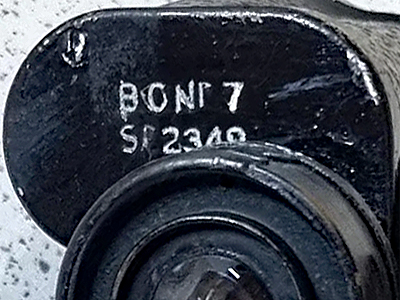
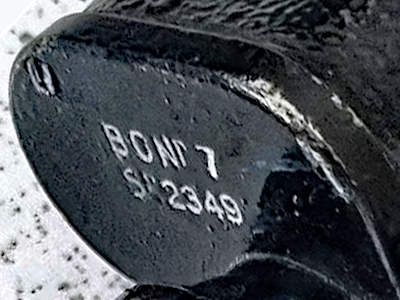
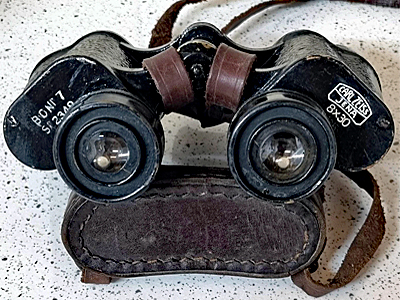
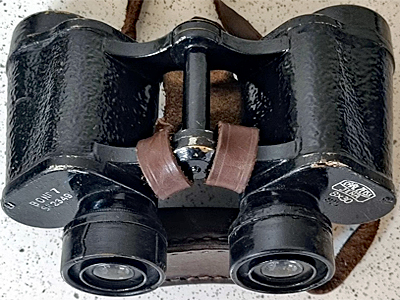
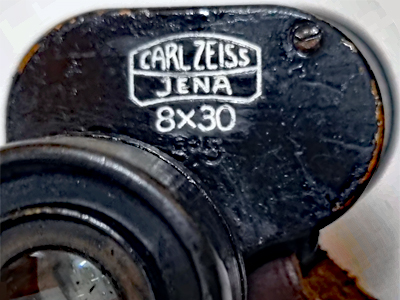
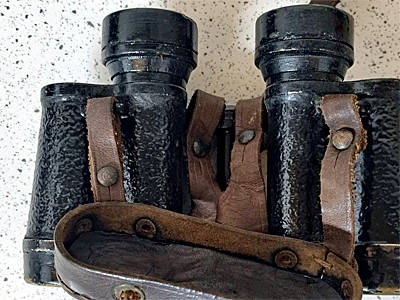
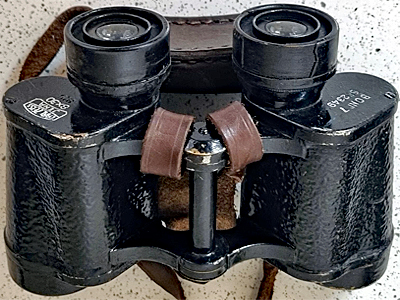
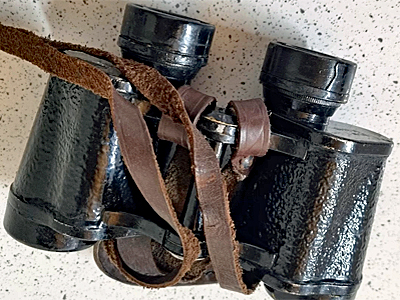
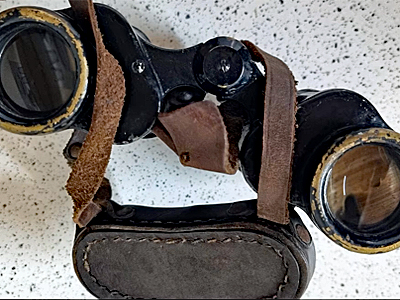
This Carl Zeiss (rln) 8×30 serial number, 219xxxx, was produced about March 1943, within the serial number sequence of the original Carl Zeiss production serial number series established in 1894.
These 8×30 military service binoculars are accompanied by the original brown leather carrying strap, brown leather eyepiece protector, and brown leather button flap.
An estimated 3000 to 3500 8×30 military service binoculars were made by the Carl Zeiss firm for the Romanian Army in the Second World War.
Carl Zeiss (rln) – B.C.Nr 7 / Sr.2896
8×30 Dienstglas, March 1943, 2197696, Jena, Thuringia, Germany
|
|
Romanian 8×30 military service binoculars, with reticul (graduated range finding scale) in right lens, production serial number, 2197696, light construction, made of aluminum alloy, black “Vulkanite” schwarzes Kunstleder (black synthetic leather) Körperbedeckung (body covering), aluminum alloy fittings, manufactured in March 1943 by Carl Zeiss (rln), of Jena, Thuringia, Germany for the armed forces of the Kingdom of Romania. Front bridge spindle button marked with production serial number “2197696” in white numbers. Left prism cover marked with “B.C.Nr 7” (Binoclu Camp Număr 7, Field Binoculars Number 7), over “Sr.2896” (Romanian armed forces property number) in white characters. Right prism cover marked with “CARL ZEISS / JENA” trademark logo over “8×30” over “8°,5” in white characters. These 8×30 military service binoculars are accompanied by the original brown leather carrying strap, brown leather eyepiece protector, brown leather case marked with “CARL ZEISS / JENA” trademark logo over “MADE IN GERMANY” over “WaA202” (WaffenAmpt202, Weapons Inspection Office 202). This Carl Zeiss (rln) 8×30 serial number appears to be part of the original Carl Zeiss production serial number series established in 1894. An estimated 3000 to 3500 8×30 military service binoculars were made by the Carl Zeiss firm for the Romanian Army in the Second World War. |


Carl Zeiss (rln) – B.C.Nr 7 / Sr.3099
8×30 Dienstglas, March 1943, 2197899, Jena, Thuringia, Germany
|
|
Romanian 8×30 military service binoculars, with reticul (graduated range finding scale) in right lens, production serial number, 2197899, light construction, made of aluminum alloy, schwarz „Reis“ Rauhlack Körperbedeckung (black “rice” rough lacquer body covering, aluminum alloy fittings, manufactured in March 1943 by Carl Zeiss (rln), of Jena, Thuringia, Germany for the armed forces of the Kingdom of Romania. Front bridge spindle button marked with production serial number “2197899” in white numbers. Left prism cover marked with “B.C.Nr 7” (Binoclu Camp Număr 7, Field Binoculars Number 7), over “Sr.3099” (Romanian armed forces property number) in white charcters. Right prism cover marked with “CARL ZEISS / JENA” trademark logo over “8×30” over “8°,5” in white characters. This Carl Zeiss (rln) 8×30 serial number appears to be part of the original Carl Zeiss production serial number series established in 1894. An estimated 3000 to 3500 8×30 military service binoculars were made by the Carl Zeiss firm for the Romanian Army in the Second World War. |


Carl Zeiss (rln) – B.C.Nr 7 / Sr.4018
8×30 Dienstglas, April 1943, 2198818, Jena, Thuringia, Germany
|
|
Romanian 8×30 military service binoculars, with reticul (graduated range finding scale) in right lens, production serial number, 2198818, light construction, made of aluminum alloy, schwarz „Reis“ Rauhlack Körperbedeckung (black “rice” rough lacquer body covering, aluminum alloy fittings, manufactured in April 1943 by Carl Zeiss (rln), of Jena, Thuringia, Germany for the armed forces of the Kingdom of Romania. Front bridge spindle button marked with production serial number “2198818” in white numbers. Left prism cover marked with “B.C.Nr 7” (Binoclu Camp Număr 7, Field Binoculars Number 7), over “Sr.4018” (Romanian armed forces property number) in white characters. Right prism cover marked with “CARL ZEISS / JENA” trademark logo over “8×30” over “8°,5” in white characters. This Carl Zeiss (rln) 8×30 serial number appears to be part of the original Carl Zeiss production serial number series established in 1894. An estimated 3000 to 3500 8×30 military service binoculars were made by the Carl Zeiss firm for the Romanian Army in the Second World War. |




Carl Zeiss (rln) – B.C.Nr 7 / Sr.5346
8×30 Dienstglas, April 1943, 2200146, Jena, Thuringia, Germany
|
|
Romanian 8×30 military service binoculars, with reticul (graduated range finding scale) in right lens, production serial number, 2200146, light construction, made of aluminum alloy, schwarz „Reis“ Rauhlack Körperbedeckung (black “rice” rough lacquer body covering, aluminum alloy fittings, manufactured in April 1943 by Carl Zeiss (rln), of Jena, Thuringia, Germany for the armed forces of the Kingdom of Romania. Front bridge spindle button marked with production serial number “2200146” in white numbers. Left prism cover marked with “B.C.Nr 7” (Binoclu Camp Număr 7, Field Binoculars Number 7), over “Sr.5346” (Romanian armed forces property number) in white characters. Right prism cover marked with “CARL ZEISS / JENA” trademark logo over “8×30” over “8°,5” in white characters. These 8×30 military service binoculars are accompanied by the original brown leather carrying strap, black plastic eyepiece protector, brown leather button flap, brown leather case marked with “CARL ZEISS / JENA” trademark logo over “MADE IN GERMANY” over “WaA202” (WaffenAmpt202, Weapons Inspection Office 202). This Carl Zeiss (rln) 8×30 serial number appears to be part of the original Carl Zeiss production serial number series established in 1894. An estimated 3000 to 3500 8×30 military service binoculars were made by the Carl Zeiss firm for the Romanian Army in the Second World War. |


Carl Zeiss (rln) – B.C.Nr 7 / Sr.5771
8×30 Dienstglas, April 1943, 2200571, Jena, Thuringia, German
|
|
Romanian 8×30 military service binoculars, with reticul (graduated range finding scale) in right lens, production serial number, 220571, light construction, made of aluminum alloy, schwarz „Reis“ Rauhlack Körperbedeckung (black “rice” rough lacquer body covering, aluminum alloy fittings, manufactured in April 1943 by Carl Zeiss (rln), of Jena, Thuringia, Germany for the armed forces of the Kingdom of Romania. Front bridge spindle button marked with production serial number “2200571” in white numbers. Left prism cover marked with “B.C.Nr 7” (Binoclu Camp Număr 7, Field Binoculars Number 7), over “Sr.5771” (Romanian armed forces property number) in white characters. Right prism cover marked with “CARL ZEISS / JENA” trademark logo over “8×30” over “8°,5” in white characters. These 8×30 military service binoculars are accompanied by the original brown leather carrying strap, black plastic eyepiece protector, brown leather button flap, brown leather case marked with “CARL ZEISS / JENA” trademark logo over “MADE IN GERMANY” over “WaA202” (WaffenAmpt202, Weapons Inspection Office 202). This Carl Zeiss (rln) 8×30 serial number appears to be part of the original Carl Zeiss production serial number series established in 1894. An estimated 3000 to 3500 8×30 military service binoculars were made by the Carl Zeiss firm for the Romanian Army in the Second World War. |


Carl Zeiss (rln) – B.C.Nr 7 / Sr.6172
8×30 Dienstglas, April 1943, 2200972, Jena, Thuringia, Germany
|
|
Romanian 8×30 military service binoculars, with reticul (graduated range finding scale) in right lens, production serial number, 2200972, light construction, made of aluminum alloy, schwarz „Reis“ Rauhlack Körperbedeckung (black “rice” rough lacquer body covering, aluminum alloy fittings, manufactured in April 1943 by Carl Zeiss (rln), of Jena, Thuringia, Germany for the armed forces of the Kingdom of Romania. Front bridge spindle button marked with production serial number “2200972” in white numbers. Left prism cover marked with “B.C.Nr 7” (Binoclu Camp Număr 7, Field Binoculars Number 7), over “Sr.6172” (Romanian armed forces property number) in white characters. Right prism cover marked with “CARL ZEISS / JENA” trademark logo over “8×30” over “8°,5” in white characters. This Carl Zeiss (rln) 8×30 serial number appears to be part of the original Carl Zeiss production serial number series established in 1894. An estimated 3000 to 3500 8×30 military service binoculars were made by the Carl Zeiss firm for the Romanian Army in the Second World War. |


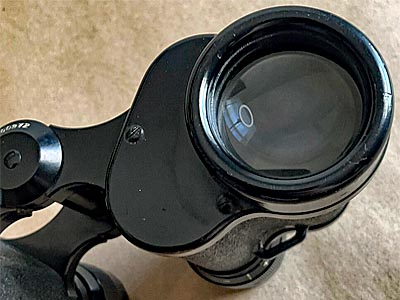


Carl Zeiss (rln) – B.C.Nr 7 / Sr.6547
8×30 Dienstglas, April 1943, 2201347, Jena, Thuringia, Germany
|
|
Romanian 8×30 military service binoculars, with reticul (graduated range finding scale) in right lens, production serial number, 2201347, light construction, made of aluminum alloy, schwarz „Reis“ Rauhlack Körperbedeckung (black “rice” rough lacquer body covering, aluminum alloy fittings, manufactured in April 1943 by Carl Zeiss (rln), of Jena, Thuringia, Germany for the armed forces of the Kingdom of Romania. Front bridge spindle button marked with production serial number “2201347” in white numbers. Left prism cover marked with “B.C.Nr 7” (Binoclu Camp Număr 7, Field Binoculars Number 7), over “Sr.6547” (Romanian armed forces property number) in white characters. Right prism cover marked with “CARL ZEISS / JENA” trademark logo over “8×30” over “8°,5” in white characters. These 8×30 military service binoculars are accompanied by the original brown leather carrying strap, black plastic eyepiece protector, brown leather case marked with “CARL ZEISS / JENA” trademark logo over “MADE IN GERMANY” over “WaA202” (WaffenAmpt202, Weapons Inspection Office 202). This Carl Zeiss (rln) 8×30 serial number appears to be part of the original Carl Zeiss production serial number series established in 1894. An estimated 3000 to 3500 8×30 military service binoculars were made by the Carl Zeiss firm for the Romanian Army in the Second World War. |